




Patent Landscape Overview 2026: Mapping the Market for Strategy
Your patent portfolio is only as strong as your understanding of the competitive landscape around it. Companies that map their patent landscape overview 2026 gain a decisive edge in product development and market positioning.
We at Daniel Law Offices, P.A. help clients turn patent data into actionable strategy. This guide walks you through analyzing market trends, evaluating competitor moves, and building a patent strategy that drives real business growth.
Where Patent Activity Concentrates in 2026
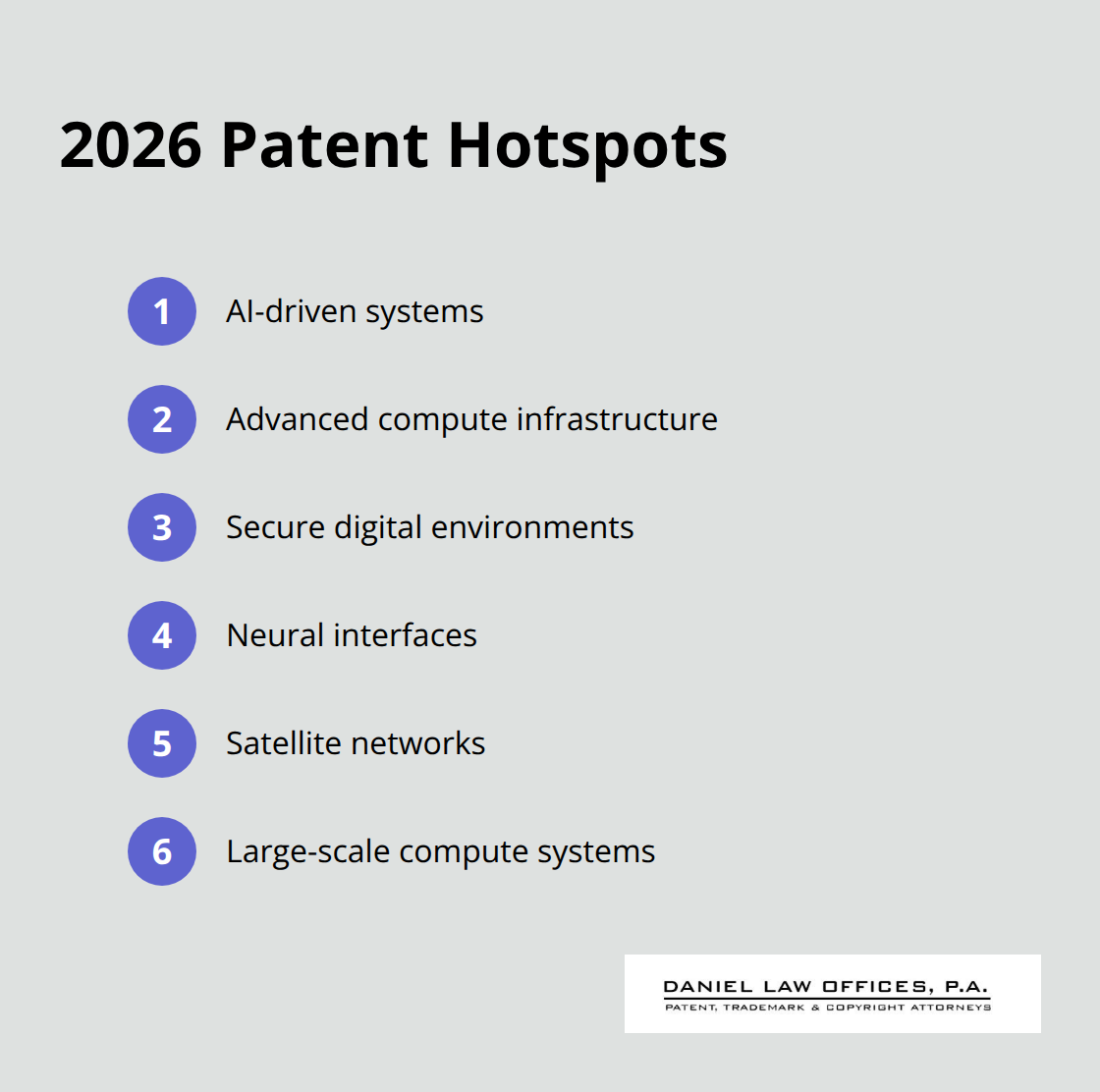
The 2026 patent landscape reveals stark concentration patterns that separate winners from laggards. AI-driven systems, advanced compute infrastructure, secure digital environments, neural interfaces, satellite networks, and large-scale compute systems dominate filing activity across jurisdictions. Gartner identifies AI supercomputers as a top technology trend for 2026, and the patent data confirms this-GPU-accelerated architectures for foundation-model training attract aggressive patent investment from both established players and startups. This concentration matters because it signals where capital flows and where competitive pressure will intensify. If your product roadmap sits outside these clusters, you operate in a market where patent protection is either commoditized or fragmented.
Space Connectivity and Ground Infrastructure
Space connectivity represents an explosive filing zone, driven by direct-to-device satellite networks that bypass terrestrial infrastructure entirely. Qualcomm, Huawei, AT&T, Samsung, and Oppo lead satellite-ready chipset and antenna patents, while emerging players like AST SpaceMobile, Lynk Global, Astrocast, and Hubble Network file aggressively in non-terrestrial network protocols. Ground infrastructure patents matter equally because satellites alone don’t create value-ground stations route traffic into terrestrial networks and complete the connectivity chain. Companies filing in this space protect both the hardware and the systems that make satellite connectivity functional.
Physical AI, Robotics, and Neural Interfaces
Physical AI and robotics generate patent clusters around edge deployment and autonomous systems, with NVIDIA holding nearly 5,000 patents across GPU architecture and memory hierarchies that enable large compute clusters. Brain-computer interfaces create smaller but strategically dense patent families, with Neuralink, Synchron, Blackrock Neurotech, and Paradromics controlling foundational claims around direct brain-to-system communication for speech restoration and motor control. These technologies move from laboratory concepts to production systems with real patent portfolios backing them.
Healthcare and Secure Computing Applications
Healthcare-focused agentic AI applications accelerate drug discovery through data analysis and experiment optimization-Sirona Medical, CertisAI, and Numerion Labs demonstrate real deployment across the industry. Confidential computing protects data in hardware-isolated environments, with Intel leading on SGX/TDX technologies and Microsoft driving confidential virtual machines for secure cloud and edge workloads. Production systems now rely on these patent-protected technologies rather than theoretical frameworks.
Geographic Filing Patterns and Market Strategy
The United States remains the dominant filing jurisdiction for foundational patents in AI compute and space connectivity, but European offices handle significant filings around confidential computing and secure digital environments. Patent activity outside these geographies correlates directly with market penetration strategies-companies filing in Japan, South Korea, and Singapore signal intent to capture Asian manufacturing and supply-chain advantages. If competitors file in jurisdictions you’ve ignored, they likely build market access you haven’t anticipated. Understanding where your competitors concentrate their patent filings reveals which markets they prioritize and which technologies they consider defensible. This geographic intelligence shapes where you should file and which markets demand the strongest patent protection for your innovations.
Turning Competitor Patents Into Strategic Intelligence
What Competitor Patents Reveal About Market Direction
Competitor patent portfolios expose what technologies they consider defensible, which markets they prioritize, and where they expect revenue growth. Most companies ignore competitor patents entirely. That’s a critical error. When Qualcomm, Huawei, and Samsung file aggressively around satellite-ready chipsets and non-terrestrial network protocols, they signal capital allocation decisions that precede product launches by 18 to 24 months. You can act on that signal before their products reach market.
Start by mapping competitor filings in your technology clusters over the past three years, not just the past year. Recent filings show immediate competitive focus; older filings show which technologies competitors consider foundational. If a competitor maintains an active prosecution history around a specific patent family, they invest resources to keep those claims alive. That investment indicates they view the technology as core to their roadmap. When you identify a competitor’s patent in your technology area, read the claims carefully-these define what they can legally prevent others from doing.
Tools That Reveal the Complete Competitive Picture
Tools like LexisNexis PatentSight+ and Derwent normalize patent ownership across corporate entities and subsidiaries, giving you a complete picture rather than fragmented data. Solve Intelligence, used by more than 700 IP teams worldwide including major firms like DLA Piper, integrates invalidity analysis with infringement detection and freedom-to-operate clearance in a single workflow.
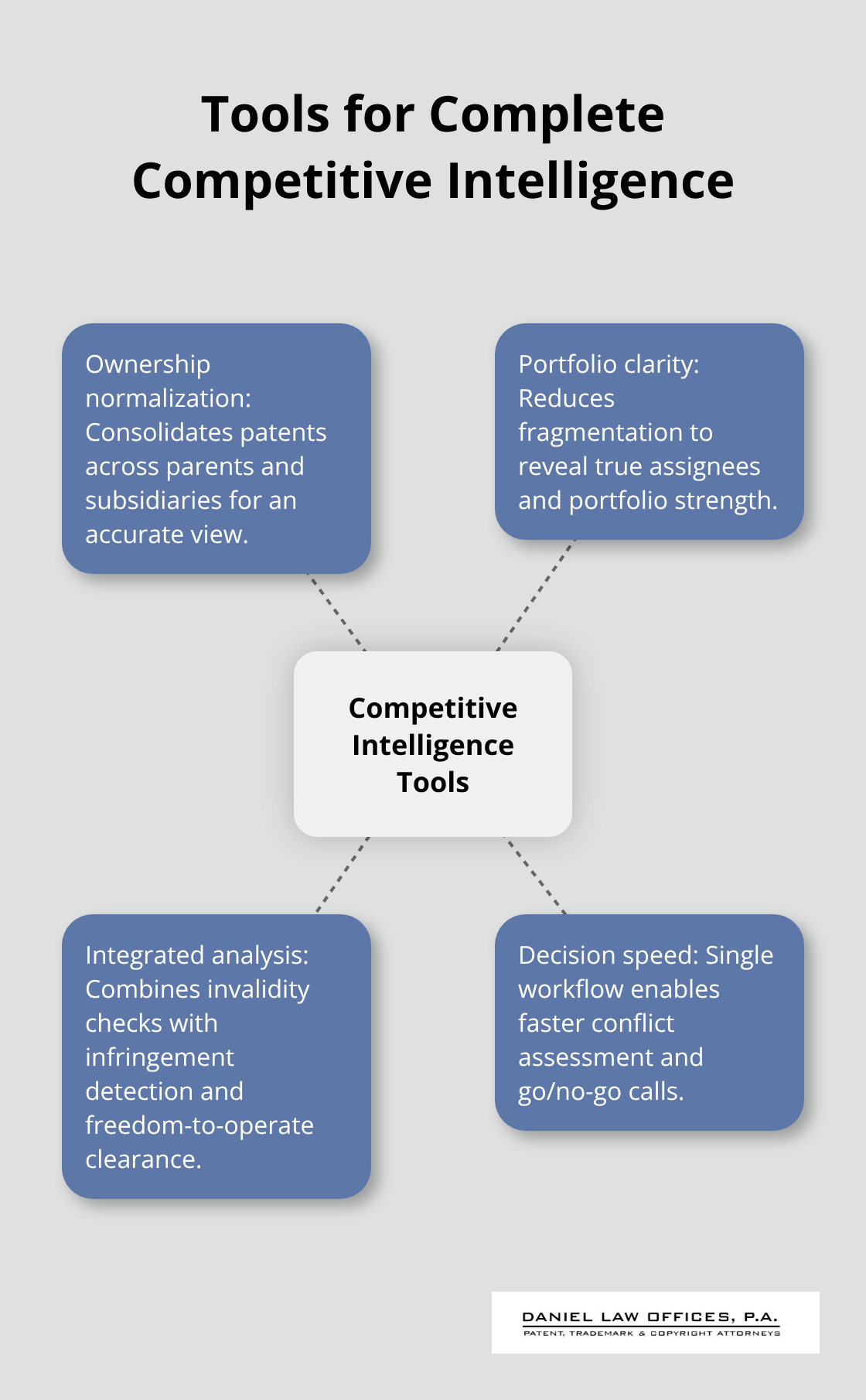
This integration lets you assess both what competitors protect and whether your innovations conflict with their claims.
The patent clusters you identify reveal adjacent markets competitors may enter. If a competitor files heavily around GPU architecture and memory hierarchies like NVIDIA does across nearly 5,000 patents, they build a moat around future compute platforms, not just protect current products. That moat affects your product roadmap decisions. Professional prior art searches provide crucial competitive intelligence for strategic decision-making and help you understand the full scope of competitor protection.
Finding White Space in Underprotected Markets
Patent gaps expose market opportunities your competitors haven’t secured. If major players file around AI supercomputers and foundation-model training but leave edge deployment unprotected, edge applications represent white space. Healthcare applications of agentic AI from players like Sirona Medical and CertisAI show concentrated filing in drug discovery acceleration, yet filing around clinical deployment, patient data integration, and regulatory compliance may remain sparse. Those gaps are opportunities.
Geographic filing patterns matter more than most companies realize. When competitors file in Japan, South Korea, and Singapore but skip Eastern European jurisdictions, they tell you where manufacturing and supply-chain control matters to their strategy. Your filing strategy should either match their geographic focus if you compete directly, or diverge deliberately if you target different markets. Analyze your own portfolio against this same lens. Are you filing in the same geographies as competitors, or are you underprotected in regions where they’ve concentrated effort?
Moving From Reactive to Proactive Patent Strategy
The difference between reactive patent strategy and proactive strategy lies in whether you understand what competitors protect before they launch products that rely on those patents. This intelligence shapes not just your defensive posture but your offensive positioning in emerging technology clusters. As you build this competitive understanding, the next step involves translating these insights into your own patent filing decisions-determining which technologies warrant protection and which markets demand the strongest defensive coverage for your innovations.
Which Technologies Warrant Protection in Your Portfolio
Your patent filing budget is finite, so every application you pursue must clear a commercial threshold. The 2026 landscape makes this decision harder because the most competitive clusters-AI supercomputers, space connectivity, and physical AI-attract filings from well-capitalized incumbents who can sustain patent prosecution costs across multiple jurisdictions. Filing in these zones demands confidence that your innovation creates differentiation competitors cannot easily workaround. Start by asking whether your technology solves a problem that drives revenue today or within 18 months. If your innovation sits three to five years away from commercialization, patent protection becomes speculative.
Gartner’s identification of AI supercomputers as a top 2026 trend means GPU-accelerated architectures already face dense patent coverage from NVIDIA’s nearly 5,000 patents across architecture and memory hierarchies, plus aggressive filings from Intel, Huawei, and emerging players. Filing in GPU core architecture against this backdrop requires either a genuinely novel approach or acceptance that your patent becomes a licensing target rather than a blocking asset.
Geography Shapes Filing Strategy
Geography matters intensely. If you target edge deployment in robotics or healthcare applications of agentic AI, file in the United States, Japan, and South Korea to protect the markets where manufacturing and supply-chain control actually occur. Skipping these jurisdictions leaves your innovation undefended where competitors generate revenue.
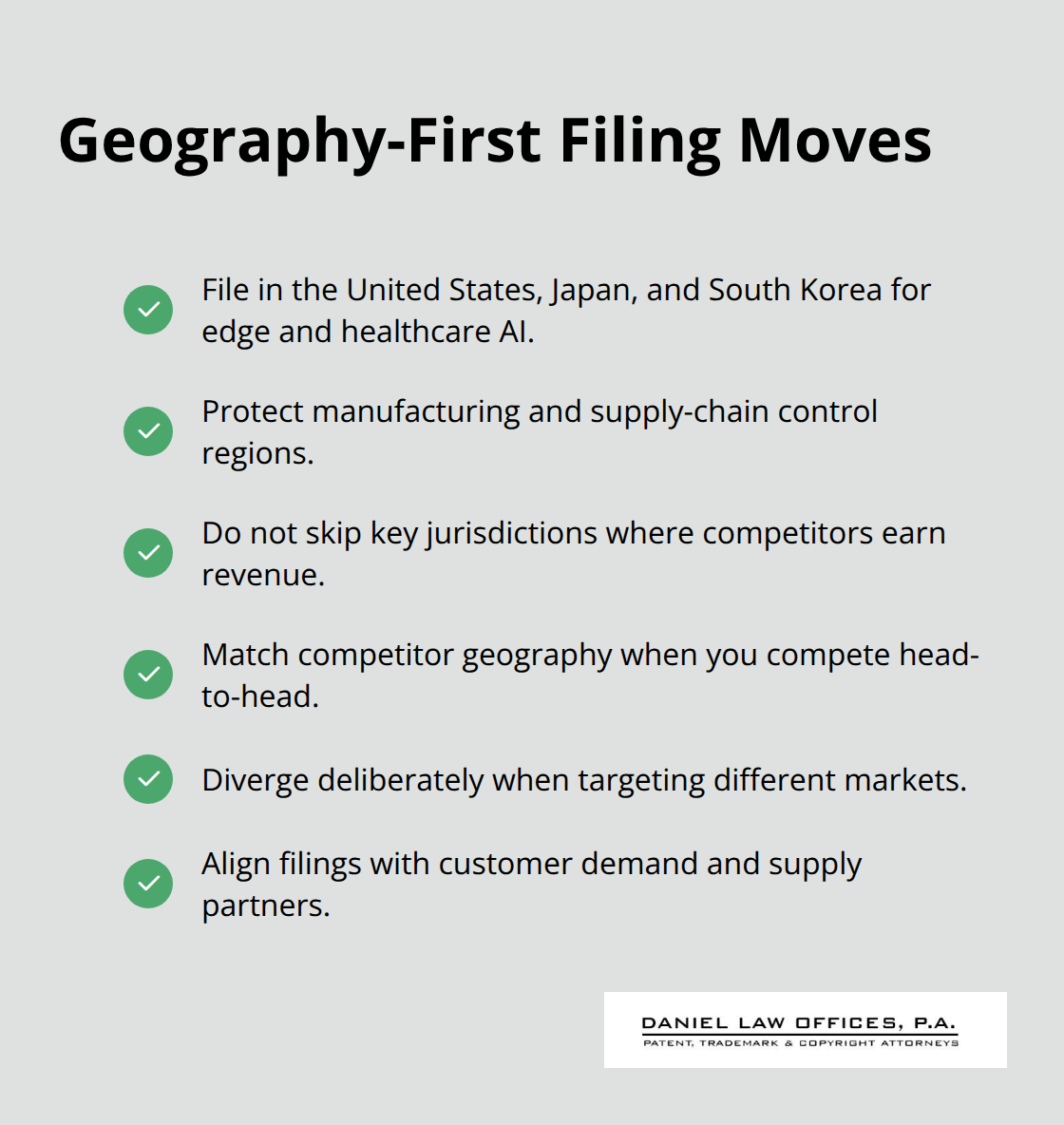
Companies filing in Japan, South Korea, and Singapore signal that supply-chain control and manufacturing partnerships matter more than US market share alone. Your filing strategy should match this geographic reality if you compete for the same customers or deliberately diverge if you target different markets.
Market Impact Dictates Filing Priority
Prioritize patent applications by measuring which technologies capture customer willingness to pay and which markets generate scale. A patent protecting satellite-ready chipsets for non-terrestrial networks matters more if your company manufactures hardware that Qualcomm, Huawei, or Samsung could challenge than if you license protocols to carriers. Read your competitor filings as a market signal. When Sirona Medical, CertisAI, and Numerion Labs concentrate patents around drug discovery acceleration through data analysis, they signal that healthcare organizations view this capability as worth premium pricing. File in clinical deployment, patient data integration, or regulatory compliance in the same space to target adjacent value that competitors may have underprotected.
Confidential computing patents from Intel and Microsoft around SGX/TDX technologies and secure virtual machines protect infrastructure that enterprises deploy today, not tomorrow. That makes filing in secure data handling and hardware isolation more defensible than filing in theoretical security frameworks. The distinction matters because it changes how you construct claim scope and which jurisdictions deserve filing investment. A blocking patent in the United States and Europe stops competitors from selling products in those regions. A licensing patent needs broader geographic coverage because it generates value through settlement and cross-licensing agreements across multiple territories.
Transform Patent Intelligence Into Product Decisions
Patent landscape data should directly inform which features your product roadmap includes and which you license or avoid. When you identify white space in competitor portfolios-areas where major players file heavily in some dimensions but leave others unprotected-you’ve found a market segment where patent risk drops significantly. The gap between GPU architecture filings and edge deployment filings in physical AI reveals that companies like NVIDIA protect compute infrastructure while edge applications remain less densely patented. Build edge products that run trained models rather than design new GPU architectures to operate in lower-patent-density territory. This doesn’t mean no patent risk exists, but it means fewer blocking patents from incumbents.
Conversely, if your product roadmap requires you to operate in a technology cluster where competitors hold dominant patent positions, your filing strategy must address freedom-to-operate concerns before you launch. Solve Intelligence, used by more than 700 IP teams worldwide, integrates invalidity analysis with infringement detection to assess whether competitor patents actually block your path forward or whether prior art or claim construction vulnerabilities create design-around opportunities. This intelligence shapes whether you file aggressively in that space, license competitor patents, or pivot your roadmap toward white space.
Final Thoughts
Patent landscape overview 2026 data transforms raw filing information into decisions that shape your competitive position and long-term growth. Companies that act on these insights gain months or years of advantage over competitors who treat patents as administrative obligations rather than strategic assets. Your patent strategy must align with market reality, not wishful thinking, because a single well-constructed patent family that protects a core technology can generate licensing revenue, block competitor entry, or provide negotiating leverage in partnership discussions for years.
A scattered portfolio of weak patents across unrelated technologies drains resources without creating defensible market position. If you file in technology clusters where incumbents hold dominant positions without a clear differentiation story, you waste resources on patents that become licensing targets rather than blocking assets. If you ignore geographic filing patterns that signal where competitors build manufacturing and supply-chain control, you leave your innovations undefended in markets that generate real revenue.
We at Daniel Law Offices, P.A. help clients navigate this complexity by translating patent data into actionable strategy. Our team assists individual inventors and businesses in securing and protecting their valuable ideas through comprehensive patent searches, drafting and filing patent applications with the USPTO, and guiding clients through the entire patent prosecution process. Contact us today to discuss how your patent strategy should evolve based on the 2026 landscape.