



Developing Comprehensive IP Strategy: A Roadmap for Growth
Your intellectual property is one of your most valuable business assets, yet many companies treat it as an afterthought. Developing a comprehensive IP strategy requires intentional planning, not guesswork.
At Daniel Law Offices, P.A., we help businesses in Orlando, Florida map out protection that actually works. This roadmap walks you through assessing what you have, building the right portfolio, and staying ahead of the competition.
Assessing Your Current IP Assets and Market Position in Orlando, Florida
Know What You Actually Own
Most companies we work with find they have no clear picture of what intellectual property they actually possess. Patents filed years ago sit in drawers. Trademarks registered for old products remain on the books. Trade secrets scatter across employee laptops with no formal documentation. This fog makes strategy impossible-you cannot build a roadmap when you do not know your starting point.
Start by cataloging everything: issued patents, pending applications, registered trademarks, domain names, software code, proprietary processes, customer lists, manufacturing techniques, and brand assets. Write down the filing dates, jurisdictions covered, renewal dates, and which products or services each asset protects. This inventory becomes your foundation.
According to the World Intellectual Property Organization, global technology patent filings grew 7.8% annually as of 2025, yet many companies file without clear strategic alignment. The difference between companies that build real value and those that waste resources comes down to this: knowing exactly what you own and why you own it.
Understand What Your Competitors Are Protecting
Your competitors’ IP activity reveals their strategic priorities. If a competitor just filed patents in a specific technical area, they believe that technology matters for their future. If they registered trademarks across multiple product lines, they invest in brand protection seriously.
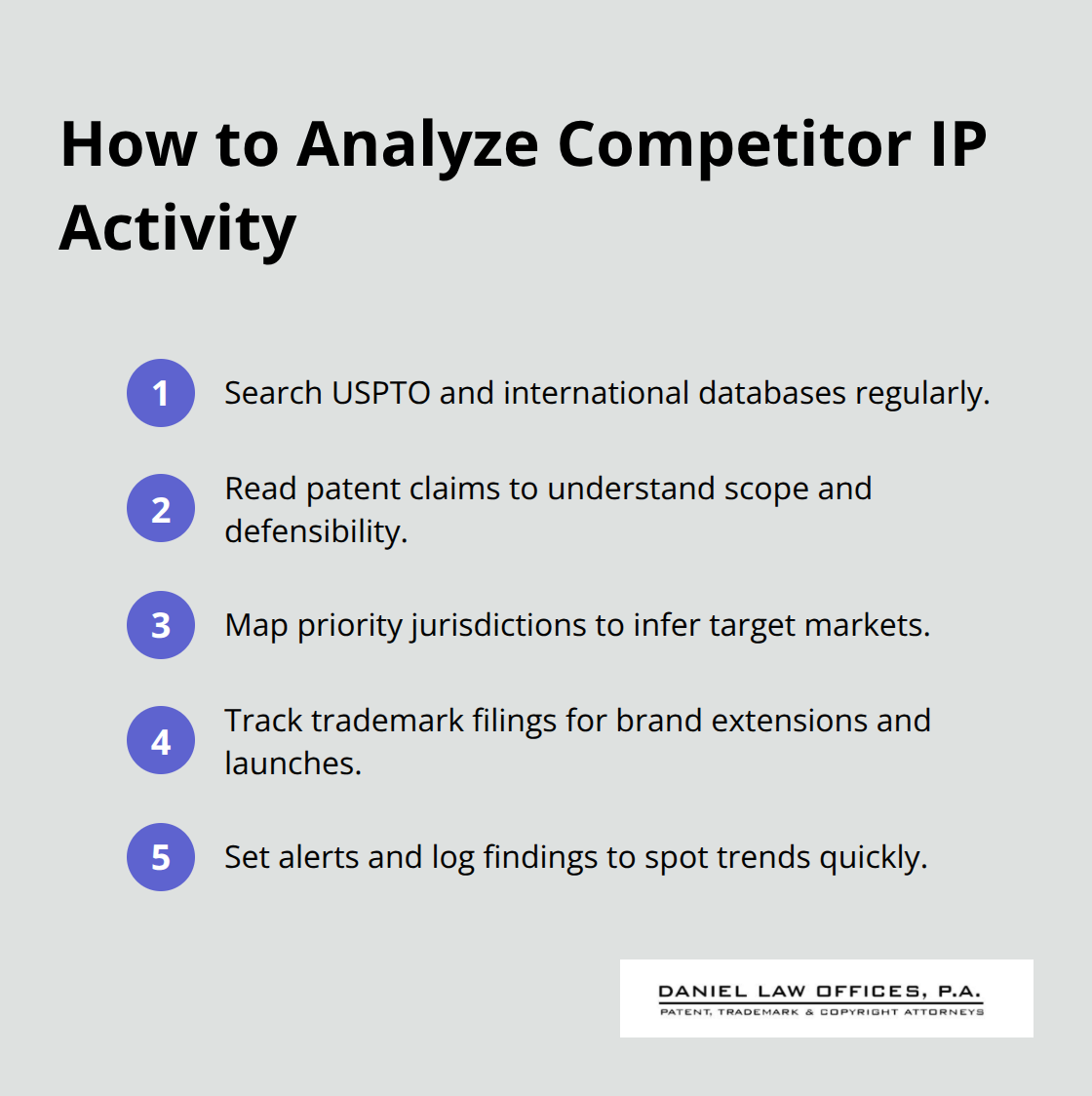
Use the USPTO database and international patent offices to track what they file. Look at the claims in their patents-these show what they consider defensible. Notice which jurisdictions they prioritize: if they file in the US, Europe, and China but skip other regions, that signals where they see their market. Monitor their trademark filings for brand extensions and product launches.
This intelligence takes time but costs almost nothing. Companies that skip this step often file patents in areas their competitors already locked down, wasting money on applications that will face rejections. The Ocean Tomo 2025 Intangible Asset Market Value Study found that patents and related IP now constitute over 87% of enterprise value for S&P 500 technology companies, meaning your competitors view this seriously. You should too.
Close the Gaps Between What You Need and What You Have
After inventorying your assets and studying competitors, gaps become obvious. You may have patents protecting your core technology but nothing protecting your manufacturing process. You may have registered trademarks for your primary brand but not for product sub-brands. You may have trade secrets but no formal protection agreements with employees or contractors (these agreements matter more than most realize).
These gaps represent real risk. A product feature that competitors can copy freely because you never patented it represents lost revenue. A brand name used in marketing but never registered as a trademark represents vulnerability to someone else claiming it.
Prioritize closing gaps where competitors could easily enter your market or where you have real differentiation worth protecting. Not every gap demands immediate action-some do not matter for your business. But systematic gaps in your strategy create systematic losses. The goal is protection aligned with business reality, not theoretical completeness. Once you understand what you own and what gaps exist, you can move forward with building a strategic portfolio that actually supports your growth.
Building a Strategic IP Portfolio in Orlando, Florida
Rank Your Innovations by Real Business Impact
Not everything deserves patent protection, and filing for everything wastes money fast. The real decision comes down to this: which assets directly support your competitive advantage and generate revenue. We see companies file patents on minor variations while leaving core innovations unprotected, simply because they never assessed what mattered most. That backwards approach drains budgets and leaves gaps where competitors can attack.
Start by ranking your innovations by market impact and defensibility. A manufacturing process that saves you 30% in production costs matters far more than a minor feature users rarely notice. A trademark that customers recognize across multiple product lines matters far more than one used for a discontinued product. Ask yourself: if a competitor copied this asset tomorrow, would it hurt your business? If the answer is no, skip the filing fee. If the answer is yes, move forward.
Understand the Real Costs and Timeline
Patents take 2 to 4 years to grant and cost $5,000 to $15,000 per application in the US alone before considering international filings. Trademarks move faster, typically 6 to 12 months, and cost roughly $300 to $500 per application. These resources demand focus. A quality-focused portfolio strategy aligned with business objectives yields roughly 40% higher licensing revenue and better litigation outcomes than indiscriminate patent accumulation, according to IP portfolio research. This means selectivity wins over volume.
For patents, prioritize technologies that competitors cannot easily design around, that protect multiple product variations, or that create barriers to market entry. For trademarks, prioritize brands you actively market, product names customers recognize, and domain names central to your business identity. Trade secrets deserve attention too-customer lists, pricing strategies, manufacturing specifications, and proprietary formulas often need formal protection agreements more urgently than patents because you can protect them immediately without waiting years for approval.
Time Your Filings to Match Your Product Roadmap
Timing matters as much as selection. File provisional patent applications for core innovations before any public disclosure, presentation, or product launch. Provisional applications cost roughly $1,500 to $3,000 and give you 12 months to evaluate market fit and refine the technology before committing to a full utility patent application. This approach lets you test products in the market while preserving your patent rights.
Trademarks should be registered before heavy marketing spend, not after-once you build brand recognition, someone else filing first creates expensive legal battles. Create a filing calendar tied to your product roadmap: file patents as technologies mature, file trademarks as brands launch, and establish renewal reminders for existing assets since trademark renewals occur every 10 years and maintenance fees for patents are required at 3.5, 7.5, and 11.5 years.
Allocate Your Budget Strategically
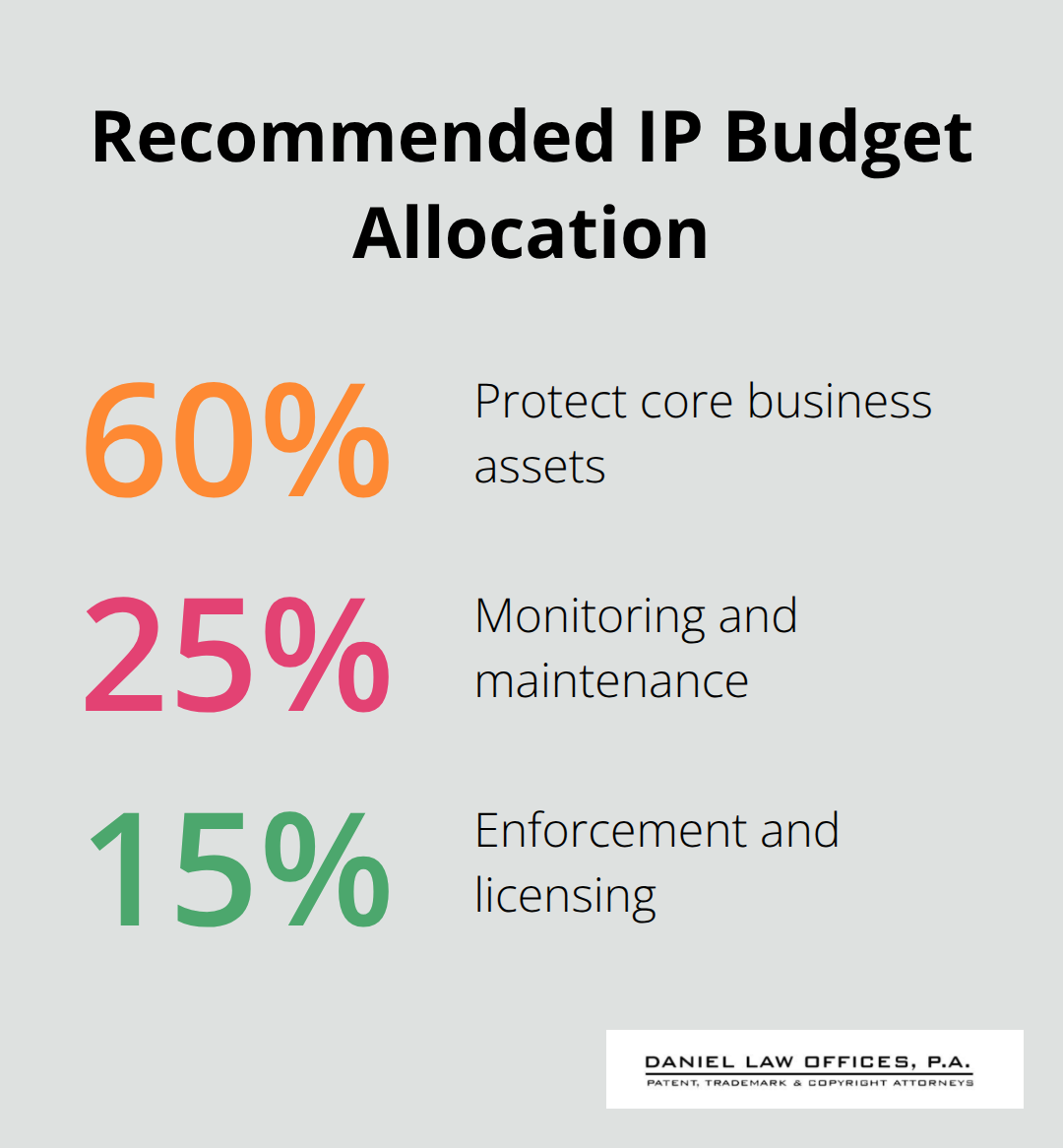
Budget allocation requires honest assessment of what you can actually maintain. A company with limited resources filing 20 patents annually but unable to pay maintenance fees on half of them creates a portfolio full of abandoned assets. Instead, file 8 patents strategically, pay all maintenance fees, and build something valuable. Allocate roughly 60% of your IP budget to protecting core business assets, 25% to monitoring and maintenance, and 15% to enforcement or licensing activities. This balance prevents the common trap of spending everything on filings while neglecting renewal obligations or competitive surveillance.
With your portfolio strategy in place and budget allocated, the next step involves moving from planning to action-filing your applications with the USPTO and establishing the systems that keep your portfolio active and aligned with market changes.
Implementing and Monitoring Your IP Strategy in Orlando, Florida
File Applications and Track Progress Through the USPTO
Filing your patent and trademark applications marks the shift from planning to execution, but the real work starts after submission. When you file a utility patent application, the USPTO assigns it a serial number and sends an initial filing receipt within two weeks. The examining attorney then conducts a prior art search, typically within 6 to 12 months, and issues an office action detailing rejections or requests for claim amendments. Most applications require multiple rounds of back-and-forth communication before approval arrives. This process takes 2 to 4 years on average, so patience matters.
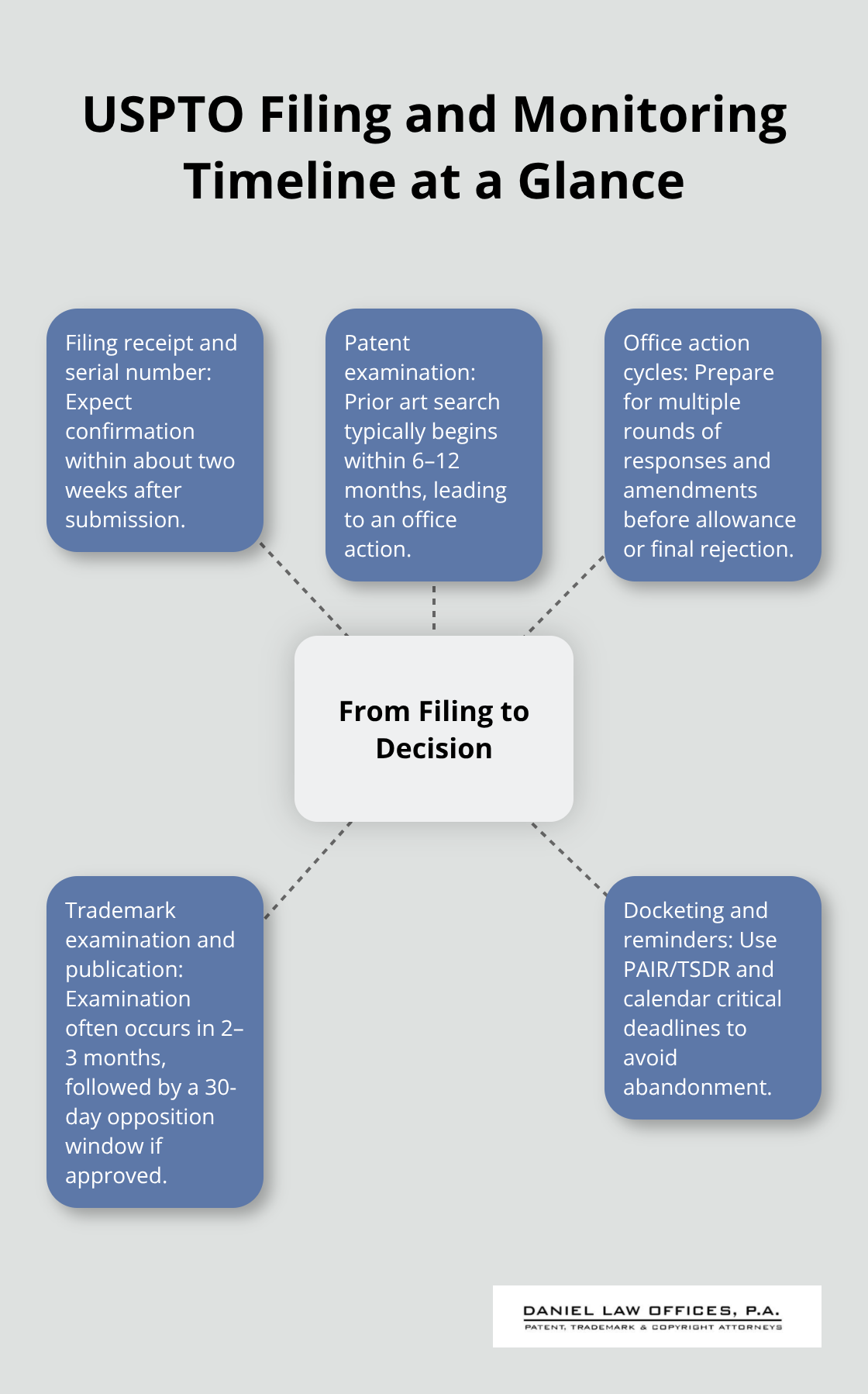
Track your application status using the USPTO’s PAIR system, which updates as the examiner reviews your submission. For trademarks, the timeline moves faster but requires equal attention. After filing, the USPTO conducts an examination within 2 to 3 months, checking for descriptiveness, likelihood of confusion with existing marks, and proper use in commerce. If approved, your mark publishes in the Official Gazette for opposition, giving competitors 30 days to challenge it. Respond promptly to any office actions from the examiner because missing deadlines results in abandonment. Set calendar reminders for response dates and keep copies of everything you submit.
Monitor Competitor Activity and Identify Market Threats
Parallel to filing, monitor what your competitors patent and trademark because their filings signal market direction and potential threats. Use the USPTO’s free Patent Public Search tool to track applications filed by competitors in your industry. When you identify a competitor’s patent in your technology area, read the claims carefully-these define what they can legally prevent others from doing. If their claims are narrow, you may have freedom to operate around them. If claims are broad, assess whether your product infringes or whether you can design alternative approaches.
Set up quarterly landscape reviews where you spend two to three hours examining competitor filings, new patents in your technical field, and trademark registrations for your brand space. This discipline catches threats early and identifies white space where you can file. Many companies wait until they face a cease-and-desist letter before studying competitor IP, which is reactive and expensive. Proactive monitoring costs almost nothing and prevents costly litigation.
Adapt Your Strategy to Market and Technology Shifts
Track technology trends and market shifts that affect your IP strategy. If your industry adopts new manufacturing standards or materials, assess whether your patents cover these variations or whether you need new filings. The World Intellectual Property Organization reported that global technology patent filings grew 7.8% annually as of 2025, with AI-related patents representing 18% of all filings. If AI touches your industry, your IP strategy must account for this shift.
Schedule annual strategy reviews where you compare your original IP goals against actual market conditions, competitive moves, and your company’s evolving product roadmap. Update your portfolio strategy annually, not every five years. Technology moves fast, and static IP strategies become liabilities. During these reviews, identify patents approaching their maintenance fee deadlines and decide whether to pay, abandon, or let expire. Not every patent deserves renewal fees forever. If a patent protects a discontinued product or outdated technology, let it expire and redirect that budget to protecting current innovations.
Maintain Active Protection for Trademarks and Patents
Maintain your trademark registrations religiously because abandonment happens when you stop using a mark in commerce or fail to file required renewals every 10 years. Use your trademarks consistently across products and marketing materials to demonstrate active use and strengthen your legal position against challenges. For patents, pay maintenance fees at 3.5, 7.5, and 11.5 years after grant to keep your protection active. This cycle of filing, monitoring, and updating transforms IP from a one-time project into an active business function that adapts as your company grows.
Final Thoughts
Developing a comprehensive IP strategy transforms how your business protects and monetizes its innovations. Companies that protect core innovations early, monitor competitors consistently, and update their strategies annually build defensible market positions that competitors cannot easily penetrate. Patents and related IP now constitute over 87% of enterprise value for S&P 500 technology companies, meaning your IP portfolio directly affects your company’s valuation and attractiveness to investors.
Start immediately with three concrete actions over the next 30 days. Complete a full inventory of your current IP assets, including patents, trademarks, trade secrets, and domain names. Conduct a competitive landscape review to identify what your competitors are protecting and where gaps exist in your own portfolio.
At Daniel Law Offices, P.A., we help businesses in Orlando, Florida navigate every step of this process-from conducting comprehensive patent searches to drafting and filing applications with the USPTO, to establishing trademark protection for your brand. Contact us to discuss your IP strategy and turn your innovations into lasting competitive advantage.