




International patent application process: From Idea to International Grant
Getting a patent approved internationally is complex, but it doesn’t have to feel overwhelming. We at Daniel Law Offices, P.A. guide inventors through the international patent application process step by step.
This guide walks you through each phase-from understanding the Patent Cooperation Treaty to securing protection in multiple countries. You’ll learn what to expect, how much it costs, and which mistakes to avoid.
How the Patent Cooperation Treaty Streamlines Global Protection
Understanding the PCT Filing Mechanism
The Patent Cooperation Treaty, administered by the World Intellectual Property Organization, provides a single filing mechanism that lets you pursue patent protection across multiple countries simultaneously. Rather than filing separate applications in each nation, the PCT allows you to submit one international application that serves as the foundation for protection in over 150 member countries. A single PCT filing costs significantly less than filing individual national applications upfront, and it buys you time to evaluate market potential before committing substantial resources to individual country filings.
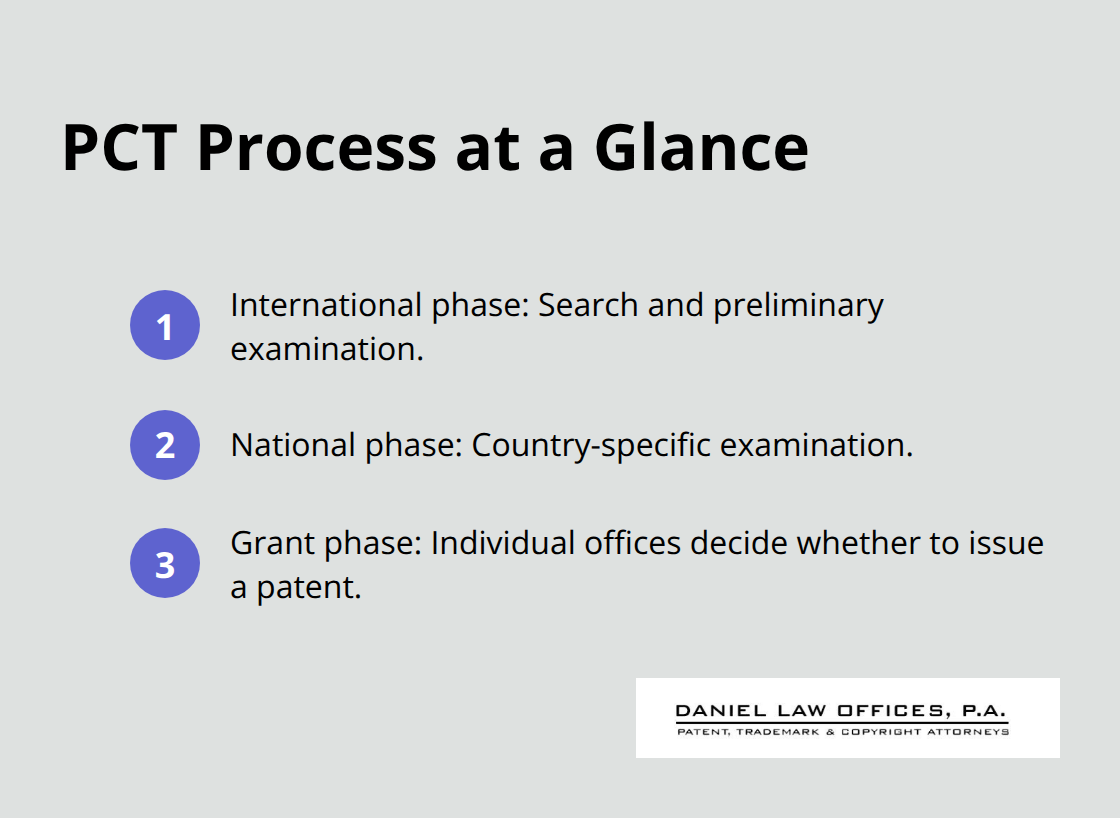
The PCT process operates in three distinct phases: the international phase, where your application undergoes a search and preliminary examination; the national phase, where individual countries examine your application according to their own rules; and finally, the grant phase, where each country’s patent office decides whether to issue protection. This structure means you avoid expensive national filings immediately. You have approximately 30 months from your initial priority date to decide which specific countries warrant protection, allowing you to gather market data and assess commercial viability first.
Strategic Filing and Cost Management
Most inventors file a provisional application in the United States first, then file their PCT application within twelve months to claim priority. This strategy costs between $2,000 and $5,000 for the initial PCT filing with the USPTO, depending on complexity, but saves considerably compared to parallel national filings.
National Patents vs. International Protection
A national patent grants protection only within a specific country’s borders, meaning a U.S. patent provides no legal recourse if someone infringes your invention in Germany or Japan. International patents don’t actually exist as a single unified right; instead, the PCT system facilitates obtaining a bundle of national patents across multiple jurisdictions. You ultimately seek protection through individual country patent offices, not a single international authority.
Timeline and Financial Realities
The timeline typically spans four to six years from initial filing to grant, though this varies significantly by country and application complexity. European Patent Office applications often take longer than U.S. applications due to stricter examination standards. Costs escalate substantially as you proceed through the national phase, with prosecution fees, translation requirements, and local attorney fees in each country adding up quickly. A comprehensive international patent portfolio covering major markets like the United States, Europe, Japan, and China can easily exceed $30,000 to $50,000 by the time all patents grant.
Understanding these financial commitments upfront allows you to develop filing strategies that prioritize markets based on actual business plans rather than pursuing protection everywhere. The next phase of your journey involves preparing your invention for this international protection process.
Preparing Your Invention for International Protection
Conducting a Comprehensive Prior Art Search
Before filing your PCT application, you need solid evidence that your invention is truly novel. A prior art search reveals existing patents, published applications, and public disclosures that might affect your invention’s patentability across different countries. The USPTO maintains the Patent Full-Text and Image Database, which covers U.S. patents and applications dating back to 1976, but international searching demands more. The European Patent Office’s Espacenet database and Google Patents provide access to millions of patents worldwide, including non-English language filings that often go unnoticed.
You should search across all three platforms because an invention rejected in one country due to prior art might still be patentable elsewhere, depending on what has been publicly disclosed in that specific jurisdiction. Many inventors skip this step and waste thousands filing in countries where their invention faces insurmountable prior art rejections. A thorough search takes two to three weeks and costs between $800 and $1,500 when conducted professionally, but it prevents filing in markets where grant odds are essentially zero.
Documenting Your Invention Properly
Documentation separates successful international applications from rejected ones. Your technical specifications must be detailed enough that someone skilled in your field could reproduce your invention from your written description alone. Include drawings with numbered components, explain how each part functions, describe the problem your invention solves, and specify what makes your approach different from existing solutions.
Patent examiners in different countries interpret disclosure requirements differently-European examiners demand more comprehensive functional descriptions than U.S. examiners typically require. Weak documentation causes rejections during the international search phase, forcing costly amendments later. Strong documentation prevents these expensive setbacks and accelerates prosecution timelines across multiple jurisdictions.
Selecting Markets Based on Revenue Potential
Prioritize countries where your product will actually generate revenue. The World Intellectual Property Organization reports that pharmaceutical and biotechnology companies file heavily in the United States, Europe, and Japan because those markets represent the largest revenues, while software companies increasingly target China alongside traditional Western markets. Filing in every PCT member country costs exponentially more but provides minimal protection value if your business operates only in North America and Western Europe.
Calculate your likely sales in each country, estimate enforcement costs if infringement occurs, and select only jurisdictions where patent protection creates tangible business advantage. This strategic approach maximizes your return on investment and positions you to move forward with filing your actual PCT application.
Filing and Prosecuting Your International Patent Application
Submitting Your PCT Application to the USPTO
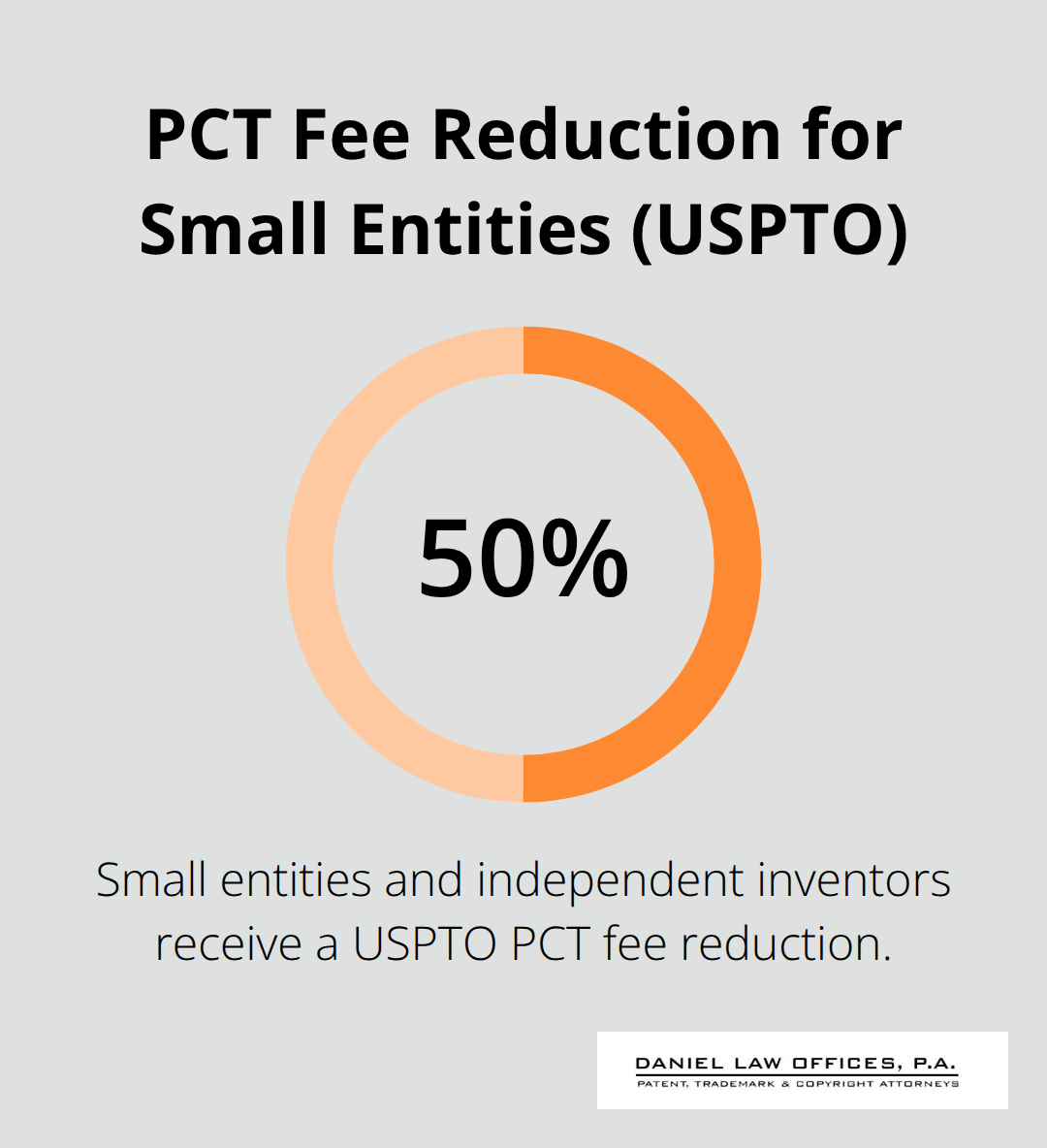
Your PCT application with the USPTO marks the formal start of your international protection journey, and timing matters more than most inventors realize. You must submit your PCT application within twelve months of your U.S. provisional application priority date, or you lose that priority claim in most countries. The submission requires a completed Form SB/16, a specification describing your invention, drawings if applicable, and an abstract. The USPTO charges $2,320 for large entities submitting a PCT application as of 2026, though small entities and independent inventors qualify for a fifty percent reduction. This single submission gives you a priority date recognized across all 157 PCT member countries, which means any public disclosure or competing submission after your filing date does not destroy your patent rights internationally.
Understanding the International Search and Examination Phase
The international phase typically lasts eighteen months from your filing date, during which the International Searching Authority examines your application and produces a written opinion on patentability. The International Searching Authority, often the European Patent Office or the Japanese Patent Office depending on where you file, identifies relevant patents and publications that might block your claims. This report directly influences your strategic decisions about which countries to pursue during the national phase.
The international search report is not a grant or rejection-it assesses how your invention likely fares against existing prior art across multiple jurisdictions. If the report identifies significant prior art problems, you can strengthen your application through amendments before entering national prosecution in individual countries, which costs substantially less than fighting rejections country by country later. Most inventors use the preliminary examination phase, which extends your decision window by an additional month and provides an examiner’s opinion on patentability issues before you commit to expensive national filings.
Managing the National Phase Entry and Deadlines
You have approximately thirty months total from your priority date to enter the national phase in specific countries and start paying individual country prosecution fees. Missing deadlines costs you the application entirely in that country, so prompt responses to office actions are critical during this window. Office actions in different jurisdictions demand different responses because European examiners focus heavily on claim scope and functional disclosure, while U.S. examiners prioritize novelty and non-obviousness over broader functional descriptions.
Crafting Strategic Amendments Across Jurisdictions
Amendments should narrow claims only when absolutely necessary to overcome prior art rejections, since narrower claims provide weaker protection against competitors who design around your patent boundaries. Coordinating amendments across all jurisdictions simultaneously rather than submitting different claim sets in different countries prevents enforcement confusion and maintains cohesive intellectual property strategy. This coordinated approach (which requires careful planning from the outset) ensures your protection remains consistent across markets and strengthens your overall competitive position.
Final Thoughts
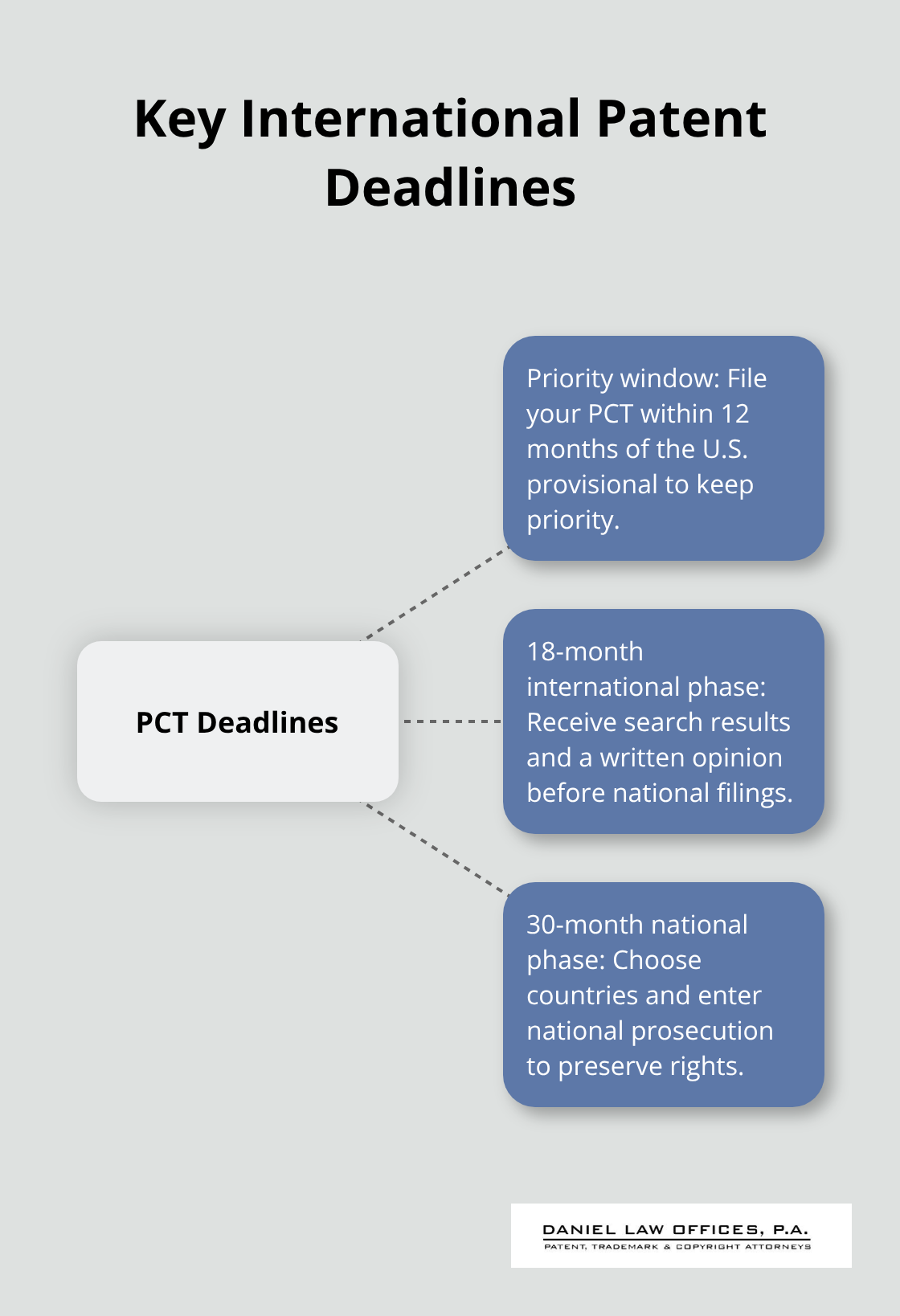
The international patent application process hinges on three critical deadlines that determine whether you retain protection or lose rights permanently. Your priority date from the initial filing establishes the foundation for all subsequent protection across member countries, the eighteen-month international search phase provides essential feedback about patentability before you commit substantial resources to national filings, and the thirty-month deadline for entering the national phase forces you to select which countries warrant protection based on actual market data. Missing any of these deadlines eliminates your rights in that jurisdiction permanently, so calendar management and prompt responses to office actions matter as much as the technical quality of your application.
Most inventors make preventable mistakes that drain resources without building meaningful protection. Filing in too many countries without clear business justification wastes money on protection you’ll never enforce, skipping the prior art search leaves you vulnerable to discovering insurmountable obstacles during prosecution, and weak technical documentation causes rejections that stronger initial preparation would have prevented. Inconsistent amendments across different jurisdictions create enforcement complications later when you need to defend your patent against actual infringement, and abandoning applications midway through prosecution wastes the investment you’ve already made.
The international patent application process demands ongoing strategic commitment long after your initial filing. Monitor your markets for infringement, maintain fee payments in countries where your product generates revenue, and consider filing continuation applications if your technology evolves. Contact us to discuss how we can help you develop filing strategies aligned with your actual business plans rather than pursuing protection everywhere.