



Patent Infringement Risks: Proactive Measures to Avoid Litigation
Patent infringement risks can derail your business faster than you’d expect. A single lawsuit can cost hundreds of thousands in legal fees, settlements, and lost productivity.
At Daniel Law Offices, P.A., we’ve seen companies blindsided by infringement claims that could have been prevented. This guide walks you through the types of infringement, concrete steps to protect yourself, and what to do if litigation becomes unavoidable.
Three Types of Patent Infringement That Threaten Your Business
Direct Infringement: The Most Common Violation
Direct infringement occurs when someone manufactures, uses, sells, or imports a product that violates every element of your patent claim. This is the most straightforward violation and happens constantly in competitive markets. A company making a product identical to yours or with the same functional features commits direct infringement, regardless of intent.
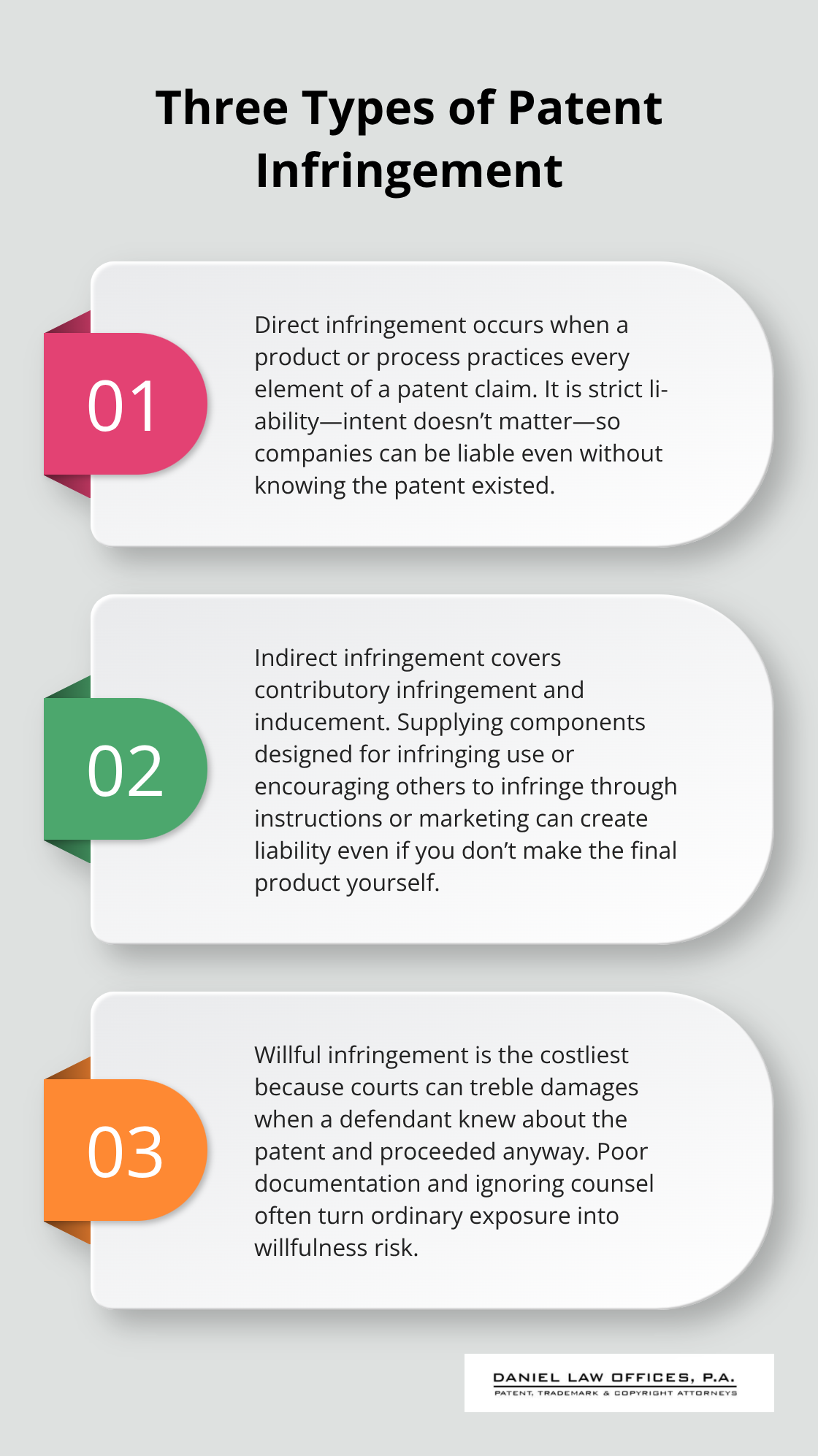
The U.S. Patent and Trademark Office reports that direct infringement claims represent the majority of patent disputes filed annually. What makes this dangerous is that infringement can happen without the infringing party even knowing your patent exists. You don’t need to prove they acted deliberately-the act itself constitutes infringement. This is why many companies get caught off guard when a cease and desist arrives.
Indirect Infringement: Liability Through Others’ Actions
Indirect infringement takes two forms: contributory infringement and inducement. Contributory infringement happens when someone knows about your patent and actively helps another party infringe it, typically through supplying components or materials specifically designed for infringing use. Inducement infringement occurs when someone actively encourages or instructs others to infringe your patent.
A supplier selling parts with instructions for infringing use, or a company marketing a product specifically for an infringing application, can face liability even if they don’t directly infringe themselves. Courts have found companies liable for inducement when they provide marketing materials or instructions that explicitly encourage infringing behavior. This means your liability extends beyond your own actions to how others use your products or services.
Willful Infringement: The Costliest Mistake
Willful infringement carries the highest financial penalties and represents the most serious threat to your business. If a court determines infringement was willful-meaning the defendant knew about your patent and ignored it anyway-damages can be tripled. The Federal Circuit has clarified that willfulness requires actual knowledge of the patent and a deliberate decision to proceed despite that knowledge.
This distinction matters enormously because treble damages in a major case can reach millions. Willful infringement findings often result from poor documentation or failure to consult counsel before launching a product. Many companies inadvertently create evidence of willfulness through internal emails, presentations, or product development notes that demonstrate they were aware of competitor patents. Understanding these three categories helps you recognize where your business is most vulnerable-and what steps you need to take next.
How to Stop Infringement Before It Starts
Start Your Protection Strategy Early
Most companies wait until a cease and desist letter arrives to think about patent risk. That reactive approach costs far more money and time than prevention. You should start your protection strategy months before you launch any product. A comprehensive patent search must happen during product development, not after you’ve invested in manufacturing and marketing. The search identifies existing patents that might conflict with your plans, giving you time to redesign, license, or pivot entirely. Searching after launch means you’ve already sunk capital into a product you may need to abandon or modify.
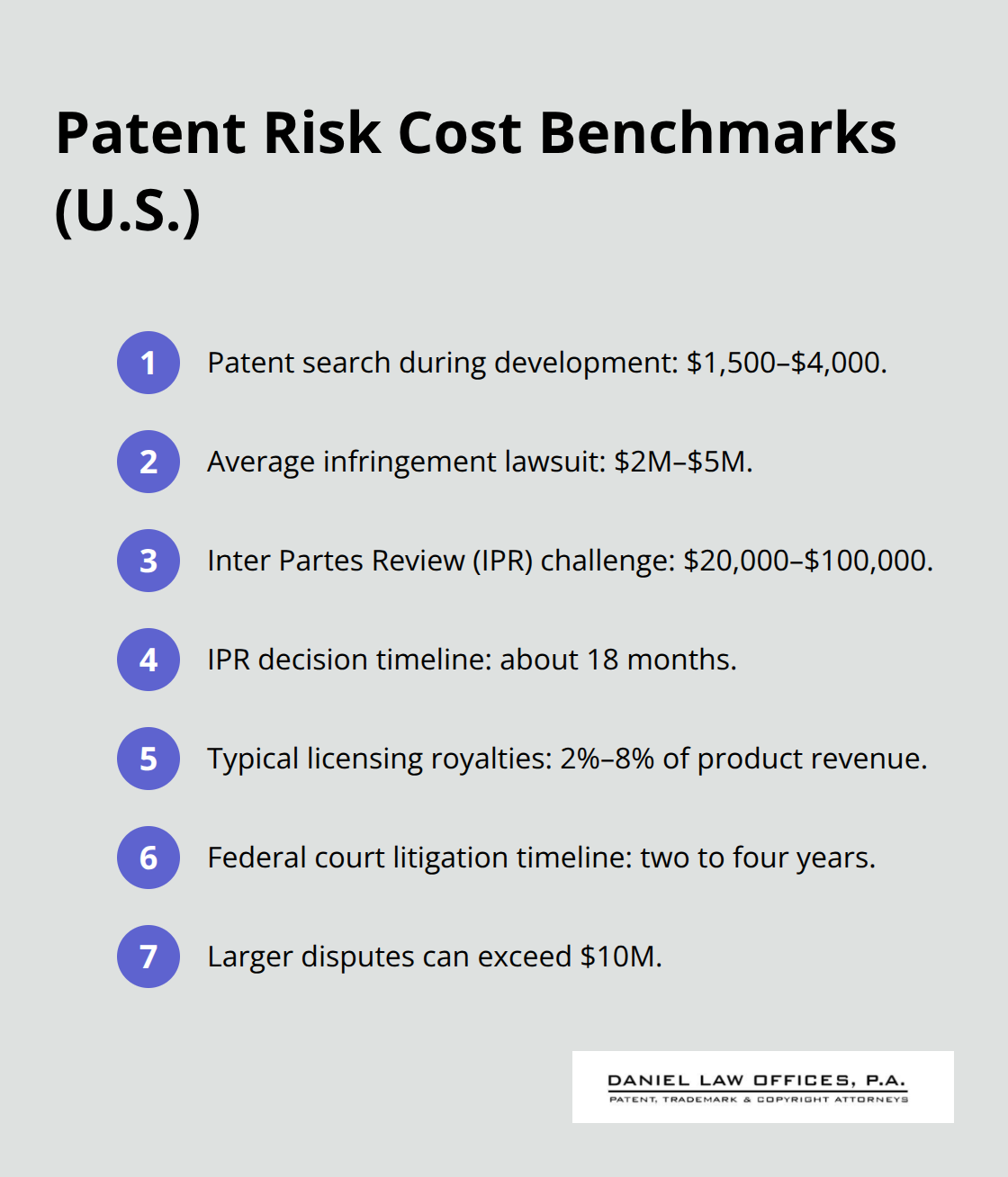
The cost of a thorough search ranges from $1,500 to $4,000 depending on complexity, while a single infringement lawsuit averages $2 million to $5 million according to the American Intellectual Property Law Association. This math is straightforward: invest in search now or face catastrophic costs later.
Monitor Competitor Patents Continuously
Beyond initial searches, you should monitor your competitors’ patent filings continuously. The USPTO publishes all new patents weekly, and tracking applications in your industry tells you what competitors are protecting. Set up automated alerts through the USPTO database for keywords related to your products and market. This isn’t busy work-it’s intelligence gathering that shows you which companies are moving into adjacent markets or copying your approach.
When you spot a competitor’s new patent, you have options: you can design around it, license it, or challenge its validity before they sue you. This proactive stance shifts power to your side and prevents surprises down the road.
Build Strong Documentation Practices
Documentation practices matter as much as searches. You should maintain detailed records of your development process, including meeting notes, design decisions, and why you chose certain features. This documentation proves independent development if someone later claims you copied their patent. Poor documentation creates the appearance of willfulness and invites treble damages. Your records become your defense, so treat them with the same care you give to your product itself.
Involve Patent Counsel Early
You should involve patent counsel early in product development rather than waiting until launch. Early consultation costs significantly less than defending against infringement claims and prevents costly redesigns after market entry. At Daniel Law Offices, P.A., we guide businesses through the patent prosecution process, helping you ensure your own patents are solid while your product development stays clean. This partnership during development (not crisis management later) protects both your innovation and your bottom line.
The steps you take now determine whether you control your patent risk or it controls you. Understanding what happens when infringement claims do arise gives you another layer of protection.
What to Do When Infringement Claims Arrive
When a cease and desist letter lands on your desk, your first instinct might be panic. Stop. This is actually your moment to take control.
A cease and desist letter is a formal demand to stop alleged infringement, but it’s not a lawsuit. You have options, and how you respond determines whether this becomes a minor setback or a financial catastrophe. Many companies make the mistake of ignoring the letter or immediately capitulating without understanding their actual exposure. Neither approach serves your interests.
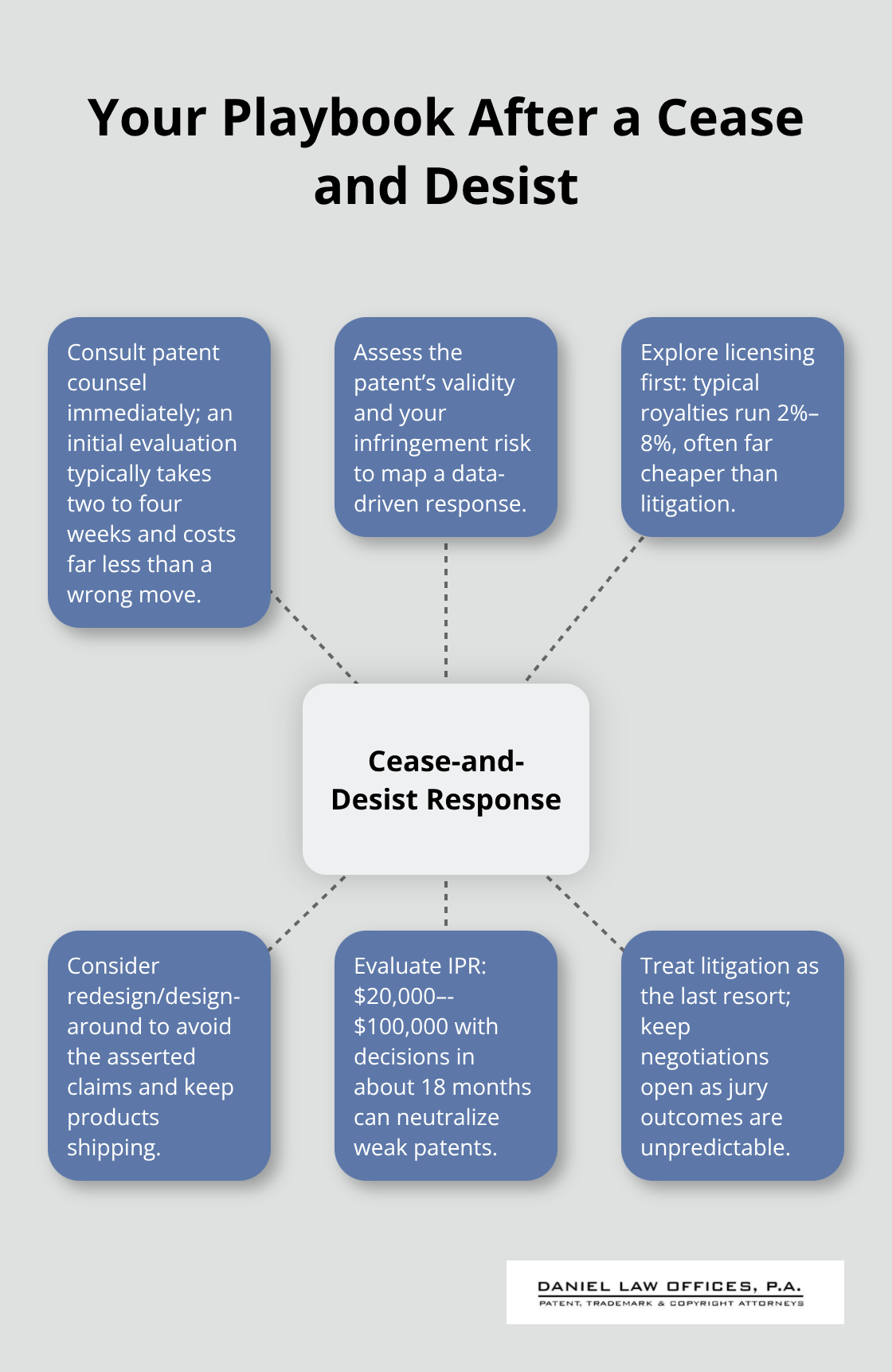
The letter should trigger an immediate consultation with counsel who can evaluate the patent’s validity, assess your infringement risk honestly, and map out a response strategy. This evaluation typically takes two to four weeks and costs far less than the damage of a wrong move. Some patents are weak and vulnerable to challenge. Others might be legitimately threatened by your product. The letter itself reveals what the patent holder believes you’re infringing, which gives you concrete information to work with rather than operating in the dark.
Licensing Agreements Often Beat Litigation
Licensing agreements represent the path most companies should explore first. A license lets you continue operating while paying royalties or a one-time fee to the patent holder. The terms vary dramatically depending on the patent’s strength, your market position, and the holder’s willingness to negotiate. Licensing costs typically range from 2 to 8 percent of your product revenue, though semiconductor and pharmaceutical licenses can run higher. This beats litigation costs by orders of magnitude.
The American Intellectual Property Law Association reports that patent cases average $2 million to $5 million in legal fees alone and often take three to five years to resolve. A licensing deal can close in months. You also avoid the uncertainty of a jury verdict and maintain your market position without redesign delays. The patent holder often prefers licensing too because they receive ongoing revenue without litigation risk. Your counsel should evaluate what the patent actually covers and whether you can design around it instead. Sometimes redesigning your product costs less than a license. Sometimes a license costs less than redesign. Only detailed analysis reveals which path makes financial sense for your specific situation.
Patent Invalidity Challenges Shift Power Back to You
If the patent is genuinely weak, you should consider challenging its validity rather than accepting infringement. The USPTO Inter Partes Review process lets you challenge a patent’s validity after it issues, and this process costs $20,000 to $100,000 depending on complexity. That’s expensive, but it’s still far cheaper than litigation and often faster. IPR decisions typically come within 18 months.
If you win, the patent is invalidated and the threat disappears entirely. If you lose, you still have litigation options. Many companies underestimate how vulnerable issued patents actually are to challenge. The USPTO grants patents with claims that don’t hold up under scrutiny, and IPR proceedings are specifically designed to catch these mistakes. Before you pay licensing fees for years, have counsel conduct a thorough invalidity analysis. The analysis costs a few thousand dollars and tells you whether the patent is worth challenging. This information changes your negotiating position dramatically. A patent holder knows if their patent is vulnerable, and that knowledge affects their willingness to settle on favorable terms.
Litigation Remains Your Final Option
Litigation should only happen when every other option fails or when you have a genuinely strong defense and the patent holder refuses reasonable settlement terms. Federal court patent litigation averages two to four years and costs $2 million to $5 million for smaller cases, with larger disputes often exceeding $10 million. You’re also risking treble damages if a court finds willful infringement.
The only scenario where litigation makes sense is when the patent is clearly invalid, you have strong evidence of independent development, or the patent holder’s demands are completely unreasonable. Even then, settlement discussions should continue throughout litigation because trial outcomes are unpredictable. Juries sometimes grant damages that defy logic. Other times they invalidate patents everyone thought were solid. The randomness of jury verdicts is precisely why settlement usually wins. The cease and desist letter is a negotiating tool, not a death sentence. How you respond determines whether you emerge stronger or weakened.
Final Thoughts
Patent infringement risks demand action before litigation arrives at your door. The companies that thrive in competitive markets invest in prevention upfront rather than crisis management later. You now understand the three types of infringement, the concrete steps to stop them before they start, and how to respond when cease and desist letters arrive.
Start with a comprehensive patent search before you launch any product, monitor your competitors’ filings continuously, and build documentation practices that prove independent development. When infringement claims do come, treat the cease and desist letter as a negotiating tool rather than a death sentence. Licensing agreements often provide the fastest resolution, patent invalidity challenges can eliminate weak patents entirely, and litigation should only happen when every other option fails.
The difference between companies that control patent disputes and those that get crushed by them comes down to timing and preparation. At Daniel Law Offices, P.A., we guide businesses through patent searches and prosecution to keep your innovations protected while your product development stays clean. The investment in prevention today protects your business tomorrow.