



Patent Law Litigation: A Complete Guide
Patent infringement can threaten your business and drain resources quickly. Whether you’re protecting your own patents or defending against claims, understanding patent law litigation in Orlando requires clear guidance through a complex process.
At Daniel Law Offices, P.A., we’ve guided businesses through every stage of patent disputes. This guide walks you through infringement claims, Florida’s litigation process, and defense strategies you need to know.
Understanding Patent Infringement in Florida
What Counts as Patent Infringement
Patent infringement occurs when someone makes, uses, sells, or imports a patented invention without permission. In Orlando and across Florida, this definition covers three distinct forms of infringement that you need to understand. Direct infringement happens when a competitor manufactures or sells a product that falls within the scope of your patent claims.
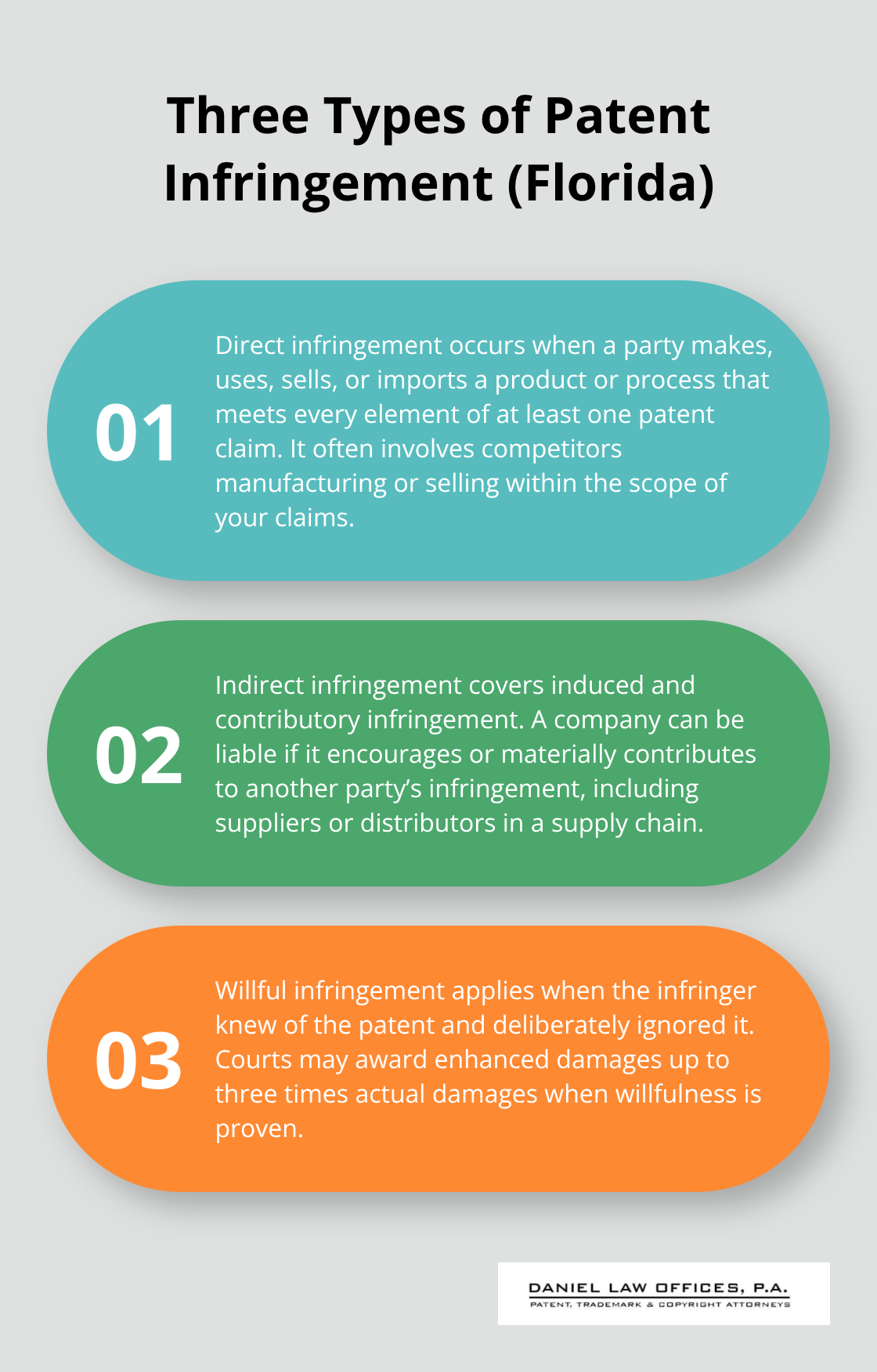
Indirect infringement occurs when someone contributes to or actively induces another party to infringe your patent, which often involves suppliers or distributors in the supply chain. Willful infringement carries the highest stakes because courts can award enhanced damages up to three times the actual damages if a defendant knew about your patent and deliberately ignored it.
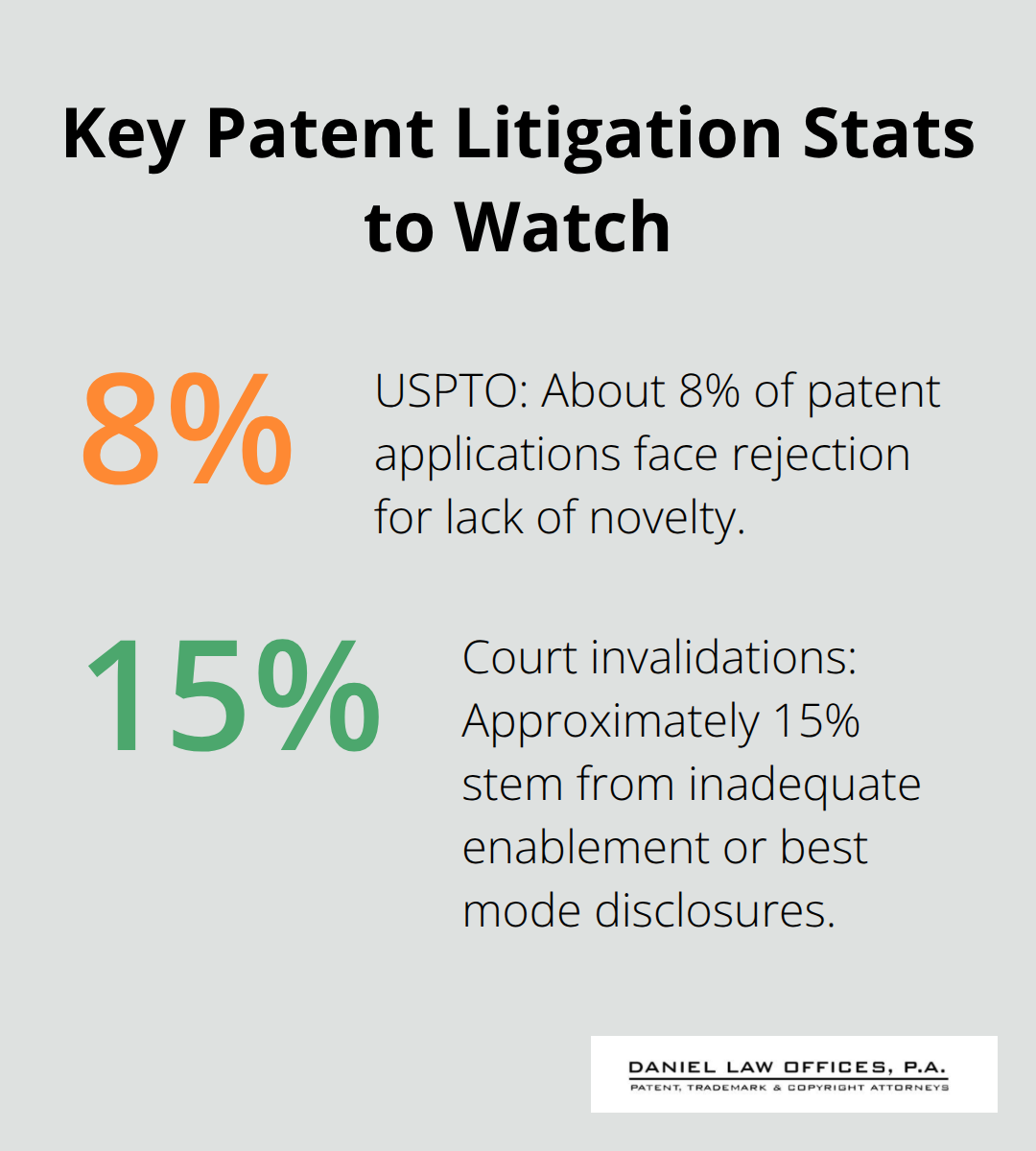
The distinction matters enormously because willful infringement transforms a financial dispute into a punitive one. If you suspect infringement, the first step is conducting a thorough patent portfolio review to verify your patent’s validity, enforceability, and remaining term. Check that all maintenance fees have been paid and that your patent has not expired, as these factors directly impact your ability to enforce it. According to the USPTO, about 8% of patent applications face rejection due to lack of novelty, which means many granted patents do face vulnerability challenges. This statistic underscores why understanding your patent’s exact scope and potential weaknesses matters before you pursue litigation.
Building Your Infringement Case
Identifying whether infringement actually occurred requires comparing the accused product or process against each element of your patent claims. This comparison, called claim charting, forms the foundation of your entire case. Examine the accused infringer’s products, manufacturing processes, marketing materials, and supply chain relationships to build a complete picture of how they use the patented technology. Look beyond the obvious defendant to manufacturers, distributors, and licensing partners who may also be infringing.
When you spot potential infringement, many businesses immediately send a cease-and-desist letter, which can prompt settlement discussions or force the infringer to stop. However, sending this letter also triggers a legal risk: the accused infringer can file a declaratory judgment action in federal court asking the court to rule that they do not infringe your patent. Before taking action, work with a patent attorney to assess whether your claims are strong enough to withstand this challenge.
Making the Business Decision
The decision to pursue infringement claims is ultimately a business decision that balances the value of your patent against litigation expenses and the time required to reach resolution. You must weigh the potential recovery against the resources you will invest in the process. Understanding these trade-offs helps you move forward with confidence into the pre-litigation steps that shape your entire enforcement strategy.
How Patent Litigation Moves Through Florida Courts
Timeline and Budget Realities
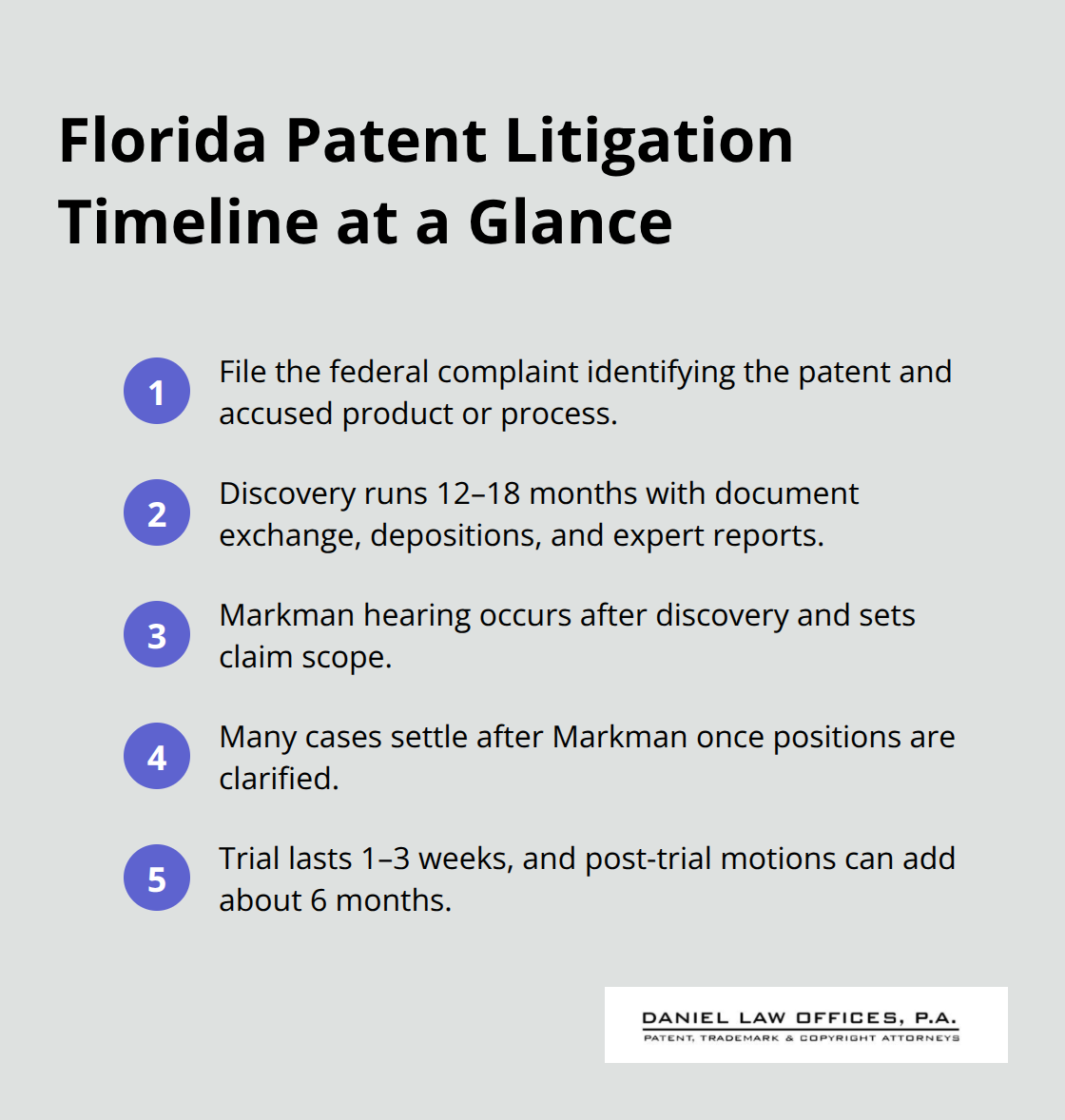
Once you file an infringement claim in Orlando, federal patent litigation in Florida typically exceeds two years and consumes substantial resources. The Eastern District of Florida, which covers Orlando, handles patent cases alongside other federal matters, and you must invest in technical experts, damages economists, and significant legal fees. Many businesses underestimate discovery costs, which represent the longest and most expensive phase of litigation. During discovery, both sides exchange documents, answer detailed interrogatories, conduct depositions, and produce expert reports. This phase alone can run 12 to 18 months and generate hundreds of thousands of pages of materials.
Your technical team will participate in depositions where opposing counsel questions them about the invention, design choices, and how competitors’ products compare to your patent claims. Plan for internal disruptions during this period because inventors and key engineers will spend time preparing testimony and reviewing documents.
Pre-Filing Strategy and the Cease-and-Desist Letter
Before filing your complaint in federal court, send a cease-and-desist letter that clearly describes your patent, explains how the defendant infringes, and demands they stop the infringing activity. This letter serves multiple purposes: it establishes notice for potential enhanced damages if infringement was willful, it may prompt settlement negotiations without litigation, and it creates a record of your enforcement efforts. However, understand that sending this letter also invites the accused infringer to file a declaratory judgment action first, which shifts control of venue and timing to them. Carefully weigh this risk before sending the letter, particularly if the defendant operates in a patent-hostile venue.
Filing and Initial Court Proceedings
Your federal complaint must identify the patent by number, explain which claims the defendant infringes, describe the accused product or process in detail, and quantify damages based on lost profits or a reasonable royalty. After filing, the defendant responds with an answer and may file counterclaims challenging your patent’s validity or enforceability, which forces you to defend the patent during the same litigation. The Markman hearing occurs after discovery and represents a critical juncture where the federal judge interprets the meaning and scope of your patent claims. This hearing directly shapes how the jury or judge will evaluate infringement later, and disputes over claim language can make or break your case. Many settlements occur after the Markman hearing because both sides gain clarity on claim scope and the strength of their positions.
Trial and Post-Trial Outcomes
If your case proceeds to trial in the Middle District of Florida or the Southern District of Florida, you present evidence through witness testimony, technical demonstrations, and expert reports. The jury or judge decides whether infringement occurred, whether your patent remains valid and enforceable, and what damages you deserve. Enhanced damages up to three times the actual amount apply if the defendant’s infringement was willful, which requires proof that the defendant knew about your patent and deliberately ignored it. Trial typically lasts one to three weeks, and post-trial motions can extend the process another six months before either party appeals to the Federal Circuit Court of Appeals. Understanding these stages prepares you for what lies ahead as you move into the critical discovery phase and beyond.
How to Defend Against Patent Infringement Claims
Evaluate the Plaintiff’s Claims Immediately
When you receive a cease-and-desist letter or face an infringement lawsuit in Orlando, your immediate response determines whether you settle quickly or prepare for extended litigation. Assemble your technical and legal team to evaluate the strength of the plaintiff’s claims against your actual operations. Request the plaintiff’s detailed claim charts that show exactly which patent elements they believe you infringe, then conduct an independent analysis of whether their interpretation matches the patent language. Many defendants assume they infringe when the plaintiff’s initial allegations are vague or overstated. Demand specificity about which products, processes, or services allegedly infringe and how, because weak infringement theories often collapse once discovery starts. Weak claims frequently fall apart during the discovery phase when both sides exchange detailed evidence.
Analyze Your Design Documentation
Review your design documentation, engineering notes, and prior art to identify whether your product was developed independently or whether design-around options exist that would eliminate infringement without compromising functionality. If you discover that your accused product actually avoids the patent claims through legitimate design differences, this becomes your strongest defense and can lead to quick dismissal or summary judgment. Document these design choices thoroughly because depositions will focus on whether you deliberately chose to design around the patent or simply happened to avoid it. Your technical team should prepare detailed explanations of how your product differs from the patented invention at each claim element.
Challenge Patent Validity as Your Primary Defense
Challenging the validity of the patent itself represents your most aggressive defense strategy and often proves more cost-effective than fighting infringement allegations head-on. Approximately 15% of patent invalidations in court stem from inadequate enablement or best mode disclosures according to USPTO data, meaning many patents contain technical vulnerabilities that a skilled attorney can exploit.
Conduct a thorough prior art search to identify publications, existing patents, or products that predate the plaintiff’s filing and may render their claims obvious or anticipated under 35 U.S.C. sections 102 and 103. The Federal Circuit has consistently held that even a single prior art reference combined with common sense can invalidate a patent claim, so invest in finding comprehensive prior art early in your defense.
Identify Prosecution Defects
If the plaintiff failed to disclose material prior art during prosecution, this omission can support an inequitable conduct defense that bars enforcement entirely. Material prior art that the patent applicant knew about but did not disclose to the USPTO weakens the patent’s enforceability significantly. Courts take these omissions seriously because they undermine the integrity of the patent examination process. Your attorney should review the patent’s prosecution history file to uncover any statements, amendments, or arguments that might reveal what the applicant knew and when they knew it.
Pursue Settlement Through Licensing
Settlement discussions should start after your validity analysis is complete because the plaintiff’s willingness to accept a lower royalty or licensing fee often signals concern about their patent’s enforceability. Many defendants achieve favorable outcomes by proposing a licensing agreement at a running royalty of 1% to 3% of sales rather than fighting through trial, which reduces litigation costs while allowing continued business operations. If settlement discussions stall, your validity arguments become leverage for either a more favorable settlement or a motion for summary judgment on invalidity that can end the case before trial.
Final Thoughts
Patent law litigation in Orlando demands preparation, clear strategy, and realistic expectations about costs and timelines. The cases that settle favorably are those where the patent holder or defendant invested time upfront to understand their position before filing or responding to claims. You now understand the three forms of infringement, how Florida courts handle patent disputes, and the defense strategies that actually work.
Working with a patent attorney matters because patent litigation involves technical complexity, procedural rules that vary by court, and strategic choices that affect your business for years. Your attorney identifies which prior art references will matter, whether your patent can withstand validity challenges, and whether settlement makes financial sense compared to trial. They also manage the procedural requirements that courts enforce strictly, from proper claim construction to evidence preservation rules that govern discovery.
At Daniel Law Offices, P.A., we help businesses navigate patent disputes from the initial cease-and-desist letter through trial and appeal. If you’re facing infringement allegations or considering enforcement action, contact us to discuss your situation and develop a strategy aligned with your business goals. Patent law litigation is expensive and time-consuming, but the right preparation and counsel protect what you’ve built.