




Orlando Patent Filing Steps: A Clear Path From Idea to Patent
Getting a patent approved in Orlando requires navigating multiple stages, from initial idea validation through final approval. The Orlando patent filing steps involve technical preparation, strategic application drafting, and careful responses to examiner feedback.
At Daniel Law Offices, P.A., we guide inventors through each phase of this process. This guide breaks down what you need to do at every stage to move your invention toward patent protection.
Does Your Invention Actually Qualify for a Patent?
Check for Novelty Before You Invest
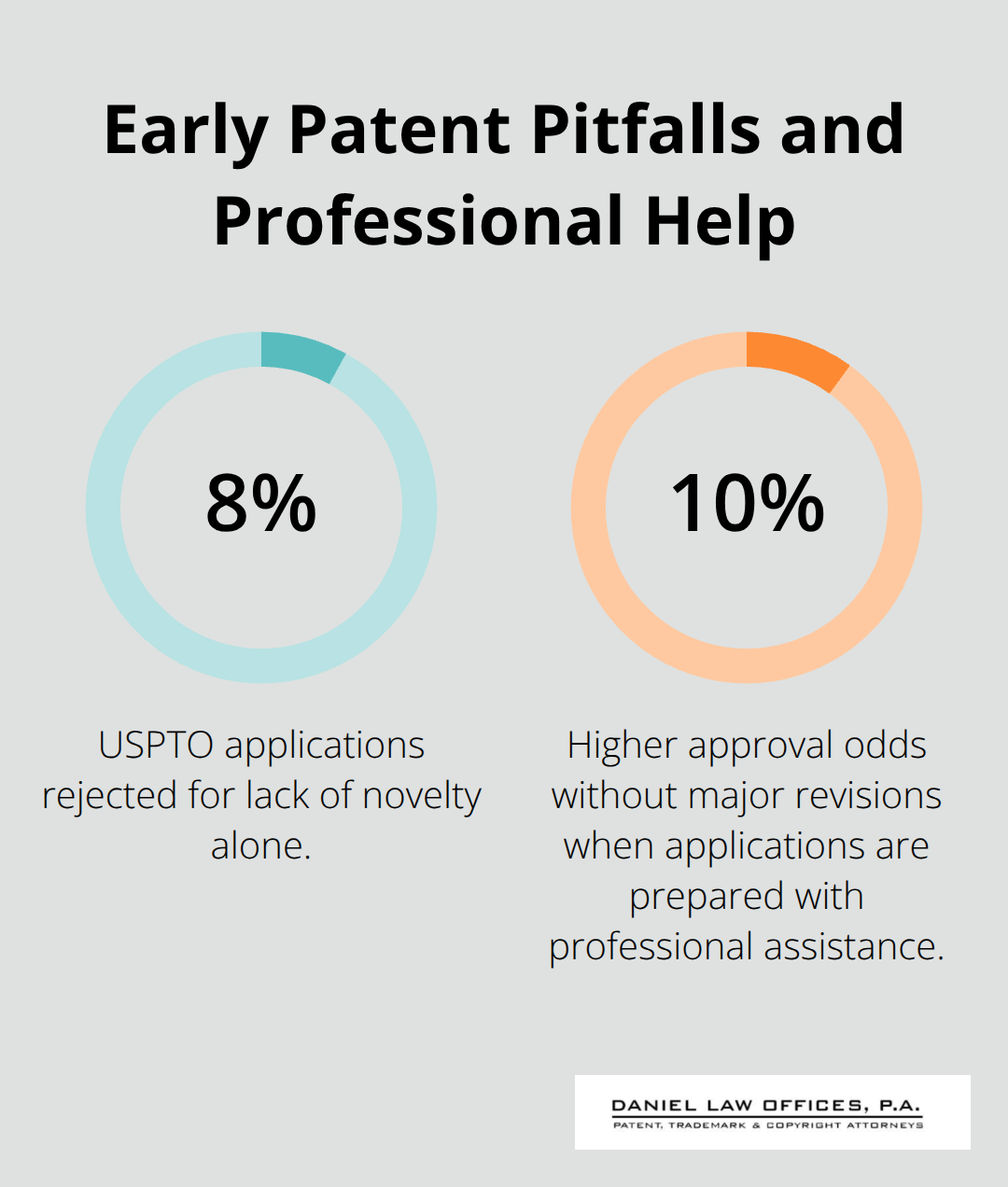
Before investing time and money into filing, you need to know whether your invention can actually receive patent protection. The USPTO rejects approximately 8% of patent applications for lack of novelty alone, which means many inventors learn too late that their idea already exists. Start with the Orange County Library System’s Patent and Trademark Resource Center, which offers free access to USPTO databases and helped over 500 inventors in 2022. Use the Patent Public Search tool to look for similar inventions and prior art.
This step requires substantial time and careful analysis-don’t rush it.
If you find patents that cover your invention’s core features, your path becomes significantly harder and more expensive. Applications prepared with professional assistance are about 10% more likely to gain approval without major revisions, partly because patent professionals catch patentability issues early that independent filers miss.
Understand the Three Requirements for Patentability
Your invention must meet three conditions: it must be novel, non-obvious, and useful. These requirements form the foundation of patent law and determine whether the USPTO will grant protection.
Utility patents protect how something works or what it does, design patents protect only the ornamental appearance, and plant patents cover asexually reproduced plant varieties. Utility patents dominate most filings because they offer the broadest protection. If your invention is primarily visual-like a unique bottle shape or furniture design-a design patent might suffice and costs less to pursue. Plant patents apply only to new plant varieties you’ve created through asexual reproduction, which is rare outside agriculture.
Choose the Right Patent Type for Your Invention
Don’t confuse these categories; choosing the wrong patent type wastes resources. In 2022, the USPTO received 189,338 provisional applications, showing that many inventors correctly chose the provisional route first to establish a filing date cheaply before committing to full prosecution. A provisional application costs far less than a non-provisional and gives you 12 months to file the complete version without losing your priority date.
About 50% of provisional filings proceed to non-provisional within that window, meaning inventors use this breathing room wisely to refine their ideas and secure funding. Once you’ve confirmed your invention qualifies and selected the appropriate patent type, the next critical phase involves gathering the technical documentation and drawings that will form the foundation of your application.
Building Your Patent Application in Orlando, Florida
The gap between a working invention and a patentable application is where most independent inventors stumble. You need technical documentation that shows how your invention functions, detailed drawings that illustrate every component, and claims written with precision-minor word choices affect your protection scope significantly. Start by creating comprehensive documentation of your invention before drafting anything for the USPTO. Include photographs or diagrams showing the invention in use, technical specifications for materials or dimensions, and descriptions of how each part interacts.
Create High-Quality Technical Drawings
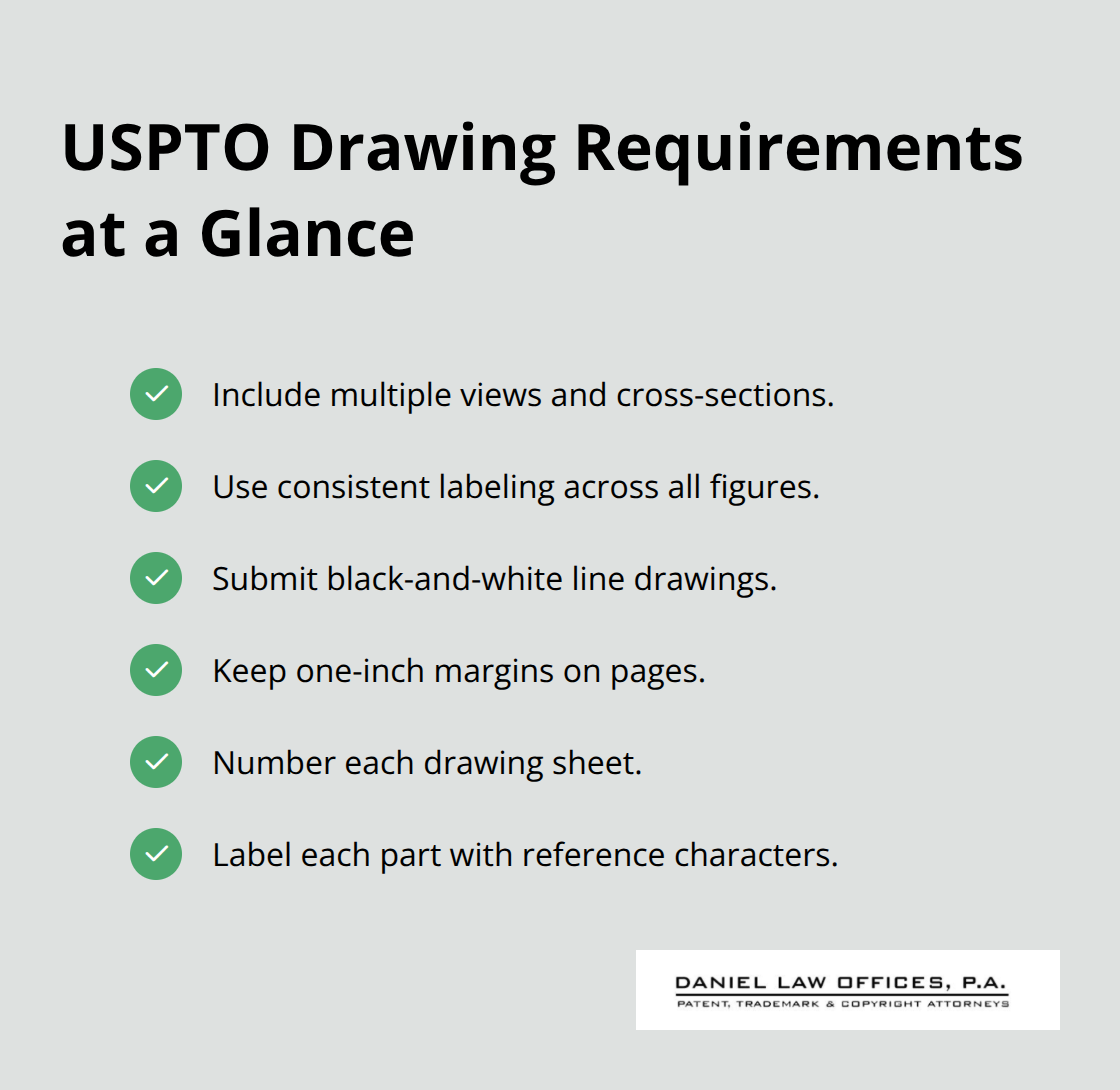
The USPTO reports that applications with high-quality drawings have approximately 20% higher approval rates without additional office actions. Your drawings need multiple views and cross-sections with consistent labeling throughout. Utility patent drawings must be black-and-white line drawings with strict formatting: one-inch margins, numbered sheets, and reference characters labeling each part. These drawings become part of the public patent record, so quality matters for both examination and future enforcement.
Draft Claims That Protect Your Invention Broadly
Claims define the precise scope of what you own, and poorly drafted claims face about 25% more initial rejections according to USPTO data. A patent attorney structures claims hierarchically: broad independent claims establish maximum protection, then narrow dependent claims provide backup positions if the examiner rejects the broader versions. Claim drafting requires understanding both your invention’s technical details and how examiners interpret patent language.
Prepare Your Specification and Documentation
Well-written specifications correlate with roughly 30% higher approval chances without major revisions. Your specification must enable a person skilled in your field to make and use the invention, and it must disclose the best mode you know. Include alternative embodiments to widen your protection scope. Inadequate enablement or best-mode disclosure contributes to about 15% of patent invalidations in litigation, so this section demands careful attention.
File Your Application Through Patent Center
Filing itself is straightforward if your preparation is thorough. The USPTO charges base filing fees of $320 for large entities, $160 for small entities, and $80 for micro entities, plus additional fees for claims exceeding 20 and pages exceeding 100. Electronic filing through Patent Center costs 15% less processing time than paper submissions and avoids a $400 non-electronic filing fee. Convert all documents to PDF, verify your internet connection stability, and triple-check all entered information before submission because corrections after filing create delays and additional costs.
About 60% of applications receive at least one non-final rejection, typically for incomplete disclosures, unclear claims, or formatting errors that careful preparation prevents. Once the USPTO receives your complete filing, an examiner assigned to your technology center begins the review process and issues the first substantive feedback on your application’s patentability.
What Happens After You File Your Patent Application
After the USPTO receives your complete application, an examiner assigned to your technology center conducts a patentability review and typically issues the First Action on the Merits within six months. This office action outlines rejections, objections, or requests for clarification. You then have six months to respond with amendments, arguments, or evidence that address each rejection. The examiner’s feedback focuses on three core issues: whether your invention is truly novel compared to prior art, whether it’s non-obvious to someone skilled in your field, and whether your specification adequately enables someone to make and use the invention.
Expect Office Actions as Part of the Standard Process
Around 60% of applications receive at least one non-final rejection, so office actions are normal and expected. Don’t panic when rejections arrive; they represent part of the standard prosecution path, not a failure of your application. The USPTO examiner is testing your claims against existing patents and publications to confirm your invention meets patentability standards. Your response strategy determines whether you move forward efficiently or face prolonged prosecution.
Analyze Prior Art and Refine Your Claims
If the examiner cites prior art patents or publications, analyze them carefully to understand how your invention differs and modify your claims to highlight those distinctions. Claims strategy becomes critical here: narrow your independent claims if necessary to avoid prior art, but preserve dependent claims that claim alternative embodiments or narrower combinations of features. The USPTO data shows applications with well-drafted claims face about 25% fewer initial rejections, which underscores why claim precision during initial filing saves time and money during prosecution.
Navigate Rejections and Explore Your Options
If you receive a second rejection marked final, you have options: file a Request for Continued Examination to restart prosecution with your original filing date, appeal to the Patent Trial and Appeal Board if you believe the examiner misapplied the law, or file a continuation application to pursue different or broader claims. Most independent inventors benefit from scheduling an interview with the examiner before or after receiving office actions; these conversations often resolve disputes faster than written arguments alone and help you understand the examiner’s specific concerns.
Move Toward Patent Issuance
Once you successfully address all rejections and the examiner allows your claims, you’ll receive a Notice of Allowance requiring payment of the issue fee within three months-this deadline is not extendable. After timely payment, your patent issues as an electronic grant through Patent Center, and your invention receives 20 years of protection from your original filing date, subject to required maintenance fees throughout the patent term.
Final Thoughts
The Orlando patent filing steps outlined in this guide create a structured path from initial concept to enforceable protection. Success depends on confirming your invention qualifies through novelty searches, preparing comprehensive technical documentation with precise claims, and navigating examiner feedback with strategic responses. Each phase builds on the previous one, and rushing any stage creates costly problems downstream.
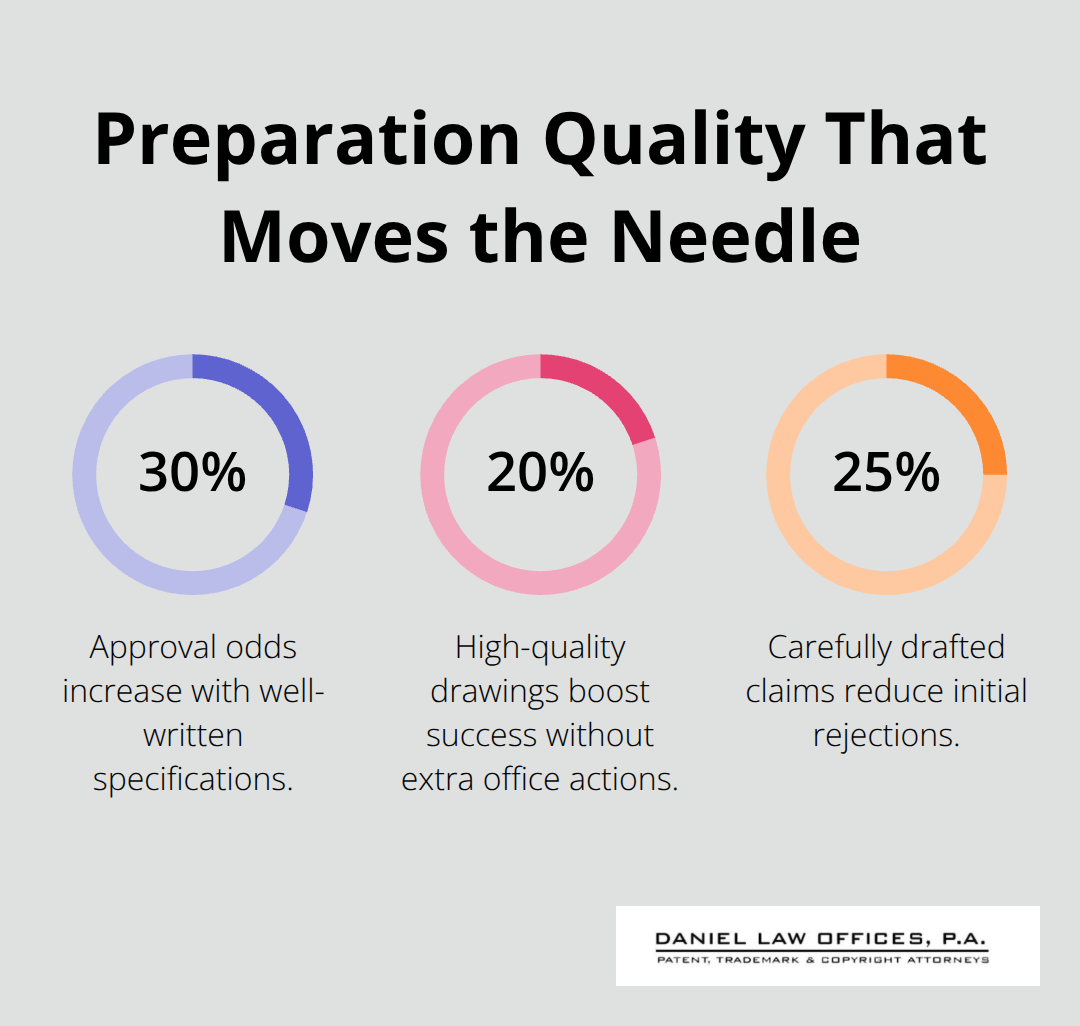
Applications prepared with professional assistance gain approval without major revisions at roughly 10% higher rates than independent filings, while well-written specifications increase approval odds by 30%, high-quality drawings boost success by 20%, and carefully drafted claims reduce initial rejections by 25%. Patent professionals understand how examiners interpret language, anticipate rejection patterns in your technology field, and know when to push back versus when to narrow your claims strategically.
We at Daniel Law Offices, P.A. guide inventors through comprehensive patent searches, application drafting, and the entire prosecution process to protect your innovations effectively.
After your patent issues, you’ll need to pay maintenance fees at 3.5, 7.5, and 11.5 years to keep your patent enforceable. Consider whether you want to file continuation applications to pursue additional embodiments or claims you didn’t include in your original filing. The Orlando patent filing journey requires patience and strategic thinking, but the result-20 years of exclusive rights to your invention-justifies the investment.