




IP Protection Strategies: Proactive Ways to Shield Your Brand
Your intellectual property is one of your business’s most valuable assets, yet many Orlando companies leave it unprotected. Without proper IP protection strategies in place, you risk losing competitive advantage, facing costly legal battles, and watching competitors profit from your innovations.
At Daniel Law Offices, P.A., we’ve seen firsthand how businesses that act proactively avoid expensive disputes and strengthen their market position. This guide walks you through the practical steps to shield your brand and secure what you’ve built.
Why IP Protection Matters for Orlando Businesses
The IP Commission Report found that intellectual property theft costs the U.S. economy more than $300 billion annually, and Florida businesses face this same threat. When you leave your innovations, brand names, and creative work unprotected, competitors can copy your methods, use your trademarks, and profit from ideas you developed. The financial damage extends beyond lost revenue-unprotected IP creates legal exposure that forces you into expensive litigation battles you could have prevented with upfront registration. Many Orlando business owners assume their ideas are safe because they haven’t seen infringement yet, but the absence of protection makes enforcement nearly impossible if theft occurs.
The Real Cost of Inaction
Without federal trademark registration, your brand rights remain limited to the geographic areas where you actively use your mark, leaving other markets vulnerable to competitors adopting similar names. The USPTO handles approximately 600,000 patent applications annually, with roughly 40% rejected due to existing prior art-a rejection that wastes thousands in prosecution costs that a thorough prior-art search could have prevented for $500 to $1,500 and 2 to 3 weeks of time. If a competitor registers a trademark similar to yours first, you lose rights in key markets permanently. Patent protection lasts about 20 years from filing under the first-to-file system, but only if you file within the one-year grace period after public disclosure; miss that window and your invention becomes unprotectable globally.
Building Defensible Competitive Advantage
Investors and acquirers assign significant value to a defensible IP portfolio because it signals novelty and creates a competitive moat that keeps rivals from easily replicating your business model. A coordinated IP strategy combining patents, trademarks, and trade secrets creates multiple layers of defense-one protection mechanism alone leaves gaps that competitors can exploit. Trademark registration specifically provides nationwide protection and the federal right to sue infringers in court, plus a public record that deters brand confusion before it happens. When you document how your invention works and protect trade secrets with confidentiality agreements and internal controls, you preserve value that licensing partners and acquisition targets recognize immediately during due diligence.
Moving Forward With Protection
The next section covers the core IP protection strategies that shield your brand and innovations most effectively.
Building Your IP Protection Foundation
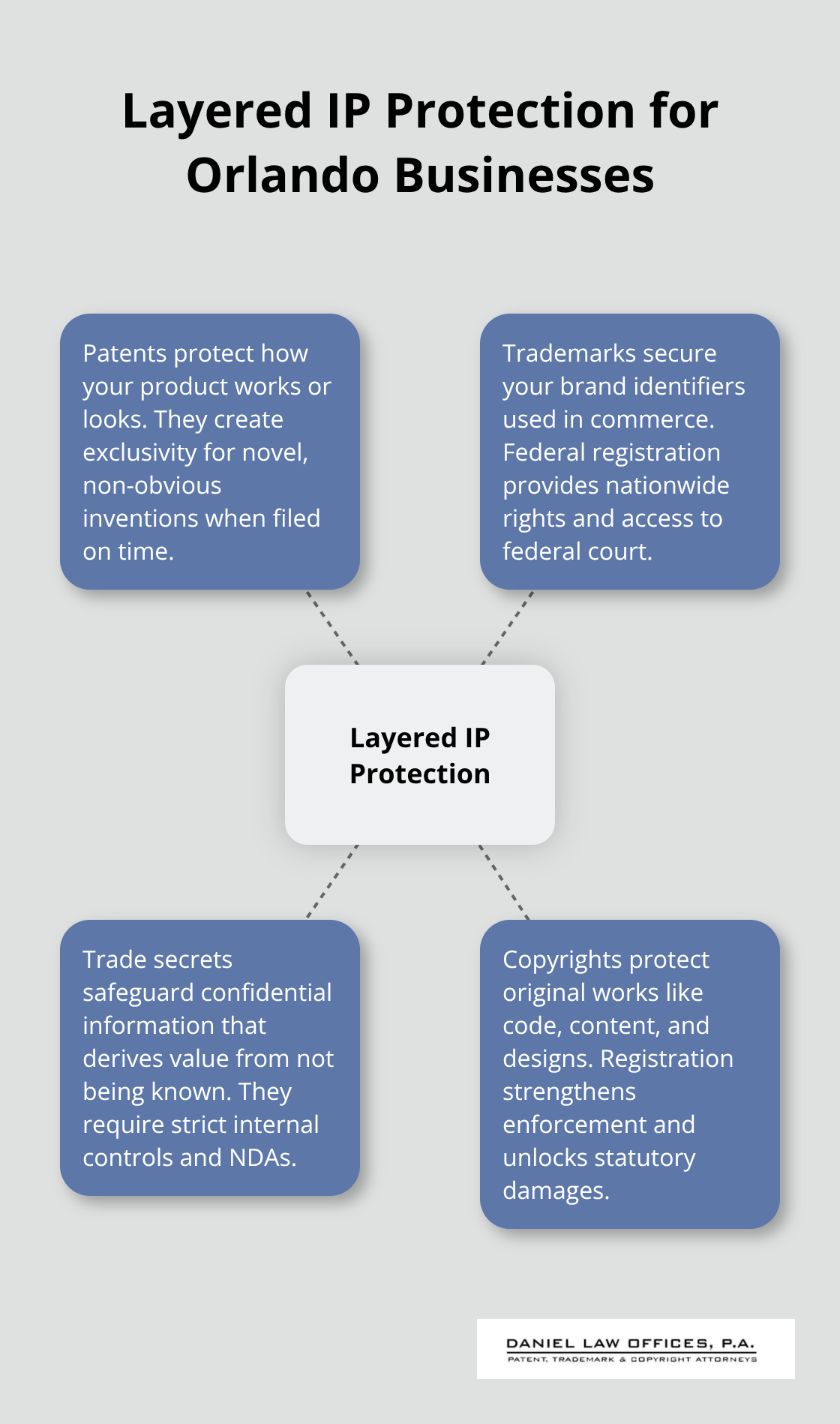
Patents, trademarks, trade secrets, and copyrights form the backbone of brand defense, but each tool protects different assets and requires different timing. Patents protect how your product works or looks, lasting about 20 years from filing under the first-to-file system according to the USPTO, but you must file within one year of public disclosure or lose rights globally. Trademarks protect your brand name, logo, and distinctive identifiers used in commerce, and federal registration through the USPTO provides nationwide protection plus the legal right to sue infringers in federal court. Trade secrets cover formulas, processes, customer lists, and confidential business information that gain value precisely because they remain confidential-these require no registration but demand internal safeguards like confidentiality agreements and restricted access. Copyright automatically protects original creative works when fixed in tangible form, whether written content, software code, or design files, but registering with the U.S. Copyright Office strengthens enforcement and opens access to statutory damages if infringement occurs.
Timing Your Patent and Trademark Filings
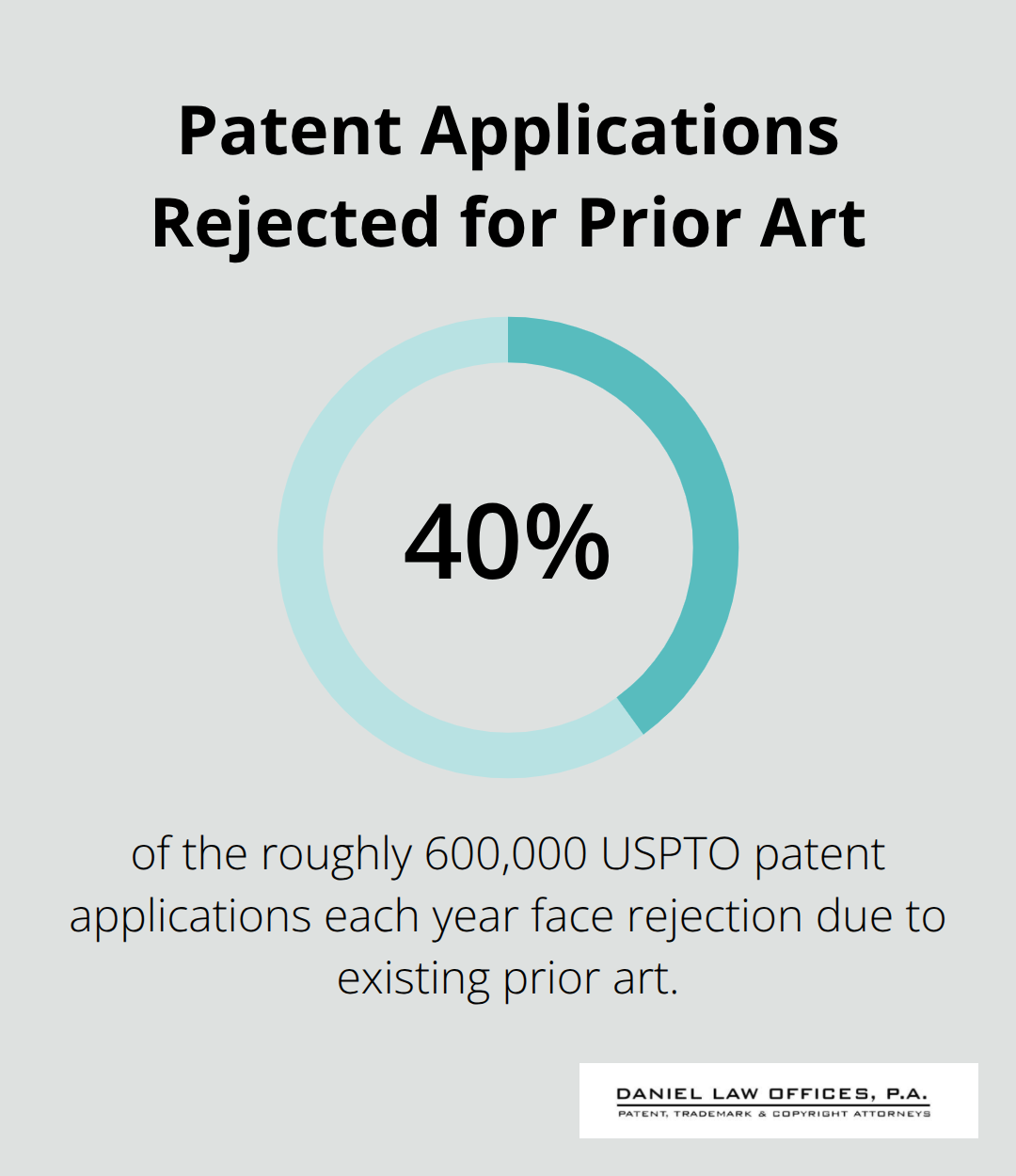
The cost difference between early filing and reactive protection is staggering. A comprehensive prior-art search costs $500 to $1,500 and takes 2 to 3 weeks but prevents filing a patent application destined for rejection-the USPTO reports that roughly 40% of the 600,000 annual patent applications face rejection due to existing prior art.
If you wait too long after deciding to protect an invention, public disclosure risks trigger, and international rights become complicated or impossible to secure. For trademarks, the risk is equally concrete: if a competitor registers a similar mark first, you permanently lose rights in that market. Conduct trademark clearance searches before any public use of your brand, then file immediately with the USPTO to establish a priority date. Many Orlando business owners delay filing because they underestimate the speed of competitors or overestimate their geographic market-but trademark rights remain limited to where you actively use the mark unless you register federally, leaving expansion into new territories vulnerable.
Protecting Trade Secrets and Creative Assets
Trade secrets require active protection to maintain their value. Documentation alone is insufficient; you must implement confidentiality agreements with employees and contractors, restrict access to sensitive materials, and maintain audit trails showing who accessed what information and when. Copyright registration is not mandatory for protection to exist, but the Library of Congress registration creates a public record and enables you to recover statutory damages up to $150,000 per infringement and attorney fees in court-unregistered works limit you to actual damages, which are difficult and expensive to prove. For software, design files, and written content created in-house, register copyrights within three months of creation to preserve all remedies. If your business relies on proprietary processes or formulas, trade secret protection combined with patents creates redundancy: if someone reverse-engineers around your patent, your trade secret safeguards still apply as long as you maintain confidentiality controls.
Coordinating Multiple Protections
A single product often qualifies for multiple protections simultaneously. A branded software tool, for example, can claim utility patent protection for its functionality, trademark protection for its name and logo, copyright protection for the underlying code, and trade secret protection for proprietary algorithms. This layered approach means that if competitors circumvent one protection mechanism, others remain in force. Coordinating these protections requires planning from the start-filing patents before public launch, registering trademarks before market entry, and implementing confidentiality controls before sharing sensitive information with partners or investors. The gaps between protections create vulnerability; a product with only a patent but no trademark registration leaves your brand name available for competitors to claim in other markets.
Understanding which protection applies to which asset sets the stage for implementing the specific strategies that counter real threats to your business.
Real IP Threats Your Orlando Business Faces
Counterfeiting and unauthorized use of your brand represents a direct revenue drain that most Orlando businesses underestimate until it happens. When competitors or counterfeiters use your trademark without permission, they capture sales that belong to you while damaging your brand reputation through inferior products or services sold under your name. Federal trademark registration through the USPTO gives you the legal right to sue infringers in federal court and recover damages, but unregistered marks leave you fighting from a weakened position with limited remedies and geographic reach.
Detecting and Stopping Counterfeiting
The moment you discover someone using your mark in commerce, document everything: screenshots, product photos, pricing, sales channels, and the date you first noticed the infringement. This evidence becomes critical if you later file a cease-and-desist letter or pursue litigation. Many Orlando business owners hesitate to act quickly, assuming a single instance is harmless, but counterfeiters and brand squatters test your willingness to enforce.
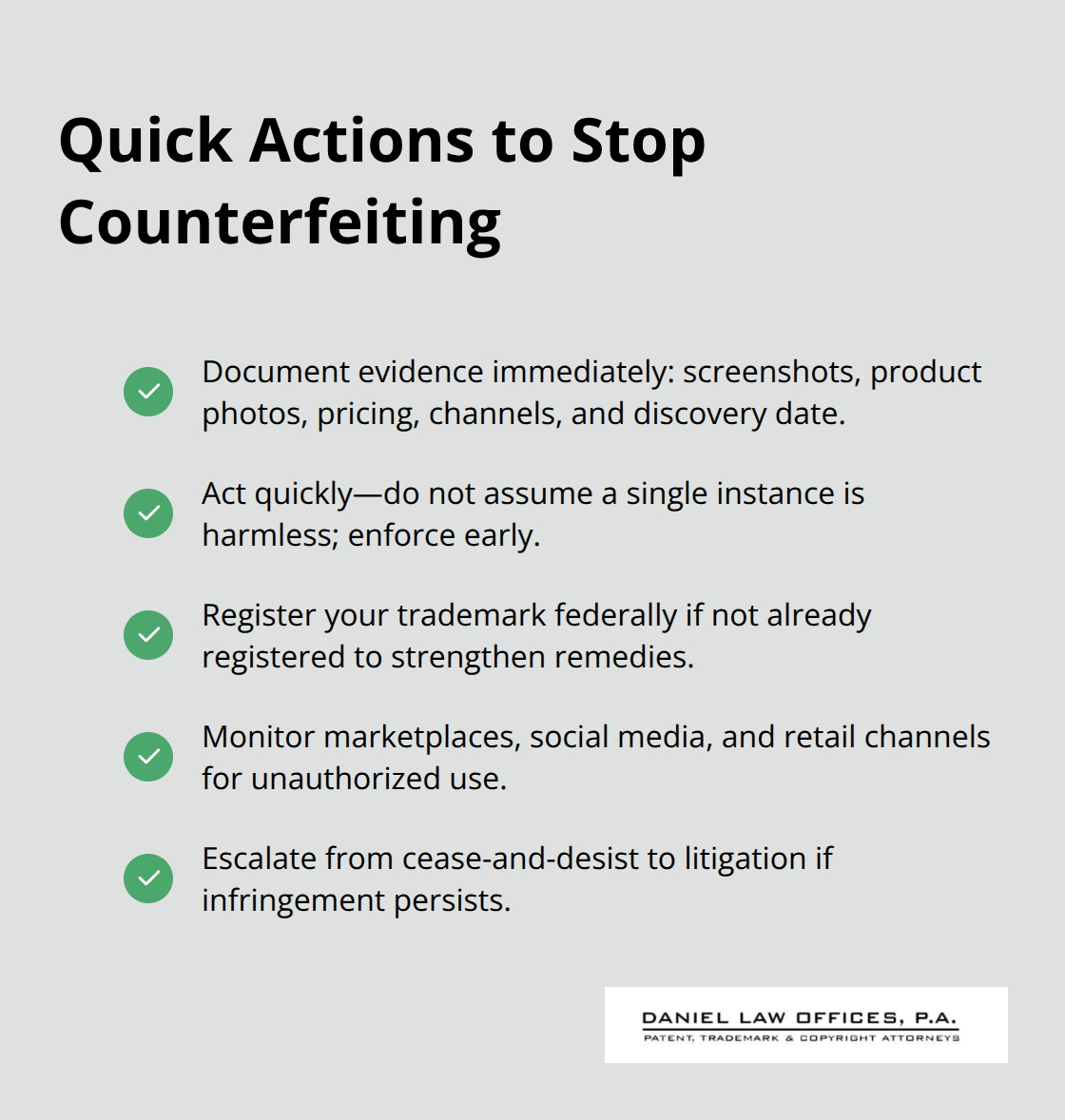
Delay signals weakness and invites further encroachment across additional products or markets.
If you haven’t registered your trademark federally, do it immediately, then monitor your brand actively using tools that track unauthorized use across online marketplaces, social media, and retail channels. The cost of trademark registration at the USPTO is roughly $250 to $350 per mark, far less than the lost revenue from even one month of unauthorized sales.
Protecting Against Employee Misappropriation
Employee misappropriation of trade secrets and proprietary ideas causes damage that often goes undetected until a former employee launches a competing business or shares your confidential processes with a rival. This threat is particularly acute in Orlando’s growing tech and service sectors, where employees frequently transition between companies and carry knowledge in their heads.
Protect yourself by implementing written confidentiality and non-disclosure agreements with every employee who accesses sensitive information, and make these agreements a condition of employment before anyone learns your trade secrets. Document what qualifies as confidential, restrict access on a need-to-know basis, and maintain audit trails showing who accessed sensitive files and when. When employees depart, conduct exit interviews that reinforce confidentiality obligations and remind departing staff that trade secret protection continues after employment ends.
Countering Competitive Infringement
Competitive infringement happens when rivals deliberately copy your patented innovations, branded products, or protected designs to capture market share without investing in development. The USPTO reports that roughly 40 percent of patent applications face rejection due to existing prior art, which means your competitors have access to the same patent databases you do and may intentionally design around your patents if your protection is weak or narrowly drafted.
If you suspect infringement, gather evidence immediately: collect product samples, take screenshots of online listings, document pricing and marketing claims, and preserve any communications where the competitor acknowledges copying your work. Contact an Orlando IP law firm to evaluate whether infringement is occurring and what remedies apply to your situation. Some infringement can be stopped through a cease-and-desist letter that warns the infringer of legal consequences, while persistent infringement may require federal litigation. The cost of inaction is steep: continued infringement erodes your market position, confuses customers about the true source of products, and diminishes the value of your IP assets if you ever seek funding or sale.
Final Thoughts
IP protection strategies work because they address threats before they damage your business. The financial cost of inaction-lost revenue from counterfeiting, litigation expenses from unprotected innovations, and diminished asset value during acquisition-far exceeds the upfront investment in patents, trademarks, and trade secret safeguards. Orlando businesses that register their IP early gain competitive advantage, attract investor confidence, and build brand value that competitors cannot easily replicate.
Your next step is straightforward: conduct an IP audit of your current assets by listing your innovations, brand names, creative works, and proprietary processes, then assess which ones drive revenue or differentiate your business from competitors. Prioritize protecting assets that define your market position, start with a prior-art search to confirm novelty before filing patents, conduct a clearance search and register trademarks federally with the USPTO to secure nationwide rights, and implement confidentiality agreements and access controls for trade secrets immediately. For copyrights, register creative works within three months of creation to preserve all remedies.
We at Daniel Law Offices, P.A. guide Orlando businesses through every step of IP protection-from comprehensive patent searches to drafting and filing patent applications with the USPTO, and establishing your brand identity through trademark registration and strategy. Contact Daniel Law Offices, P.A. to develop a protection plan tailored to your business goals and market position, and prevent costly disputes that preserve the value of what you’ve built.