



Design patent filing: Navigating Design Patents in the USPTO
Your product’s visual design can be your strongest competitive advantage. At Daniel Law Offices, P.A., we help companies protect those distinctive looks through design patent filing.
Many business owners overlook design patents, focusing only on utility patents. That’s a costly mistake-design patents guard the ornamental features that make your product instantly recognizable in the marketplace.
What Sets Design Patents Apart in Orlando, Florida
A design patent protects the visual appearance of a product, not how it works. This matters because your product’s look can be worth millions. When the USPTO grants a design patent, you own the exclusive right to that ornamental design for 15 years from the grant date. Utility patents, by contrast, protect how something functions and last 20 years from filing. The distinction matters for product-based businesses. If your competitive advantage rests on a distinctive shape, pattern, surface ornamentation, or overall appearance rather than technical innovation, a design patent is your weapon. Many companies file both types simultaneously because they serve different purposes. A smartphone might have a utility patent covering its processing technology and a design patent protecting its distinctive curved edges and button placement. The visual elements often matter more to consumers than internal mechanisms they never see.
Why Design Patents Deliver Real Market Value
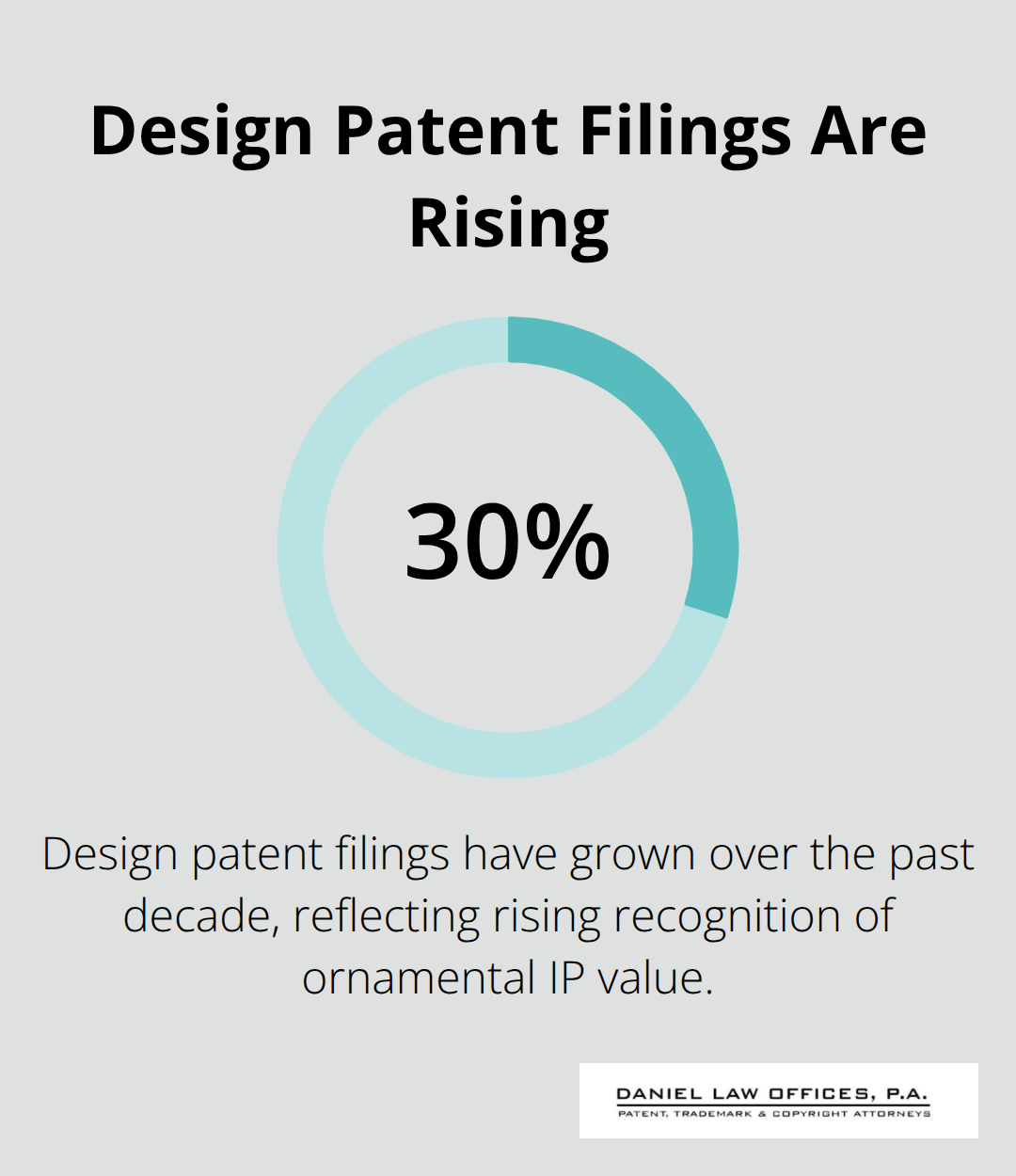
Design patents stop competitors from copying your product’s appearance. Apple’s design patents on the iPhone’s rectangular shape with rounded corners illustrate this power. The company has successfully defended these patents in court, demonstrating that design protection translates to genuine competitive moats. According to the USPTO, design patent filings have grown approximately 30 percent over the past decade, signaling that companies increasingly recognize ornamental features as valuable intellectual property.
In Florida and beyond, businesses in consumer products, furniture, sporting equipment, and fashion industries file design patents regularly. The filing fee at the USPTO runs $220 for most applicants, making design patents significantly cheaper than utility patents. This affordability means even small manufacturers can afford protection. The examination process typically takes 12 to 18 months, faster than utility patent prosecution. Companies protecting multiple product variations often file multiple design patents, creating a portfolio that makes their designs difficult for competitors to work around without infringing.
Real Products That Prove Design Patents Work
The Dyson vacuum cleaner’s distinctive bladeless fan design carries design patent protection. Coca-Cola’s contoured bottle shape, one of the most recognizable designs globally, has received protection through design patents. These companies understood that their visual distinctiveness drove consumer preference and justified legal protection. Nike’s shoe sole patterns and heel designs have multiple design patents. The Fitbit wearable tracker’s distinctive band design received design patent protection. These aren’t hypothetical examples. These are commercial products where companies invested in design patent filings because the visual appearance directly influenced purchasing decisions and brand recognition. If your product has a shape, color combination, texture, or overall appearance that differentiates it from competitors, design patent protection in your market and nationwide becomes a practical business decision rather than an optional formality.
Moving Forward with Your Design Protection Strategy
Identifying which visual features merit protection requires understanding what makes your product stand out in the marketplace. The USPTO examines design applications against existing designs to determine whether your ornamental features are truly novel and non-obvious. Companies that file design patents early gain significant advantages-once a competitor launches a similar product, your filing date establishes priority. The process involves submitting detailed drawings that show your design from multiple angles, along with written descriptions that explain what you’re protecting. Getting these elements right from the start prevents costly rejections and delays. Daniel Law Offices, P.A. assists companies in identifying which visual features merit protection and navigating the filing process to secure enforceable rights. Understanding the preparation requirements and documentation standards sets the foundation for successful protection.
The Design Patent Filing Process in Orlando, Florida
Submitting Drawings That Meet USPTO Standards
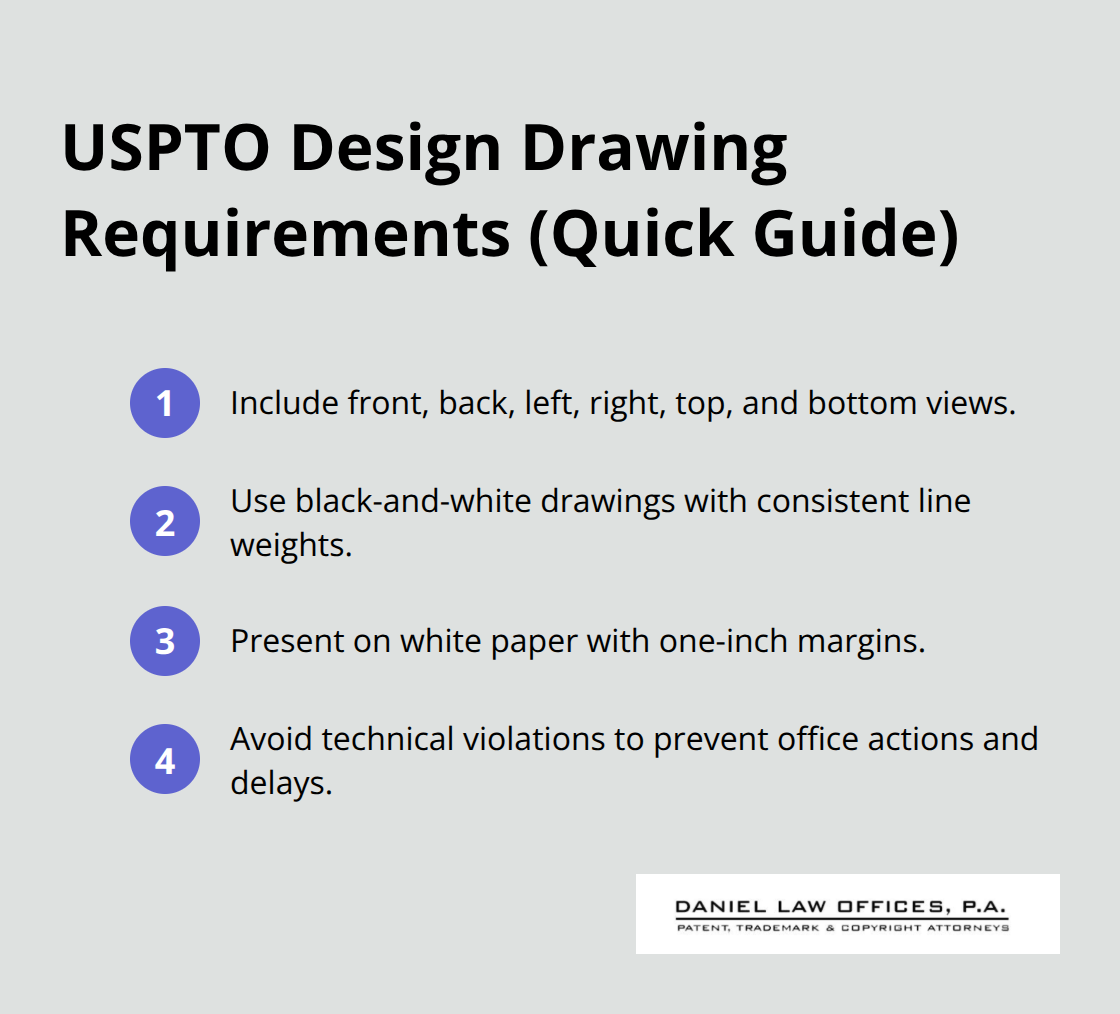
Your design drawings determine whether the USPTO grants or rejects your application. The USPTO requires drawings that show your design from multiple angles, typically including front, back, left side, right side, top, and bottom views. These drawings must follow specific formatting standards: black and white presentation, consistent line weights, and appearance on white paper with one-inch margins. Applicants frequently submit drawings that violate these technical requirements, forcing the USPTO to issue office actions demanding corrections.
This delays your filing by months.
The drawings must also clearly show what you’re protecting and what you’re not. If your design includes a specific color combination, you need to file a color design patent, which costs an additional $100 and requires color drawings with specific color descriptions. Most companies file drawings without color because they want broader protection. Your written description should be concise (typically one to three paragraphs) and avoid claiming features that don’t appear in the drawings. The USPTO rejects applications where the description contradicts the visual representation.
Completing Your Application and Establishing Your Filing Date
After you submit your complete application through the USPTO’s electronic filing system, your filing date is established immediately. The filing fee of $220 starts the clock on your 15-year protection period. This straightforward submission process means you can establish priority quickly, which matters significantly if competitors launch similar products after your filing date.
Navigating the Examination Phase
The examination phase tests whether your design truly differs from existing designs in the marketplace. The USPTO compares your drawings against published design patents and utility patents to find similar ornamental features. Their search covers products in your industry category and adjacent categories. If the examiner finds prior art that closely resembles your design, they’ll issue an office action rejecting your application.
You then have three months to respond, though you can request a one-month extension by paying an additional $200. Your response options include amending your drawings to emphasize distinguishing features, submitting arguments explaining why your design is novel, or both. Companies that provide weak responses to office actions face repeated rejections and eventually abandoned applications. A strong response clearly articulates what visual elements make your design non-obvious compared to existing designs.
Understanding the Timeline and Response Strategy
The entire process typically takes 18 to 24 months from filing to grant. During this period, your responses to office actions determine whether examiners approve your design or reject it repeatedly. Applicants who understand the examination standards and craft targeted responses maximize their approval odds and protect the broadest possible design scope. Daniel Law Offices, P.A. guides clients through office action responses to strengthen their applications and navigate this critical phase successfully.
The mistakes you make during examination can limit your protection scope significantly. Understanding what distinguishes your design from prior art before you respond to office actions prevents costly errors that narrow your rights.
Common Mistakes That Ruin Design Patent Applications in Orlando, Florida
Drawing Errors That Trigger Immediate Rejection
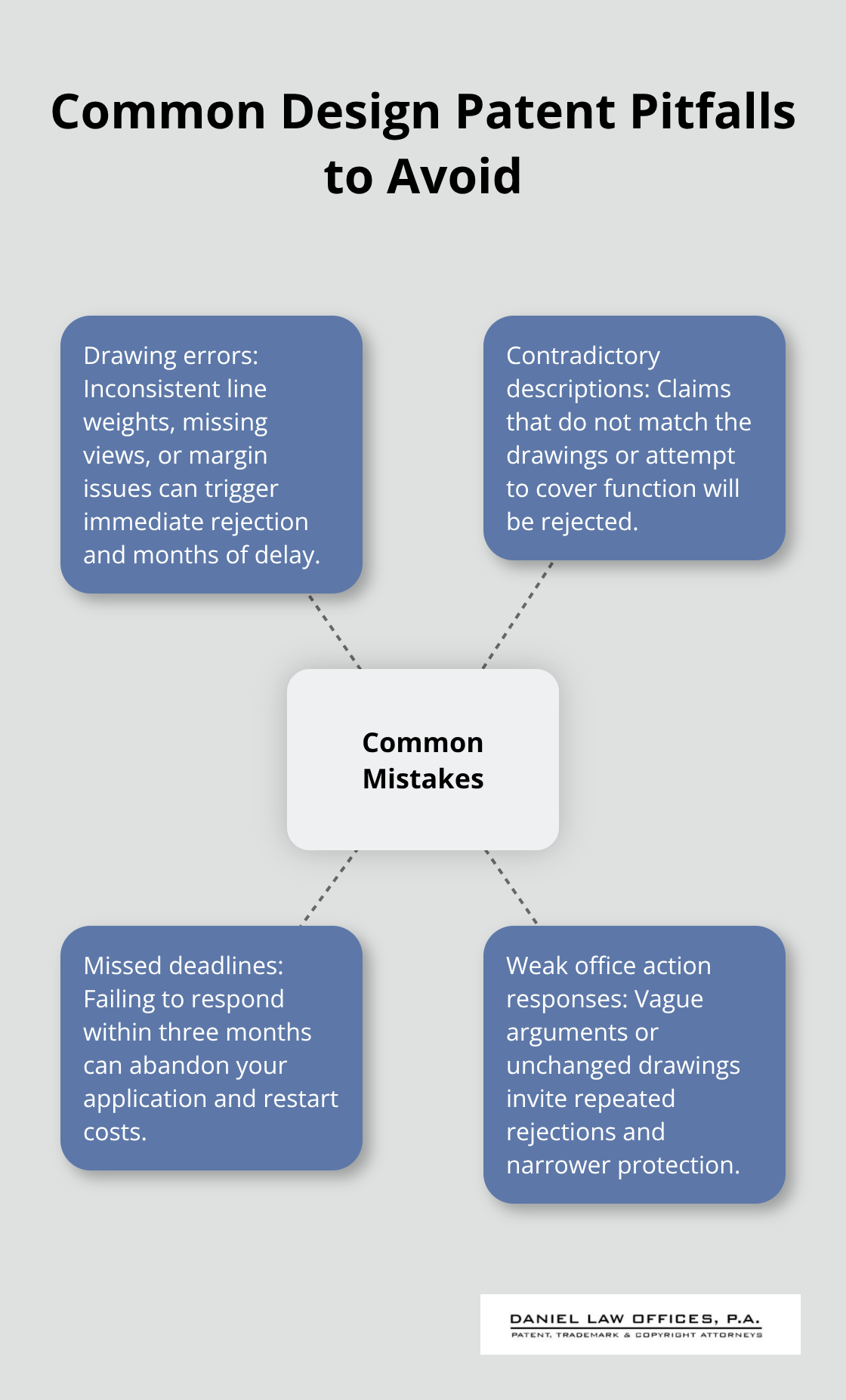
Drawing errors account for the majority of design patent rejections at the USPTO. Applicants submit drawings with inconsistent line weights, margins that fail to meet the one-inch requirement, or views that don’t show the design clearly from all angles. The USPTO examiner rejects your application outright if your drawings violate formatting standards. You then lose months waiting for a correction period while your competitor potentially launches a similar product.
The solution is straightforward: follow the USPTO’s Drawing Standards for Design Patents precisely before submission. Your drawings need black ink on white paper, consistent line thickness throughout, and all required views (typically six views minimum). Many applicants attempt to save money by creating drawings themselves in standard design software, only to face rejection because the output fails to meet USPTO specifications. Professional design patent drawings cost between $300 and $800 per design, but this investment prevents costly rejections and accelerates approval.
Written Descriptions That Contradict Your Visual Representation
Your written description of the design matters equally to your drawings. Applicants frequently write descriptions that either claim ornamental features not visible in the drawings or fail to describe what they’re actually protecting. The USPTO rejects applications where the description contradicts the visual representation. If your drawings show a product without color but your description claims a specific color combination, the examiner rejects it. If your description claims protection for internal mechanisms, the examiner rejects it because design patents protect only ornamental appearance.
The description should be concise and directly reference what appears in your drawings. Avoid vague language like “the design consists of an attractive shape” or “elegant proportions.” Instead, write “the design comprises a curved base, tapered sides, and a rounded top surface as shown in the drawings.” This specificity helps examiners understand your protection scope and reduces rejection odds significantly.
Missing Deadlines That Abandon Your Application
Timing matters just as much as accuracy. The USPTO gives you three months to respond to office actions, but applicants frequently miss this deadline. Missing the deadline abandons your application entirely, forcing you to start over and pay the filing fee again. Calendar your response deadline the moment you receive an office action from the USPTO.
Examiners rarely grant deadline extensions without payment, and even then, extensions add months to your timeline. Companies that treat office action responses as urgent tasks maintain momentum and avoid abandonment. The three-month window passes quickly, and procrastination on your response costs far more than the effort required to meet the deadline.
Final Thoughts
Design patent filing protects what makes your product visually distinctive in the marketplace. Submit drawings that meet USPTO formatting standards precisely, write descriptions that match your visual representation exactly, and respond to office actions within the required timeframe. Companies that execute these fundamentals successfully secure 15 years of exclusive protection for their ornamental designs at minimal cost compared to the competitive advantage gained.
Drawing errors, description contradictions, and missed deadlines account for the majority of design patent rejections. These mistakes are entirely preventable when you work with professionals who understand USPTO examination standards and have navigated the process repeatedly. Daniel Law Offices, P.A. assists companies in identifying which visual features merit protection, preparing compliant applications, and responding strategically to office actions through our registered patent attorney.
Identify which product features differentiate you from competitors and determine what visual elements drive your market position. The filing fee of $220 establishes your priority date immediately, protecting your design from that moment forward, and companies that file early gain significant advantages when competitors eventually launch similar products.