




Brand Identity Trademark Benefits: Solidifying Your Brand With Protection
Your brand is your most valuable business asset, yet many companies operate without legal protection for it. Competitors can copy your name, logo, and identity-costing you customers and revenue.
Brand identity trademark benefits go far beyond legal paperwork. A registered trademark stops infringement, builds customer loyalty, and increases what your brand is worth in the marketplace. We at Daniel Law Offices, P.A. help businesses secure these protections so you can focus on growth.
Why Your Brand Needs Trademark Protection
Without trademark protection, your business operates with an open door for competitors to exploit your identity. When someone else uses your brand name, logo, or slogan without permission, you have limited legal recourse if you haven’t registered with the USPTO. Federal registration changes this entirely.
Federal Registration Gives You Legal Ownership
Federal registration gives you a legal presumption of ownership across the entire United States and territories, meaning courts will assume the mark is yours unless challenged. This presumption shifts the burden to infringers to prove their right to use similar marks, not the other way around. You can also record your registration with U.S. Customs and Border Protection to stop infringing goods at the border before they reach your customers.
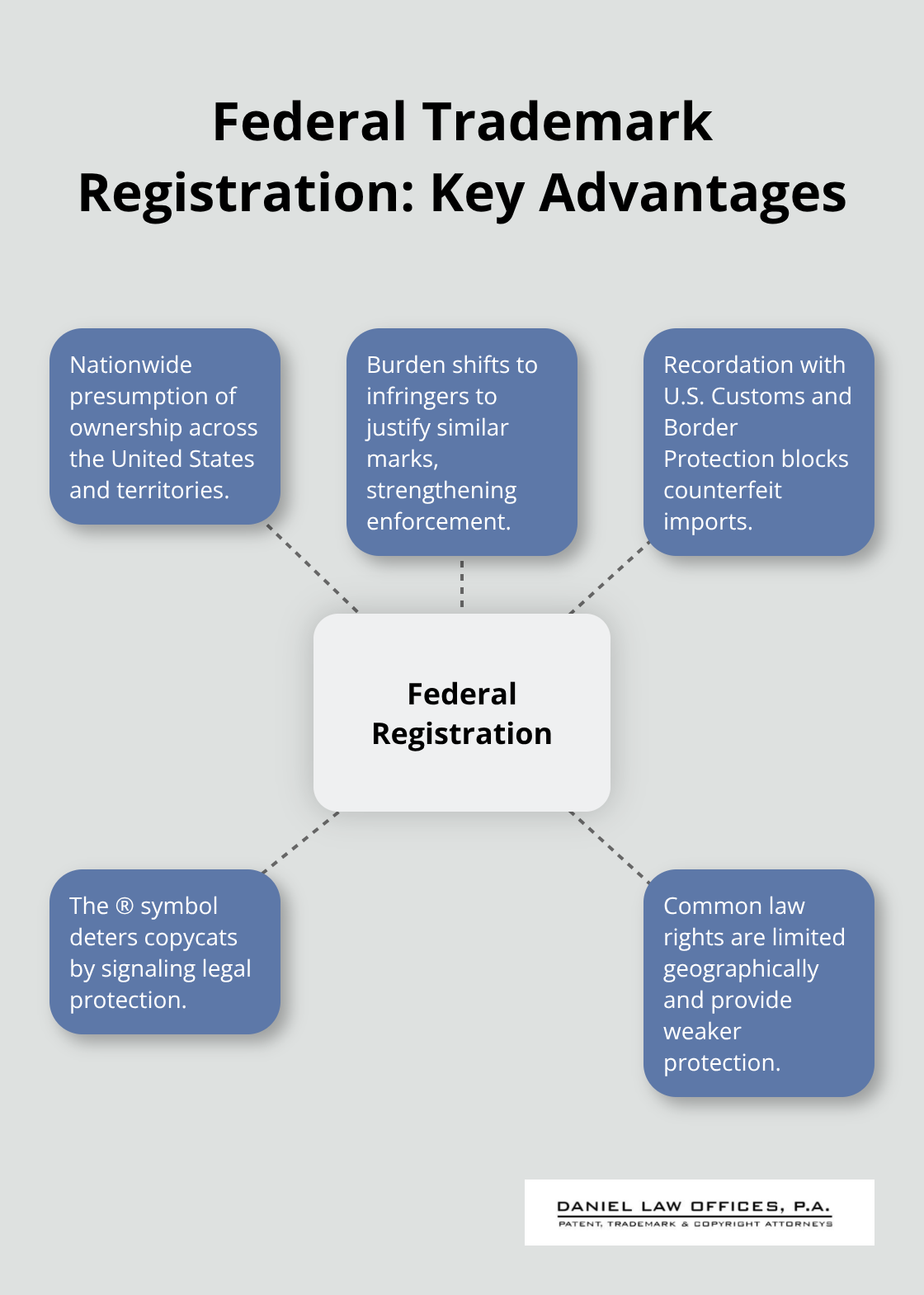
The ® symbol signals to competitors that you hold legal protection, which alone deters many from copying your work. Without registration, you’re limited to common law rights, which only protect you in the specific geographic area where you actively use the mark. Common law protection also requires you to search far beyond the USPTO database to identify conflicts-a time-consuming and incomplete process.
Build Recognition That Drives Customer Loyalty
Customers trust brands they recognize. When your trademark is registered and consistently used across your marketing, packaging, and digital presence, it builds recognition that translates directly to loyalty. A registered mark also increases your brand’s market value significantly. If you ever license your brand to partners, sell your business, or expand through franchising, that registration becomes a quantifiable asset on your balance sheet.
Licensing alone creates revenue opportunities-you can authorize third parties to use your mark in exchange for royalties or upfront payments. The USPTO database makes your ownership public, which reduces disputes over who first used the mark and strengthens your position in any legal action.
Protect Your Brand Across Digital Platforms
Registration simplifies enforcement across digital platforms. Major social media networks and e-commerce sites have trademark protection policies that make it faster to remove infringing accounts or counterfeit listings when you hold federal registration. This protection matters because counterfeit products and unauthorized brand use cost legitimate businesses billions annually.
The next step involves understanding how to actually secure this protection. The trademark registration process requires careful planning and execution to succeed.
Securing Your Trademark Before Filing
Search the Trademark Landscape First
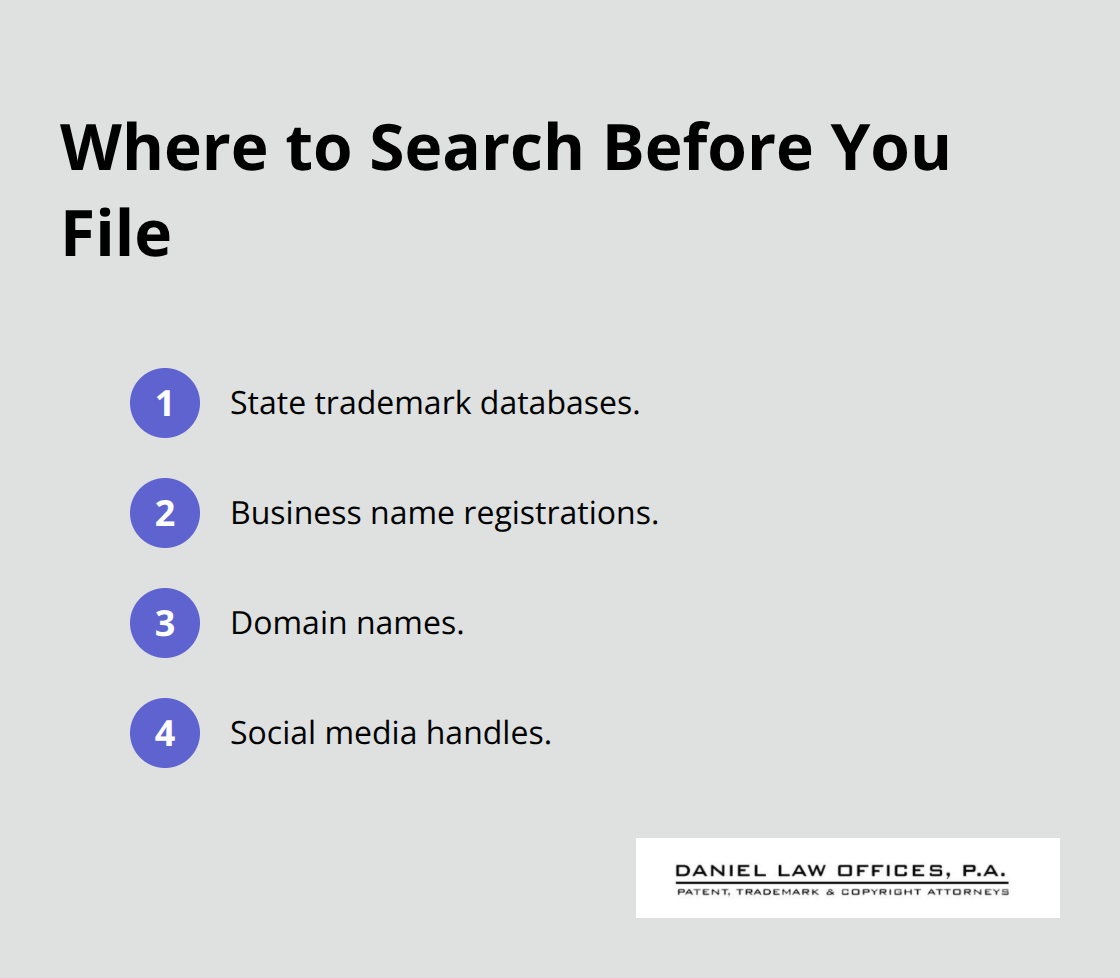
Before you submit anything to the USPTO, you need to know whether your chosen mark is actually available. A trademark search isn’t optional-it’s the foundation of a successful registration. Many businesses skip this step and file applications that get rejected, wasting months and thousands of dollars. The USPTO database contains over 2.3 million active trademark registrations, and searches must extend beyond it to be thorough. You should search state trademark databases, business name registrations, domain names, and social media handles because common law rights exist in geographic areas where marks are used, even without federal registration. A comprehensive search identifies conflicts before you invest in filing. If you find a similar mark already registered for your goods or services, the USPTO will reject your application-and you’ll lose your filing fee.
Understand What You’re Protecting
Once your search confirms availability, filing with the USPTO requires precision. You’ll need to specify the exact goods or services your mark will cover-this matters because your registration only protects you in those categories. If you register a mark for software but later want to sell merchandise, you may need additional registrations. The specification of goods and services determines the scope of your legal protection, so accuracy here prevents costly gaps in coverage.
Navigate the USPTO Application Timeline
The USPTO currently processes trademark applications in approximately 3 to 6 months on average, though this timeline varies based on application complexity and office actions. Office actions are official communications from the USPTO examiner identifying issues with your application. Common rejections include descriptiveness (your mark merely describes what you sell), likelihood of confusion (it’s too similar to existing marks), or improper specimen submission (you didn’t provide proper evidence of use).
Respond Correctly to Office Actions
Responding to office actions requires understanding trademark law-generic terms like “App Store” face rejection, while suggestive marks like “Spotify” succeed because they require imagination to connect the mark to the service. If the examiner issues an office action, you have six months to respond or your application abandons. Many applicants misunderstand the response requirements and file inadequate responses, leading to final rejections. The entire process from filing to registration typically takes 6 to 12 months when no complications arise, though contested applications can extend much longer.
Understanding these procedural requirements helps you avoid common pitfalls, but the real challenge emerges once your registration becomes official-protecting what you’ve secured demands active enforcement and strategic management.
How Trademark Protection Strengthens Your Business
Federal Registration Gives You Enforceable Legal Rights
A registered trademark transforms how your business competes. Companies with federal trademark registrations operate from a position of strength that unregistered competitors cannot match. When your mark is registered, you gain the legal right to sue for infringement in federal court and recover damages, which creates a powerful deterrent against competitors who might otherwise copy your brand. The ability to pursue legal action isn’t theoretical-it’s actionable leverage that stops copying before it damages your market position.
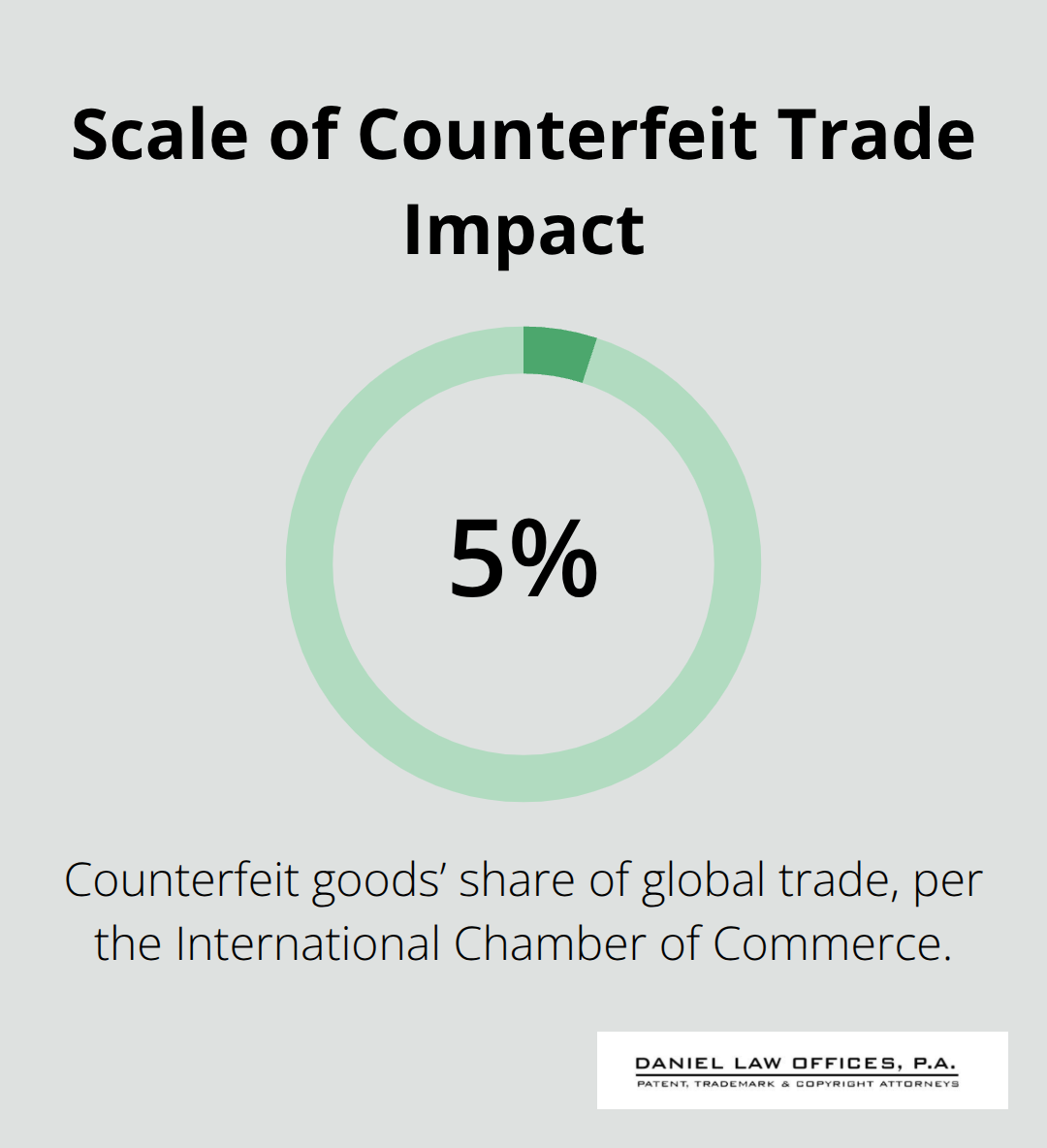
Unregistered businesses relying on common law rights face enormous obstacles: proving you used the mark first, establishing geographic scope, and fighting costly litigation without the presumption of ownership that federal registration provides. Your registration also qualifies you to record the mark with U.S. Customs and Border Protection, which physically stops counterfeit imports at borders. This matters because counterfeit goods cost American businesses approximately 5% of global trade annually according to the International Chamber of Commerce. For a brand doing $10 million in annual revenue, that represents significant financial exposure your registration actively prevents.
The ® Symbol as Your First Line of Defense
The ® symbol signals ownership so clearly that most competitors avoid the mark entirely rather than risk infringement litigation. This visual indicator communicates legal protection to the marketplace and reduces the likelihood that competitors will attempt unauthorized use. Registration transforms your mark from an intangible concept into a legally recognized asset that courts will protect.
Increase Your Brand’s Financial Value
Your trademark registration fundamentally increases what your business is worth in financial terms. When you license your brand to partners, the registration transforms your mark into a quantifiable revenue stream. Licensing agreements tied to registered marks command higher royalty rates because buyers know the protection is ironclad and nationwide.
If you eventually sell your business, a registered trademark portfolio adds measurable value to your sale price-investors and acquirers specifically value federally registered marks because they eliminate intellectual property risk. The registration removes uncertainty from the transaction and justifies premium valuations.
Expand Protection Across Multiple Markets
Expanding into new product categories becomes simpler with an established registered mark because you can file additional applications in different goods or services classifications, building a comprehensive trademark portfolio that protects your brand across multiple markets. Without this strategic approach, many companies waste money registering marks they don’t need or miss critical protection gaps in categories where they plan to operate. Daniel Law Offices, P.A. helps businesses identify which additional trademark registrations make sense for their growth plans and build protection strategies that align with expansion goals.
Final Thoughts
Trademark registration transforms how your business operates in the marketplace. The brand identity trademark benefits you gain through federal protection extend far beyond legal documents-they create tangible competitive advantages that compound over time. A registered mark stops competitors from copying your identity, builds customer recognition that drives loyalty, and establishes ownership that courts will defend.
Your registration remains valid indefinitely as long as you maintain it and continue using the mark in commerce. This means the investment you make today protects your brand for decades, through product launches, market expansions, and potential business sales. Companies that register early gain years of protection before competitors even consider similar marks, and if you expand internationally, your U.S. registration serves as a foundation for seeking protection in foreign countries through the Madrid Protocol (which connects you with over 100 member nations).
Enforcement matters just as much as registration, since the USPTO doesn’t police your mark for you-you must monitor unauthorized use and take action when infringement occurs. We at Daniel Law Offices, P.A. help businesses navigate every stage of trademark protection, from comprehensive searches to confirm availability through USPTO filings and enforcement actions that stop unauthorized use. Contact us to discuss your trademark strategy and secure the protection your brand deserves.