




Trademark Search Importance Florida: How Thorough Checks Safeguard Your Brand
Your brand name is your business identity. Without a trademark search before registration, you risk building on someone else’s legal foundation.
At Daniel Law Offices, P.A., we’ve seen businesses waste thousands on applications that get rejected because they didn’t check for existing marks first. Understanding trademark search importance in Florida protects your investment from the start.
Why Trademark Searches Protect Your Business in Florida
The Real Cost of Skipping a Search
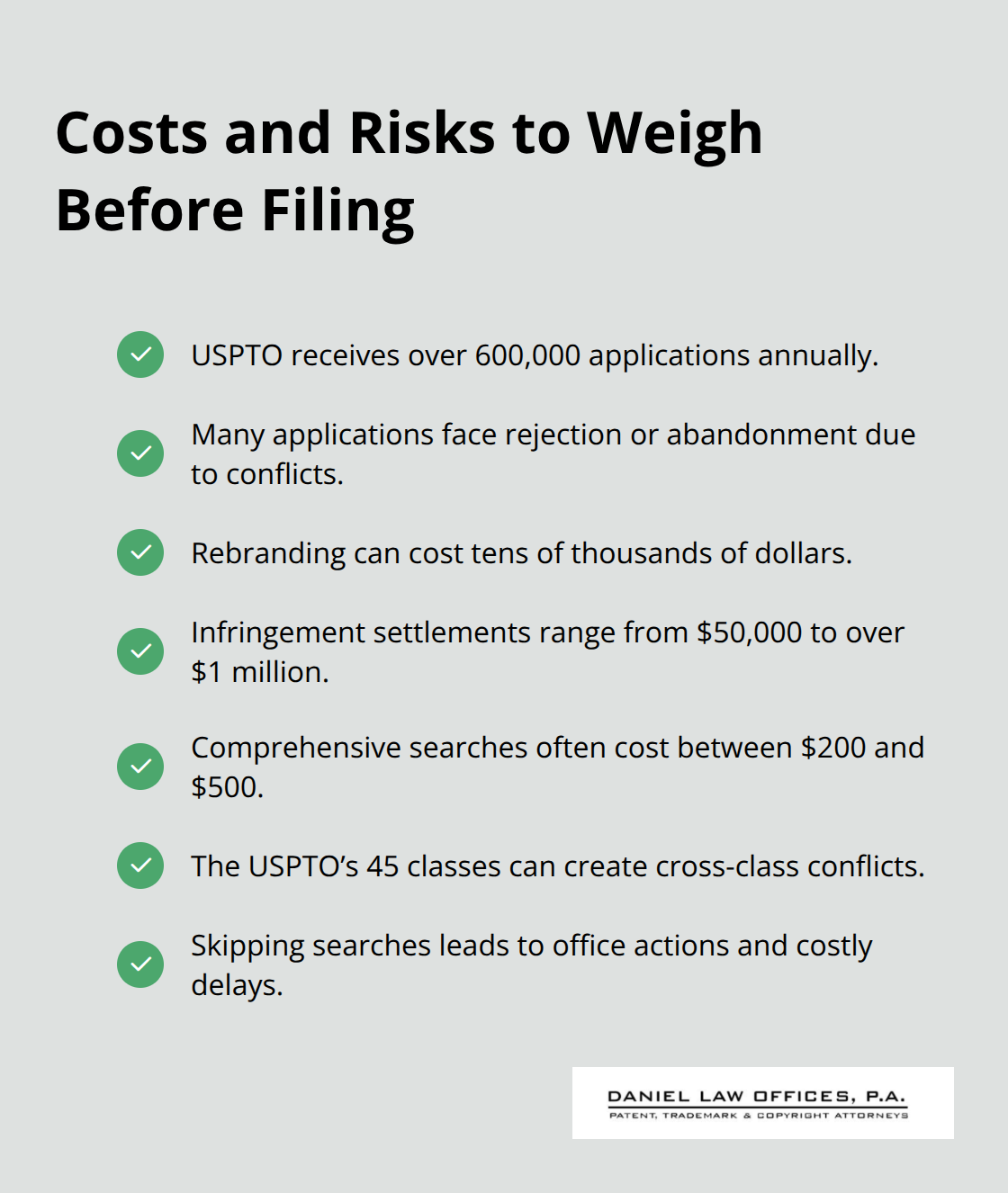
Skipping a trademark search in Florida is a gamble that costs far more than conducting one. The USPTO receives over 600,000 trademark applications annually, and a significant portion face rejection or abandonment due to conflicts with existing marks. When businesses rush to file without searching, they often discover too late that their chosen mark conflicts with another company’s established rights. The financial damage extends beyond the application fee. Rebranding after a rejection can cost tens of thousands of dollars when you factor in new logos, website updates, marketing materials, and lost customer recognition. A comprehensive search costs a fraction of what you’ll spend fixing the problem later.
How Conflicts Damage Your Business
If your trademark application conflicts with an existing mark, the USPTO will issue an office action rejecting your application. You then have six months to respond, but responding won’t help if the conflict is legitimate. The examining attorney won’t approve your mark, and you lose your filing fee. More critically, if you proceed without registration and start using a mark that infringes on someone else’s trademark, you face potential legal action. Trademark holders can sue for damages, and courts have awarded settlements ranging from $50,000 to over $1 million in infringement cases, depending on the severity and duration of the violation. A search identifies these conflicts before you invest time, money, and brand identity into a mark you cannot legally use.
What a Comprehensive Search Actually Covers
A proper search examines federal trademark registrations through the USPTO database, state trademark registrations, and common law usage where businesses use marks without formal registration. Many business owners don’t realize that unregistered marks receive protection in their geographic area or industry. This means a competitor in a different state might have legitimate rights to your desired mark, creating a genuine legal obstacle. The search also looks at phonetic similarities, visual similarities, and marks in related industries. If you plan to trademark “FreshFlow” for beverage services, a search would flag similar marks like “FlowFresh” or variations used by competitors in adjacent markets (food, supplements, wellness products). This comprehensive approach prevents the costly scenario where you’ve already launched your brand, invested in marketing, and built customer recognition only to receive a cease-and-desist letter.
Taking the Next Step Forward
Understanding what exists in the trademark landscape puts you in control of your brand’s future. The search results tell you whether your mark faces obstacles and what those obstacles actually are. With this information, you can move forward confidently or adjust your strategy before filing with the USPTO.
What a Comprehensive Trademark Search Actually Examines in Orlando, Florida
Federal, State, and Common Law Layers
A comprehensive trademark search extends across multiple legal layers that most business owners overlook. The search covers the USPTO’s federal trademark database (which holds over 14 million registered marks), state-level registrations, and common law usage records to identify all potential conflicts. Many business owners assume that if a mark isn’t federally registered, it poses no legal threat-this assumption costs them thousands in legal fees and rebranding expenses. State trademark registrations carry legitimate legal weight in their respective states, and common law usage (where a business uses a mark without formal registration) grants enforceable rights within that company’s geographic area and industry.
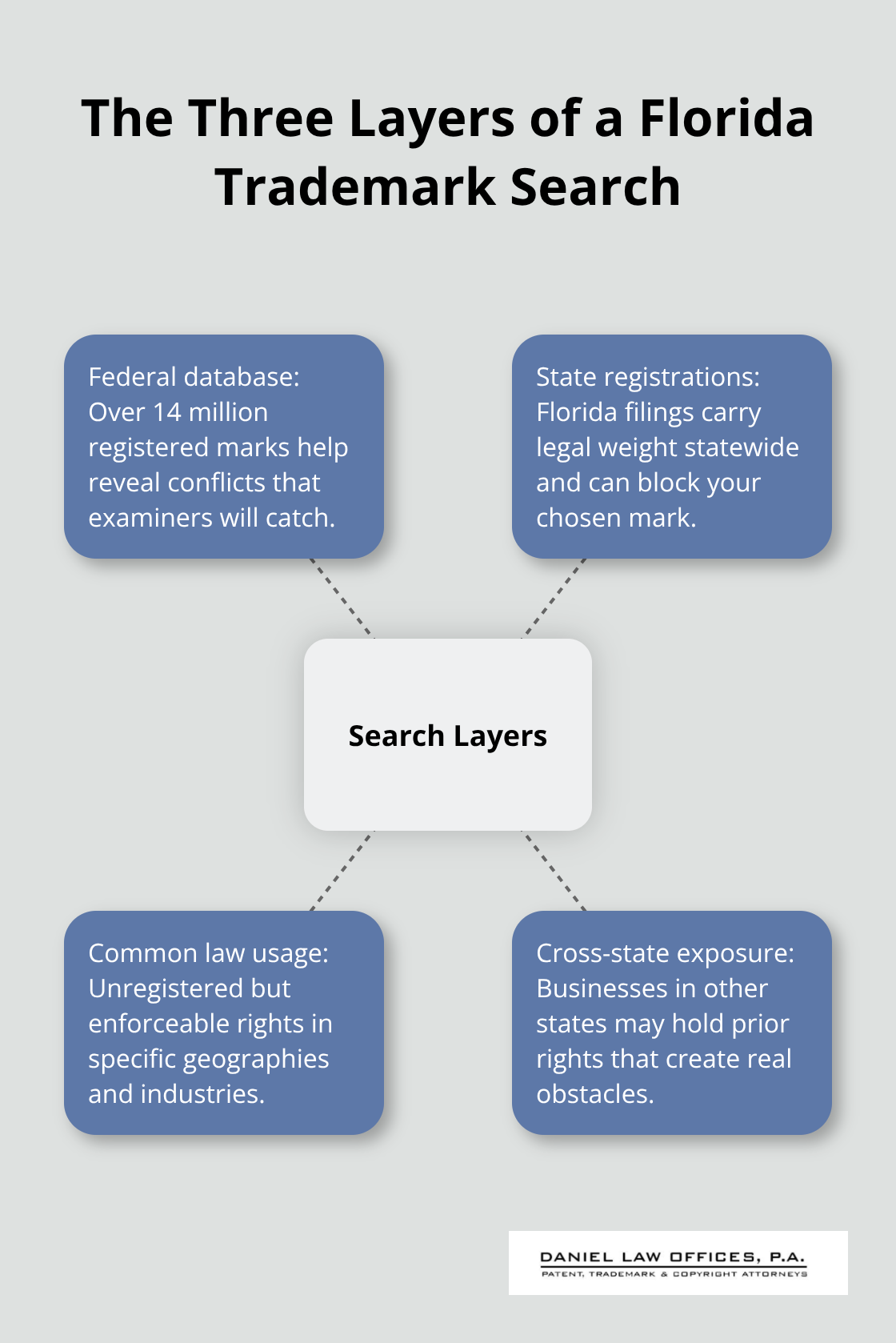
A search that ignores these layers leaves you exposed to cease-and-desist letters from businesses operating in different states or markets. The USPTO examining attorney will catch federally registered conflicts during prosecution, but unregistered marks won’t appear in their review. You discover them later, often after you’ve invested in branding and marketing.
Industry-Specific and Related Class Analysis
The search also analyzes similar marks within your specific industry and related product or service classes. If you trademark a name for software services, the search must examine marks in adjacent classes like technology consulting, IT support, and digital platforms. The USPTO uses 45 international classes to categorize goods and services, and conflicts occur across related classes when the average consumer might confuse the marks. For example, marks in beverage class 32 frequently conflict with marks in food preparation class 43 because consumers encounter both in similar contexts. A thorough search examines not just identical marks but variations in spelling, phonetic equivalents, and visual presentations to identify real obstacles before you file.
Phonetic, Visual, and Conceptual Similarities
The federal database alone contains over 14 million registered marks, and the search must account for phonetic similarities, visual similarities, and conceptual overlap. If you’re trademarking “FreshFlow” for beverage services, a search would flag similar marks like “FlowFresh” or variations used by competitors in adjacent markets (food, supplements, wellness products). This level of analysis takes time and requires understanding how trademark examiners evaluate similarity, but it prevents the expensive scenario where your application faces rejection months after filing. You then face the choice to either abandon your mark or pursue a lengthy appeals process that drains resources and delays your market entry.
How to Search for Trademarks in Florida
Starting with the USPTO TESS Database
The USPTO’s TESS database (Trademark Electronic Search System) is your starting point for federal records, but treating it as your only search creates serious blind spots. The database contains over 14 million registered marks, and the search function allows you to look by exact match, phonetic similarity, or design elements. However, many business owners run a quick search, find nothing that looks identical, and assume they’re safe to file. This approach misses the nuanced conflicts that examining attorneys catch during prosecution. The TESS search requires understanding how the USPTO classifies marks and what similarity actually means in trademark law. If you search for FreshFlow and find no exact match, you might still face rejection when FlowFresh or Fresh Flows appears in the results under phonetic or conceptual similarity.
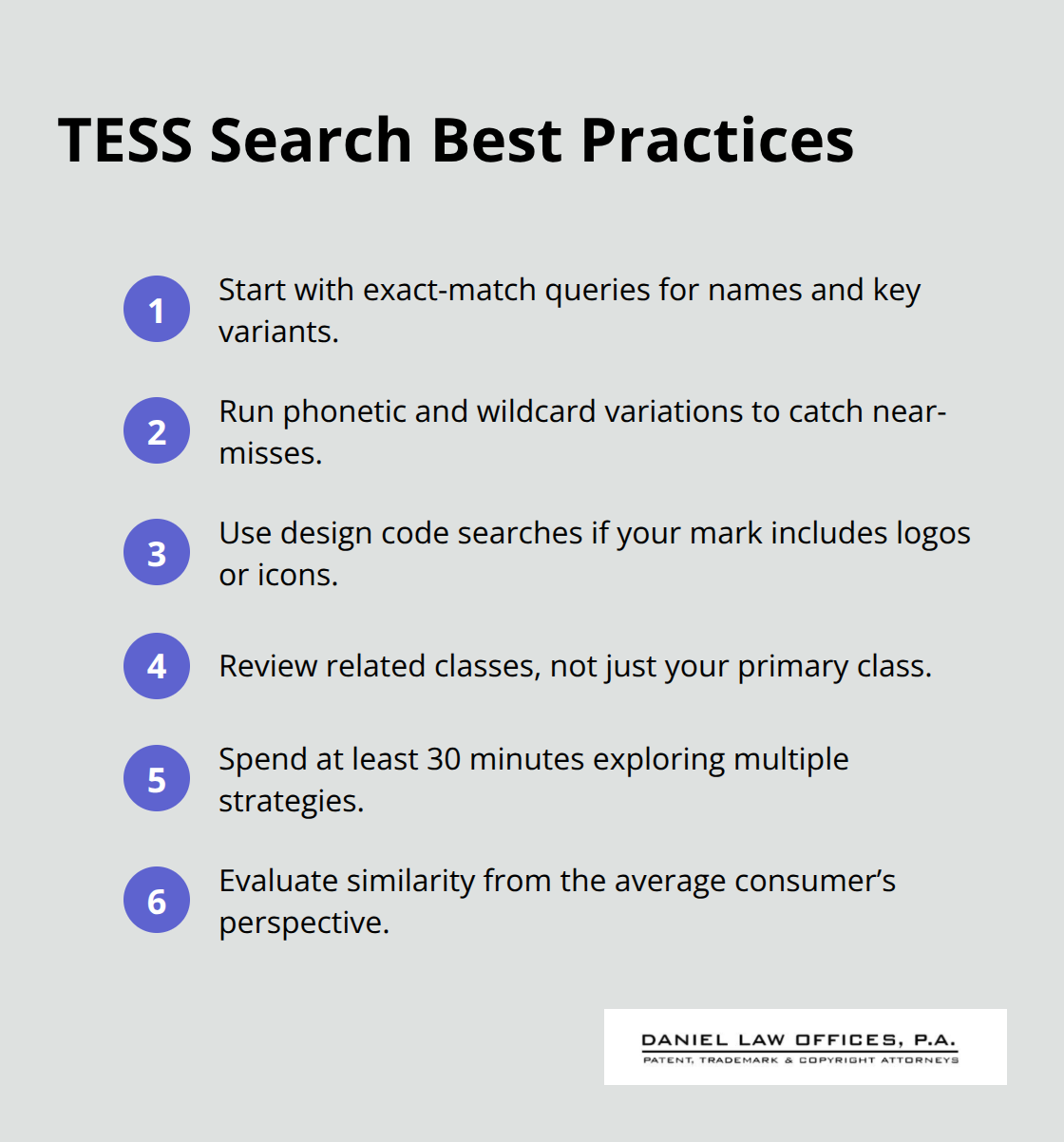
Try spending at least 30 minutes on TESS searches using multiple search strategies-exact match, phonetic algorithms, and design code searches if your mark includes visual elements. Many entrepreneurs skip this step and spend hundreds on application fees only to receive office actions months later citing conflicts they missed.
Uncovering State and Common Law Marks
State trademark registrations and common law usage create equally significant obstacles that TESS cannot reveal. Florida maintains its own trademark database through the Florida Department of State, Division of Corporations, and state-level registrations carry legitimate legal weight within Florida’s borders. Additionally, unregistered marks used in commerce receive common law protection, meaning a competitor using your desired mark in a specific geographic area or industry has enforceable rights even without formal registration. Finding these marks requires checking Florida’s state database directly, searching Google Maps and business directories for competitors using similar names in your industry, and reviewing industry-specific databases or trade publications. A trademark search service like Thomson CompuMark or searching through the Secretary of State’s business records costs between $100 and $500 but identifies state and common law conflicts that DIY searches miss.
Working with a Patent Attorney for Complete Coverage
Comprehensive searches across federal, state, and common law sources prevent false confidence that leads to costly mistakes after launch. A patent attorney can conduct thorough searches that examine all three layers of trademark protection simultaneously. This approach (combining federal database searches, state registrations, and common law usage analysis) takes significantly more time than a solo TESS search but catches conflicts that independent searches miss. The investment in professional search services pays for itself when you avoid application rejections, cease-and-desist letters, or expensive rebranding campaigns. Daniel Law Offices, P.A. assists businesses in securing and protecting their brand identity by registering trademarks, which includes conducting comprehensive trademark searches to identify potential conflicts before you file with the USPTO.
Final Thoughts
A trademark search in Florida isn’t optional-it’s the foundation of protecting your brand investment. The businesses that skip this step face rejected applications, cease-and-desist letters, expensive rebranding campaigns, and legal settlements ranging from $50,000 to over $1 million. You’ve now seen how federal databases, state registrations, and common law usage create multiple layers of potential conflict, and ignoring any of these layers leaves your brand vulnerable to obstacles you won’t discover until you’ve already invested thousands in marketing.
The trademark search importance in Florida becomes clear when you calculate the real numbers. A comprehensive search costs between $200 and $500, while a rejected application wastes your filing fee and delays your market entry by months. Rebranding after a conflict costs tens of thousands when you factor in new logos, website updates, and lost customer recognition. The math is straightforward: spend a few hundred dollars now or spend tens of thousands later.
Moving forward with trademark registration requires confidence that your mark faces no legitimate obstacles. Daniel Law Offices, P.A. assists businesses in securing and protecting their brand identity by registering trademarks, which includes conducting comprehensive trademark searches to identify potential conflicts before you file. Contact Daniel Law Offices, P.A. to secure your trademark and protect your brand from the start.