




Trademark Registration Timeline: From Filing to Protection
Getting a trademark registered takes time, and understanding each step matters for protecting your brand. We at Daniel Law Offices, P.A. know that the trademark registration timeline can feel long and complicated.
This guide walks you through exactly what happens from the moment you file with the USPTO to when your mark receives full protection.
How to Submit Your Trademark Application and Navigate USPTO Review
Preparing Your Application for Filing
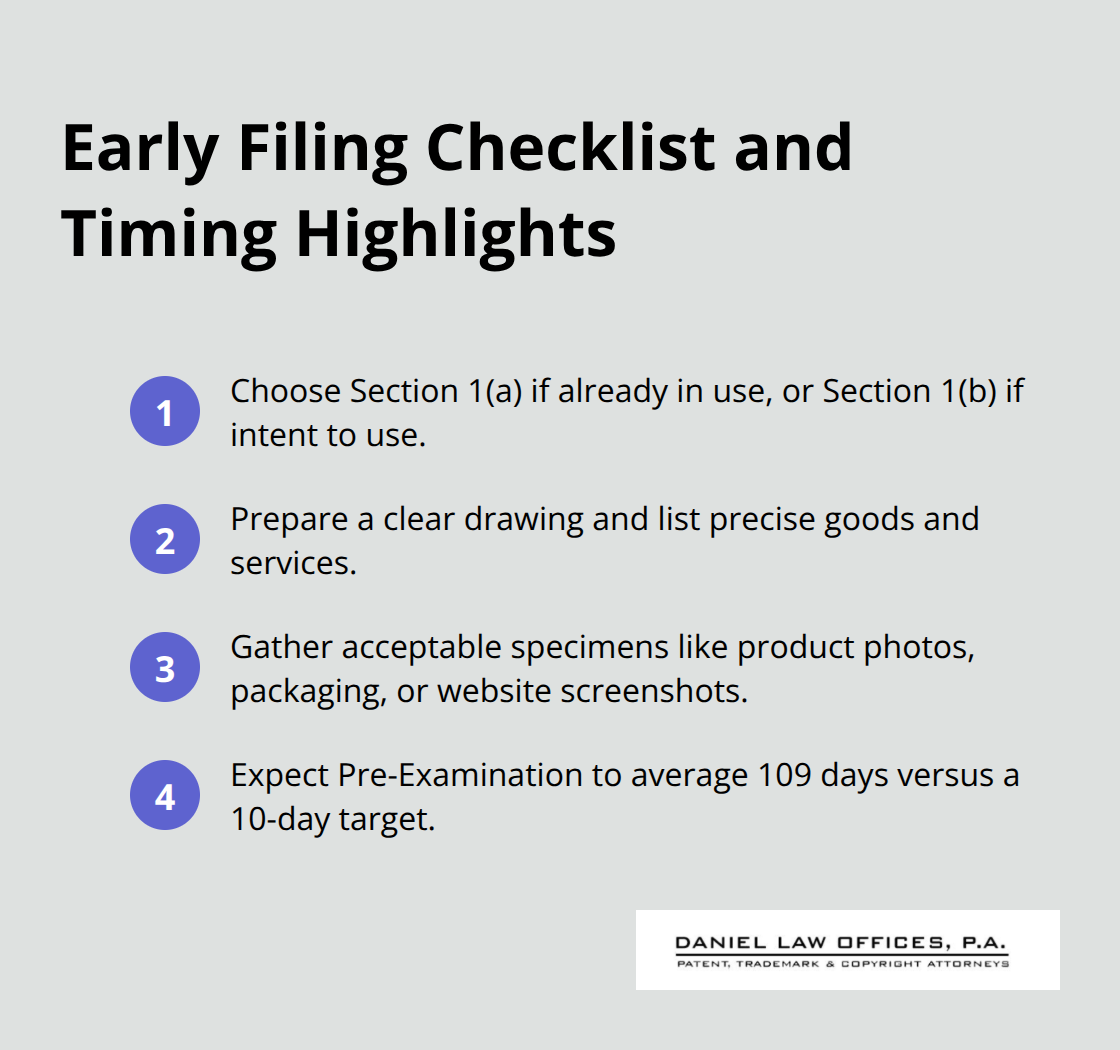
Submitting your trademark application to the USPTO requires precision from the start. You’ll file through the Trademark Electronic Application System, which means you must gather the right documents before you begin. Define your filing basis first-are you filing under Section 1(a) because you already use the mark in commerce, or Section 1(b) because you intend to use it? This choice shapes your entire timeline. Prepare a clear drawing of your mark, identify the specific goods or services you’re protecting, and gather specimens that show how you actually use the mark (product photos, packaging, or website screenshots work well). According to the USPTO, the Pre-Examination Unit processes TEAS applications in an average of 109 days, far exceeding their stated 10-day target, so you should not expect quick initial processing. Submit accurate information the first time-errors in your goods and services description or specimen format will trigger office actions and add months to your registration. Conduct a thorough trademark search through the USPTO database before filing to identify potential conflicts and reduce the chance of refusals that derail your timeline.
What Happens During the Examination Phase
Once the USPTO assigns an examining attorney to your application, they review it for compliance and search for conflicting marks in their database. This examination phase typically takes months, and the examining attorney may issue an office action if they find problems. You must respond within three months, or your application will be abandoned. Common rejections include descriptive marks that need proof of acquired distinctiveness, conflicts with existing registrations, or specimen issues that don’t show actual use. If the examiner raises objections, respond promptly with evidence or arguments-extensions cost money and extend your timeline further. The USPTO data from May 31, 2026 shows that the average time from filing to the first examining action is 4.3 months, and the total time from filing to registration or abandonment is 9.9 months, though individual cases vary significantly.
Moving Toward Publication and Opposition
After the examiner clears all objections, your mark moves to publication in the Trademark Official Gazette, where anyone can oppose it for 30 days before registration issues. This publication step represents a critical milestone in your protection journey, as it signals that the USPTO has found no grounds to refuse your application. The opposition period gives third parties a final opportunity to challenge your registration, but most applications pass through without incident. Once the 30-day window closes without opposition, your mark advances toward the final registration stage.
How Long Does Trademark Registration Actually Take in Orlando, Florida
The USPTO aims to examine trademark applications within 6–9 months, but current processing times tell a different story. As of May 31, 2026, the average time from filing to the first examining action sits at 4.3 months, while total time from filing to registration or abandonment averages 9.9 months. However, these numbers mask significant delays in specific stages. The Pre-Examination Unit processes TEAS applications in 109 days on average, nearly 11 times the 10-day target. Intent-to-use extension requests average 121 days against a 15-day target, and Statement of Use processing takes 96 days when the target is just 15 days.
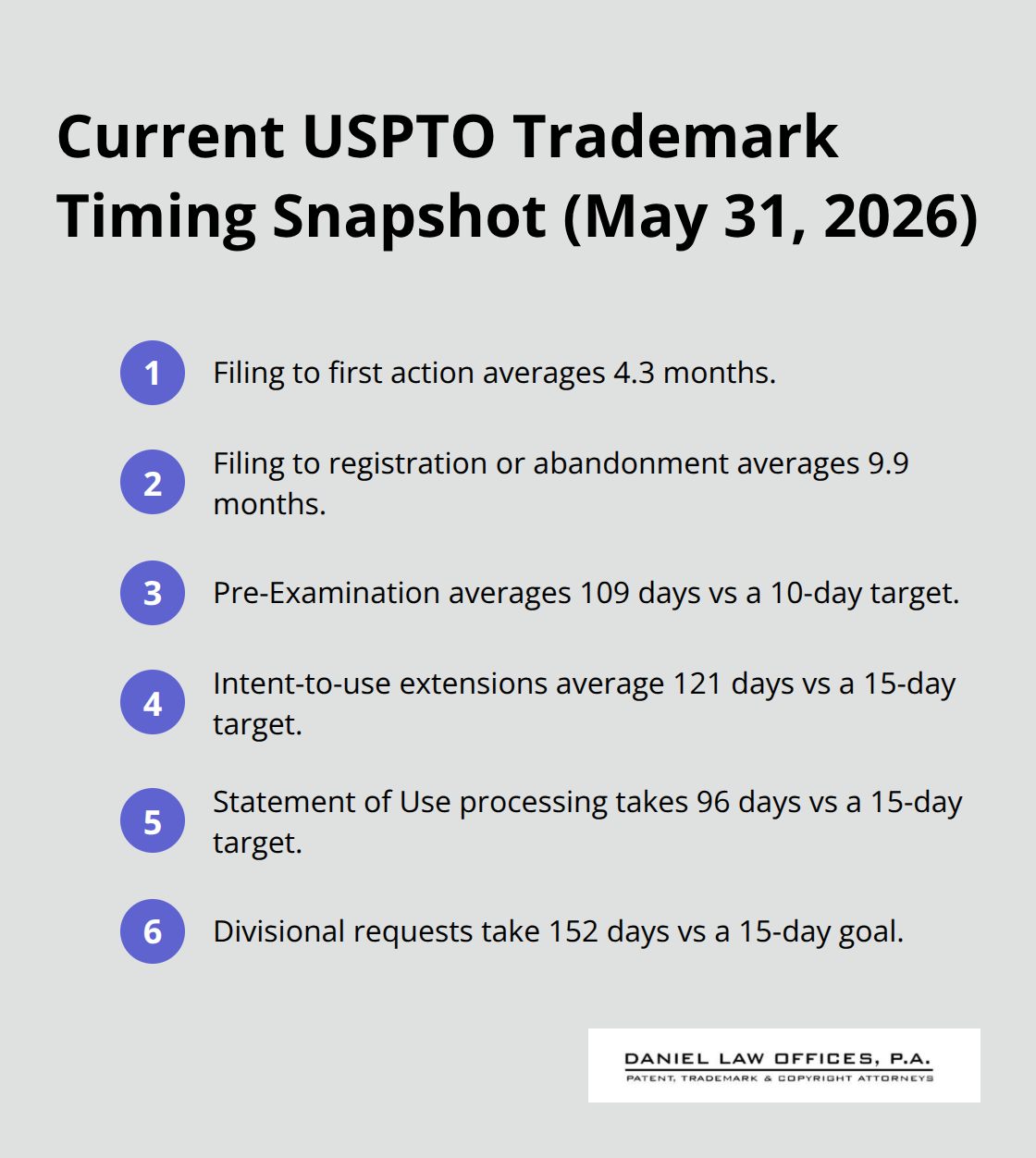
Divisional requests lag at 152 days versus a 15-day goal.
What Slows Down Your Registration
Specimen issues and goods description errors create the primary delays in trademark registration. If your specimen fails to show actual use of the mark in commerce, the examiner will reject it and you will lose three months waiting for your response deadline. Descriptive marks that lack acquired distinctiveness trigger lengthy office actions requiring evidence of five years or more of exclusive use. Conflicting marks discovered during examination force you to argue non-likelihood of confusion or abandon the application entirely.
The backlog stems from a surge in trademark filings driven by e-commerce growth, influencer branding, and globalization, combined with stricter examination policies designed to block fraudulent filings from foreign entities. New scrutiny under the Trademark Modernization Act increases office actions, particularly around specimen submissions and goods descriptions. Foreign applicants face additional scrutiny, and Madrid Protocol applications average 16 days to initial processing against a 10-day target, with stylized marks and designs taking longer to appear in the Trademark Status & Document Retrieval system.
Strategies to Reduce Delays
Submit a comprehensive trademark search before filing to eliminate conflicts upfront and avoid rejections that multiply your timeline. Prepare specimens showing actual marketplace use rather than generic mockups, and list goods and services with precision rather than broad categories. The expedited Petition to Make Special exists only for litigation threats or counterfeiting situations, making it unavailable for most businesses. Working with someone familiar with trademark law helps you avoid rejections that extend your timeline significantly.
Tracking Progress and Managing Deadlines
Monitor your application status every three to four months through the Trademark Status & Document Retrieval system to catch issues early. Keep your mailing address and email current to receive all office action notices, as missing a deadline results in automatic abandonment. Response deadlines are absolute: you have three months from an office action (six months for Madrid applicants), and extensions cost additional fees while adding months to your timeline.
The registration process involves multiple checkpoints: initial examination, publication in the Trademark Official Gazette, the 30-day opposition period, and final registration approximately two months after approval. For intent-to-use filings, you will receive a Notice of Allowance before actual registration, giving you six months to file a Statement of Use with the option for extensions. Post-registration requires maintenance filings at years five through six and nine through ten, with failure to file resulting in cancellation or expiration.
Planning Your Timeline Realistically
The actual timeline depends on your responses, the examiner’s workload, and whether conflicts emerge during search. Plan for 9–12 months minimum from filing to protection rather than the theoretical 6–9 month window. Once your mark receives registration, the real work of protecting your brand begins-and that protection requires ongoing attention and strategic enforcement.
Keeping Your Trademark Active After Registration in Orlando, Florida
Maintain Your Registration Through Required Filings
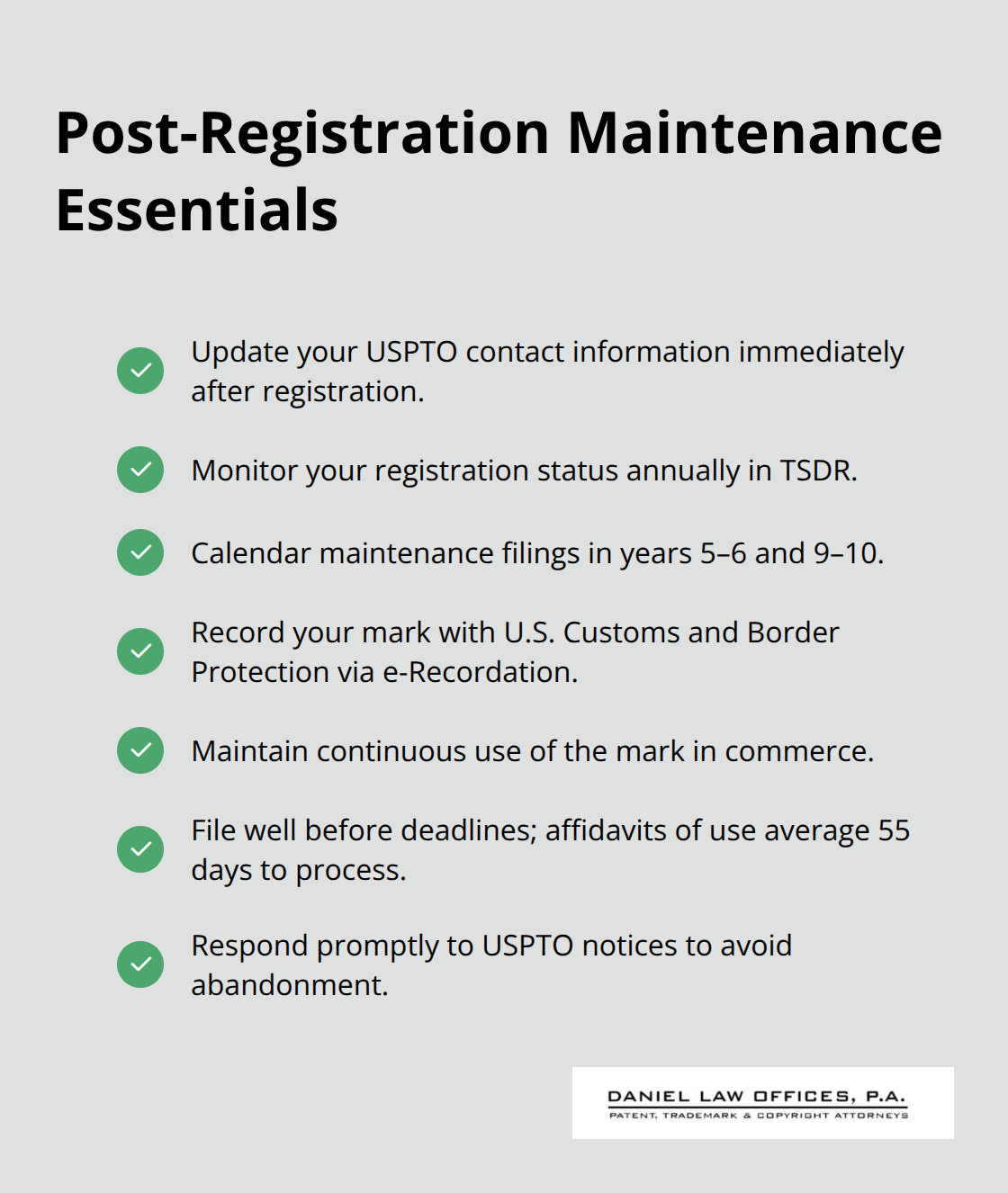
Registration marks the start of your trademark protection, not the end. Once the USPTO approves your mark, you own the exclusive right to use it for the goods and services listed in your registration, but that ownership demands active maintenance. The USPTO does not police usage or enforce your rights-that responsibility falls entirely on you. Your first task after registration issues is updating your contact information immediately. The USPTO sends maintenance notices and renewal reminders to the address on file, and missing these communications leads to cancellation or expiration that strips your protection away. Monitor your registration status annually through the Trademark Status & Document Retrieval system, and set calendar reminders for years five through six and nine through ten, when post-registration affidavits of use become due. Failure to file these documents at the required intervals results in loss of registration, forcing you to file a new application and start over. The USPTO data shows that post-registration affidavits of use average 55 days to process, so file well before deadlines rather than at the last moment.
Record Your Mark With Customs and Border Protection
You can record your trademark registration with U.S. Customs and Border Protection through e-Recordation, which prevents imported counterfeit goods from entering the country. This practical step stops counterfeiters from shipping fake products into the United States under your brand name. The e-Recordation process links your registered mark to CBP’s enforcement system, triggering automatic seizure of infringing imports at ports of entry. Many brand owners overlook this protection, leaving their registrations vulnerable to international counterfeiting operations.
Monitor the Marketplace for Unauthorized Use
Trademark enforcement means actively monitoring the marketplace for unauthorized use and taking legal action when infringement occurs. Search for your mark regularly across e-commerce platforms, social media, domain registrations, and competitor websites to catch infringement early. Document any unauthorized use with screenshots and dates, as this evidence supports cease-and-desist letters or litigation if needed. Infringement claims have stronger footing when your mark is registered because registration creates a legal presumption of your ownership and exclusive rights nationwide.
Take Swift Action Against Infringers
Many infringers stop immediately upon receiving a formal notice, making enforcement cost-effective compared to litigation. If infringement persists, you may need to pursue legal action through federal court or the International Trade Commission, depending on the scope and nature of the violation. Trademark rights exist only when you actively use them and defend them; abandonment occurs when you stop using your mark in commerce for three consecutive years, allowing others to claim it. This means maintaining continuous marketplace presence with your registered mark is non-negotiable for keeping protection alive.
Understand Your Enforcement Responsibilities
The registration certificate you receive is proof of ownership, but it is your responsibility to enforce that ownership through vigilance and swift action against infringers. Your registered mark provides the legal foundation for protection, yet that foundation crumbles without active defense and consistent use in the marketplace.
Final Thoughts
The trademark registration timeline spans multiple stages from your initial filing through examination, publication, opposition, and final registration-a process that typically takes 9 to 12 months. Registration itself marks only the beginning of your protection responsibilities, as you must maintain your mark through required filings at years five through six and nine through ten, keep your contact information current, and actively monitor the marketplace for infringement. Your registered mark becomes a valuable business asset that prevents competitors from using confusingly similar marks, provides nationwide protection, and allows you to record your mark with U.S. Customs and Border Protection to block counterfeit imports.
After registration issues, you need to set up a monitoring system to track your mark’s use and watch for unauthorized use in the marketplace. Document your continued use in commerce to prevent abandonment, respond promptly to any maintenance notices from the USPTO, and send cease-and-desist letters immediately when you discover infringement-many infringers stop without litigation. We at Daniel Law Offices, P.A. help businesses navigate the entire trademark registration timeline and develop enforcement strategies that protect your brand long after registration.