



IP Litigation Alternatives: When To Seek Nonlitigation Protections
Intellectual property disputes don’t always require a courtroom battle. Many IP owners in Orlando, Florida and beyond discover that litigation drains resources, damages relationships, and delivers unpredictable results.
At Daniel Law Offices, P.A., we help clients understand IP litigation alternatives that protect their rights while preserving business partnerships. Mediation, arbitration, licensing agreements, and strategic settlements often deliver faster, more cost-effective outcomes than traditional court proceedings.
Why Litigation Costs More Than Most IP Owners Realize
Discovery and Trial Expenses Drain Resources Fast
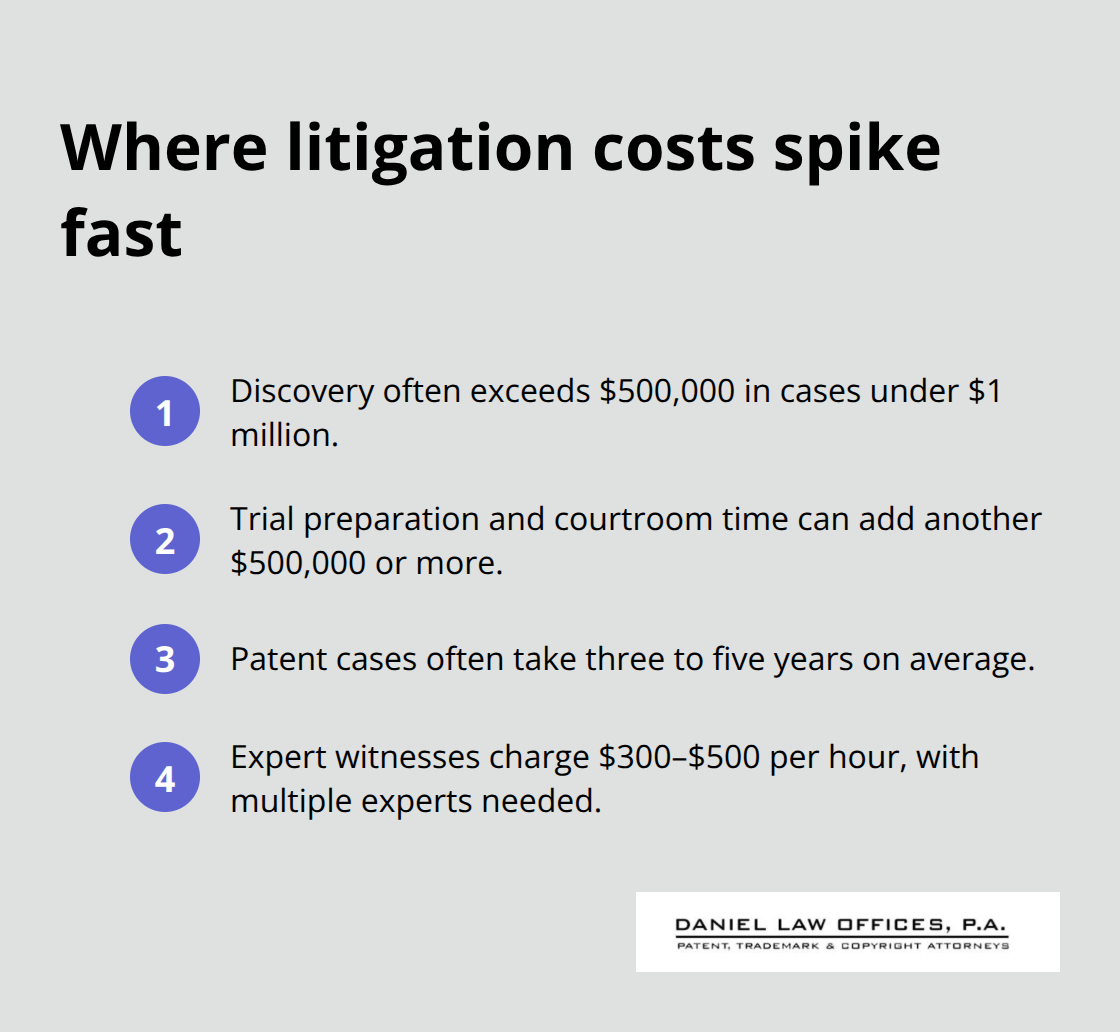
IP litigation in federal court devours resources at an alarming rate. Discovery alone-the phase where both sides exchange documents, emails, and technical evidence-routinely exceeds $500,000 for cases under $1 million in controversy. Add trial preparation and courtroom time, and you’re looking at another $500,000 or more. These figures come from real-world IP dispute data, not theoretical estimates.
Many IP owners in Orlando, Florida and beyond face a brutal choice: spend $1 million or more to fight, or find another path.
The timeline compounds the damage. Patent litigation stretches across three to five years on average, tying up executives, engineers, and internal resources while competitors move forward. Your team stops innovating and starts producing discovery documents. The financial bleeding doesn’t stop at attorney fees either. Expert witnesses in patent cases charge $300 to $500 per hour, and you typically need multiple experts for validity, infringement, and damages analysis. Depositions multiply costs further.
The Unpredictability Problem Courts Cannot Solve
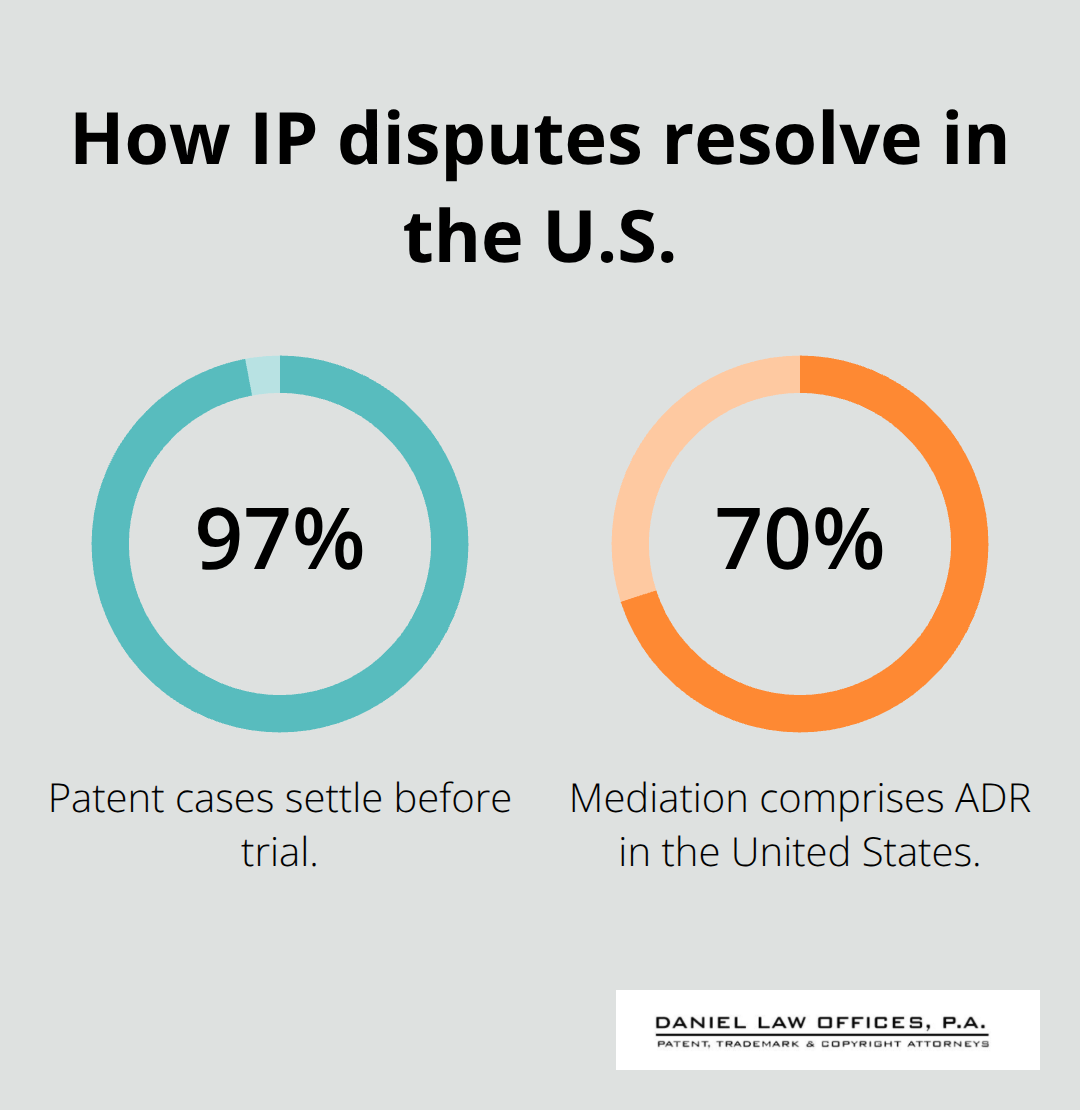
More than 97 percent of patent cases settle before trial, which reveals a hard truth: courts don’t reliably predict outcomes. Juries struggle with technical patents. Judges make unpredictable rulings on claim construction.
A trademark case you thought you’d win can collapse on a similarity analysis you didn’t anticipate. This uncertainty forces you to budget for worst-case scenarios, inflating your total cost of litigation.
Even winning a judgment doesn’t guarantee recovery-collecting from an insolvent defendant or one with limited assets leaves you holding an expensive piece of paper. The unpredictability of litigation should factor heavily into your decision about whether to pursue court action at all.
Hidden Damage to Relationships and Competitive Position
Courtroom battles fracture relationships with business partners, suppliers, and even customers who get dragged into disputes. Public court filings expose your technical details, trade secrets, and business strategies to competitors. Once your patent claims are public record, competitors can design around them more easily. Litigation also damages your reputation-even winning feels adversarial, and the process signals instability to investors and customers evaluating your company.
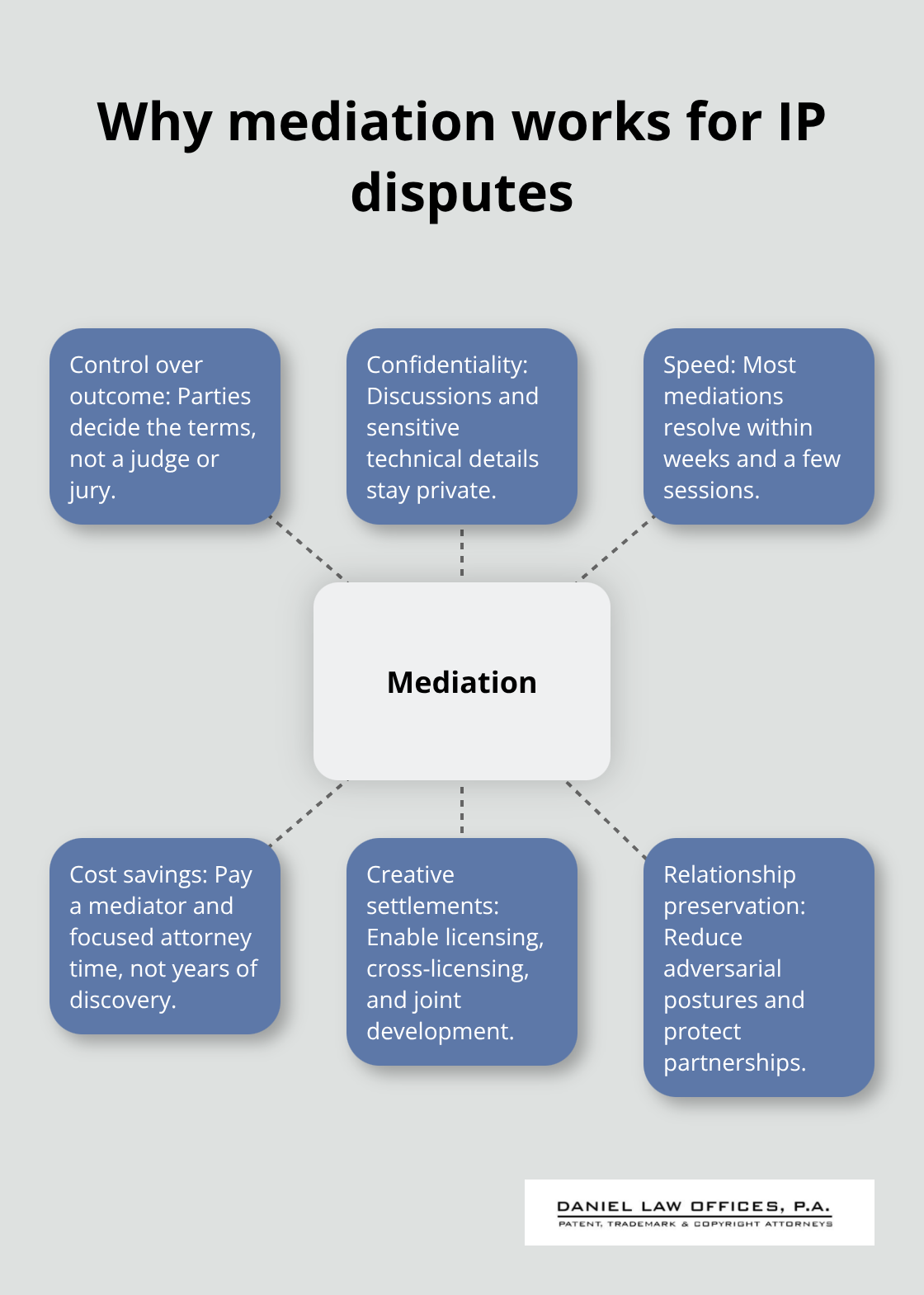
Settlement negotiations and mediation happen confidentially, allowing both sides to preserve dignity and explore creative solutions that courts cannot order, such as licensing arrangements or joint development agreements. These alternatives protect what matters most: your competitive edge and your relationships. Understanding these hidden costs makes the case for exploring mediation and arbitration before you commit to years of courtroom warfare.
Mediation and Arbitration: Two Paths Forward in IP Disputes
How Mediation Works and Why It Delivers Control
Mediation offers a fundamentally different path forward. A neutral mediator facilitates discussions between you and the opposing party but does not decide the outcome-you retain complete control over any settlement. This structure matters because it shifts power away from unpredictable judges and juries and back to the parties who understand the business realities. Mediation comprises about 70 percent of alternative dispute resolution in the United States, reflecting widespread recognition that it works.
The process typically begins with a joint session where both sides frame the dispute and establish confidentiality rules. If that session stalls, the mediator shifts to private sessions, moving between parties to test settlement options, propose compromises, and identify common ground. Unlike court proceedings, mediation confidentiality is protected by statute in most jurisdictions and reinforced through written agreements-sensitive technical information, trade secrets, and settlement discussions remain private. This confidentiality advantage alone justifies choosing mediation over litigation for many IP owners.
Creative Settlements Courts Cannot Provide
Mediation unlocks outcomes that courts cannot order. A judge cannot create a licensing arrangement, cross-license agreement, or joint development partnership-courts can only award money damages or injunctions. Mediation routinely produces these creative settlements because both parties cooperate rather than compete. In patent cases, mediation is particularly effective because a skilled mediator with patent knowledge can translate technical defenses into settlement leverage, helping parties understand the realistic value of their positions without the expense of expert testimony and trial preparation.
The cost advantage is substantial. Mediation typically costs only the mediator’s hourly rate plus your attorney fees for negotiation-often a fraction of discovery alone in litigation. Most mediations conclude within one to three sessions, compressed into weeks rather than years. When a settlement emerges, the mediator drafts a legally enforceable agreement that can remain confidential or be filed with the court.
Why Arbitration Carries Hidden Risks
Arbitration presents a different profile. A private arbitrator functions like a judge, issuing a binding decision after hearing evidence, but arbitration lacks the appeal rights and extended discovery phases of court litigation. This sounds faster, and it can be, but arbitration carries hidden costs that make it less attractive than mediation for many IP disputes. Arbitration fees run high-arbitrators charge hourly rates similar to judges’ time costs, and you still conduct discovery and retain experts, making the total expense competitive with litigation itself.
The lack of appeal rights is a significant drawback; if the arbitrator misinterprets your patent claims or misapplies the law, you have no recourse. For IP disputes involving complex technical defenses and legal nuance, this finality creates real risk. Mediation, by contrast, carries no such risk because settlement is voluntary-if mediation fails, you proceed to litigation with all your options intact.
When Mediation Makes Financial Sense
Mediation becomes the logical first step when dispute costs threaten to overwhelm the value at stake, particularly in patent cases where discovery expenses exceed $500,000 and outcomes remain uncertain even after trial. The 97 percent settlement rate in patent cases before trial demonstrates that parties almost always find middle ground once they understand the real costs and risks-mediation simply accelerates that realization without the financial bleeding. Beyond cost savings, mediation preserves the business relationships and competitive positioning that litigation destroys. You can share sensitive information under protective measures, explore licensing opportunities, and reach agreements that serve both parties’ long-term interests rather than creating a winner and a loser. This collaborative approach often produces outcomes neither side anticipated at the start, transforming a dispute into an opportunity for partnership or peaceful coexistence.
Licensing as Your First Negotiation Tool
Why Licensing Outperforms Courtroom Victories
Licensing agreements deliver predictability that litigation cannot match, and they often return more value than courtroom victories. When Stac Electronics negotiated with Microsoft over compression technology in the early 1990s, initial licensing demands reached $4 million per month. After litigation stretched on and costs mounted, the parties settled with revised licensing terms that reflected realistic market conditions without legal fees consuming both sides’ resources. This case illustrates a critical point: pre-litigation licensing economics frequently approach or exceed post-litigation outcomes, but with far less uncertainty and expense.
The software industry particularly demonstrates this pattern, where settlements routinely involve new or revised scope-of-use licenses with undisclosed terms rather than outright verdicts. Your licensing strategy should begin before disputes escalate, not after patent infringement litigation drains your budget.
Balancing Revenue Protection With Operational Flexibility
Negotiating favorable terms requires balancing your need for revenue protection against the licensee’s need for operational flexibility. Overly restrictive licenses backfire, as the Sega Enterprises and Atari Games cases demonstrated when licensees pursued independent development or reverse engineering to circumvent tight restrictions. Draft licenses that accommodate future use, technological shifts, and corporate restructuring without creating unintended windfalls from simple hardware changes or market evolution.
The software industry’s volatility makes licensing terms particularly sensitive to shifts in technology and enforcement approaches. A license that works today may create problems tomorrow if it fails to account for product evolution or international transfers. Build flexibility into your agreements from the start.
Settlement Agreements That Courts Cannot Create
Settlement agreements emerging from mediation typically include licensing provisions courts cannot order, such as cross-licensing arrangements or joint development partnerships that transform adversaries into collaborators. These outcomes preserve your competitive position while generating ongoing revenue streams that damage awards rarely match. A judge cannot create a licensing arrangement or partnership-courts can only award money damages or injunctions. Mediation routinely produces these creative settlements because both parties cooperate rather than compete.
The Cost-Benefit Analysis Favors Early Negotiation
The cost-benefit analysis is straightforward: a carefully negotiated license (completed in weeks or months, combined with your attorney’s time for drafting and negotiation) costs substantially less than discovery alone in federal litigation. Most mediations conclude within one to three sessions, compressed into weeks, allowing you to reach enforceable agreements that can remain confidential or be incorporated into court orders. This approach protects both your technical details and your business relationships while delivering terms aligned with your long-term competitive strategy rather than the unpredictable outcomes judges and juries impose.
Final Thoughts
IP litigation alternatives deserve serious consideration before you commit to years of courtroom battles and six-figure legal bills. The financial case is compelling: discovery alone exceeds $500,000 in typical IP disputes, and mediation typically concludes within weeks at a fraction of that cost. The 97 percent settlement rate in patent cases before trial reveals that parties almost always find middle ground once they understand real costs and risks, and mediation accelerates that realization without the financial bleeding.
Your choice depends on your specific situation and the strength of your IP position. If your dispute involves exclusive patent rights with no licensing opportunity, counterfeiting, or illegal downloads, traditional litigation may be necessary. But if resolution through negotiation is possible, mediation offers a superior path forward that preserves business relationships and delivers creative solutions-licensing arrangements, cross-licensing deals, joint development partnerships-that courts simply cannot order.
We at Daniel Law Offices, P.A. help clients navigate these decisions by evaluating both the strength of their IP position and the realistic costs of enforcement. Whether you need to secure patents and trademarks through registration or evaluate IP litigation alternatives, our team guides you toward strategies that protect your innovations while preserving your competitive position. Contact us to discuss which approach fits your situation.