



Trademark Registration Startups: Laying the Foundation for Brand Protection
Your startup’s brand is one of your most valuable assets, yet many founders overlook trademark registration until it’s too late. We at Daniel Law Offices, P.A. see startups lose months and thousands of dollars fighting rebranding battles that proper trademark protection could have prevented.
Trademark registration for startups isn’t just a legal formality-it’s a business necessity that protects your identity from day one. This guide walks you through the process in Orlando, Florida, and shows you how to avoid the costly mistakes we watch new companies make repeatedly.
Why Your Startup Needs Trademark Protection Now
Startups with patents and trademarks are 10 times more likely to secure funding, according to research from the A-CAPP Center. This statistic alone should tell you that trademark registration isn’t a nice-to-have-it’s a competitive advantage that investors notice immediately. When you register your trademark early, you signal to potential funders that you’ve thought strategically about protecting your brand. More importantly, you eliminate a major risk that could derail your entire business.
Federal Registration Stops Costly Rebranding
Another company can claim your brand name if you wait too long to register. The cost of rebranding-updating logos, packaging, websites, and marketing materials-often runs into tens of thousands of dollars. Early trademark registration prevents this nightmare entirely. Without federal registration, you have virtually no legal recourse if someone copies your name or logo across state lines.
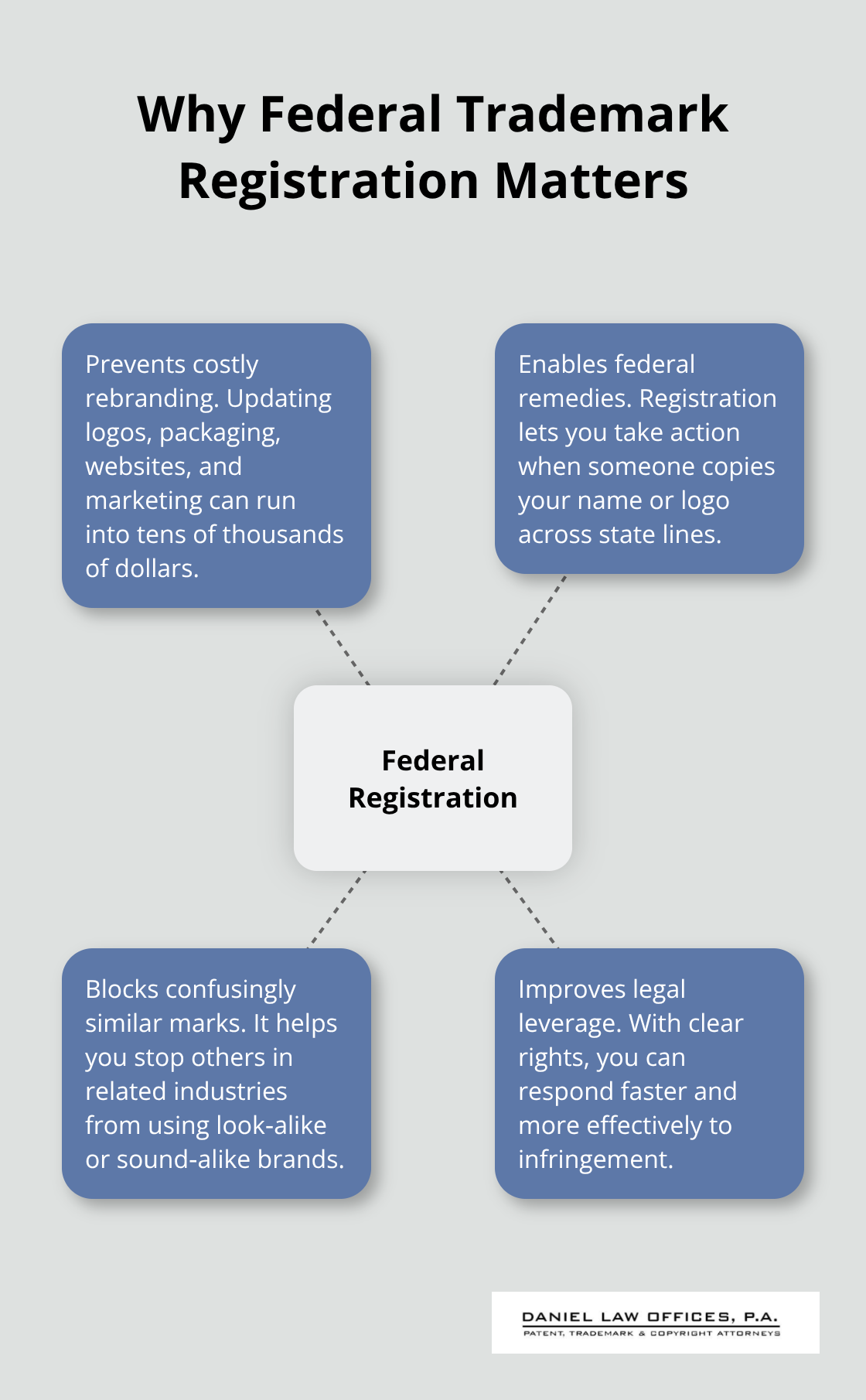
With registration, you can pursue federal remedies and prevent others from using confusingly similar marks in related industries.
Your Brand Transforms Into a Measurable Asset
The moment you register your trademark, it transforms from an idea into a tangible business asset with measurable value. A registered trademark increases your company’s valuation for future sales or licensing opportunities. If you ever decide to sell your startup or bring on investors, a protected brand significantly strengthens your negotiating position. Investors conduct due diligence on intellectual property, and they want to see that your brand is legally protected and defensible. This protection matters most in the early years when you’re building customer recognition and market presence.
Priority Rights Defeat Competitors
The likelihood of confusion standard governs trademark disputes, meaning even visually or phonetically similar marks can trigger legal challenges. Federal registration provides nationwide priority and exclusive rights that common-law use cannot match. This is why filing with the USPTO matters more than simply operating under a name or securing a domain. A domain name or LLC registration creates zero trademark rights-these are common misconceptions that cost startups dearly. If you delay federal filing and a competitor registers a confusingly similar mark in your industry, you may receive a cease-and-desist letter and face the choice between expensive litigation or rebranding.
The solution is straightforward: register your trademark before someone else does. The next section walks you through the specific steps to register your trademark in Orlando, Florida, and explains what to expect from the USPTO examination process.
How to File Your Trademark with the USPTO
Search the USPTO Database Before You File
Start your trademark registration by checking the USPTO’s Trademark Electronic Search System, known as TESS. This free tool lets you verify whether existing marks conflict with yours before you invest time and money in an application. Search using multiple variations of your mark-exact phrases with quotes, different word combinations, and phonetic alternatives. Many startups skip this step or conduct only a surface-level search, then receive an office action months later citing a similar mark they missed. The USPTO’s TESS database contains over 2 million active registrations, so precision matters.
A comprehensive search should also include Florida state registrations through Sunbiz, the official portal for Florida’s business filings, since state-level marks can create conflicts even if they don’t appear in federal records. Once you confirm your mark is available, you move forward with confidence knowing you’ve eliminated a major risk.
Select the Right Classes for Your Products or Services
Filing your application with the USPTO costs $225 to $275 per class, depending on whether you file electronically and how many product or service categories you claim. The USPTO uses a class-based system, and selecting the correct classes protects your brand in the right industries. If you sell software but only register in the clothing class, you have no federal protection against someone else using your mark for apps or digital services. Many startups file without professional guidance and later discover they selected overly broad or incorrect classes, forcing them to file additional applications or accept limited protection.
Research your industry’s standard classifications before you submit your application. The USPTO website provides detailed class descriptions that help you identify which categories match your business. Precision in class selection strengthens your protection and prevents costly gaps in coverage.
Prepare Strong Evidence of Use
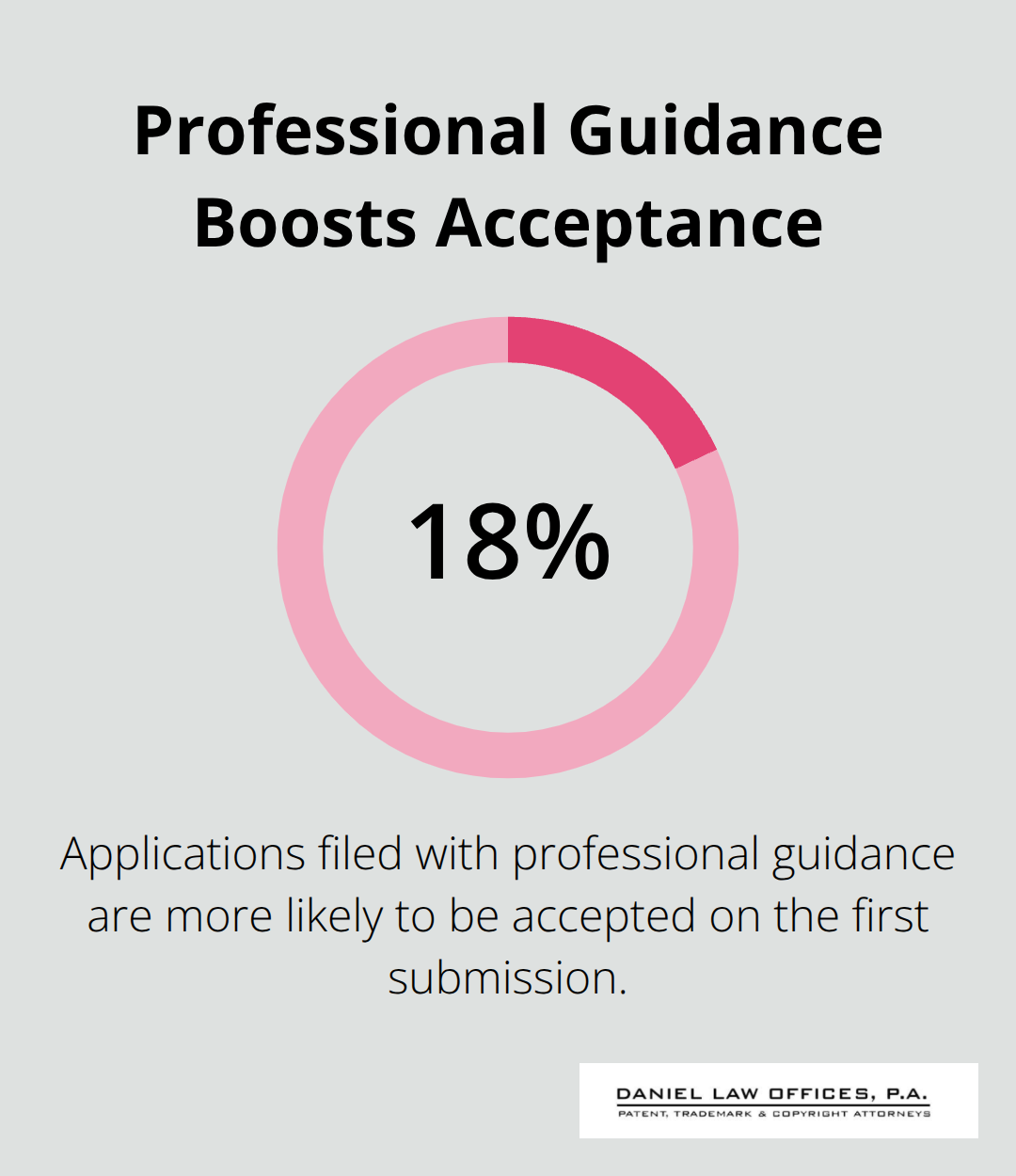
Applications filed with professional guidance are approximately 18 percent more likely to be accepted on the first submission, according to research from the A-CAPP Center. This higher acceptance rate reflects the importance of preparing strong specimens of use and selecting precise classes.
You must provide evidence that you actually use your mark in commerce (or have a genuine intent to use it soon). Screenshots of your website, product packaging, or marketing materials serve as specimens that demonstrate real-world use of your mark.
Weak or unclear specimens invite office actions that delay your registration. Prepare multiple high-quality examples that clearly show your mark associated with the goods or services you claim.
Respond Promptly to Office Actions
The examination process typically takes several months, and the USPTO may issue an office action requesting clarification, additional evidence, or amendments to your application. Missing deadlines can result in abandonment of your application, so track all correspondence from the USPTO carefully. Respond to office actions within the specified timeframe (usually six months) with the information or revisions the examiner requests.
Once the USPTO approves your mark, you can display the registered trademark symbol (®) and gain nationwide exclusive rights in the classes you registered. Federal registration provides access to federal courts for enforcement and stronger remedies against infringers than state registration alone.
Understand What Happens After Approval
Your registration doesn’t end the process-it marks the beginning of your responsibility to maintain and protect your mark. You must file a Declaration of Use around the five-year mark to demonstrate that you continue to use your mark in commerce. Renewal is required every ten years to maintain protection, with associated maintenance fees. These ongoing requirements ensure your registration remains valid and enforceable.
The mistakes startups make after registration often prove as costly as the mistakes they make before filing. The next section examines the trademark errors that damage startups most frequently and shows you how to avoid them.
Common Trademark Mistakes Startups Make
Selecting Names Too Similar to Existing Brands
Startups routinely select brand names that overlap with existing marks, triggering office actions or cease-and-desist letters that derail launch timelines. The likelihood of confusion standard in trademark law means even phonetically similar marks can create legal exposure. A startup selling fitness software might register Spotifi thinking it differs enough from Spotify, only to face a challenge months later. The USPTO examiner will compare your mark against existing registrations in related classes, and similarity in sound, appearance, or meaning matters more than you might expect.
Conduct searches across Google, the USPTO TESS database, and Florida’s Sunbiz portal before settling on a name. Search for variations, abbreviations, and phonetic alternatives. If you discover a mark that sits uncomfortably close to yours, change your name now rather than invest in building brand recognition around a vulnerable choice. The cost of renaming before launch is negligible compared to rebranding after customers recognize your original mark.
Neglecting Trademark Monitoring and Enforcement
Startups treat trademark registration as a finish line when it’s actually a starting point. Many founders file their registration and then neglect the ongoing responsibility to monitor competitors and enforce their rights. The USPTO database contains abandoned registrations from companies that failed to file their Declaration of Use at the five-year mark or skipped renewal at the ten-year mark.
Post-registration monitoring means actively searching for infringing uses across your industry, online marketplaces, and social platforms. Amazon, eBay, and Etsy all offer brand registry programs that allow you to report counterfeit listings and remove infringing products. Set up quarterly searches using your trademark across these platforms and monitor for similar marks filed in your classes. If you discover infringement and do nothing, you weaken your legal position and signal to potential infringers that enforcement isn’t a concern. Document any infringing uses and prepare to send cease-and-desist letters.
Delaying International Trademark Protection
Startups operating only in Florida or the United States often assume their federal registration provides worldwide protection, which it does not. US registration protects your mark only within US borders and does not extend to Canada, Mexico, Europe, or Asia. If your startup plans to expand internationally within three to five years, delay in filing abroad creates vulnerability.
Another company can register your mark in Canada or the UK before you do, forcing you to rebrand in those markets or negotiate expensive licensing agreements. The Madrid System allows you to file a single international application covering 122 member countries, significantly reducing the cost and complexity of multi-country protection compared to filing in each country separately. After you secure your US registration, prioritize registrations in your manufacturing countries first, then your target markets, then future opportunities (this Three M’s approach from the A-CAPP Center aligns your filing strategy with your business growth).
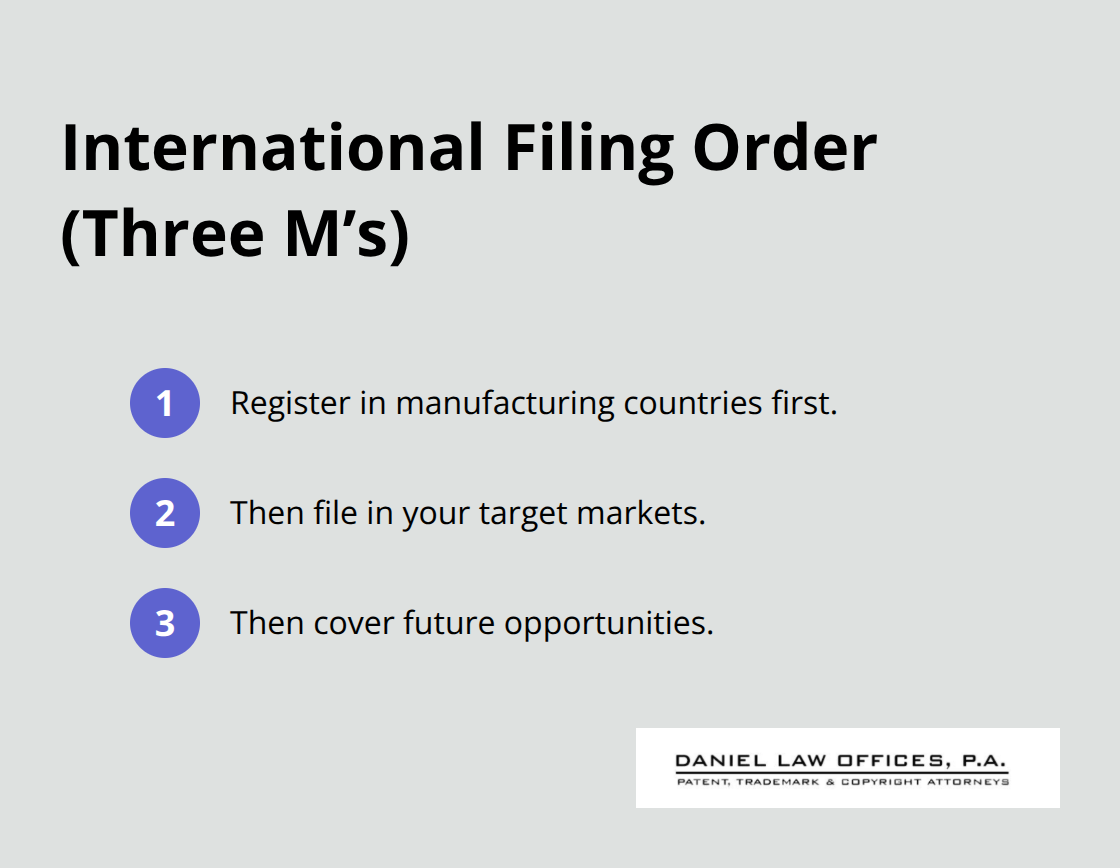
International filings cost more upfront but prevent the far greater expense of rebranding or losing market access when you expand.
Final Thoughts
Trademark registration for startups protects your identity from the moment you launch and attracts investors who recognize the value of protected intellectual property. The statistics prove this reality: startups with trademark protection secure more funding, command higher valuations, and avoid the devastating costs of forced rebranding. Every month you delay filing increases the risk that a competitor will register a confusingly similar mark in your industry, leaving you with expensive legal battles or the choice to abandon the brand you’ve built.
Conduct a thorough search using the USPTO’s TESS database and Florida’s Sunbiz portal, select the correct classes for your products or services, prepare strong evidence of use, and file your application promptly. Once registered, monitor your mark actively across online marketplaces and your industry, and plan for international protection if expansion is part of your growth strategy. These actions eliminate the most common mistakes that damage trademark registration startups and position your brand for long-term success.
We at Daniel Law Offices, P.A. help businesses establish and protect their brand identity through trademark registration and intellectual property strategy. Contact us to discuss your trademark strategy and move forward with confidence.