




Trademark Registration Orlando Florida: From Application to Brand Protection
Your brand is your business identity, and protecting it legally matters more than most business owners realize. Trademark registration in Orlando, Florida gives you exclusive rights to your brand name, logo, and other distinctive marks across your industry.
We at Daniel Law Offices, P.A. help brand owners navigate the registration process and defend their intellectual property. This guide walks you through everything from initial application to ongoing protection strategies.
Understanding Trademark Basics and Why Registration Matters
What Actually Qualifies as a Trademark
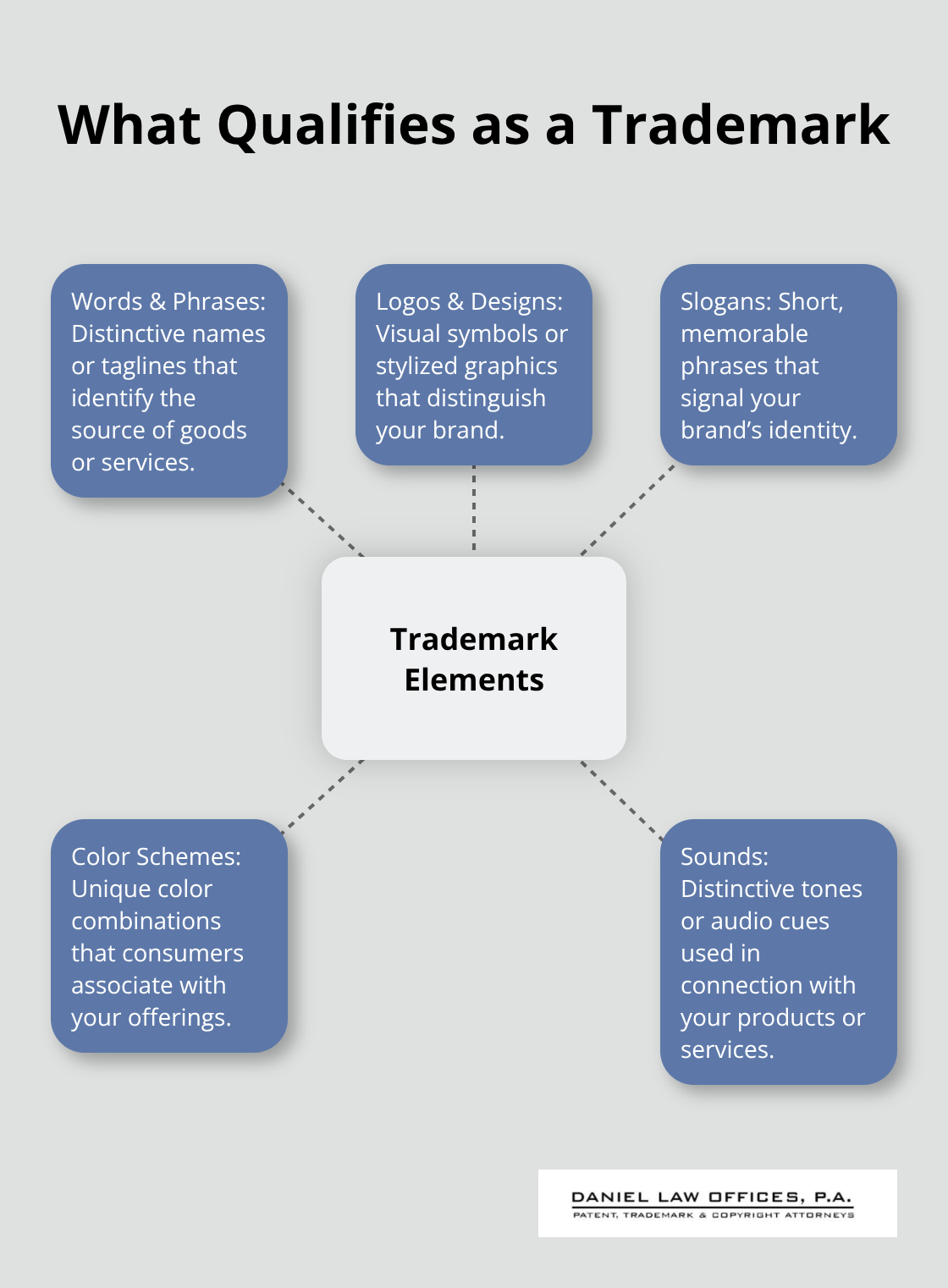
A trademark is any word, phrase, symbol, design, or combination of these elements that identifies and distinguishes your goods or services from competitors. The U.S. Patent and Trademark Office received over 645,000 trademark applications in 2023, reflecting how seriously American businesses take brand protection. Your company name, logo, slogan, color scheme, or even a distinctive sound can all function as trademarks. The key requirement is that your mark must be capable of distinguishing your products from others in the marketplace. Generic terms like “software” or “restaurant” cannot receive trademark protection, but distinctive terms like Apple for technology or Amazon for e-commerce absolutely can.
Federal registration through the USPTO provides significantly stronger protection than relying on common law rights alone, giving you nationwide rights and the ability to take legal action against infringers in federal court.
Why Federal Registration Outperforms State or Common Law Protection
Businesses that operate without federal registration often discover too late that their brand protection has serious gaps. Common law trademark rights exist automatically when you use a mark in commerce, but they only protect you in the geographic areas where you actively conduct business. If you operate in Orlando, Florida, without federal registration, someone in California could legally use your identical mark for competing products. Federal registration eliminates this problem entirely by granting you rights across all fifty states. Additionally, the USPTO registration certificate serves as legal evidence of your ownership, which carries significant weight in court disputes. According to the American Intellectual Property Law Association, trademark litigation costs average between $300,000 and $500,000 when disputes reach trial. Federal registration also allows you to record your trademark with U.S. Customs and Border Protection, enabling officials to stop counterfeit imports at ports of entry.
Clearing Up What Trademark Registration Actually Does and Does Not Do
Many business owners hold misconceptions about trademark protection that lead to inadequate brand defense strategies. Registration does not automatically protect your trademark forever without maintenance-you must file renewal documents every ten years to keep your federal registration active. Registration also does not prevent someone from using similar marks in unrelated industries, though the broader your trademark’s reputation, the stronger your protection becomes across different categories. Some owners believe that registering a domain name or a social media handle provides trademark protection, but these registrations exist in separate systems and offer no legal trademark rights. Your trademark registration covers the specific goods or services listed in your application; if you expand into new product categories, you typically need additional registrations. The USPTO does not police the internet for infringement-that responsibility falls on you to monitor usage and take enforcement action when unauthorized use occurs. Many business owners also mistakenly think that trademark registration prevents anyone else from using their mark, but the actual protection depends on whether competitors use similar marks for similar products or services that could confuse consumers.
Understanding these fundamentals positions you to make informed decisions about your brand’s legal protection. The application process itself requires careful attention to detail and strategic planning to maximize your trademark’s strength and scope.
The Trademark Application Process in Orlando, Florida
Conduct a Comprehensive Trademark Search First
A trademark search before filing your application is non-negotiable. The USPTO database contains over 12 million registered and abandoned trademarks, and thorough searching prevents you from wasting money on an application that will face rejection. Most business owners skip this step or conduct only a surface-level search, which leads to costly refusals from the USPTO. You need to search not just identical marks but also similar ones that could create confusion in your industry. The USPTO uses a phonetic similarity standard, meaning Coca and Coka might be considered confusingly similar despite different spelling. Free searches on the USPTO website provide basic results, but they miss state trademark registrations, common law usage, and domain name conflicts that could trigger opposition to your application. Thorough searches across state trademark databases and the internet reveal potential conflicts that the federal database alone won’t catch. This upfront investment in comprehensive searching saves thousands in application fees and prevents rejection after waiting months for examination.
Prepare Your Application With Precision
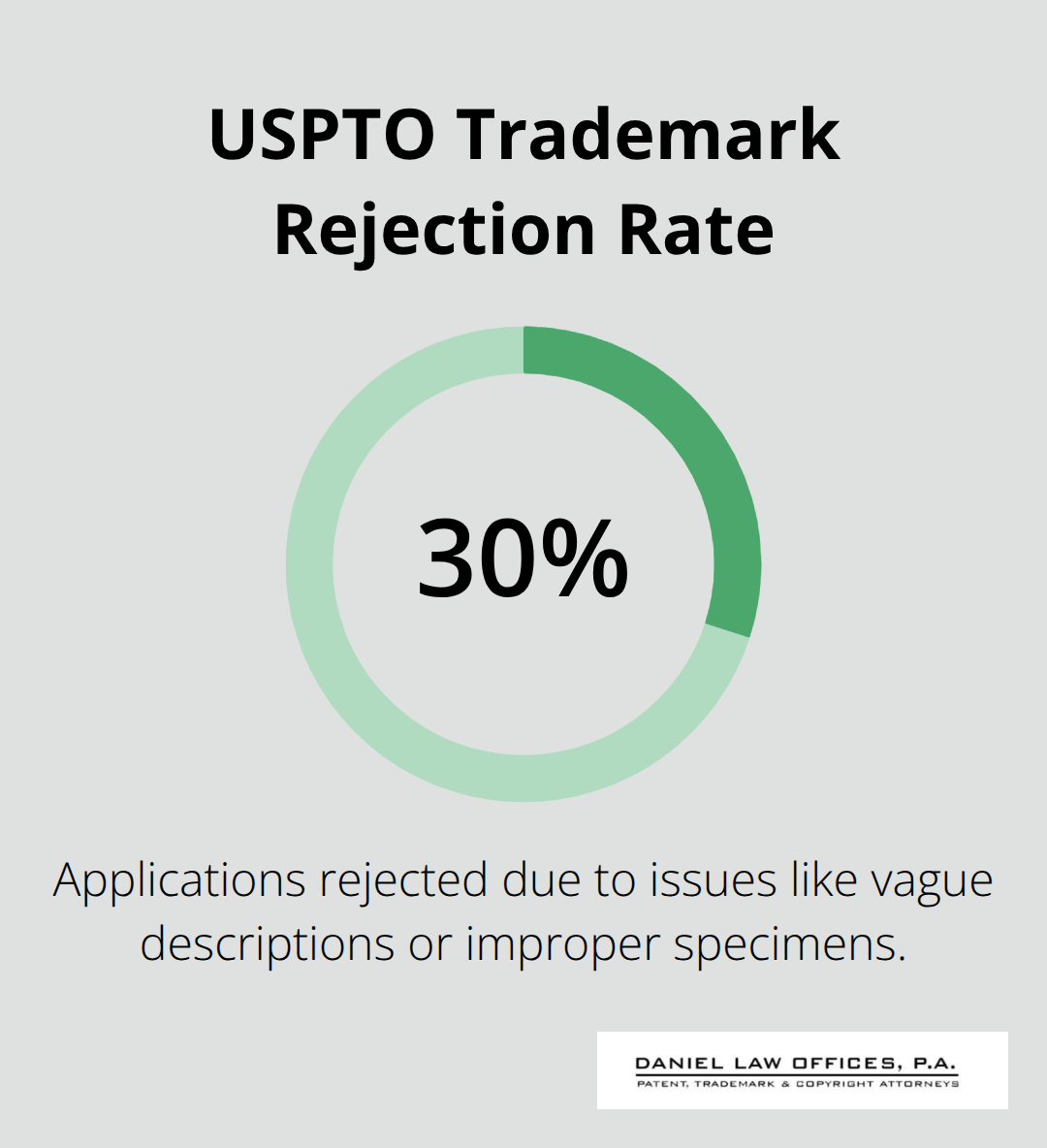
Your actual application requires precision that most business owners underestimate. The USPTO rejected approximately 30% of trademark applications in recent years, with many rejections stemming from vague descriptions of goods or services or improper specimen submissions.
Your application must identify exactly what goods or services your mark will cover, using language that aligns with the USPTO’s International Classification system rather than your own descriptions. If you claim your mark covers software but submit a specimen showing it on a physical product box, the examiner will reject the application for inconsistency. You must also provide a clear specimen showing your mark actually in use on or associated with your goods or services in commerce.
Navigate the USPTO Examination Process
The examination process typically takes four to six months, during which the assigned examiner reviews your application for compliance with federal trademark law. If the examiner issues a rejection, you have six months to respond with arguments or evidence addressing their concerns. Many rejections relate to descriptiveness, where the examiner believes your mark merely describes the goods or services rather than distinguishing them from competitors. Responding effectively to these rejections requires knowledge of trademark law and prior case decisions that support your position. The difference between an amateur response and a strategic one often determines whether your trademark ultimately registers. Once the USPTO approves your application, you move into the next critical phase of your brand’s protection strategy.
Protecting Your Brand After Registration
Monitor Your Trademark Actively
Registration marks the beginning of your brand protection work, not the end. The USPTO grants your trademark, but protecting it from infringement falls entirely on you. Most business owners mistakenly believe that federal registration automatically stops others from using similar marks, when in reality you must actively monitor the marketplace and take enforcement action when unauthorized use occurs.
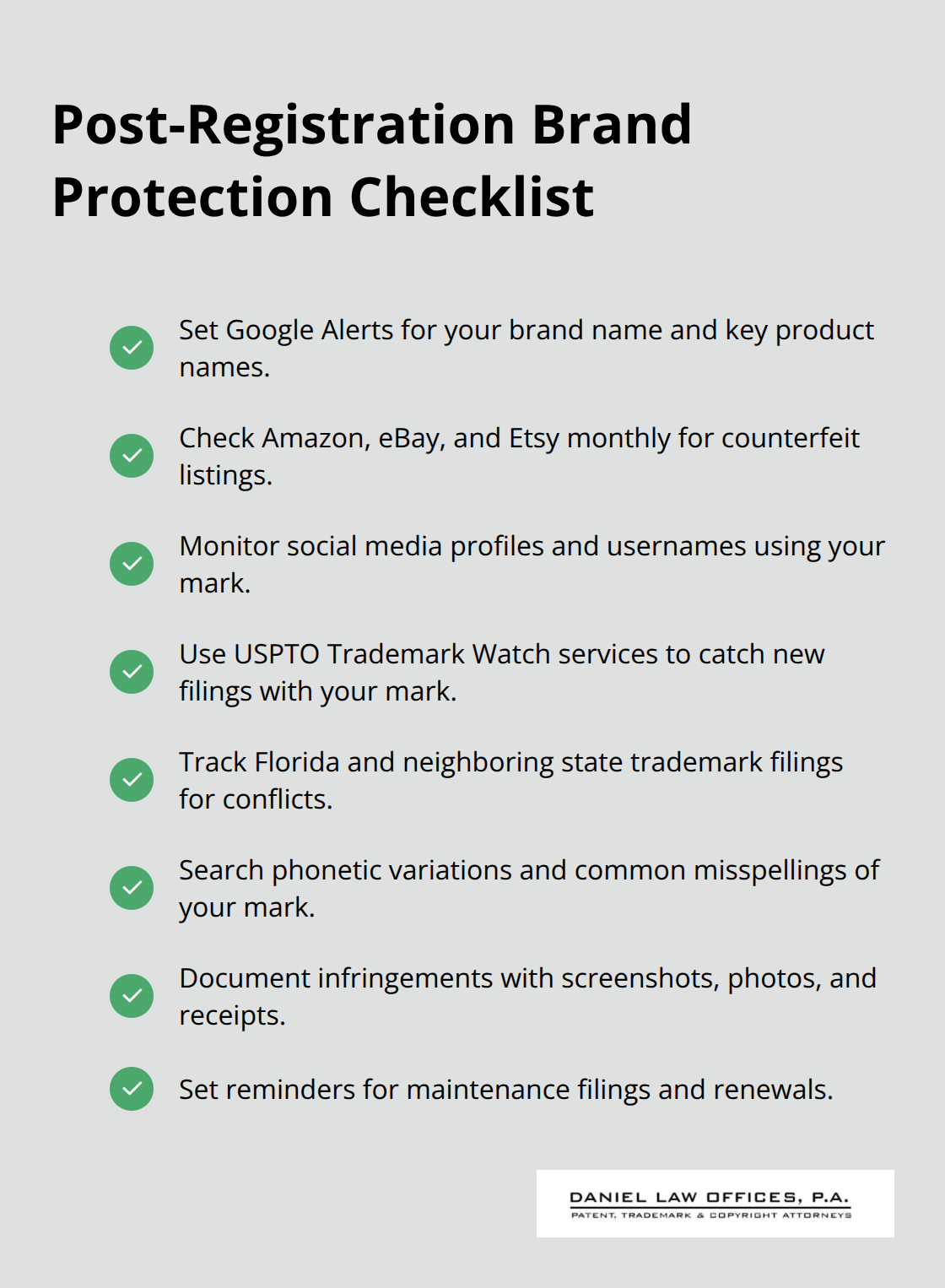
Start monitoring immediately by setting up Google Alerts for your brand name, checking e-commerce platforms monthly for counterfeit products, and monitoring social media accounts that use your mark without authorization.
The International Trademark Association reports that counterfeiting costs American companies approximately 4.2 trillion dollars annually across all industries, making proactive monitoring essential rather than optional. Use services like Trademark Watch from the USPTO itself, which alerts you when someone files an application containing your registered mark, typically costing between 200 and 400 dollars annually depending on your service provider. Additionally, monitor state trademark filings in Florida and neighboring states where your business operates, since state registrations can sometimes create conflicts even when federal registration exists.
Set calendar reminders to conduct quarterly brand searches across major e-commerce platforms including Amazon, eBay, and Etsy, where counterfeit goods frequently appear. Search for phonetic variations of your mark as well, since counterfeiters intentionally misspell brands to evade detection.
Maintain Your Federal Registration
Maintaining your federal registration requires filing a Declaration of Use between the fifth and sixth year after registration, then filing renewal applications every ten years thereafter. The USPTO will not remind you about these deadlines, and missing them results in cancellation of your trademark rights despite your initial investment in registration. Set multiple calendar reminders at least six months before each deadline to avoid this costly mistake.
Enforce Your Rights Against Infringement
When you discover unauthorized use of your trademark, response speed matters significantly. Send a cease-and-desist letter immediately, clearly stating your registration number and describing the infringing use, which often resolves conflicts without litigation. Document all instances of infringement with screenshots, photographs, and purchase receipts showing the infringing products or services.
If the infringer ignores your cease-and-desist letter, federal litigation becomes necessary, with trademark infringement cases averaging 275,000 to 500,000 dollars in costs according to the American Intellectual Property Law Association. However, trademark holders who prevail in court can recover attorney fees and damages from willful infringers, making enforcement financially viable in cases involving significant unauthorized use. Daniel Law Offices, P.A. assists businesses in protecting their brand identity by registering trademarks and guiding clients through the complexities of intellectual property law.
Final Thoughts
Trademark registration in Orlando, Florida protects your brand from competitors who would otherwise capitalize on your reputation and market position. The registration process demands attention to detail at every stage, from comprehensive searching through ongoing monitoring and enforcement. Skipping any of these steps leaves your brand vulnerable to infringement that costs far more to remedy than prevention would have cost upfront.
Federal registration provides nationwide protection that common law rights simply cannot match, but registration alone does not protect your brand. You must actively monitor for infringement, maintain your registration through required filings, and enforce your rights when unauthorized use occurs. The businesses that protect their brands most effectively treat trademark management as an ongoing responsibility rather than a one-time filing task.
We at Daniel Law Offices, P.A. guide brand owners through the entire trademark lifecycle, helping you conduct thorough searches before filing, prepare applications that withstand USPTO examination, and develop enforcement strategies when infringement occurs. Contact Daniel Law Offices, P.A. to discuss your trademark protection strategy, whether you are registering your first trademark or defending an existing registration against infringement. Protecting your intellectual property today prevents far more expensive problems tomorrow.