




Strategies for Foreign Patent Protection: Expanding Your Global Reach
Your patent is only as strong as the countries where you protect it. A U.S. patent won’t stop competitors from copying your invention in Europe, Asia, or anywhere else globally.
At Daniel Law Offices, P.A., we help companies navigate foreign patent protection and build intellectual property strategies that work across borders. The decisions you make now-which countries to target, when to file, and how to enforce your rights-directly impact your bottom line and competitive advantage.
How Patent Protection Works Across Borders in Orlando, Florida
Patent protection is territorial. A U.S. patent grants you exclusive rights only within the United States. The moment your invention crosses a border, that patent becomes worthless without separate protection in each country where you operate or sell. This reality forces companies to make hard choices about which markets justify the cost of filing abroad.
Understanding Your Filing Timeline
The Paris Convention, established in 1883, gives you 12 months from your U.S. filing date to file in other member countries while preserving your original priority date. This window sounds generous until you realize that 12 months moves fast when you’re managing product development, manufacturing, and market entry simultaneously. The Patent Cooperation Treaty, administered by WIPO and recognized by over 150 countries, offers a different approach. Instead of filing separately in each country immediately, you file one international application that delays your national filings for up to 30 months from your priority date. This extra time lets you assess market potential, secure funding, and gather competitive intelligence before committing to expensive national filings in each jurisdiction. The catch is that the PCT is not a global patent-it’s a filing mechanism that eventually requires you to enter the national or regional phase in specific countries, each with its own examination process and fees.
Comparing Paris Convention and PCT Routes
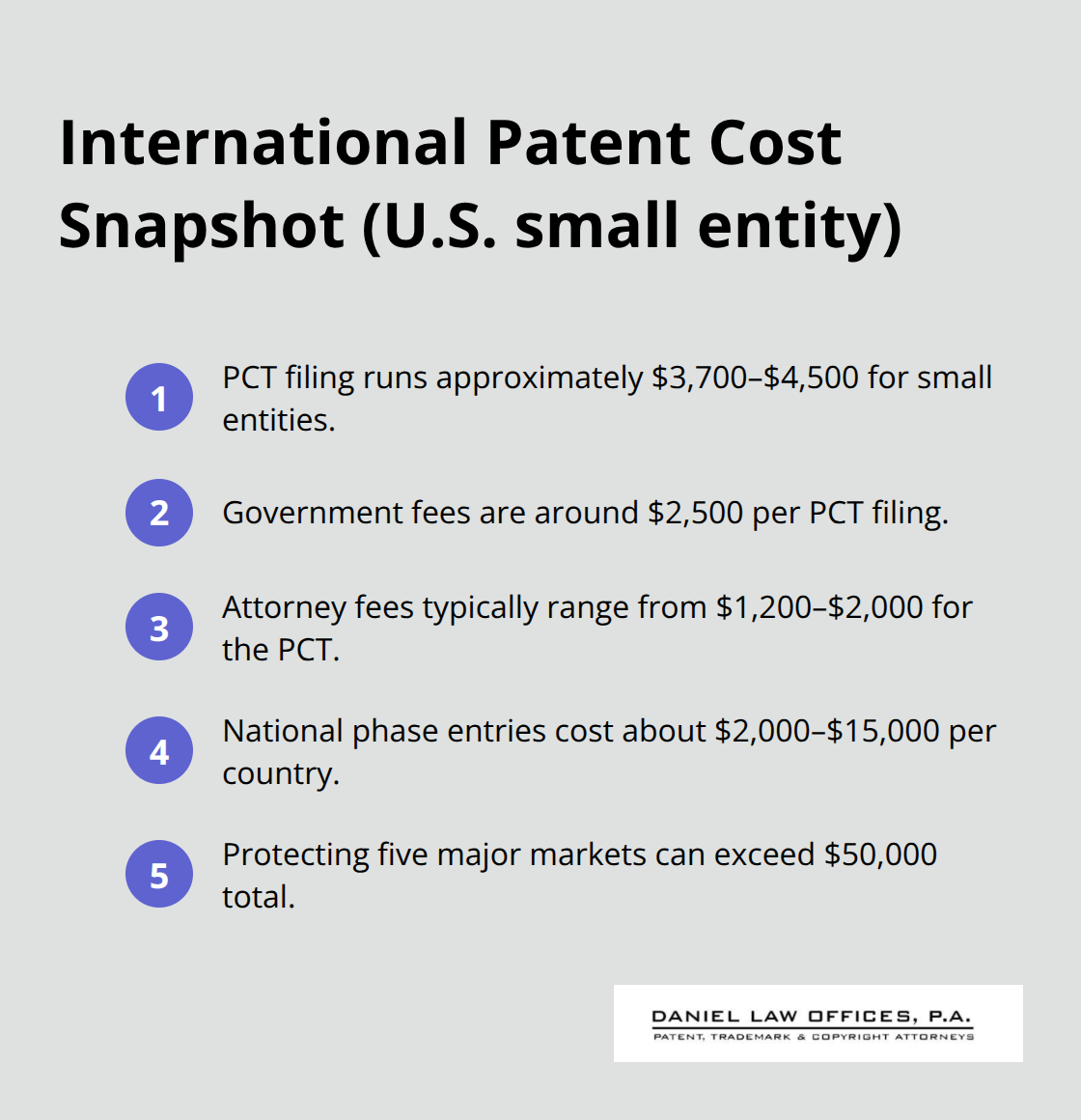
The Paris Convention route works best when you’re targeting just a few countries and need to move quickly. You file separately in each country, which means higher upfront costs but faster prosecution in each jurisdiction. The PCT route makes sense when you’re considering many countries or need time to evaluate markets. PCT filing costs approximately $3,700 to $4,500 for small entities, with government fees around $2,500 and attorney fees between $1,200 and $2,000, according to WIPO and USPTO data. Micro-entity applicants qualify for roughly 80% discounts on most fees, reducing total costs to about $2,000 to $3,000. After the international phase concludes, national phase filings in each country typically run $2,000 to $15,000 per country. This means that protecting an invention across five major markets could easily exceed $50,000 once you account for prosecution and maintenance.
The decision between Paris and PCT isn’t about which is better-it’s about matching your business timeline and budget to your market ambitions. Companies that wait too long to decide on international strategy often miss the Paris Convention deadline and lose the ability to claim their U.S. priority date in some countries.
How Enforcement Strength Shapes Your Strategy
Patent enforcement strength differs sharply across jurisdictions. The United States, Canada, Western Europe, Japan, and South Korea offer reliable enforcement through courts that respect patent rights and award meaningful damages. China remains improving but still challenging for enforcement. India, Russia, Brazil, and South Africa present tougher environments where even valid patents face difficulty in courts. This enforcement landscape should directly influence your filing strategy.
Filing a patent in a country where you cannot effectively enforce it wastes money. If your competitors manufacture in China and you cannot realistically enforce your patent there, filing may still make sense to block imports into the U.S. under Section 337 proceedings, but you should understand this limitation upfront. The USPTO and the European Patent Office coordinate through the Cooperative Patent Classification system, which harmonizes how patents are classified across jurisdictions and eases cross-border searching. This coordination helps you understand what prior art examiners will find and how your patent scope compares globally.
Procedural Differences Across Patent Offices
Foreign patent offices operate differently from the USPTO. Some conduct more thorough searches before examination begins. Others allow broader claims initially and narrow them during prosecution. These procedural differences affect your filing strategy and timeline in ways that require local knowledge. Understanding these variations helps you anticipate examination timelines and prepare responses that align with each jurisdiction’s expectations. The path forward requires you to match your enforcement priorities with your filing decisions-a step that determines whether your international patent portfolio protects your business or simply drains your budget.
When Should You File International Patents in Orlando, Florida
The moment you file a U.S. patent application, your 12-month Paris Convention window opens. This deadline is absolute and unforgiving. If you miss it, you lose the ability to claim your U.S. priority date in countries outside the Paris Convention, and that costs you dearly. Competitors who file after you may establish earlier priority in some jurisdictions. Most companies wait too long to make this decision, then rush into international filings without strategy. Founders focus on product launch and fundraising while their patent clock ticks silently.
Two Paths Forward
The timing decision splits into two routes. The Paris Convention route demands immediate action-you must file in target countries within those 12 months or lose priority. The PCT route gives you breathing room, extending the decision to 30 months from your U.S. filing date. However, the PCT is not a waiting game without cost. You still pay filing fees upfront (around $3,700 to $4,500 for small entities), and you must decide which countries to enter during the national phase. The PCT buys time only if you use it strategically to assess market demand, secure funding, or identify which competitors operate in which regions. Filing in the wrong countries at the wrong time burns capital that could fund product development instead.
Target Markets First, File Second
Most companies file internationally based on where they think they might sell someday. This approach wastes tens of thousands of dollars. The smarter approach targets countries where competitors currently manufacture, where you plan to generate revenue within 18 months, or where enforcement is strong enough to matter. National phase filings cost between $2,000 and $15,000 per country once you move beyond the international phase. Protecting your invention across five major markets easily exceeds $50,000 in total costs. A company protecting a medical device in India and Brazil-countries with weaker patent enforcement-may recover nothing from that protection even if infringement occurs. The same dollars spent protecting the invention in Germany, Japan, and Canada create defensible rights in jurisdictions where courts actually award damages.
Enforcement realities should drive your filing decisions, not aspirational sales projections. Countries with strong enforcement (the United States, Canada, Western Europe, Japan, and South Korea) justify the filing costs because you can actually stop infringement. China remains challenging despite improvements; India, Russia, and Brazil present enforcement environments where even valid patents struggle in court. Your portfolio should concentrate in jurisdictions where you manufacture, where customers are located, or where competitors operate. A manufacturer with plants in Germany and Mexico should file in both countries plus the U.S. to block imports. A software company selling primarily in North America and Western Europe should skip India entirely and focus those dollars on European protection through the European Patent Office route.
Budget Reality and Cost Control
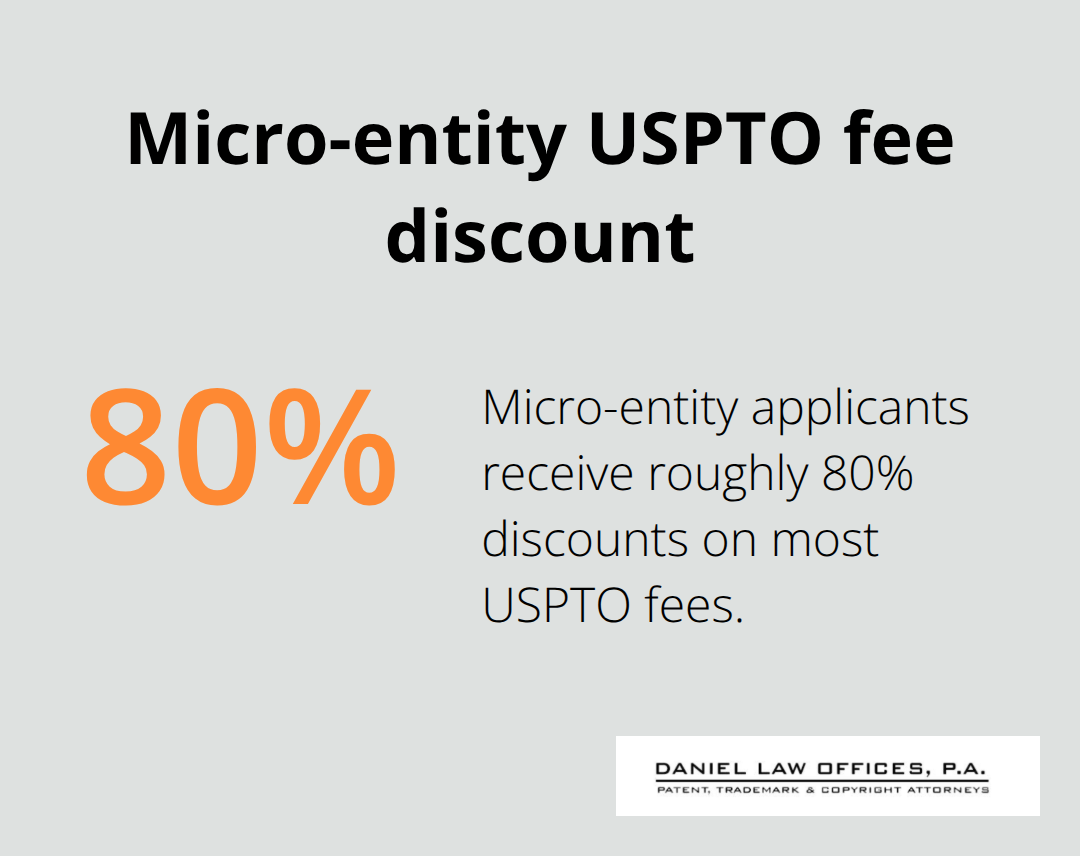
The total cost of ownership for international patents extends far beyond initial filing fees. Translation costs alone add $500 to $2,000 per application per language. Maintenance fees continue indefinitely-some countries charge annual renewal fees that accumulate over the patent’s 20-year life. A patent maintained across ten jurisdictions for 20 years costs substantially more than the initial filing suggests. Micro-entity applicants receive roughly 80% discounts on most USPTO fees, reducing initial PCT costs to about $2,000 to $3,000. This discount applies only to the international phase; national phase entries in foreign countries do not receive the same discounts. You must plan for the full cost before committing.
The practical strategy involves filing the U.S. patent first, establishing that priority date, then using the 30-month PCT window to gather market intelligence. Which countries show genuine customer traction? Where do your competitors actually operate? Which jurisdictions have customers willing to pay premium prices that justify patent protection costs? Once you answer these questions, enter the national phase in only those countries. This staged approach prevents the costly mistake of protecting inventions in 15 countries when five would suffice. The next step involves understanding how to maintain and enforce those patents once you’ve filed them across your target markets.
How to Keep Patents Valid Across Different Countries in Orlando, Florida
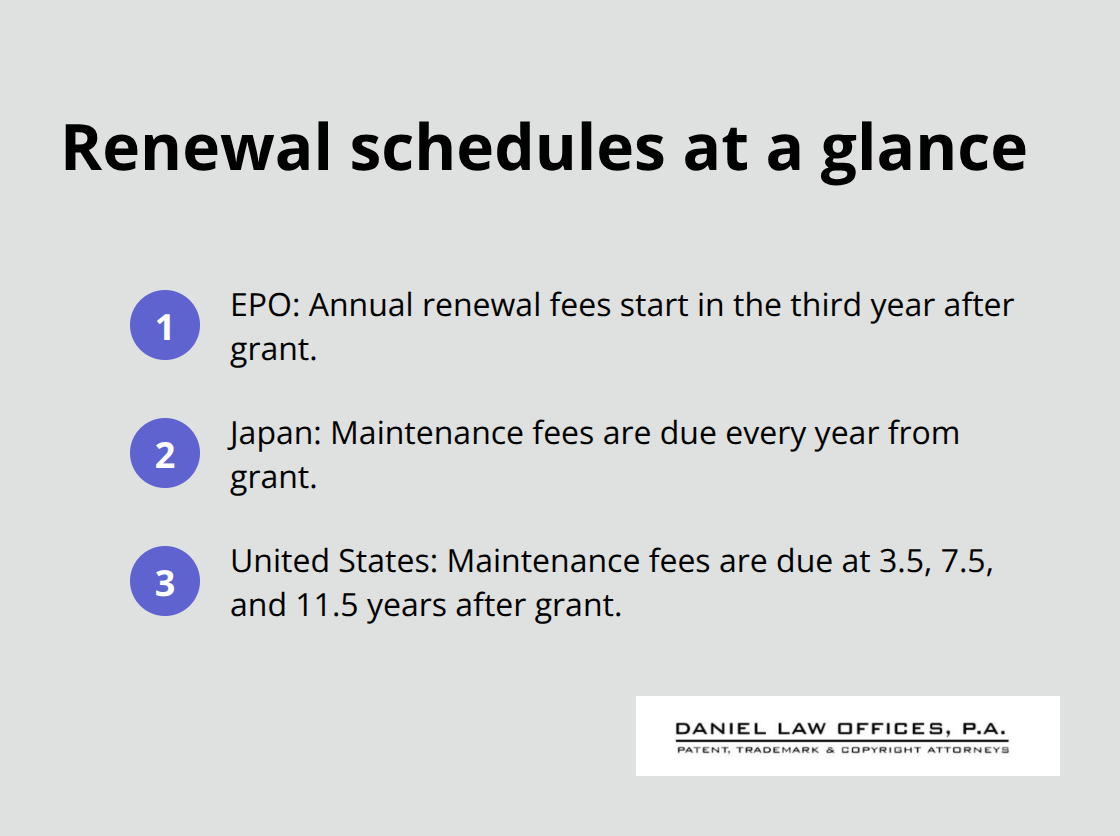
Patent maintenance across multiple jurisdictions demands precision and discipline. You cannot file a patent in ten countries and forget about it for 20 years. Every jurisdiction has different renewal deadlines, fee structures, and procedural requirements. Missing a single deadline in one country forfeits your patent protection there permanently, with no restoration option in most cases. The European Patent Office charges annual renewal fees starting in the third year after grant, with costs increasing each year you maintain protection. Japan requires maintenance fees every year from grant forward. The United States charges maintenance fees at 3.5 years, 7.5 years, and 11.5 years after grant.
Track Deadlines Systematically Across Jurisdictions
A company protecting a patent across the U.S., European Patent Office, Japan, and Korea faces renewal deadlines arriving in different months throughout each year. Without a systematic tracking system, you will miss payments. Patent management software sends automated reminders for every jurisdiction, tracks payment deadlines months in advance, and maintains records of what you have paid and when. Services like Anaqua or CPA Global track deadlines across hundreds of jurisdictions and integrate with accounting systems to prevent missed fees. The cost of this software is negligible compared to losing patent protection because you missed a renewal deadline by one month.
Understand Enforcement Mechanisms in Your Target Markets
Patent rights are negative rights-they allow you to stop others from making, using, selling, or importing your invention, but enforcement mechanisms vary dramatically by country. In the United States, you file suit in federal court and can obtain injunctions stopping infringement immediately and damages for past harm, sometimes including treble damages if infringement was willful. The U.S. International Trade Commission under Section 337 can block imports of infringing products, which is often faster than district court litigation. Germany offers some of the fastest patent litigation in the world, with cases resolved in 12 to 18 months, and German courts award reasonable damages based on lost profits or reasonable royalties. China allows enforcement through its courts, but damages awards remain modest and enforcement inconsistent. India and Russia present environments where even valid patents face difficulty in courts, with slow proceedings and unpredictable outcomes.
Choose Filing Countries Based on Enforcement Reality
Your choice of which countries to file in should be driven by where you can actually win cases and recover damages, not by aspirational market presence. A manufacturer with plants in Germany and Mexico should file in both countries plus the U.S. to block imports. A software company selling primarily in North America and Western Europe should skip India entirely and focus those dollars on European protection through the European Patent Office route. This enforcement reality means that protecting an invention in a country where you cannot realistically enforce it wastes money.
Retain Local Counsel in Target Markets
Local patent counsel in target markets is not optional-it is essential. A local attorney in Germany understands German patent law, the procedural rules of German courts, and which judges handle patent cases favorably. An attorney in the U.S. cannot effectively represent you in German litigation. Local counsel handles prosecution before the patent office in their country, responds to office actions using language and procedural knowledge that local examiners expect, and represents you if enforcement becomes necessary. Keep detailed records of all invention-related activities to support your patent applications and maintenance strategy. The cost of retaining local counsel in multiple countries adds to your patent expenses, but the alternative is watching your patents die through missed deadlines or losing infringement cases because your legal strategy did not account for local procedural rules and enforcement culture.
Final Thoughts
Global patent protection requires matching your filing strategy to enforcement realities and market priorities. The companies that succeed internationally file strategically in countries where they manufacture, sell, or face genuine competitive threats, rather than protecting inventions across 15 jurisdictions when three would suffice. The Paris Convention and PCT both serve legitimate purposes, but they work only when you understand your timeline and budget before committing to foreign patent protection.
Common mistakes derail international patent strategies repeatedly. Companies miss the 12-month Paris Convention deadline because product launch consumed all attention, others file in countries with weak patent enforcement and wonder why their patents provide no protection when infringement occurs, and many underestimate the total cost of ownership by forgetting that maintenance fees, translation costs, and local counsel fees accumulate over 20 years. The path forward starts with a clear assessment of where your business operates and where competitors threaten your market position-which countries will generate revenue within 18 months, where do your competitors manufacture, and which jurisdictions offer enforcement strong enough to justify filing costs.
At Daniel Law Offices, P.A., we help companies develop international patent strategies that align with business goals and market realities. Our registered patent attorney guides you through patent searches, application drafting, and prosecution before the USPTO, then coordinates foreign patent protection in your target markets. Contact us to discuss your strategy and start protecting your innovations globally.