




Patent Infringement Lawsuits Florida: What Do You Need to Know
Patent infringement can threaten your business and drain resources through costly litigation. If you operate in Florida, understanding how patent infringement lawsuits work is essential to protecting your innovations.
We at Daniel Law Offices, P.A. help businesses navigate these complex legal challenges. This guide covers what you need to know about patent protection and enforcement in Florida.
What Counts as Patent Infringement in Orlando, Florida
Understanding the Basics of Patent Infringement
Patent infringement occurs when someone makes, uses, sells, or imports a patented invention without permission from the patent holder. Florida courts hold infringers liable regardless of whether they knew about your patent-intentionality doesn’t matter legally. According to the United States Patent and Trademark Office, over 600,000 patent applications were filed in 2024, making infringement a growing concern for businesses across the state.
Courts focus on one critical question: does the accused product or process contain all the essential elements of your patent claims? If even one claim element is missing, infringement typically doesn’t occur. This reality makes patent language enormously important. Vague claims create enforcement difficulties, while specific, well-drafted claims provide stronger protection.
Patent Types Protected in Florida
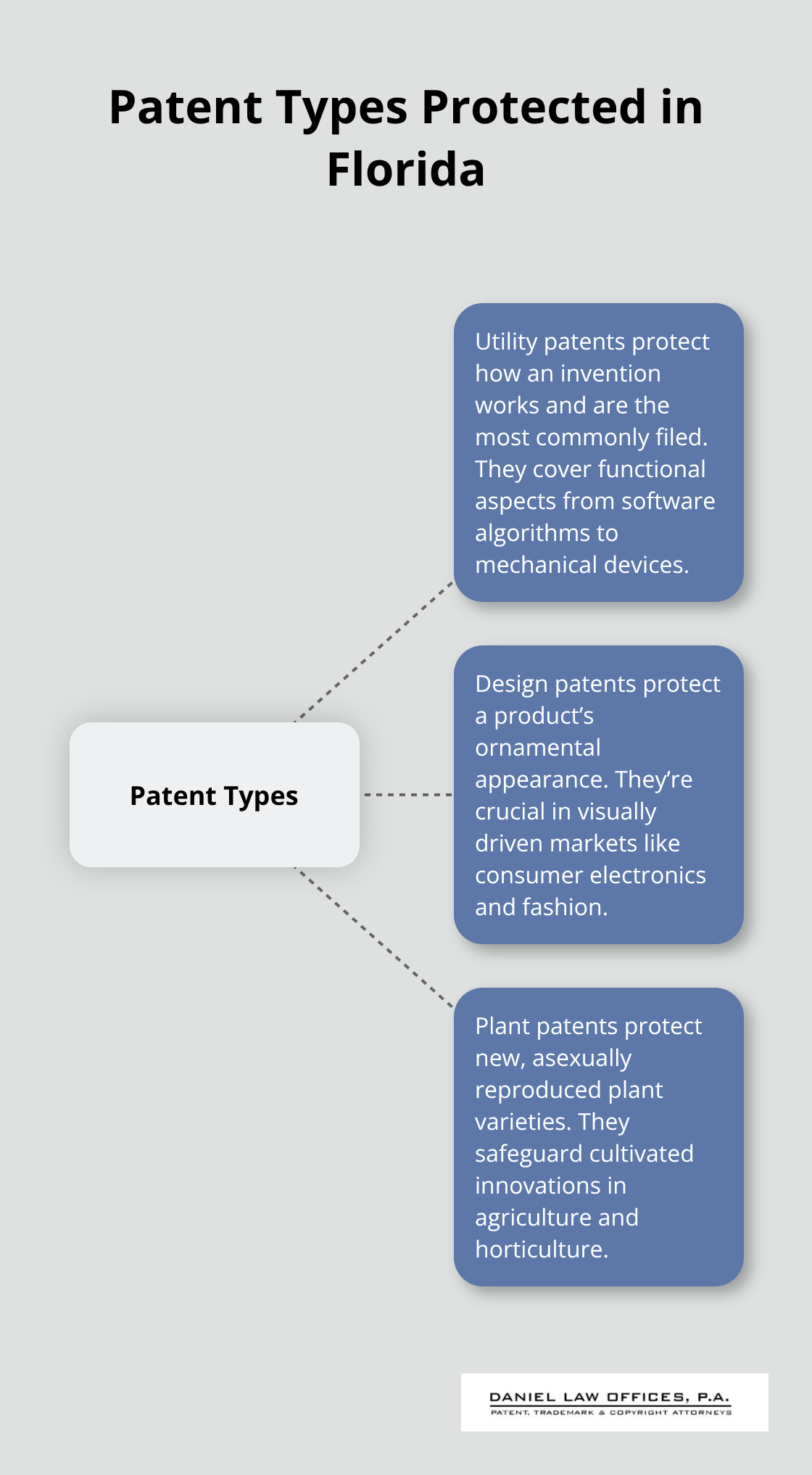
Different patent types receive protection in Florida, though the actual protections are federal rather than state-specific. Utility patents cover how inventions work and represent the most common type filed, protecting everything from software algorithms to mechanical devices. Design patents protect the ornamental appearance of products, which matters significantly in industries like consumer electronics and fashion. Plant patents cover new plant varieties developed through cultivation.
Manufacturing businesses in Florida, particularly in aerospace, medical devices, and software development, face constant infringement threats. The Florida technology sector generated approximately 240,000 jobs as of 2023, creating significant intellectual property exposure for companies operating in these fields.
Why Infringement Risks Matter for Your Business
Small manufacturers often underestimate infringement risks until a competitor launches a similar product. At that point, litigation costs can exceed $1 million. Conducting thorough patent searches before launching products helps identify existing patents that could create liability and prevents costly conflicts before they start.
Understanding these infringement fundamentals positions your business to take protective action. The next section covers the specific lawsuit process you’ll face if infringement occurs.
How Patent Infringement Lawsuits Move Through Florida Courts
Understanding Federal Jurisdiction and Filing Requirements
Patent infringement lawsuits fall under federal law rather than state law, which means you must file in United States District Court. If your case involves Orlando-area businesses, you’ll typically file in the Middle District of Florida. The plaintiff carries the burden of proving infringement by a preponderance of the evidence, meaning your case must be more convincing than the defendant’s position. Most patent cases in federal court take between two to four years from filing to trial, though case complexity and court docket congestion affect this timeline significantly.
Early Motions and Claim Strength
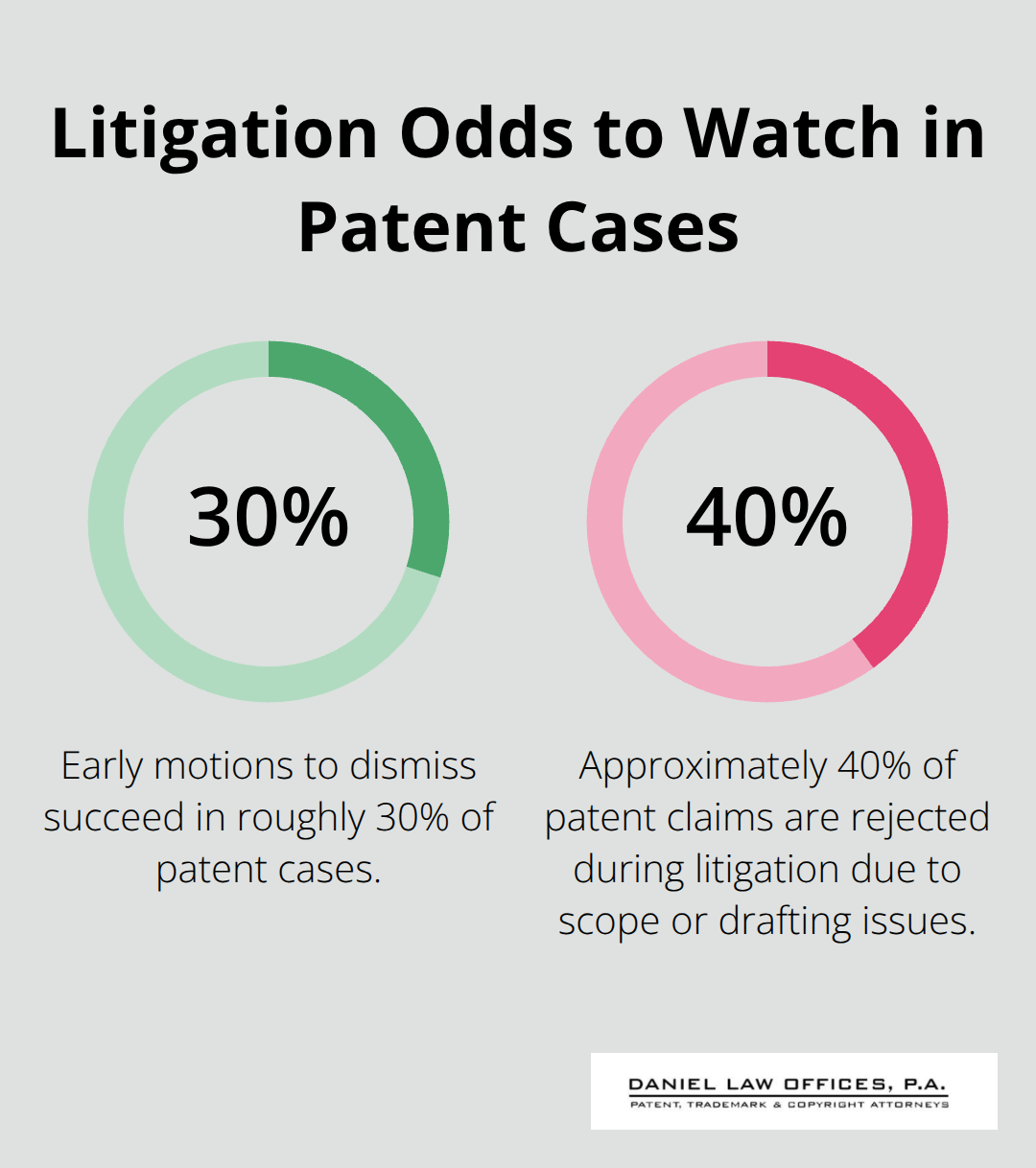
The defendant will likely file a motion to dismiss within sixty days of being served, arguing that infringement hasn’t occurred even if all facts are true. Federal Judicial Center data shows these early motions succeed roughly thirty percent of the time, which demonstrates how critical strong claim drafting becomes from the beginning. Vague or overly broad patent language gives defendant attorneys immediate weaknesses to exploit, potentially ending your case before trial even begins.
Discovery: Building Your Evidence Package
Discovery consumes the majority of litigation time and represents your primary opportunity to build a winning case. Both sides exchange documents, emails, and technical specifications that reveal how the defendant designed their product and whether they intentionally copied your invention. Courts typically order depositions where you question the defendant’s engineers and executives under oath, creating testimony that either supports or undermines your infringement claims. The defendant will demand access to your patent files, development records, and licensing communications, so organize this material professionally before litigation starts.
Patent cases generate enormous document volumes (some exceed fifty thousand pages), making digital document management systems essential for tracking evidence efficiently. Proper organization at this stage strengthens your position throughout the entire process.
Trial and Damages
At trial, the judge or jury evaluates whether the accused product contains every element of your patent claims. If you win, damages typically range from actual lost profits to a reasonable royalty on infringing sales, with willful infringement cases potentially doubling damages. Understanding these potential outcomes helps you evaluate settlement offers and litigation strategy as your case progresses toward resolution.
How to Protect Your Patents in Orlando, Florida
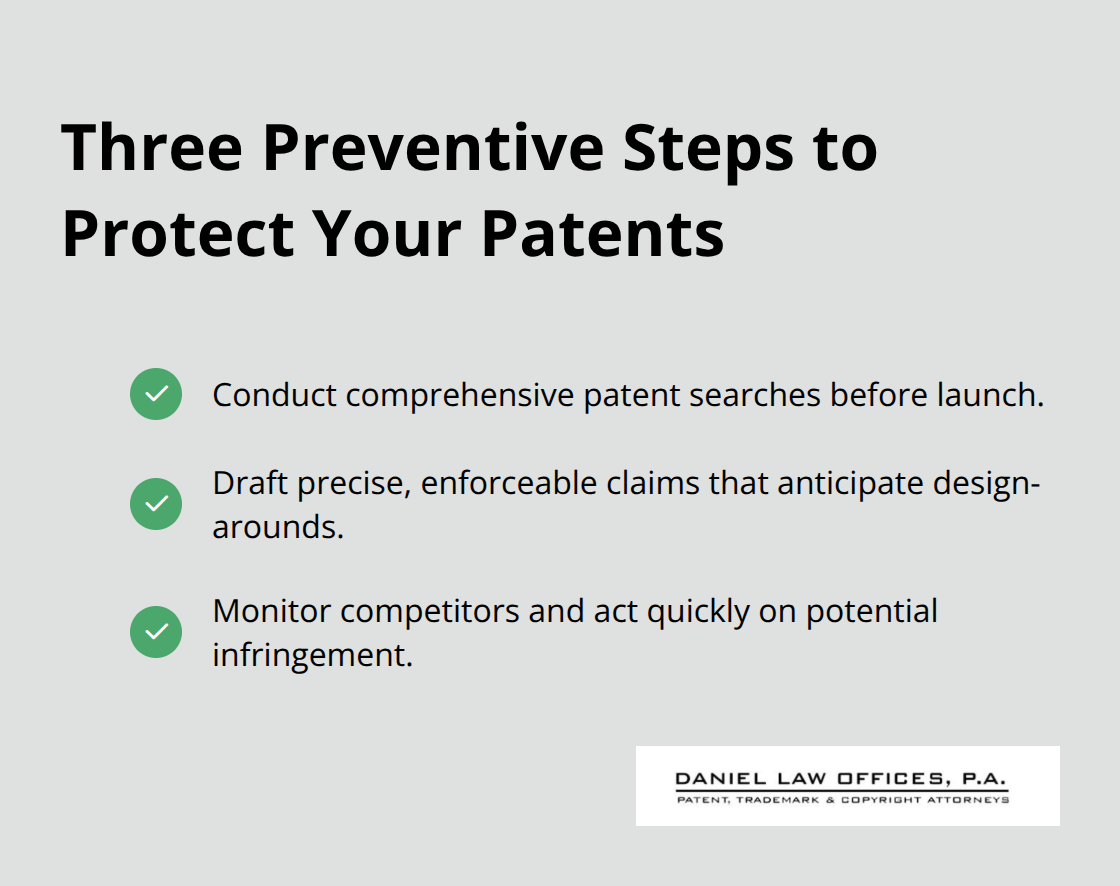
Conduct Patent Searches Before Launch
Patent searches before product launch represent the single most important protective step your business can take. The United States Patent and Trademark Office receives thousands of applications monthly, and launching a product that infringes an existing patent exposes your company to immediate litigation costs exceeding one million dollars. Comprehensive searches identify conflicting patents before you invest in manufacturing, marketing, and distribution.
These searches examine not just issued patents but also pending applications that could mature into enforceable rights. Many Florida manufacturers skip this step to save money upfront, then face catastrophic costs when competitors sue. The USPTO database contains millions of patents, and manual searching produces unreliable results. Professional search services using specialized databases like Google Patents and Espacenet provide comprehensive coverage that protects your business from costly surprises.
Draft Claims That Survive Court Challenges
Patent claim language determines whether your patent survives infringement challenges in court. Vague claims get invalidated before trial, while overly narrow claims fail to cover competitor products that use slightly different approaches. Federal courts reject approximately forty percent of patent claims during litigation when they lack understanding of how competitors might design around them.
Your patent attorney must understand your technical field deeply enough to anticipate design variations and draft claims that cover those variations. Generic or theoretical claims provide worthless protection. Claims must reference specific technical elements, measurements, and functional relationships that define your actual invention. The precision required separates patent protection fundamentally from copyright or trademark protection.
Monitor Competitors and Detect Infringement Early
Once your patent issues, active market monitoring becomes essential to catching infringement before competitors gain market share. Many business owners assume patent protection happens automatically, but patents require active enforcement. Assign someone on your team to monitor competitor product announcements, trade show displays, and patent filings by potential competitors.
If a competitor files a patent application describing technology similar to yours, request copies immediately through the USPTO to evaluate infringement potential. Early detection allows you to send cease-and-desist letters before the competitor invests significantly in manufacturing and marketing, often resolving disputes through negotiation rather than litigation. Waiting years before taking action strengthens the defendant’s position and increases settlement costs. Industry associations in Florida’s aerospace, medical device, and software sectors often provide competitor intelligence through membership networks.
Final Thoughts
Patent infringement lawsuits in Florida demand immediate action when you suspect a competitor is copying your invention. Document everything right away-collect product samples, marketing materials, patent filings, and any communications showing the competitor knew about your patent. Contact an attorney within weeks rather than months, as delays weaken your position and allow competitors to establish market presence that complicates settlement negotiations.
The preventive steps outlined throughout this guide protect your business far more effectively than litigation. Conduct thorough searches before launching products to avoid infringing existing patents, draft claims with precision that anticipates how competitors might design around your invention, and monitor the market continuously so you catch infringement early when negotiation remains possible. These protective measures cost substantially less than defending against infringement claims or pursuing patent infringement lawsuits in Florida against competitors.
We at Daniel Law Offices, P.A. help Florida businesses protect their innovations through comprehensive patent searches, application drafting, and prosecution guidance. Our registered patent attorney understands the technical complexities that determine whether your patent survives court challenges and provides the strategic guidance needed to enforce your rights effectively. Contact Daniel Law Offices, P.A. to discuss your patent protection strategy and learn how we can help safeguard your innovations from infringement threats.