




IP Portfolio Management: Building a High-Impact IP Portfolio That Scales
Your intellectual property portfolio is only as strong as the strategy behind it. Without a clear plan, patents and trademarks become scattered assets instead of competitive advantages.
At Daniel Law Offices, P.A., we’ve seen companies waste thousands on IP protection that doesn’t align with their business goals. This guide walks you through building an IP portfolio management system that actually scales with your growth.
Why Your IP Portfolio Needs a Strategic Foundation
Start With What You Actually Own
Most companies have no idea what intellectual property they actually possess. Patents sit in filing cabinets. Trademarks scatter across different registrations. Trade secrets live in employee heads. The first step toward a scalable IP portfolio is taking inventory of everything you have, then honestly assessing whether it’s worth keeping.
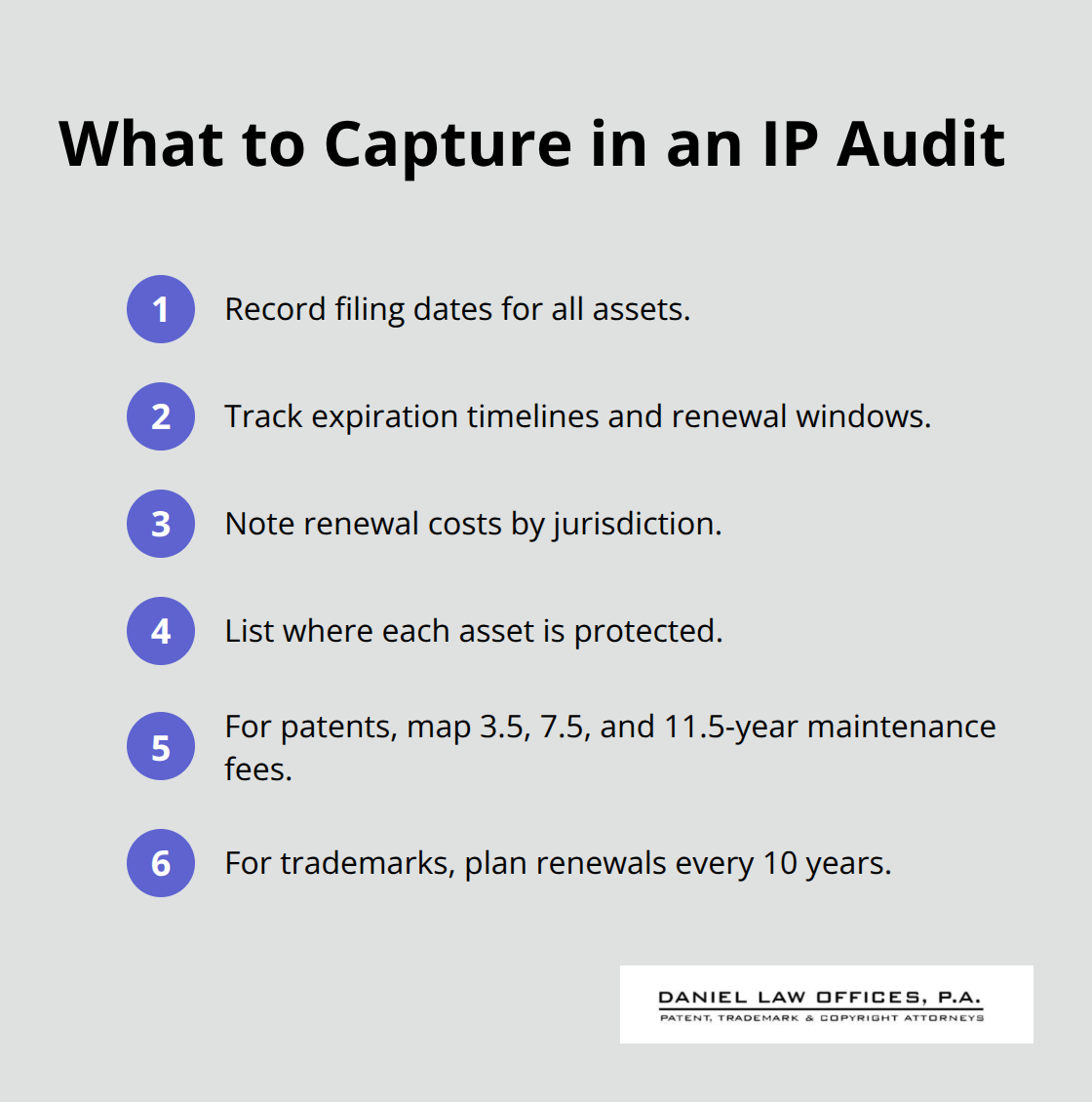
A comprehensive IP audit goes beyond simply listing patents and trademarks. You need to document the legal status of each asset, including filing dates, expiration timelines, renewal costs, and which jurisdictions provide protection. For patents, this means identifying your grant dates and maintenance fee schedules, since the U.S. Patent and Trademark Office requires fees at 3.5, 7.5, and 11.5 years after issuance. Trademarks require renewal every ten years, but many companies miss these deadlines because they lack centralized tracking.
Organizations lose significant value simply through administrative neglect rather than market failure.
Know Which Assets Actually Drive Revenue
After cataloging what you own, assess commercial value ruthlessly. Not every patent deserves continued investment. Studies indicate that more than 9 out of 10 patents fail to generate a return on investment, which means your portfolio likely contains assets draining resources rather than creating them.
Evaluate each patent and trademark against your current business strategy and market position. Does this patent protect a product you still sell or plan to develop? Does this trademark support a brand you actively market? If the answer is no, consider abandonment rather than paying renewal fees. Conversely, identify high-value assets that deserve aggressive protection in additional markets. If a patent covers a technology with clear market demand, filing internationally through the Patent Cooperation Treaty makes financial sense. If a trademark represents your core brand, securing registrations in your key markets prevents competitors from building similar brands later.
Connect Protection to What Your Business Actually Does
Your IP strategy must align with real business objectives, not abstract protection goals. Too many companies file patents because they believe patents equal success, not because those patents support commercial plans. Define what your business actually needs to protect. Are you protecting manufacturing processes that competitors might copy? Are you building brand recognition that requires trademark defense? Are you creating software with trade secret value?
Each asset type requires different protection strategies and renewal investments. A software company may benefit more from trade secret protection and copyright registration than from patents on algorithms. A consumer brand needs aggressive trademark monitoring and enforcement across e-commerce platforms. A manufacturer developing proprietary processes may require patents combined with trade secret protection for formulations competitors cannot reverse-engineer. This alignment prevents wasted spending on IP that doesn’t support growth and focuses resources on protection that actually matters.
Once you understand what you own and what drives real value, the next step involves identifying the gaps in your current protection strategy and where your competitors are moving.
Building and Expanding Your IP Portfolio in Orlando, Florida
The gap between filing patents and building a valuable portfolio separates companies that protect their innovations from those that waste resources on scattered protection. You cannot expand strategically without understanding what competitors are doing and which of your innovations actually deserve patent protection.
Search Before You File Anything
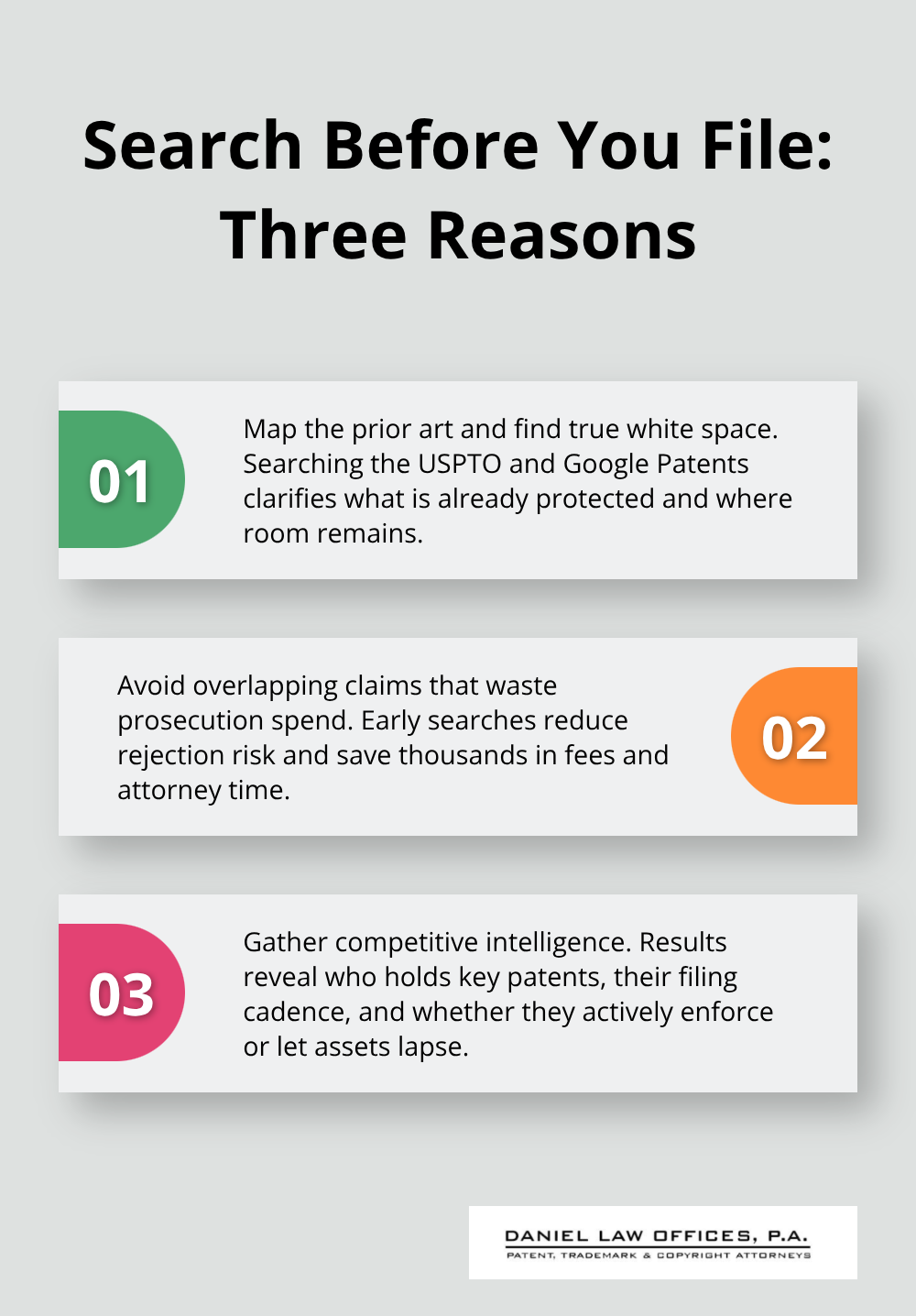
Conduct regular patent searches before filing anything new. The U.S. Patent and Trademark Office database and Google Patents let you search existing patents in your technology area, revealing what protection already exists and where white space remains. Many companies skip this step and file patents that overlap with existing ones, wasting thousands on prosecution fees for applications the examiner will reject. Search results also show you which companies hold patents in your space, their filing patterns, and whether they’re actively defending their IP or letting assets expire.
A trademark audit works similarly. Conduct searches across the USPTO database and state trademark registries to identify registered marks similar to your brand. Many companies discover they cannot use their preferred trademark because competitors registered it in the same class years ago. This search costs under two hundred dollars but prevents investing in branding that faces legal challenges later.
Make Searching a Regular Practice
Schedule these audits annually, not once. Markets shift, competitors file continuously, and your product portfolio evolves. Annual searches reveal emerging threats before they become serious and uncover new filing opportunities as your business expands. This ongoing vigilance protects your position and keeps your strategy responsive to market changes.
Evaluate Which Innovations Truly Deserve Patents
Prioritizing which innovations deserve patents requires brutal honesty about market timing and competitive advantage. Not every invention justifies patent costs, which range from three thousand to fifteen thousand dollars for a basic U.S. patent plus international filings that multiply expenses. Ask whether the innovation creates a genuine barrier competitors cannot easily work around. A process improvement that competitors can reverse-engineer through product analysis deserves patent protection. A design that competitors can copy by changing minor visual elements probably does not.
Consider your market launch timeline too. Patents take eighteen to twenty-four months to grant in the U.S., so filing a patent for a technology you plan to launch in six months wastes money since competitors will already have the product in market before you gain protection. Instead, rely on trade secrets and first-mover advantage, then file continuation patents later based on market feedback. Conversely, if you plan to license technology to other companies or operate in markets where competitors have deep pockets for litigation, patents become essential.
Watch What Competitors File
Monitor what your competitors file through quarterly searches of their patent portfolios and trademark applications. When a competitor files a patent in a technology area you thought was unprotected, it signals they see commercial value there. This intelligence should influence your own filing decisions and product development roadmap. Companies that ignore competitor filings often discover too late that a competitor patented the exact technology they planned to launch, forcing costly design-arounds or licensing negotiations.
Understanding your competitive landscape and making smart filing decisions positions you to scale your portfolio effectively. The next step involves building the systems and infrastructure that let you manage multiple patents and trademarks as your portfolio grows.
Scaling Your IP Portfolio for Long-Term Growth in Orlando, Florida
Centralize Your IP Assets Before Growth Spirals Out of Control
A portfolio with dozens of patents and trademarks becomes unmanageable without centralized systems to track renewal dates, maintenance fees, and jurisdictional coverage. Most companies discover this problem too late, after missing renewal deadlines or paying duplicate fees for overlapping registrations. We recommend implementing a dedicated IP management system before your portfolio grows beyond ten assets. Spreadsheets fail quickly because they lack version control, cannot flag approaching deadlines automatically, and create confusion when multiple team members access the same data.
Modern IP management platforms centralize all patents, trademarks, trade secrets, and domain names in one location with complete asset profiles, automated renewal reminders, and role-based access so your finance team, product managers, and legal counsel work from the same current information. These systems track filing dates, grant dates, maintenance fee schedules, renewal costs, and jurisdictional coverage for each asset.
Track Maintenance Fees and Renewal Deadlines Religiously
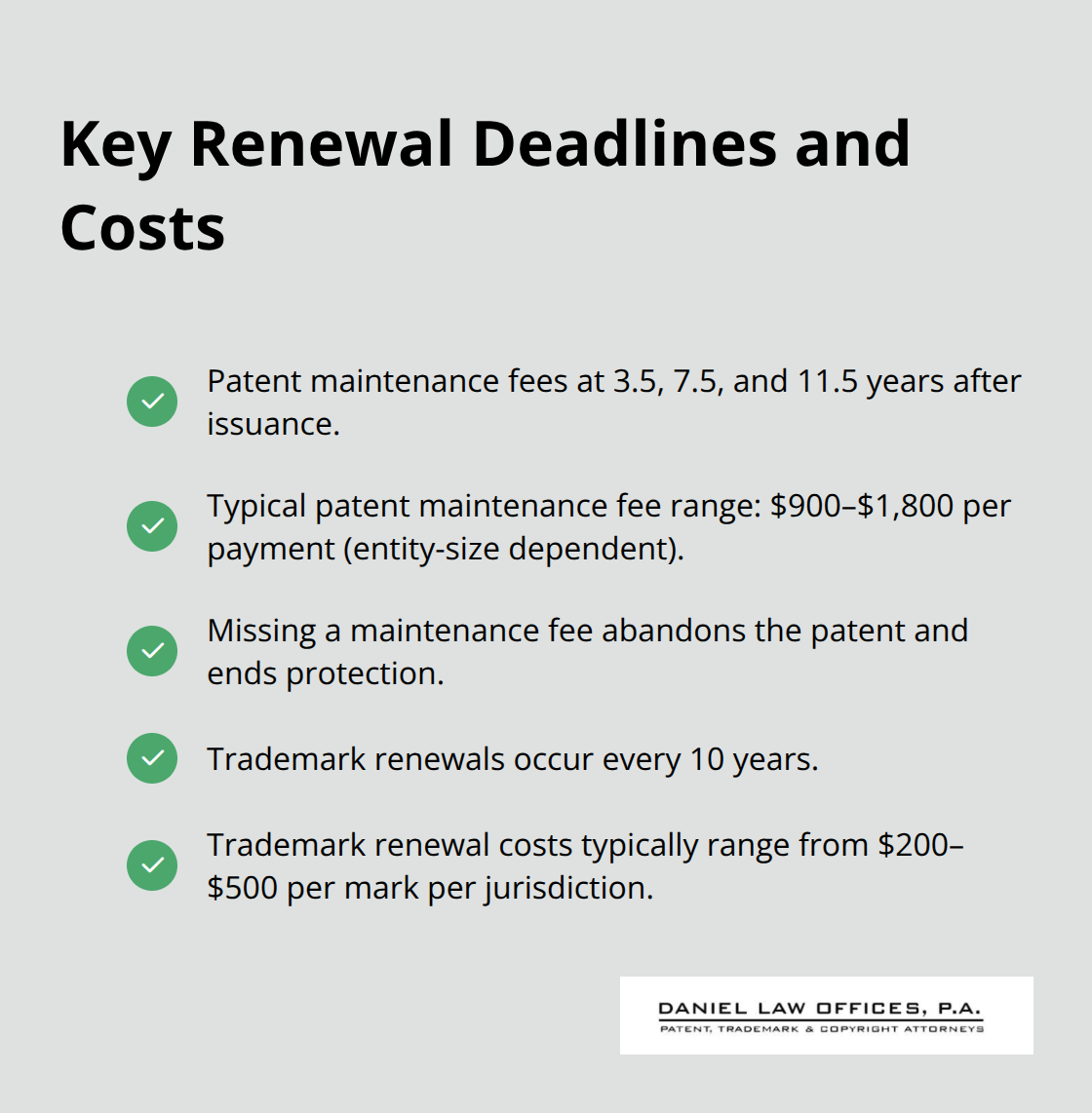
For patents specifically, the U.S. Patent and Trademark Office requires maintenance fees at 3.5, 7.5, and 11.5 years after issuance, with costs ranging from nine hundred to eighteen hundred dollars per fee depending on your company size. Missing even one maintenance fee results in patent abandonment and loss of protection. Trademark renewals occur every ten years and cost between two hundred and five hundred dollars per mark per jurisdiction.
Automated deadline tracking prevents these costly lapses and surfaces renewal decisions well in advance so you can evaluate whether each asset still deserves investment. Without this infrastructure, your portfolio deteriorates through administrative neglect rather than market failure.
File Strategically Across International Markets
International expansion requires deliberate filing strategy rather than reactive registration. The Patent Cooperation Treaty allows you to file one international patent application instead of filing separately in dozens of countries, reducing initial costs and buying time to evaluate which markets justify national filings. Most companies file in the United States first, then expand internationally only after validating market demand. However, this approach leaves your technology unprotected in key markets during the critical launch window.
Instead, conduct market analysis before filing anything. Identify where your competitors operate, where your customers concentrate, and which regions offer the strongest IP enforcement. File in the United States and your core markets simultaneously through the Patent Cooperation Treaty, then make decisions about additional countries based on actual market traction rather than speculation.
Apply the Madrid System Strategically for Trademarks
The Madrid System works similarly for trademarks, allowing one application to cover multiple countries. However, Madrid System registrations cost more upfront than individual country registrations, so only pursue this route if you genuinely plan to use your trademark in those jurisdictions. Budget for ongoing renewal costs across all jurisdictions where you hold protection.
A single patent maintained across the United States, Europe, China, and Japan costs between five thousand and eight thousand dollars annually in maintenance and renewal fees. Many companies overextend geographically and then abandon protection in smaller markets to reduce costs, which wastes the initial filing investment. Instead, be realistic about which markets matter to your business and concentrate protection there rather than spreading resources thin across jurisdictions where you have no customers or competitive threats.
Final Thoughts
Building a scalable IP portfolio requires three foundational actions. First, conduct a comprehensive audit of everything you own, assess which assets generate real revenue, and align your protection strategy with actual business objectives rather than abstract IP goals. Second, search before filing anything new, monitor what competitors are doing, and make ruthless decisions about which innovations deserve patent investment based on market timing and competitive advantage. Third, implement centralized systems to track renewal deadlines and maintenance fees before your portfolio grows beyond your ability to manage it manually.
The most common mistake we see involves companies filing patents without understanding their market or competitors, then abandoning those patents years later because they never aligned with business strategy. Another frequent error occurs when organizations miss renewal deadlines through administrative neglect, which destroys asset value instantly. Companies also overextend geographically, filing in dozens of countries they never actually enter, then paying renewal fees indefinitely on protection they do not need (these mistakes waste thousands of dollars that could have strengthened your core portfolio in markets where you actually compete).
If you have never conducted a formal IP audit, start there immediately. If you already have patents and trademarks scattered across different systems, consolidate them into one platform with automated deadline tracking. At Daniel Law Offices, P.A., we help businesses and inventors secure protection for their innovations through comprehensive patent searches, application drafting, and trademark registration-contact us to discuss your specific situation and develop an IP portfolio management strategy that actually supports your growth.