



International Patent Filing Process: Step-by-Step Across Borders
Filing patents across multiple countries requires navigating complex rules, tight deadlines, and varying requirements in each jurisdiction. The international patent filing process demands strategic planning from the start.
At Daniel Law Offices, P.A., we guide clients through each stage of protecting their innovations globally. This guide breaks down the essential steps you need to know.
International Patent Routes in Orlando, Florida
The Paris Convention: Priority Without Centralization
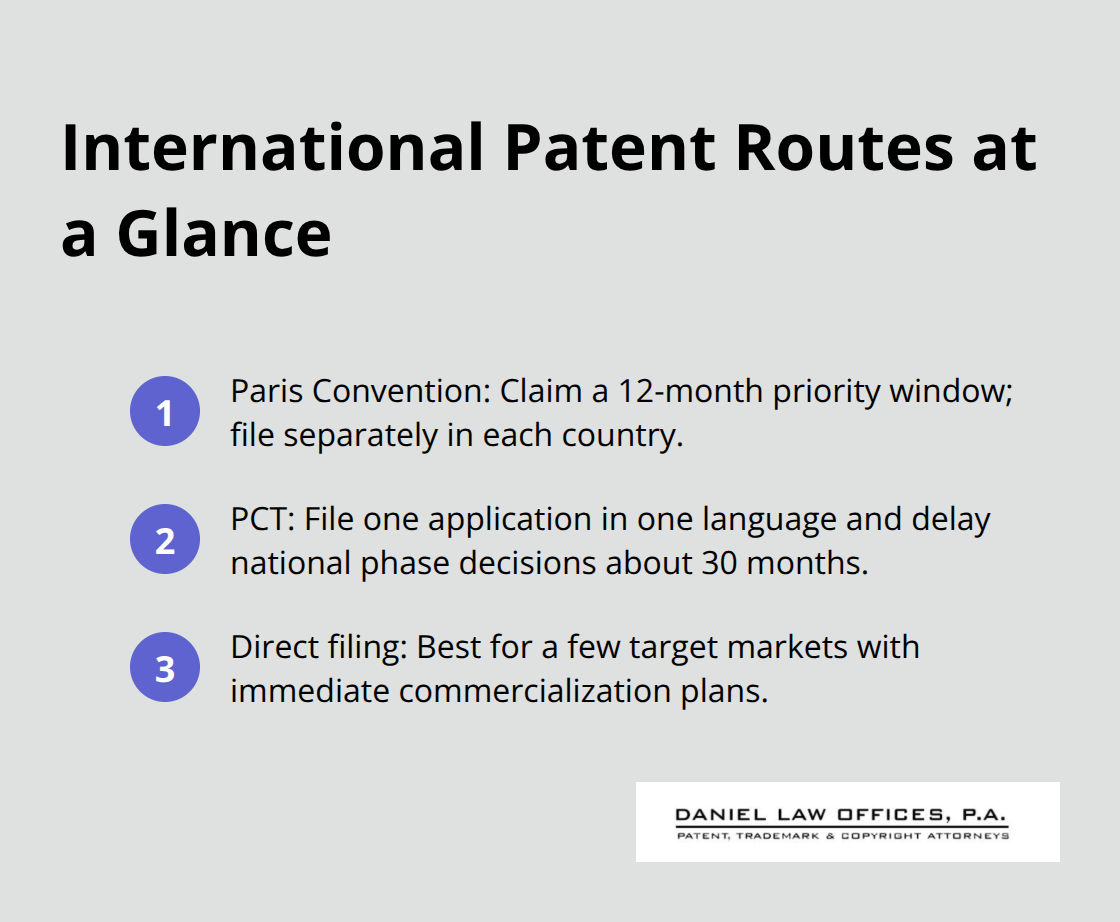
The Paris Convention, established in 1883 and now joined by 177 countries according to the World Intellectual Property Organization, grants you a priority date in member nations within 12 months of your initial filing. File in the United States first, and you can claim that same priority date when filing in other countries, preventing competitors from patenting your invention in the interim. However, the Paris Convention requires you to file separately in each country you want protection, handling each application independently with different fees, language requirements, and examination timelines.
The Patent Cooperation Treaty: One Application, Multiple Markets
The Patent Cooperation Treaty lets you file one international application that covers up to 195 member countries, drastically reducing administrative complexity. With a PCT application, you pay one set of fees upfront, submit documents in one language, and receive a single priority date across all designated countries. The catch is that the PCT doesn’t grant patents directly-it delays the expensive national phase filings until 30 months after your priority date, giving you time to evaluate market potential before committing resources to individual countries.
Direct Filing: When It Makes Sense
Direct filing in each country makes sense only in narrow situations. If you’re protecting an invention in just two or three specific markets and have immediate commercialization plans, filing directly in those countries through the Paris Convention may cost less than the PCT’s initial fees and formal requirements. Most businesses benefit from the PCT route because it provides breathing room to assess which markets justify patent protection costs.
Cost Comparison: PCT Versus Direct Filing
The PCT filing fee ranges from roughly $2,000 to $3,500 depending on your application’s complexity, while direct filings in multiple countries can easily exceed that amount when combined. National phase entry fees in major offices like the European Patent Office, Japan, and China add another $5,000 to $15,000 per jurisdiction, so the PCT’s delay mechanism gives you valuable months to secure funding or validate your business model before incurring those costs. Understanding these financial implications shapes your entire international protection strategy and determines which route aligns with your timeline and budget constraints.
Preparing Your Application for International Success
Conduct Comprehensive Prior Art Searches Across Key Markets
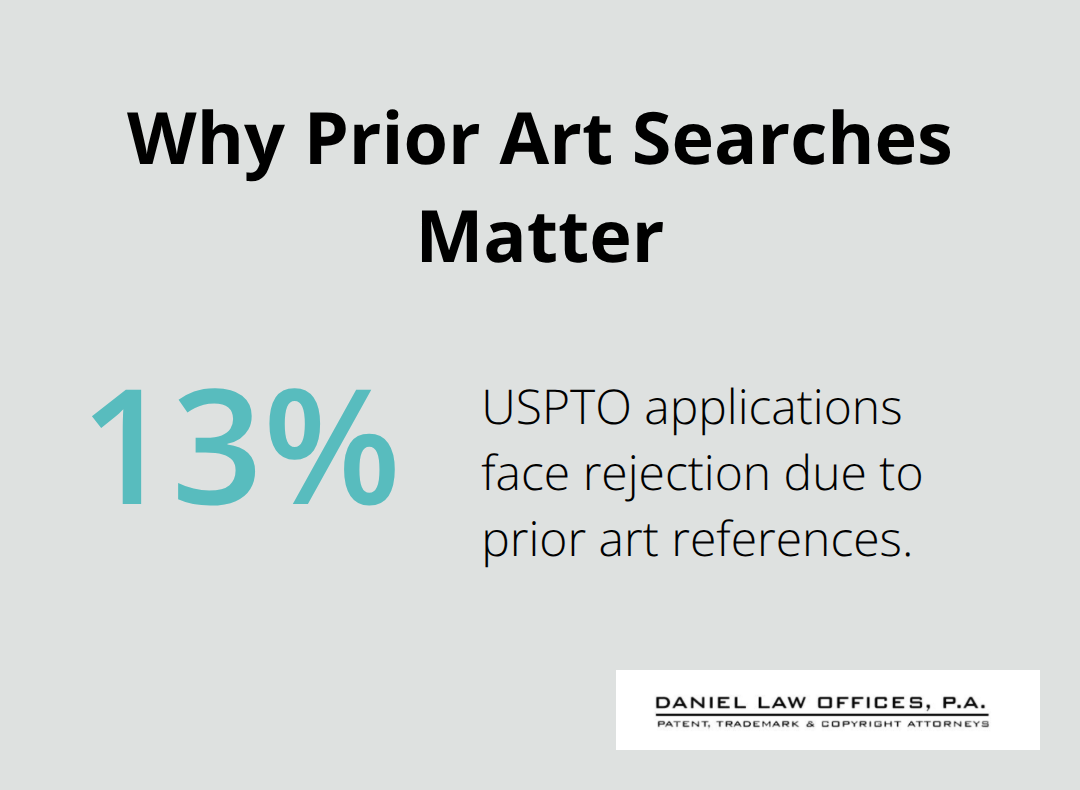
A comprehensive prior art search across multiple jurisdictions must happen before you file internationally, not after. The United States Patent and Trademark Office reports that approximately 13% of patent applications face rejection due to prior art references, and this percentage climbs when applicants fail to search comprehensively across key markets.
Search databases in the United States, Europe, Japan, and China separately because each office indexes patents differently and maintains distinct records. The European Patent Office’s Espacenet database covers over 100 million patent documents globally, while the Japan Patent Office’s J-PlatPat system includes Japanese patents that may not appear prominently in Western searches. China’s patent database has grown explosively, with the China National Intellectual Property Administration receiving over 1.7 million patent applications in 2023 alone according to WIPO data, meaning your invention could already be protected or disclosed there. Conducting these searches in your target markets before selecting your filing strategy prevents wasted months and significant resources after PCT filing.
Adapt Your Patent Specification for Different Jurisdictions
Your patent specification must adapt meaningfully for different jurisdictions rather than simply translating word-for-word. Claims that work in the United States often fail in Europe because the European Patent Office interprets claim language more narrowly and requires different structural formatting. Japan’s patent office demands specific claim structures and examination responses that differ substantially from U.S. practice, and China’s office has historically favored broader claims but now scrutinizes dependent claims more carefully.
Align Filing Strategy with Your Business Markets
Identify which three to five countries represent your actual business markets first-this matters far more than protecting your invention everywhere. If your manufacturing happens in Vietnam, your primary customers are in Germany, and you’re developing the product in Florida, protect those regions specifically rather than spreading resources across 195 PCT countries. Calculate the real cost: national phase entry in Europe averages $8,000 to $12,000, Japan costs $6,000 to $10,000, and China runs $4,000 to $7,000 per jurisdiction through local counsel. Your business strategy must drive filing decisions, not the other way around.
These preparation steps establish the foundation for your international filing approach. Understanding your prior art landscape, adapting your claims strategically, and targeting the right markets positions you to move forward with confidence into the filing requirements and timelines that shape your protection across regions.
International Patent Deadlines and Examination in Orlando, Florida
The 30-Month National Phase Entry Window
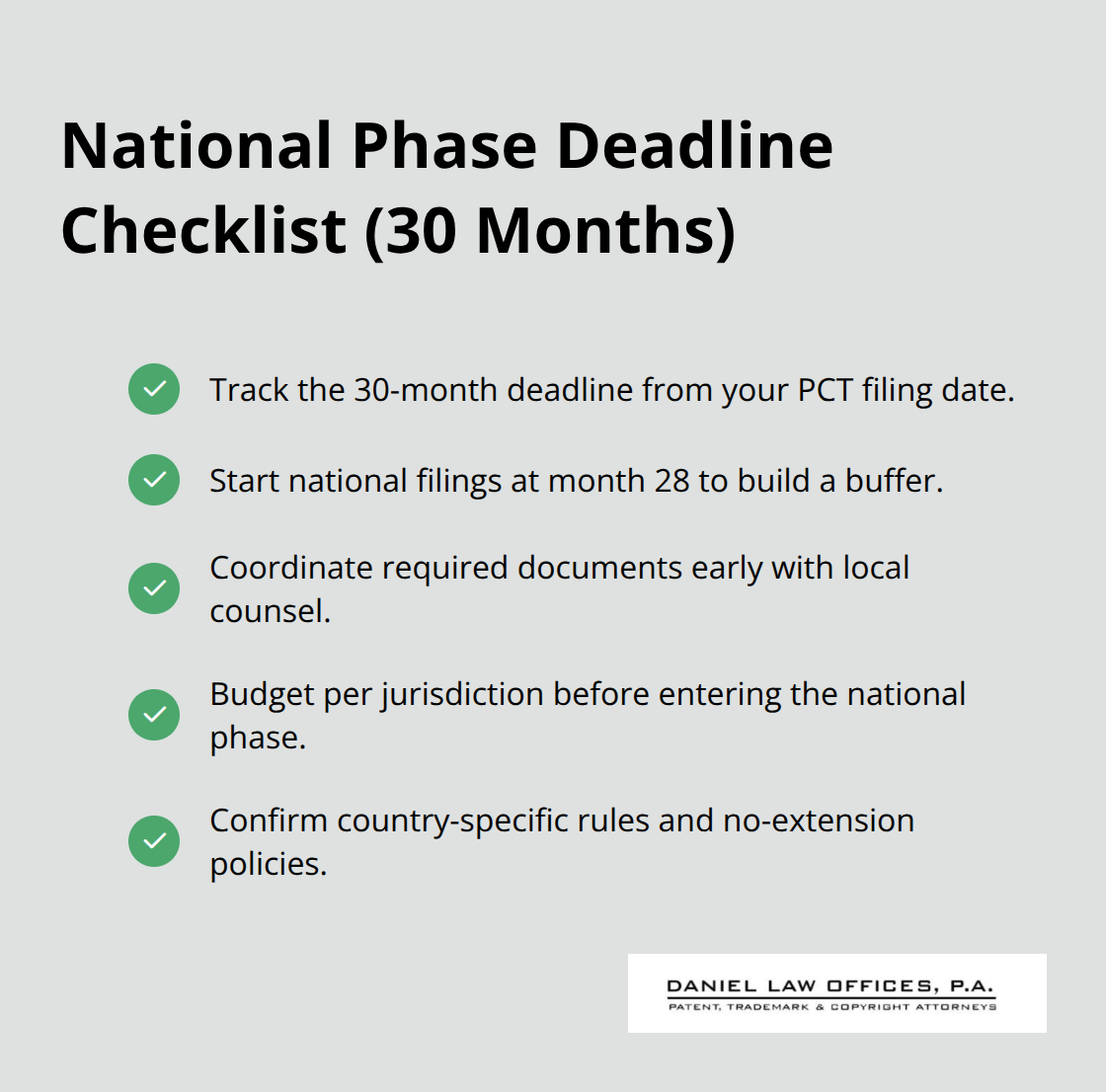
The 30-month window after PCT filing feels generous until you realize how quickly it disappears. The World Intellectual Property Organization reports that applicants who miss national phase entry deadlines lose all rights in that jurisdiction permanently, with no extensions available in most countries. Your priority date means nothing if you fail to file national applications before the deadline passes. Mark your calendar now: 30 months from your PCT filing date is your hard stop for entering the national phase in any country where you want protection. Many applicants assume they can file whenever they’re ready, but the deadline is absolute. Set internal reminders at month 28 to start national phase filings, giving yourself a two-month buffer for unexpected delays with local counsel or document preparation.
Examination Timelines Across Major Patent Offices
The European Patent Office, Japan Patent Office, and China National Intellectual Property Administration each maintain separate deadlines and fee structures, so treating them as a single process creates serious problems. Europe requires filing within 30 months and typically costs $8,000 to $12,000 in total prosecution fees through grant. Japan’s examination takes 18 to 36 months on average and demands specific claim formatting that differs substantially from U.S. applications, adding $6,000 to $10,000 in costs. China moves faster than both, with examination typically completing within 24 to 30 months, but the office has shifted toward stricter scrutiny of dependent claims in recent years, requiring claims to be drafted defensively from the start.
How Examination Procedures Differ Across Jurisdictions
Examination procedures vary dramatically across these three major markets, and what works in one jurisdiction fails in another. The U.S. Patent and Trademark Office allows multiple rounds of amendment with relatively flexible claim language, but the European Patent Office interprets claims narrowly and limits your amendment opportunities more strictly. Japan’s patent office requires detailed responses to office actions within strict timeframes (typically 90 days), with little flexibility for extension. China’s examination has become increasingly rigorous since 2020, with examiners conducting more thorough prior art searches and rejecting claims that lack sufficient antecedent basis.
Maintenance Fees Across Your Patent Family
Maintenance fees multiply across jurisdictions and demand careful financial planning. Europe requires annuity payments starting in year three, escalating significantly by year ten; Japan charges annual maintenance fees that increase over time; China’s maintenance fees are lower but still mandatory. The total cost to maintain a patent family across these three regions alone reaches $15,000 to $25,000 over a ten-year period (depending on your claim count and jurisdiction-specific requirements). Your business model must support these ongoing expenses, or you’ll face lapsed protection in critical markets. Calculate your maintenance budget before selecting which countries deserve protection, because abandoning a patent in Europe after five years wastes the initial filing investment and signals to competitors that you’ve decided the market isn’t worth defending.
Final Thoughts
International patent filing across multiple jurisdictions demands careful planning, strategic market selection, and disciplined timeline management. The international patent filing process-from understanding the Paris Convention and PCT systems through conducting thorough prior art searches, adapting your specifications for different markets, and managing examination procedures and maintenance fees-shapes your costs, timelines, and ultimate protection across the regions that matter most to your business. Each decision you make early determines whether your innovation remains protected as your business grows across borders.
We at Daniel Law Offices, P.A. guide clients through each stage of this complex process, working with individual inventors and businesses to conduct comprehensive patent searches, draft applications that withstand examination in multiple jurisdictions, and navigate the prosecution timelines that vary dramatically across the United States, Europe, Japan, and China. Rather than treating international protection as a one-size-fits-all approach, we align your filing strategy with your actual business markets and budget constraints, helping you avoid wasted resources on countries that don’t support your commercialization plans. Your next step is identifying which markets genuinely matter for your innovation and calculating the real costs of protection in those regions.
If you’re ready to move forward with international patent protection, contact Daniel Law Offices, P.A. to discuss your specific situation with our patent attorney. The difference between a well-executed international filing strategy and a scattered approach often determines whether your innovation remains protected as your business grows across borders.