




How to Submit a Successful Patent Application
Getting a patent approved requires more than just a good idea-it demands careful planning and precise execution. At Daniel Law Offices, P.A., we guide inventors through each stage of the patent submission process.
This guide covers everything from evaluating whether your invention qualifies for protection to navigating USPTO requirements. You’ll learn practical ideas for patent submission that increase your chances of approval.
Does Your Invention Qualify for Patent Protection in Orlando, Florida?
Confirm Your Invention Meets Patentable Subject Matter Requirements
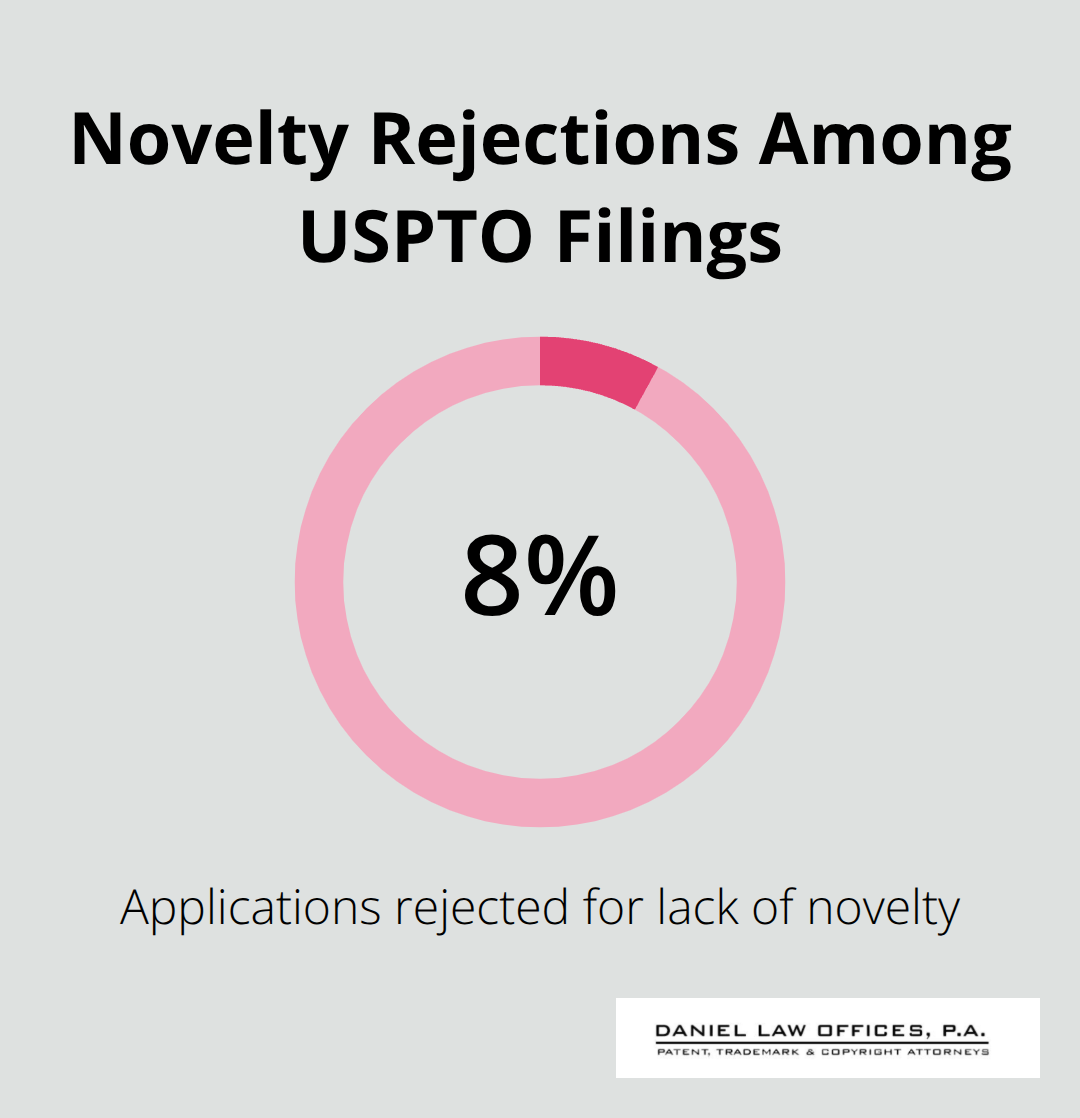
Not every innovation deserves patent protection, and filing for something that doesn’t qualify wastes money and time. The USPTO receives nearly 600,000 patent applications annually, but roughly 8 percent face rejection due to lack of novelty according to USPTO data.
Before you invest in drafting and filing, you need to confirm three things: your invention qualifies as patentable subject matter, it is novel, and it is non-obvious. Patentable subject matter includes processes, machines, articles of manufacture, and compositions of matter. Abstract ideas, laws of nature, and naturally occurring phenomena do not qualify.
Search Prior Art to Establish Novelty
A prior art search reveals what already exists and tells you whether your invention truly stands apart. This search should cover the entire USPTO patent database, international databases through WIPO PatentScope, and published applications. Many inventors skip this step or conduct a cursory search, then face rejection months later when an examiner finds a conflicting patent. A comprehensive search costs between 500 and 2,000 dollars depending on complexity, but it prevents you from filing on something already patented.
Analyze How Your Invention Differs from Existing Patents
When you find similar patents or applications, analyze how your invention differs. The differences must be substantial enough that the invention would not be obvious to someone skilled in your field. Obviousness rejections represent a significant portion of initial office actions. Your invention must solve a problem in a non-obvious way or combine existing elements in a novel manner that produces unexpected results.
Document Your Search and Analysis Thoroughly
Document everything during your search and analysis. Keep records of what you found, what you eliminated, and why your invention stands out. This documentation becomes invaluable when responding to USPTO office actions or if you need to defend your patent’s validity later. Strong documentation also supports the next critical phase: preparing your actual patent application with technical drawings and precise claim statements that protect your innovation effectively.
Building Your Patent Application in Orlando, Florida
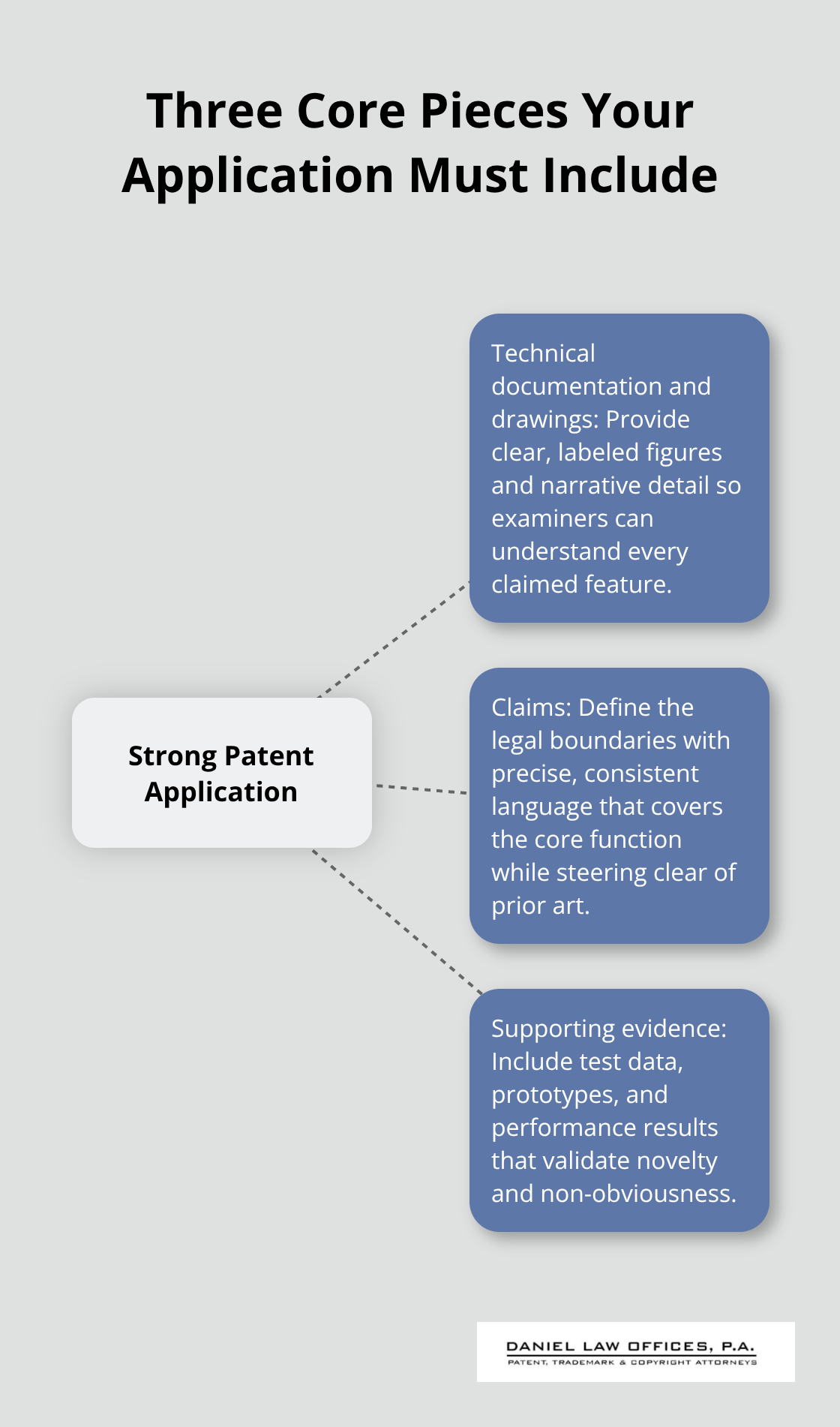
Your prior art search confirmed that your invention qualifies for protection. Now comes the phase where most applications succeed or fail: assembling the actual patent application with technical precision. The USPTO data shows that applications prepared with professional assistance are roughly 10 percent more likely to gain approval without major revisions, largely because these applications contain well-organized technical documentation and precise claim language from the start. Your application requires three interconnected components that must work together seamlessly: detailed technical documentation with drawings, claim statements that define your invention’s legal boundaries, and supporting evidence that validates your claims.
Prepare Drawings That Show Every Claimed Feature
Your drawings are not optional decoration; they define what examiners can see and what competitors must understand about your invention. The USPTO requires drawings to clearly depict all features claimed in your application, and high-quality drawings correlate with roughly a 20 percent higher approval rate without additional office actions according to USPTO analysis. Use black-and-white drawings unless color is genuinely necessary to show the invention’s function. Include multiple views, cross-sections, and detailed labeling that corresponds precisely with your written description. Each drawing must have proper margins, sheet numbering, and inventor identification information. If you claim a process, your drawings should show each step or apparatus involved. Poor drawings force examiners to request corrections, which delays your application and invites closer scrutiny of your entire submission. Most inventors underestimate this component, but examiners spend seconds reviewing drawings before reading your written description, so clarity here shapes their entire perception of your work.
Write Claims That Protect Your Actual Innovation
Claims are the legal boundaries of your patent, and weak claims invite competitors to work around your protection or trigger rejections from examiners. Craft independent claims that are broad enough to cover your invention’s core function but narrow enough to avoid existing patents you found during your prior art search. Then add dependent claims that cover additional features or variations with commercial value. The USPTO reports that applications with precisely structured claims reduce initial rejections by roughly 25 percent. Your claims must use clear, consistent language throughout; vague terms like effective, suitable, or substantially invite examiner objections and narrow your protection. Write your specification with enough technical detail that someone skilled in your field could reproduce your invention without undue experimentation. Include alternative embodiments, variations, and different ways your invention could operate to broaden your protection. Avoid introducing new technical information in your claims that doesn’t appear in your written description, as the USPTO will reject this as impermissible new matter.
Organize Your Evidence to Support Patentability
Collect test results, prototype documentation, performance data, and any other evidence that demonstrates your invention works as described and solves the problem you identified. This evidence strengthens your specification and becomes critical ammunition if an examiner issues a rejection. Document the development timeline, including when you conceived the invention, when you built prototypes, and what results you achieved. If your invention produces unexpected benefits or results that would not be obvious to someone in your field, document those results with actual numbers and measurements. When you respond to office actions later, this evidence allows you to argue against obviousness rejections with concrete facts rather than theoretical assertions. Inventors often possess this evidence but fail to organize it within their application in a way that examiners recognize its relevance. Your specification should explicitly reference your evidence and explain how it supports your claims about novelty and non-obviousness.
Assemble Your Complete Application Package
With your drawings finalized, claims written, and evidence organized, you now have the three core components ready. The next phase involves selecting the right application type (provisional or nonprovisional) and completing the required USPTO forms, which determines how quickly your invention receives examination and what level of legal protection you establish from day one.
Submitting Your Application to the USPTO in Orlando, Florida
You’ve assembled a complete application package with precise drawings, well-structured claims, and supporting evidence. Now you face a critical decision that shapes your entire patent protection strategy: whether to file a provisional or nonprovisional application. Most inventors should choose nonprovisional filing because it triggers immediate USPTO examination and establishes enforceable patent rights from your filing date. Provisional applications cost less upfront and establish a priority date, but they expire after 12 months without examination, meaning you must file a nonprovisional within that window or lose your priority benefit.
Provisional vs. Nonprovisional: Which Path Fits Your Timeline
In 2022, the USPTO received 189,338 provisional applications, showing their popularity among inventors seeking quick priority dates. However, roughly half never mature into actual patents because inventors miss the 12-month deadline or fail to convert properly. If you choose provisional filing, treat it as a temporary placeholder, not a final solution. The real protection begins when you file the nonprovisional application, which requires a complete specification, formal claims, drawings, an oath or declaration, and the Application Data Sheet.
Understanding Nonprovisional Filing Fees and Requirements
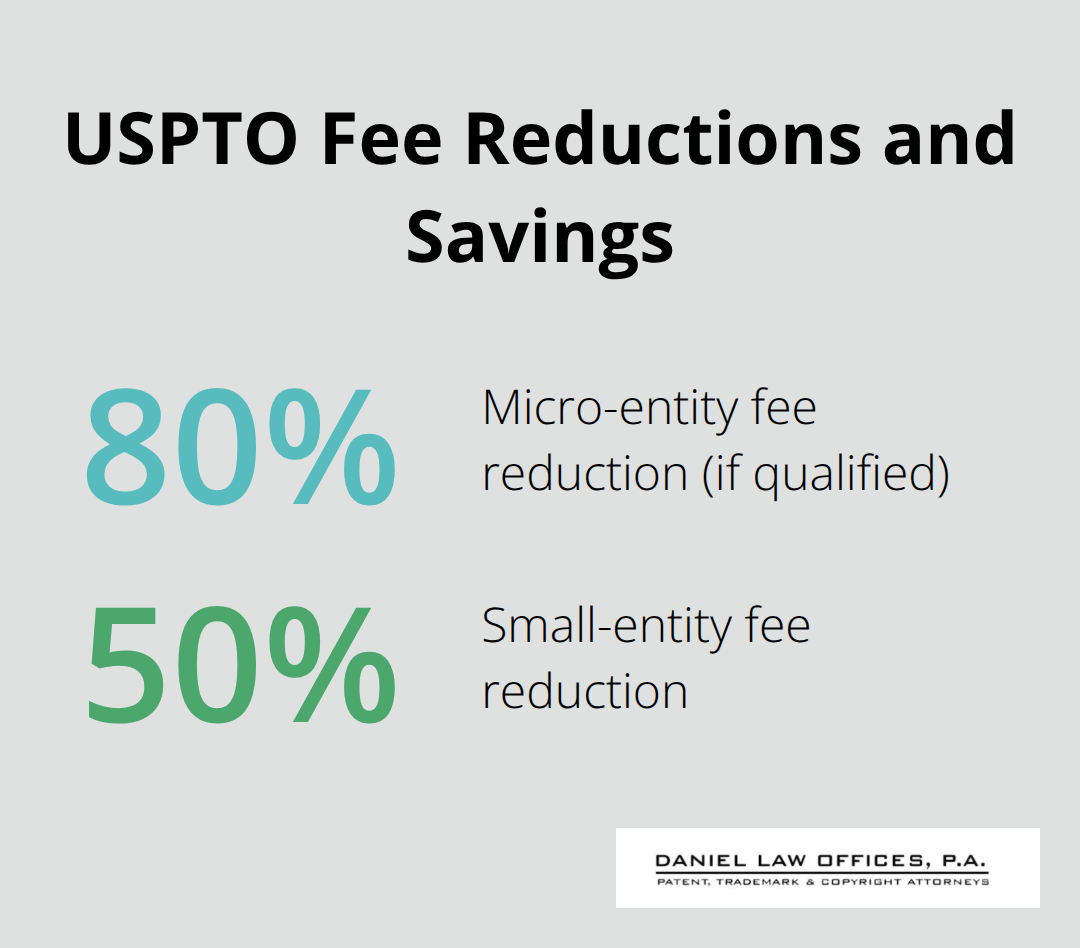
For nonprovisional utility patents, filing fees as of 2023 are $320 for large entities, $160 for small entities, and $80 for micro entities, with additional charges for claims exceeding 20 and pages exceeding 100. These costs vary based on your business size and application complexity. Micro-entity status can reduce fees by up to 80 percent if you qualify as an independent inventor or small business owner. Small-entity status cuts fees by roughly 50 percent.
Calculate your total cost before submission to avoid surprises when the USPTO bills you for excess claims or pages.
File Electronically Through Patent Center
File electronically through Patent Center to avoid a $400 non-electronic filing fee and to manage correspondence online. Electronic filings also process roughly 15 percent faster than paper submissions, reducing time to your first office action. Register as an eFiler with the USPTO before submission to enable digital filing and reduce processing delays. Complete the Application Data Sheet accurately, as errors here trigger initial rejections that waste months. Include your oath or declaration using form PTO/AIA/01 or PTO/AIA/08, and if you use an oath, have it notarized before submission.
Submit Your Complete Package and Monitor Status
Submit all documents together through Patent Center in PDF format with proper file naming and organization. After submission, the USPTO assigns a patent examiner within weeks and mails you a filing receipt with your application number and filing date; this date becomes critical for establishing priority against competing patent applications filed later. Monitor your application status through Patent Center and respond promptly to any office actions the examiner issues. Timely responses keep your application moving forward and prevent abandonment due to missed deadlines.
Final Thoughts
Patent prosecution typically takes two to four years from filing to grant, and about 60 percent of applications receive at least one non-final rejection due to incomplete disclosures or overly broad claims. When you receive an office action, respond promptly and thoroughly by addressing every objection with reasoned amendments or legal arguments supported by your documentation and evidence. If your examiner issues a final rejection, you can file a Request for Continued Examination, amend your claims further, or appeal to the Patent Trial and Appeal Board-many applications that initially face rejection ultimately receive approval through strategic amendments and persistence.
After allowance, pay your issue fee by the deadline and your patent will grant within weeks, providing full legal protection for 20 years from your filing date. The ideas for patent submission outlined in this guide-thorough searching, precise documentation, clear claims, and timely filing-significantly improve your approval odds and position your innovation for long-term competitive advantage. At Daniel Law Offices, P.A., we guide inventors through patent prosecution and help you navigate office actions, amendments, and strategic decisions that protect your work.
Contact us to discuss your patent application and secure the protection your invention deserves by visiting our patent services page.