



How to Patent an Idea: Essential Steps Guide
You’ve developed something valuable, but protecting it legally requires knowing the right steps to patent an idea. The process involves more than just filing paperwork-it demands careful planning, technical documentation, and strategic navigation through USPTO requirements.
At Daniel Law Offices, P.A., we guide inventors through each phase of patenting. This guide walks you through the essential steps, from assessing patentability to securing your protection and moving forward after approval.
Assess Your Idea’s Patentability
Start with a Patent Search
Start with a patent search before you invest time and money into filing. The USPTO reports that about 8% of patent applications face rejection due to lack of novelty, meaning someone else already patented your core idea or something substantially similar. A search catches this early and saves you thousands in wasted legal fees.
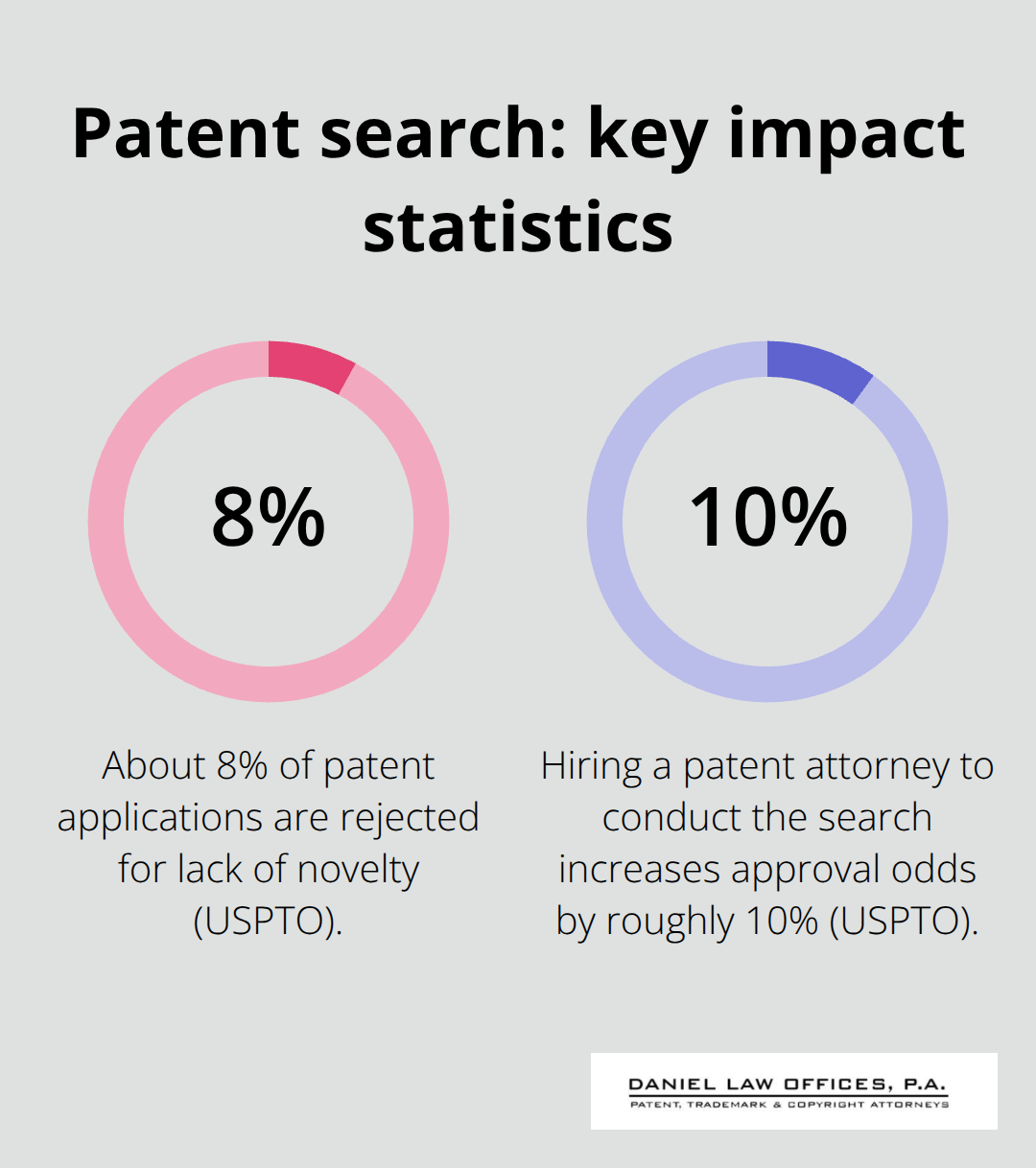
Use the USPTO’s free patent search database to look for existing patents in your field. If you’re in Orlando, Florida, the Orange County Library System’s Patent and Trademark Resource Center provides free access to USPTO databases and assisted over 500 inventors in 2022. Search broadly using different keyword combinations and classifications to capture variations of your invention. Don’t just search US patents-check international databases through the European Patent Office and the World Intellectual Property Organization to understand the global landscape. A thorough search typically takes hours, but hiring a patent attorney to conduct it increases your eventual approval odds by roughly 10% compared to doing it yourself, according to USPTO data.
Verify Novelty, Non-Obviousness, and Utility
Patentability hinges on three requirements: novelty, non-obviousness, and utility. Your invention must be genuinely new-not just a minor variation of existing patents. It must not be obvious to someone working in your field, and it must have a practical function. Many successful patents protect ideas that initially seemed simple but solved real problems in innovative ways, so don’t assume your idea lacks patentability just because it seems straightforward to you.
Document Your Invention Thoroughly
Document your invention development with detailed descriptions, sketches, and a chronological timeline showing when you conceived and built each version. This documentation becomes critical if someone later challenges your patent or if you need to prove you developed the idea first. Include alternative designs and improvements you considered, as these strengthen your application by showing thorough development. Write down technical specifications, materials used, and how your invention performs differently from existing solutions. This level of detail also helps when you work with a patent attorney-they’ll have everything needed to draft robust claims that protect your invention broadly rather than narrowly.
With your patentability assessment complete and your documentation in order, you’re ready to move into the next phase: preparing and filing your patent application with the USPTO.
Prepare Your Application for Filing
Create Technical Drawings That Meet USPTO Standards
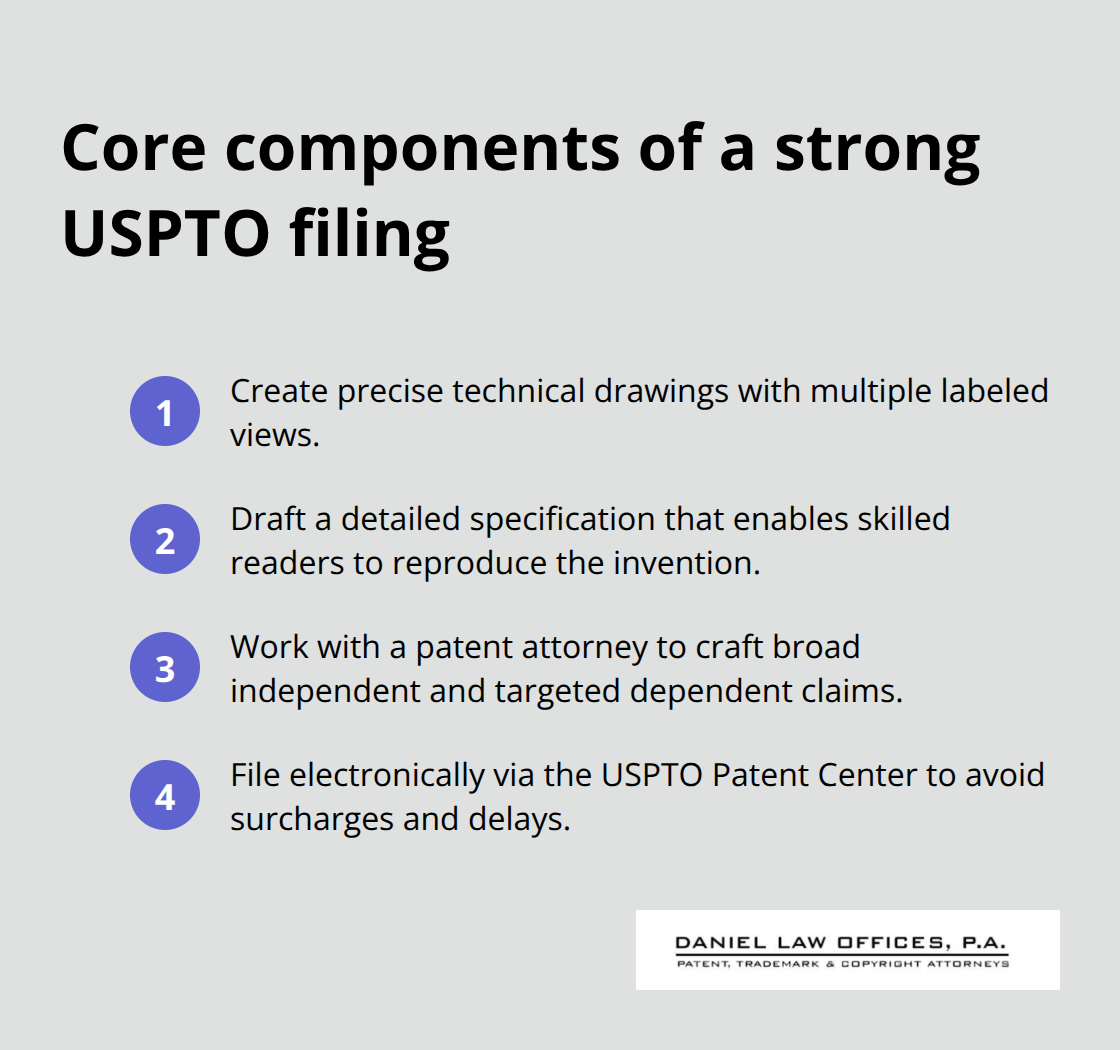
Your technical drawings and descriptions form the backbone of a strong patent application, and they must be precise enough that someone skilled in your field could reproduce your invention from them alone. Include multiple views of your invention-front, side, cross-section, and exploded views if applicable-with every component clearly labeled and referenced to your written description. Poor drawings cause about 20% more office actions during examination, according to USPTO data, so invest time here to get them right. Each drawing should show how parts connect and function together, making the invention’s structure immediately clear to an examiner.
Write a Detailed Specification
Your written description must explain what your invention does, how it works, what problems it solves, and how it differs from existing solutions. Include alternative designs and variations you considered, as these broaden your patent’s protection scope. Specifications must be detailed enough to satisfy enablement requirements-meaning a person trained in your field could make and use your invention based solely on your description. Avoid vague language or assumptions about what readers already know; instead, spell out technical specifications, materials used, and performance differences from existing solutions.
Work with a Patent Attorney to Draft Strong Claims
A patent attorney transforms your technical documentation into legally defensible claims that protect your invention’s scope. Patent attorneys understand claim language and examination procedures in ways that significantly impact your application’s strength. Applications drafted by attorneys show roughly 25% fewer initial rejections compared to self-drafted applications, per USPTO data. An attorney structures independent claims that are broad enough to capture variations of your invention, then uses dependent claims to narrow specific embodiments. They anticipate examiner objections and draft your specification to address common rejection reasons before they arise.
File Your Application Through the USPTO
Filing fees for utility patents run $320 for large entities and $160 for small entities as of 2023, but attorney fees typically range from $7,000 to $15,000 for a complete non-provisional application, depending on complexity. Electronic filing through the USPTO’s Patent Center is faster and simpler than paper filing, which carries a $400 surcharge and processes roughly 15% slower. Your attorney handles this submission, tracks all deadlines, and maintains organized records of your application’s progress through examination.
Once your application reaches the USPTO, the examination process begins-and how you respond to examiner feedback will determine whether your patent ultimately receives approval.
Navigate the Patent Examination Process in Orlando, Florida
Understand What Happens After Filing
After the USPTO receives your application, an examiner assigned to your case conducts a thorough prior art search and reviews your claims against patentability standards. About 60% of applications receive at least one non-final rejection during examination, according to USPTO data, so expect feedback rather than immediate approval. The examiner issues an Office Action detailing any rejections, and you have a deadline to respond-typically three months from the date the Office Action was mailed. Missing this deadline means your application goes abandoned, so calendar these dates immediately and set reminders well before the due date. The examination timeline varies significantly by technology area, but utility patents typically take 18 to 36 months from filing to final decision. During this waiting period, you can mark your products as patent pending, which signals to competitors that protection is coming and sometimes deters copying, though patent pending status offers no legal enforcement power.
Respond to Examiner Rejections Strategically
When an examiner rejects your claims, they cite specific prior art patents or publications showing that your invention lacks novelty or appears obvious. Your response strategy matters enormously here. You can amend your claims to narrow their scope, argue why the examiner’s interpretation is incorrect, or submit new evidence showing your invention’s advantages over the cited prior art. Claims amended narrowly to overcome rejections protect less broadly, so work with a patent attorney to find the balance between approval likelihood and protection scope. Office action responses typically cost $2,000 to $5,000 in attorney fees, and complex applications may require two or three rounds of responses before reaching final approval or rejection.
Handle Final Rejections and Appeals
If your application receives a final rejection, you can appeal to the Patent Trial and Appeal Board, file a continuation application to pursue different claim language, or accept rejection and abandon the application. Many inventors incorrectly assume rejection means their invention cannot be patented, but strategic amendments and well-reasoned arguments overcome most rejections. At Daniel Law Offices, P.A., we guide clients through these complex responses to maximize approval chances while protecting your innovation’s scope.
Secure Patent Approval and Manage Maintenance
Once the examiner approves your application, you receive a notice of allowance and pay the issue fee (roughly $1,000 for small entities), after which your patent officially grants and protection begins. Maintenance fees then become due at 3.5, 7.5, and 11.5 years after grant, ranging from $400 to $7,400 depending on your entity size, and missing these payments causes your patent to lapse permanently.
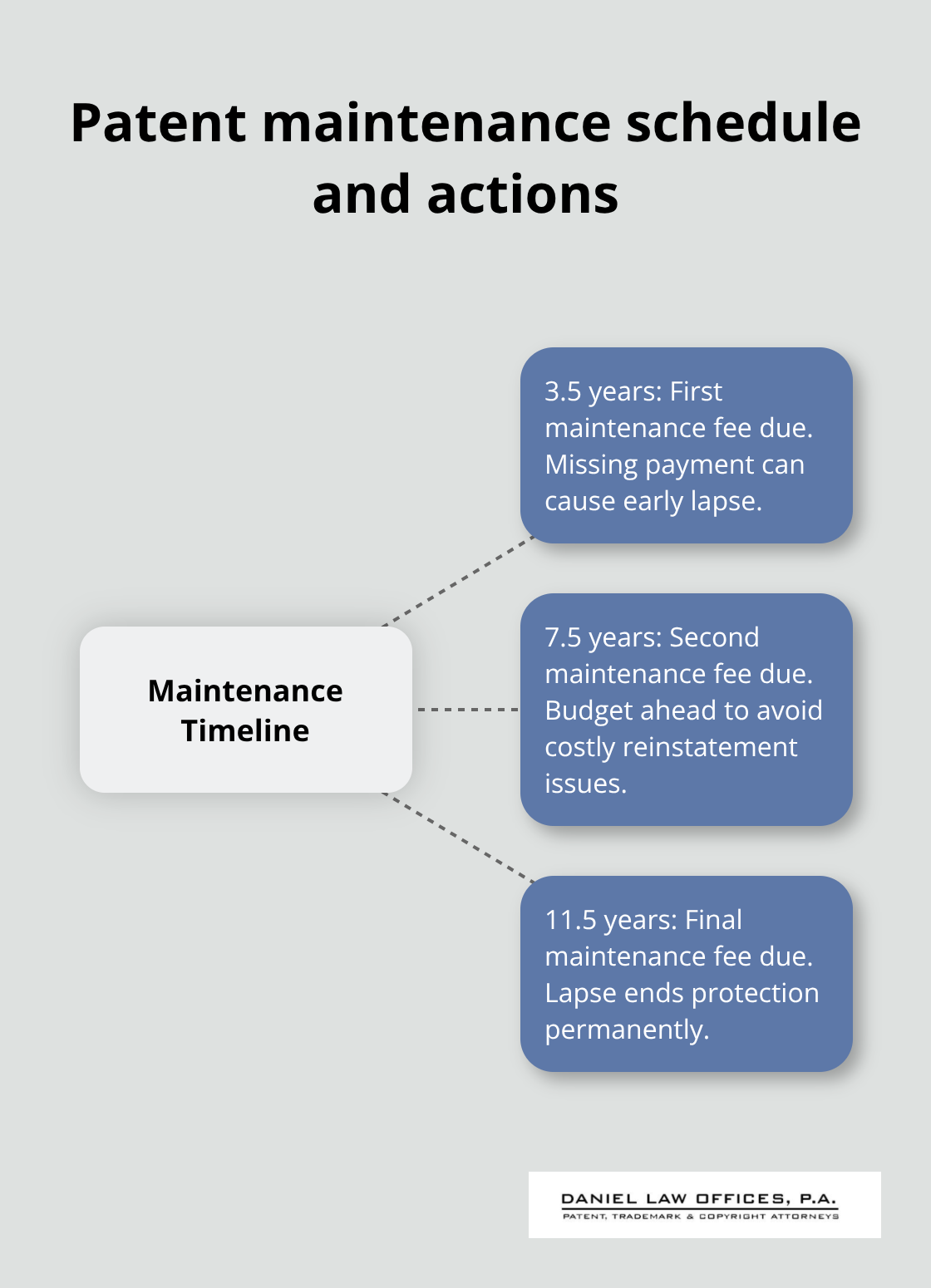
Track these deadlines carefully to maintain your protection throughout the patent’s life.
Final Thoughts
Patent protection transforms your innovation into a valuable asset that attracts investors, partners, and customers while preventing competitors from copying your solution. The steps to patent an idea demand careful planning and thorough documentation, but the investment pays dividends through market exclusivity and licensing opportunities that strengthen your business position. Maintenance fees at 3.5, 7.5, and 11.5 years after grant keep your protection alive, and monitoring for infringement ensures you can enforce your rights when needed.
We at Daniel Law Offices, P.A. guide inventors through every phase of this process, from initial patentability assessment through post-grant management and enforcement. Our registered patent attorney handles comprehensive patent searches, application drafting, examination responses, and strategic guidance tailored to your innovation’s market potential. Contact us today to discuss your invention and develop a protection strategy that positions your idea for long-term success.