




How to Navigate USPTO Patent Filing Fees
USPTO patent filing fees can make or break your innovation budget. The current fee structure includes basic filing costs ranging from $320 to $1,600 depending on your entity size and patent type.
At Daniel Law Offices, P.A., we see inventors overpay by thousands due to poor timing and missed discount opportunities. Smart fee management starts with understanding the three-tier pricing system and strategic application timing.
What Do USPTO Filing Fees Actually Cost in Orlando, Florida
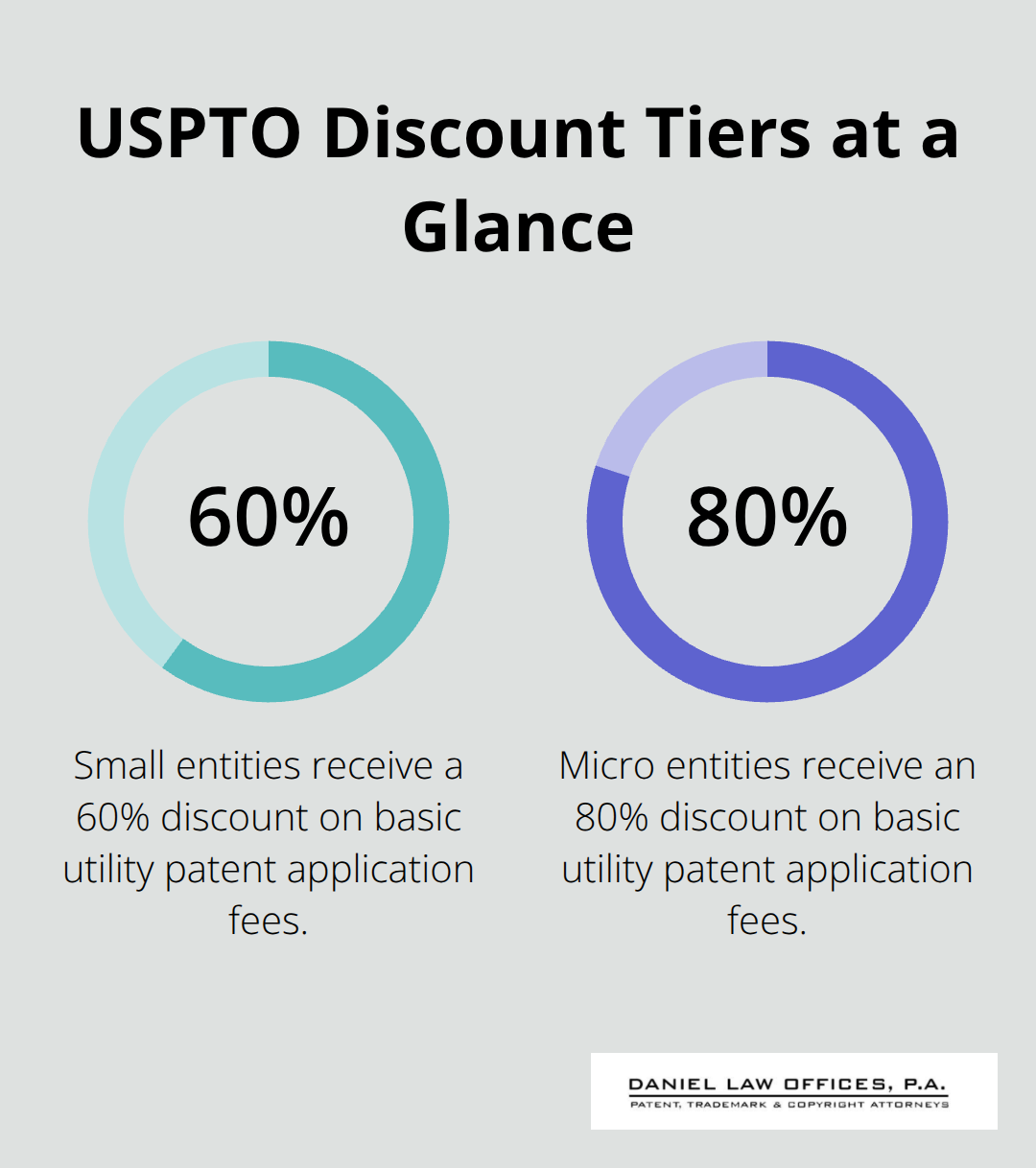
The USPTO operates three distinct fee tiers that can drastically impact your patent budget. Large entities pay the full rate of $1,600 for a basic utility patent application, while small entities receive a 60% discount at $640, and micro entities pay just $320 with an 80% reduction. These discounts apply to the combined basic filing fee of $350, search fee of $770, and examination fee of $880 as of January 2025.
Small Entity Status Requirements
Small entity qualification demands fewer than 500 employees and no assignment to large organizations. The USPTO defines small entities as individuals, small businesses, or nonprofit organizations that haven’t licensed their rights to larger companies. This classification saves inventors $960 on basic utility applications alone. Applicants lose thousands when they incorrectly assess their entity size or fail to maintain proper documentation.
Micro Entity Income Thresholds
Micro entity status requires stricter criteria including a gross income limit of $212,352 in 2023, fewer than four previous patent applications, and no assignment obligations to large entities. University employees can qualify regardless of income if their employment constitutes their primary income source. The additional $320 savings over small entity status makes micro qualification worthwhile for eligible applicants (particularly those just starting their patent journey).
Patent Prosecution Fee Accumulation
Additional fees accumulate quickly during examination. Each independent claim beyond three costs $600, and total claims over twenty trigger $200 per additional claim. Response extensions range from $235 for the first month to $3,395 for the fifth month. Request for Continued Examination fees start at $1,500 and increase for subsequent requests. Non-electronic filing adds an unnecessary $400 penalty that electronic submission through Patent Center eliminates entirely.
Hidden Costs That Add Up
Late maintenance fees carry a $550 penalty within six months of the due date. Revival petitions for abandoned applications range from $2,260 to $3,000 depending on delay duration (with longer delays costing more). Non-English translation charges add $150 per document. These seemingly minor fees compound across multiple applications and can devastate budgets without proper planning and strategic timing decisions.
How Can You Cut Patent Filing Costs by Thousands in Orlando, Florida
Entity status verification represents the single most impactful cost reduction strategy available to patent applicants. Small entities save $960 per utility application compared to large entities, while micro entities save $1,280 per application according to current USPTO fee schedules. The key lies in proper documentation and timing of status claims.
Small entity status requires you to maintain fewer than 500 employees and avoid assignments to large corporations throughout the patent process. Micro entity applicants must document gross income below $212,352 annually, file fewer than four previous applications, and meet the same assignment restrictions as small entities.
Strategic Application Timing Reduces Prosecution Costs
Patent application timing directly impacts total costs through examination duration and response requirements. Applications filed early in the fiscal year typically receive faster examination, which reduces the likelihood of expensive extension fees that range from $235 to $3,395 per month.
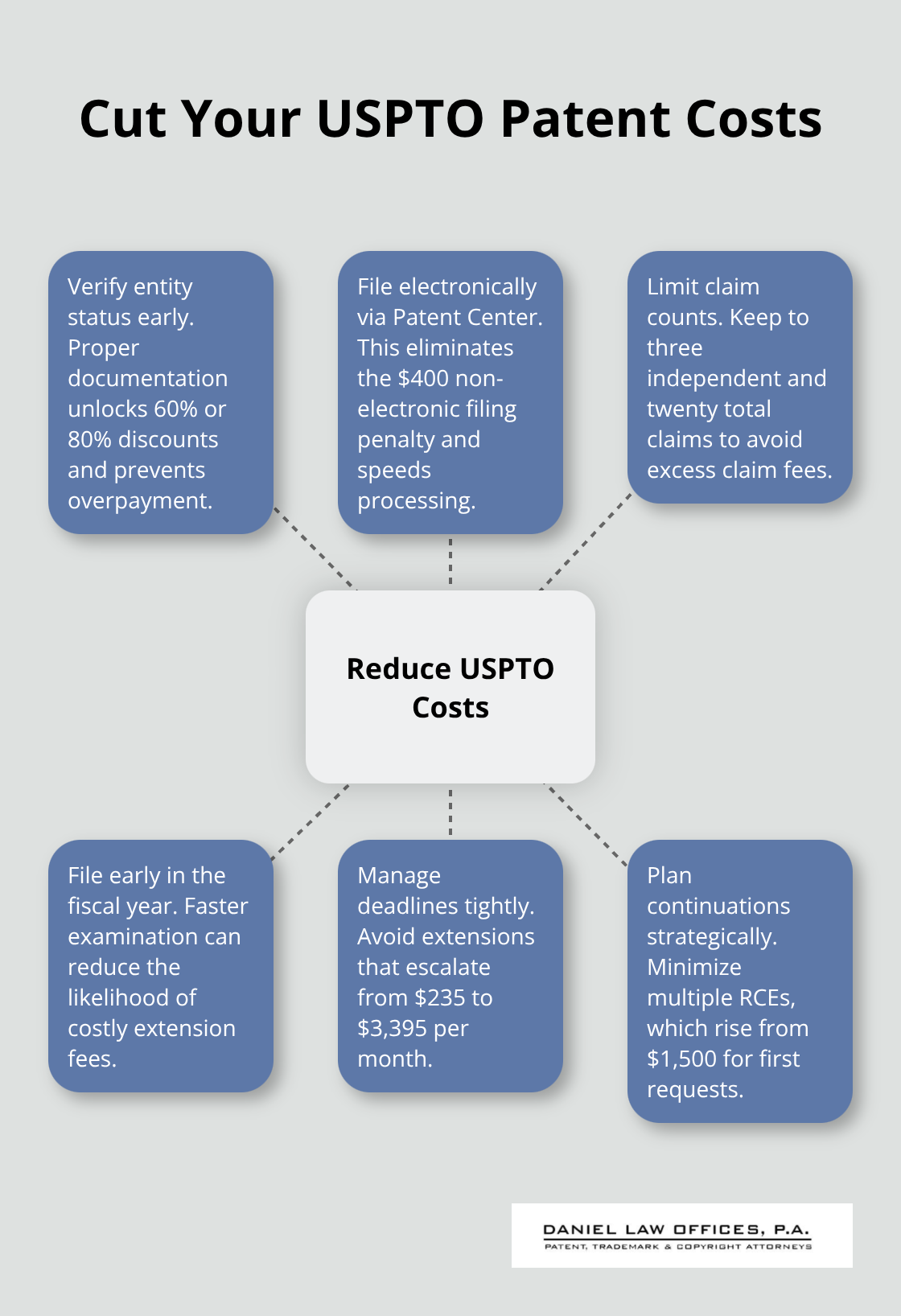
File complete applications with fewer than three independent claims and twenty total claims to avoid excess claim fees entirely. Electronic submission through Patent Center eliminates the $400 non-electronic penalty while it provides faster processing times. You should file continuation applications strategically to avoid multiple Request for Continued Examination fees (which increase from $1,500 for the first request to higher amounts for subsequent submissions).
Common Mistakes That Trigger Unnecessary Fees
Response deadline management prevents the most expensive fee traps in patent prosecution. Missing initial response deadlines triggers extension fees that compound monthly, with fifth-month extensions costing $3,395. Incomplete applications lead to restriction requirements and additional examination rounds that multiply prosecution costs.
Improper claim drafting with excessive independent claims generates $600 fees per additional claim beyond three. Late maintenance fee payments within six months of due dates incur $550 penalties, while longer delays require costly revival petitions that range from $2,260 to $3,000 depending on abandonment duration.
The USPTO’s recent fee structure changes have created new opportunities for cost savings, particularly for applicants who understand how these adjustments affect different entity types and international patent filing strategies.
How Do Recent USPTO Fee Changes Affect Your Patent Budget in Orlando, Florida
The January 2025 fee adjustments represent the most significant USPTO price restructure since the America Invents Act implementation. Basic utility fees increased from $320 to $350, while search fees jumped from $700 to $770 and examination fees rose from $800 to $880. These changes hit large entities hardest with total increases of $220 per application, though small and micro entities benefit from enhanced discount rates of 60% and 80% respectively under the Unleashing American Innovators Act.
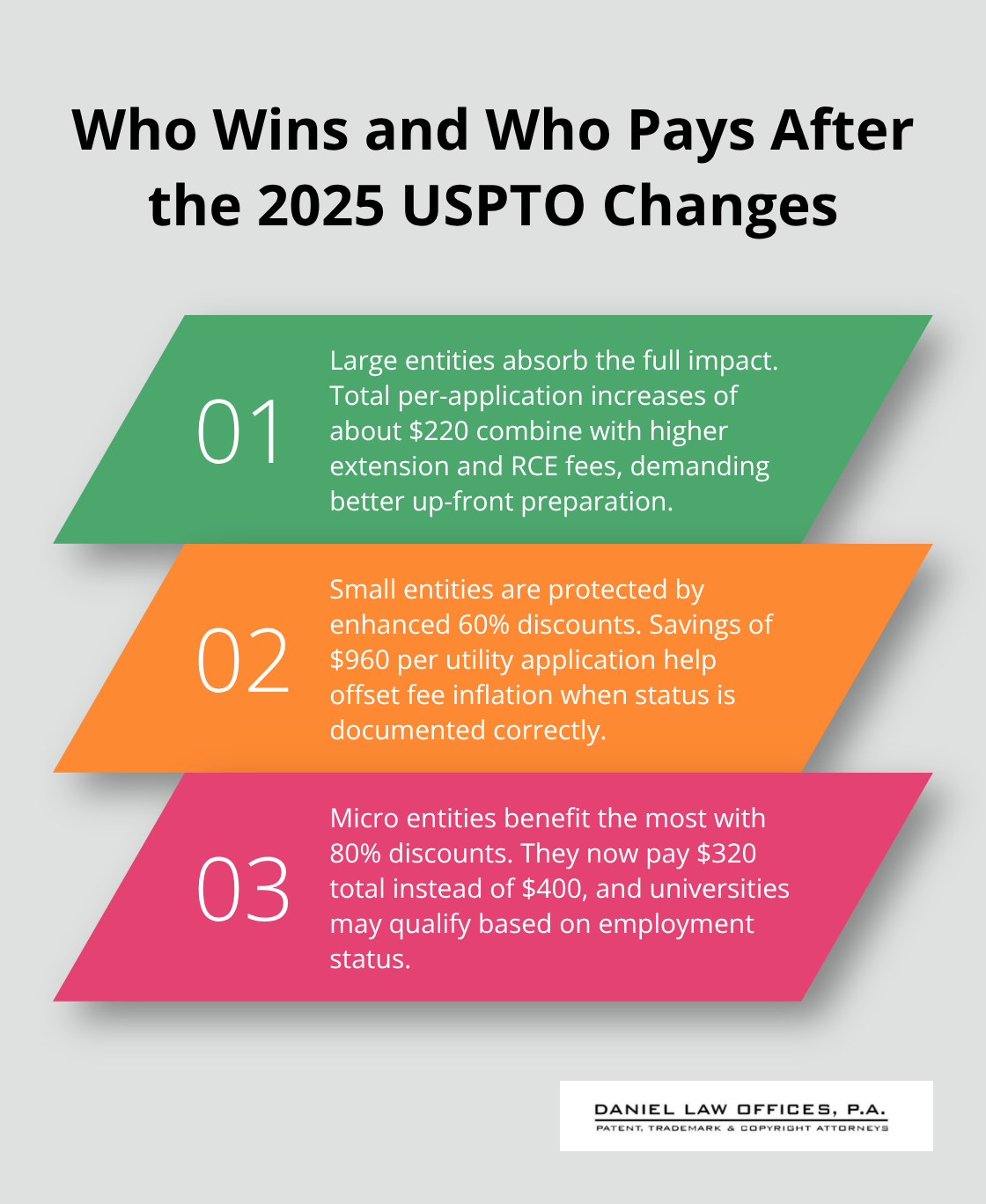
The new structure means micro entities now pay $320 total instead of the previous $400, which creates actual savings despite base fee increases. Large entities face the full burden of these adjustments, while smaller applicants receive better protection from cost escalation.
Extension Fees Create New Strategic Challenges
Extension fees underwent dramatic increases that fundamentally change prosecution strategy requirements. First-month extensions jumped from $220 to $235, while fifth-month extensions skyrocketed from $2,800 to $3,395 (a 21% increase that makes delays extremely expensive). Request for Continued Examination fees increased from $1,200 to $1,500 for first requests, with subsequent RCEs costing significantly more.
These changes demand immediate strategy shifts toward complete initial applications and faster response times. Patent applicants who previously relied on extensions to manage workload now face budget penalties that make thorough preparation financially mandatory rather than optional.
Maintenance Fee Trajectory Through 2026
The USPTO’s fee-setting authority expires in September 2026, which creates uncertainty for long-term patent portfolio planning. Current projections suggest continued increases in maintenance fees, which already cost $2,150 at 3.5 years for standard entities. The agency’s biennial review process indicates additional adjustments that target continuing applications and complex prosecution scenarios.
Patent holders should budget for 15-20% annual fee increases through 2026 and consider accelerated filing schedules before potential future restrictions. The SUCCESS Act discussions suggest possible extensions of USPTO authority with modified discount structures that could further benefit small entities while increasing costs for large corporations.
Impact Analysis for Different Entity Types
Small entities now save $960 per utility application compared to large entities, while micro entities save $1,280 per application according to current USPTO fee schedules. The enhanced discount rates provide better protection against fee inflation for qualifying applicants. Large entities absorb the full impact of increases without relief mechanisms.
Universities and research institutions particularly benefit from micro entity provisions that allow income-based qualification regardless of traditional thresholds when employment constitutes the primary income source.
Final Thoughts
USPTO patent filing fees demand strategic approach and complete understanding of the three-tier system. Small entities save $960 per utility application while micro entities save $1,280 compared to large entity rates. The January 2025 fee increases make entity status verification more valuable than ever (with enhanced discount rates of 60% and 80% respectively).
Electronic submission through Patent Center eliminates the $400 non-electronic penalty and accelerates processing times. Complete applications with fewer than three independent claims and twenty total claims avoid excess fees entirely. Response timing becomes critical as extension fees now range from $235 to $3,395 per month.
Professional guidance becomes necessary when entity status qualification remains unclear or complex prosecution scenarios arise. We at Daniel Law Offices, P.A. help inventors navigate these fee structures while maximizing available discounts through proper documentation and strategic timing. Your next step involves verification of entity status eligibility and preparation of complete applications before fee increases continue through 2026.