



How to Navigate the Steps in Obtaining a Patent
Getting a patent protects your invention and gives you legal rights to your creation. The steps in obtaining a patent can feel overwhelming without proper guidance, but breaking them down makes the process manageable.
At Daniel Law Offices, P.A., we walk you through each phase so you understand what to expect. This guide covers everything from initial eligibility checks to final approval.
How to Determine If Your Invention Qualifies for Patent Protection in Orlando, Florida
Understanding the Three Core Requirements for Patentability
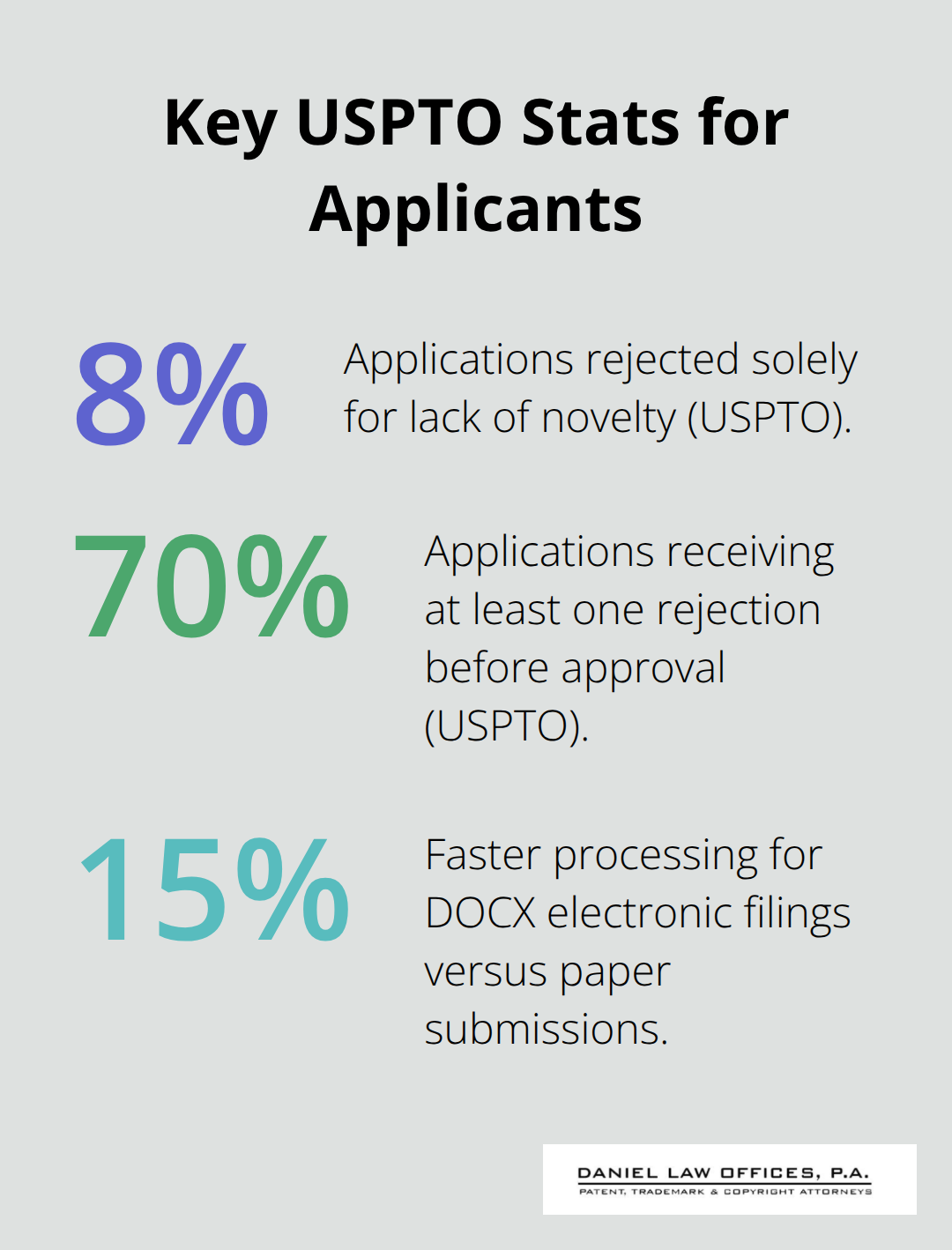
Not every invention qualifies for patent protection, and validating eligibility upfront saves months of wasted effort. The USPTO requires that your invention be new, non-obvious, and useful. New means no public disclosure, sale, or patent anywhere in the world more than one year before filing. Non-obvious means your invention cannot be a simple combination of existing technology that someone skilled in your field would naturally create. Useful means the invention must have practical application and actually work. According to USPTO data, approximately 8% of applications face rejection solely because the invention lacks novelty.
Many inventors skip this validation step and file applications for inventions that prior art already covers, wasting thousands in filing and prosecution fees.
Selecting the Right Patent Type for Your Innovation
Utility patents are the most common path, protecting how an invention functions or is used, including software algorithms, mechanical devices, and manufacturing processes. They last 20 years from your filing date. Design patents protect the ornamental appearance of an invention and last 15 years from issuance, not from filing. Plant patents protect new, distinct plant varieties reproduced asexually and last 20 years from filing. Most inventors pursuing patent protection should focus on utility patents because they cover the broadest range of innovations. Design patents make sense only if your competitive advantage depends on how the product looks rather than how it works. Plant patents apply almost exclusively to agricultural and horticultural innovations. Filing fees differ significantly by type: a utility patent filing costs $330 for large entities and $165 for small entities through the USPTO, while design patents cost $220 for large entities and $110 for small entities.
Realistic Timelines and Budgets for Orlando, Florida Inventors
Most utility patents take 2 to 4 years from initial filing to final grant, though this varies dramatically by technology field and USPTO workload. The prosecution phase alone typically costs between $5,000 and $15,000 beyond the initial filing fee, depending on how many office actions you receive and whether you need professional help responding to examiner rejections. About 70% of patent applications receive at least one rejection before approval according to USPTO data, so budget for multiple rounds of responses. If you reach a final office action and want to continue, a request for continued examination costs roughly $2,000 in additional fees and restarts the process. Provisional applications offer a faster, cheaper entry point at just $280 for large entities and $140 for small entities, establishing an early filing date while you refine your invention over 12 months before filing the full nonprovisional application. However, only about half of the 189,338 provisional applications filed in 2022 converted to nonprovisional applications within that 12-month window, suggesting many inventors use provisional filings without committing to full patent protection.
Moving Forward With Your Patent Strategy
Understanding these foundational requirements positions you to make informed decisions about your patent strategy. The next critical step involves conducting a thorough patent search to confirm your invention’s novelty and identify any existing prior art that could affect your application’s strength. This search forms the foundation of a solid filing strategy and helps you avoid costly rejections down the road.
Searching for Prior Art and Building Your Patent Foundation in Orlando, Florida
Start Your Patent Search With the Right Tools
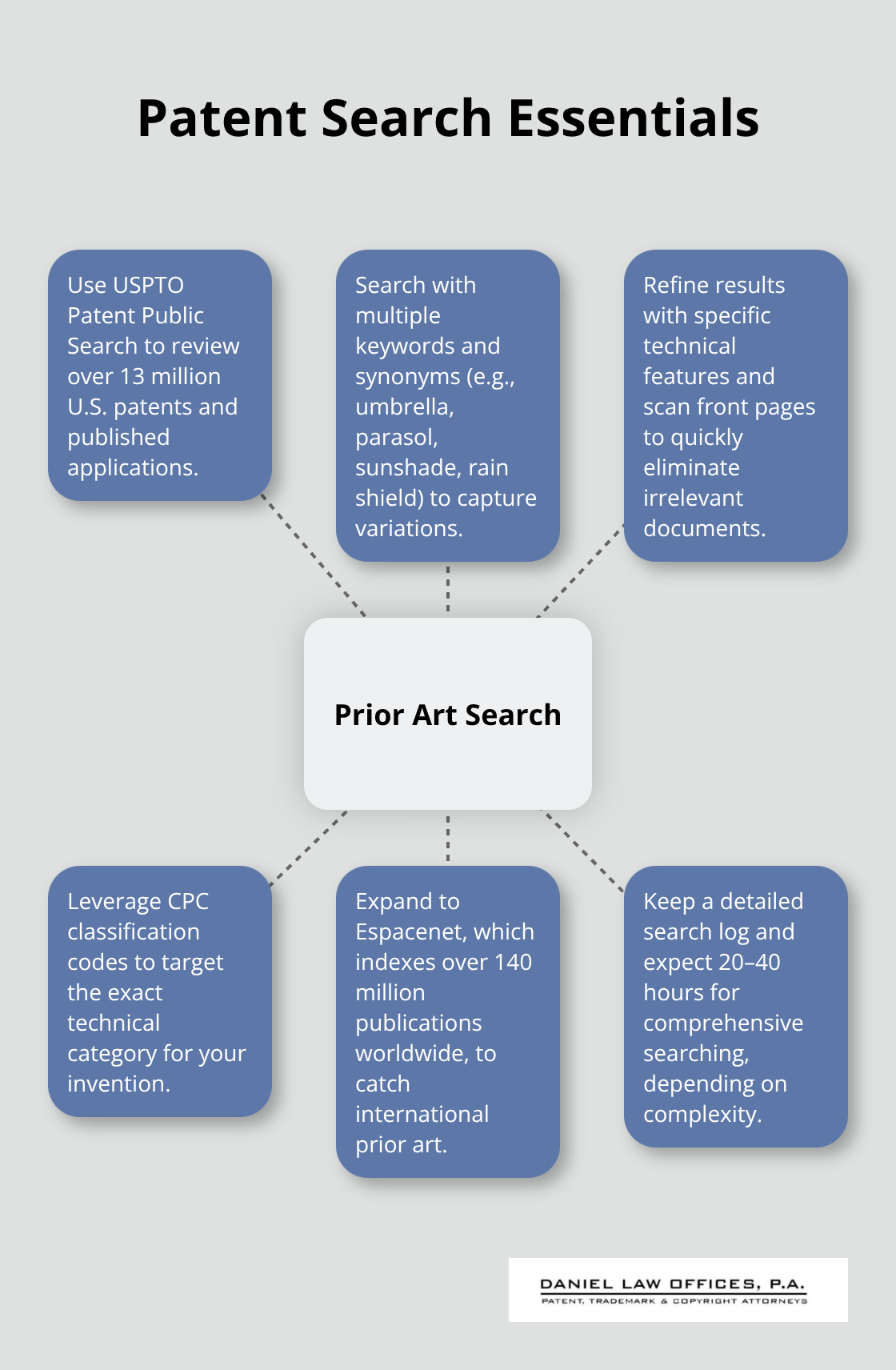
A comprehensive patent search stands as the single most important step before filing, yet most inventors skip it or conduct only a surface-level review. The USPTO reports that approximately 8% of applications face rejection for lack of novelty, but this figure climbs significantly when applicants file without understanding what already exists in their field. The USPTO Patent Public Search tool provides free access to over 13 million U.S. patents and published applications. Search using multiple keyword variations and synonyms describing your invention-if you invented an umbrella, search for umbrella, parasol, sunshade, and rain shield. Narrow your results by adding specific technical features, then review the front pages of promising patents to quickly discard irrelevant results.
Leverage Classification Systems and Expand Your Search Scope
The CPC classification system helps you locate patents in your exact category. Navigate to the USPTO Classification Resources page, find relevant CPC codes matching your technology, and use those codes in advanced searches. Most inventors find this step takes considerable time (often 20 to 40 hours depending on complexity), but the investment prevents filing applications for inventions already covered by prior art. Expand beyond the USPTO by searching Espacenet, the European Patent Office database containing over 140 million publications worldwide, since patents filed internationally may anticipate your invention in the U.S. market. Document every search you conduct in a detailed log noting databases used, search dates, keywords, and which patents you reviewed-this record becomes invaluable if you face rejections and need to prove you performed due diligence.
Prepare Documentation With Precision and Care
Once you understand the prior art landscape, prepare your technical documentation with exceptional care because well-written specifications have approximately a 30% higher chance of approval without additional office actions. Your application requires a detailed written description that allows someone skilled in your field to make and use your invention without undue experimentation, plus detailed drawings showing multiple views and cross-sections with consistent labeling. Well-drafted claims reduce initial rejections by about 25%, so start with broad independent claims that capture your core innovation, then add narrower dependent claims that protect specific variations.
File Your Application Electronically Through Patent Center
File electronically through the USPTO Patent Center using DOCX format to avoid a $400 non-electronic filing surcharge and to process applications about 15% faster than paper submissions. Your application must include a complete specification with title, background, brief summary, detailed description with at least one working embodiment, and precise claims that define your protection scope. Include an Application Data Sheet with bibliographic information, an oath or declaration, and an abstract. The basic nonprovisional utility patent filing fee is $330 for large entities and $165 for small entities, but this covers only examination; expect additional costs for excess claims beyond 20 total claims or three independent claims. When filing, create your USPTO.gov account in advance and submit everything electronically in a single batch to avoid missed deadlines that result in abandonment. The USPTO typically issues a First Office Action within 6 to 12 months, but this timeline varies significantly by technology field and current examination workload.
Move Into Patent Prosecution With Professional Support
A registered patent attorney can review your search findings and help you prepare documentation that meets USPTO standards. Applications prepared with professional help are roughly 10% more likely to be approved without major revisions according to USPTO data. We at Daniel Law Offices, P.A. assist inventors in conducting comprehensive patent searches, drafting applications that withstand initial examination, and navigating the entire prosecution process. Once you file your application, the examination phase begins, and your responses to the USPTO examiner’s office actions will determine whether your patent issues or faces rejection.
Handling Office Actions and Moving Toward Patent Approval in Orlando, Florida
Understanding Office Actions and Initial Rejections
After you file your application, the USPTO examiner reviews your claims against prior art and existing patents, typically within 6 to 12 months. This examination phase determines whether your patent issues or faces rejection. About 60% of patent applications receive at least one non-final rejection according to USPTO data, making office actions a normal part of the process rather than a sign of weakness. When you receive an office action, you have roughly six months to respond, though you can request extensions for an additional fee. The examiner’s rejection typically cites specific prior art patents or references showing that your claims lack novelty or appear obvious in light of existing technology.
Crafting Effective Responses to Examiner Rejections
Your response strategy matters enormously because approximately 45% of applications face rejection on the first office action, but most rejections can be overcome with careful amendments or arguments. You can narrow your claims to distinguish them from prior art, argue why the examiner’s interpretation of the prior art is incorrect, or combine both strategies. Narrower claims face lower rejection risk but protect less of your invention, while broader claims cover more variations but encounter higher rejection resistance. Each response incurs fees and extends your timeline, so strategic decision-making at this stage directly impacts both your costs and your patent’s ultimate strength.
Pursuing Continued Examination When Rejections Persist
If you reach a final office action and believe you have valid arguments, a request for continued examination restarts the process with a new examiner and costs roughly $2,000 in additional fees. Many inventors reach this point without professional representation and make critical errors in claim drafting or arguments that damage their patent’s enforceability later. We at Daniel Law Offices, P.A. guide clients through each office action response, helping them understand which claims to amend and which arguments carry the most weight with examiners in your specific technology field.
Navigating the Path to Patent Issuance
Once the examiner allows your claims, you receive a Notice of Allowance requiring you to pay an issue fee within three months to avoid abandonment. The issue fee costs $1,000 for large entities and $500 for small entities. After you pay this fee, the USPTO publishes your patent and issues the grant, making your protection official.
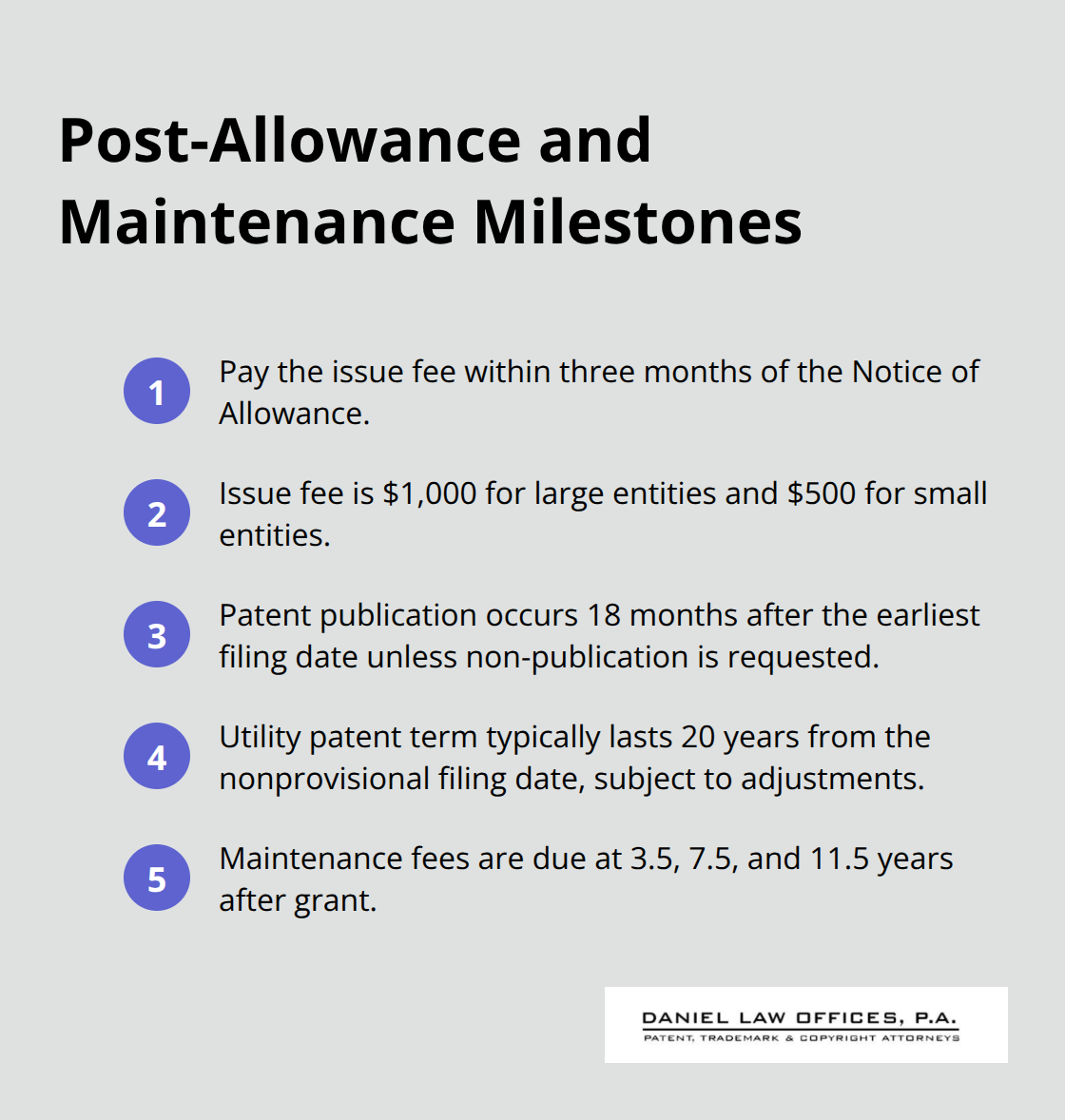
Patent publication occurs 18 months after your earliest filing date unless you request non-publication in specific circumstances. Your patent term begins at grant and typically lasts 20 years from your nonprovisional filing date for utility and plant patents, though term adjustments may apply if the USPTO delayed examination.
Managing Maintenance Fees Throughout Your Patent’s Life
Maintenance fees become due at 3.5, 7.5, and 11.5 years after grant, with costs ranging from $1,600 to $7,700 depending on entity status and the specific maintenance period. The USPTO does not send reminders for maintenance fees, so set calendar alerts or work with a patent attorney to track these deadlines because missing a maintenance fee payment results in patent expiration.
Final Thoughts
The steps in obtaining a patent demand attention to detail, strategic thinking, and persistence through multiple examination phases. Patentability requires novelty, non-obviousness, and utility; comprehensive prior art searches prevent costly rejections; and office actions represent standard procedure rather than failure. Most inventors underestimate both the timeline and complexity of patent prosecution, filing applications without professional guidance and then struggling through examiner responses that proper preparation could have anticipated.
After your patent issues, maintenance fees arrive at 3.5, 7.5, and 11.5 years after grant, and missing these deadlines destroys your protection regardless of how strong your patent is. Many inventors lose their patents to expired maintenance fees simply because they failed to set reminders or track deadlines. You should also consider whether international protection matters for your invention, since a U.S. patent provides no protection in Europe, Asia, or other markets where competitors might copy your work.
Applications prepared with professional help are roughly 10% more likely to be approved without major revisions, and well-written specifications have approximately 30% higher approval rates without additional office actions. These improvements translate directly into lower costs and faster timelines. We at Daniel Law Offices, P.A. assist inventors in conducting comprehensive patent searches, drafting applications that withstand initial examination, and managing the entire prosecution process from filing through maintenance-contact us to discuss your patent strategy and move forward with confidence.