




How to Navigate the Patent Searching Process
Filing a patent without searching first is like walking into traffic blindfolded. Most inventors skip this step and regret it later when they discover their idea already exists or conflicts with someone else’s patent.
At Daniel Law Offices, P.A., we’ve seen countless inventors waste thousands of dollars on applications that should never have been filed. A proper patent searching process catches these problems before they become expensive mistakes.
Why You Need a Patent Search Before Filing
Filing a patent application without conducting a thorough search first ranks among the costliest mistakes an inventor can make. The USPTO receives over 600,000 patent applications annually, and many face rejection because applicants never checked whether their invention already existed. When you skip the search phase, you gamble with your money. A single rejected application costs between $300 and $15,000 depending on complexity-and that covers only the filing fee. Add attorney costs and you face thousands wasted on an application that never had a chance.
The Real Cost of Skipping Your Search
A proper search costs a fraction of what a rejected application wastes. The USPTO’s patent database contains over 12 million issued U.S. patents plus millions more published applications. Without systematically searching these databases, you won’t know what obstacles stand between you and patent protection. Many inventors believe their idea is completely original when similar patents already exist but use different terminology. A search reveals whether your invention truly is novel and identifies the prior art references that directly impact how you’ll draft your claims and position your invention’s unique aspects.
Three Critical Errors Inventors Make
Inventors commonly commit three mistakes that lead to expensive rejections. First, they conduct only surface-level Google searches instead of using the actual USPTO Patent Public Search tool or the free Google Patents database, which indexes official patent documents. Second, they fail to search using different keyword variations and technical classifications-a patent might describe your invention using entirely different terms than you’d expect.
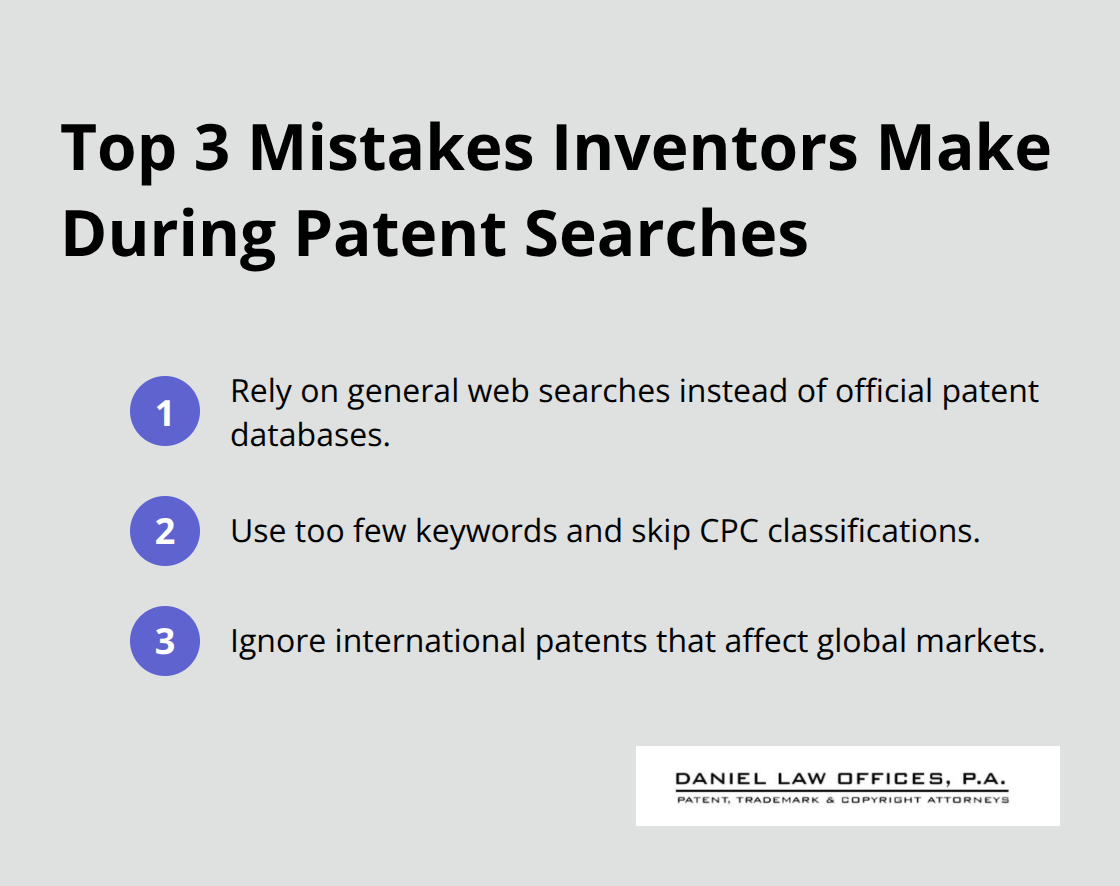
Third, they ignore international patents when their invention might compete globally.
These oversights force inventors to spend additional money amending claims or abandoning applications entirely. A comprehensive search takes time but saves far more money downstream. The search also reveals licensing opportunities and helps you understand the competitive landscape around your idea, which informs whether pursuing patent protection makes business sense at all.
How Search Results Guide Your Strategy
The information uncovered during your search proves invaluable during patent prosecution when the USPTO examiner inevitably raises rejections. You’ll understand exactly which prior art references the examiner might cite and how to position your claims to distinguish your invention from existing patents. This preparation accelerates the prosecution process and increases your chances of approval. With this foundation in place, you’re ready to learn which tools and databases actually deliver reliable results.
Where to Search for Patents That Matter
Start with the USPTO Patent Public Search Tool
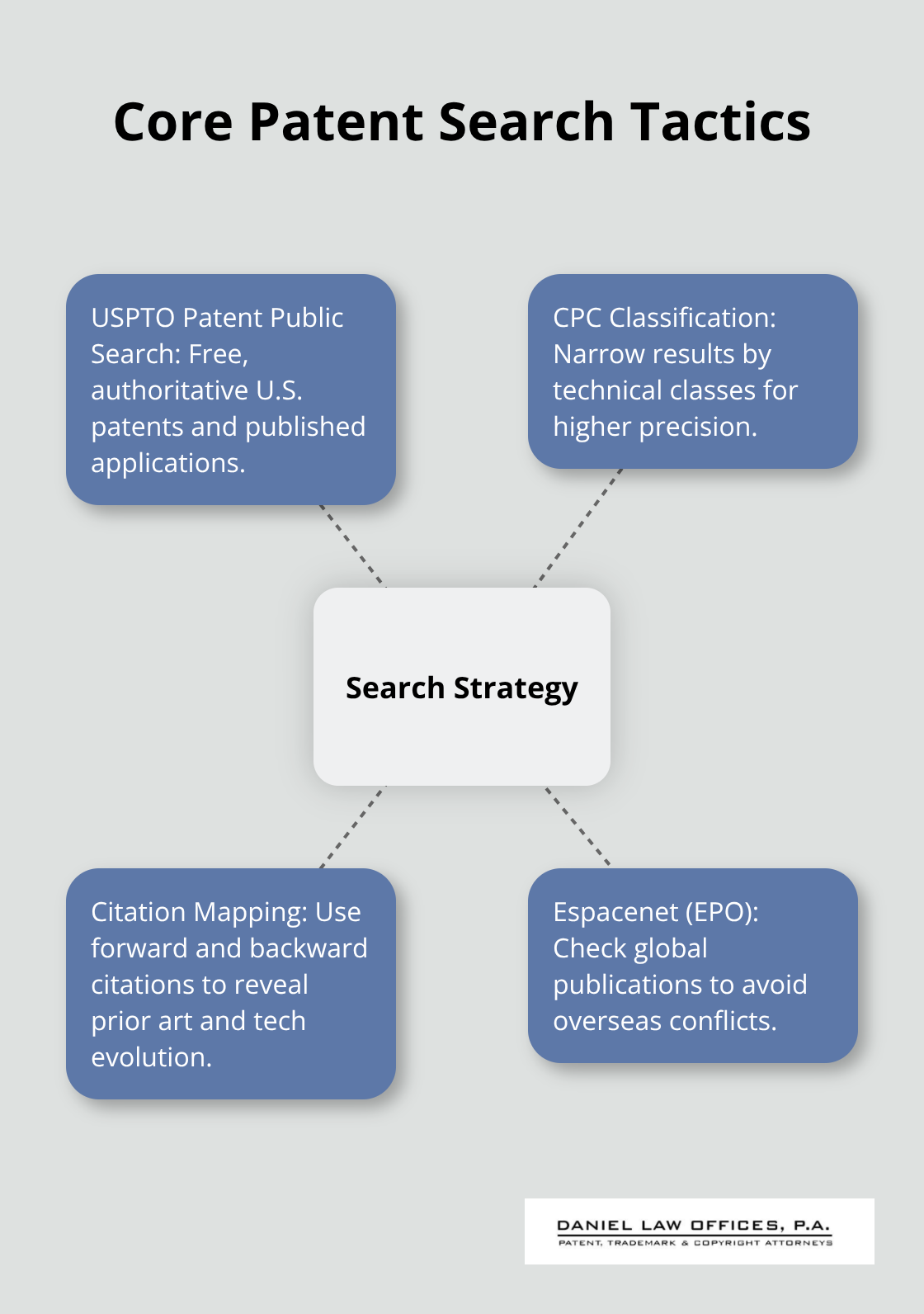
The USPTO Patent Public Search tool serves as your primary resource for finding what already exists. This free database contains over 12 million issued patents and millions of published applications searchable by keyword, patent number, inventor name, or classification code. Start broad with your core invention terms, then progressively narrow results by adding technical specifications and features specific to your idea. For example, if you invented a modified umbrella handle, search umbrella first, then add terms like ergonomic grip, adjustable mechanism, or weather-resistant to filter results more effectively.
Use Classification Codes to Sharpen Your Results
The USPTO classifies patents using Cooperative Patent Classification codes, and searching by CPC dramatically improves your precision. Once you identify a relevant patent, examine its drawings, specifications, and claims carefully because these sections reveal exactly how the invention functions and what legal protection already exists. Forward and backward citation searches prove invaluable here; backward citations show what prior art the patent examiner considered, while forward citations reveal which newer patents built upon the one you found. This citation mapping shows the entire landscape of related inventions and helps you spot gaps where your idea might fit.
Search International Patent Databases for Global Coverage
International patents matter far more than most inventors realize, especially if your invention has commercial potential outside the United States. The European Patent Office’s Espacenet database contains over 140 million patent publications across jurisdictions, and searching here reveals whether competitors or other inventors already patented your idea globally. Many inventors discover too late that their invention was patented in Germany or Japan years earlier, blocking their market expansion plans. Espacenet searches cost nothing and take minutes, making this a non-negotiable step.
Document Your Findings Thoroughly
When you identify patents that closely resemble your invention, document them thoroughly with publication numbers, filing dates, and claim language because this documentation becomes essential if you proceed to file. This comprehensive approach prevents costly surprises later and positions your application for success with the USPTO examiner. With a complete picture of the prior art landscape in hand, you’re ready to interpret what your search results actually mean for your invention’s patentability.
What Your Search Results Actually Tell You
Once you’ve gathered patents from the USPTO database and international sources, the real work starts: understanding what those results mean for your invention’s viability. Most inventors make the critical mistake of scanning patent titles and assuming they’ve completed their analysis. This surface-level approach leads to false confidence or unnecessary abandonment of genuinely novel ideas.
Read the Claims Section First
You must read the claims section of similar patents because claims define the legal scope of protection, not the invention’s general concept. A patent titled Smart Umbrella Handle might protect only a specific mechanical locking mechanism, leaving room for your electronic moisture-sensing handle to be completely novel. The specification and drawings matter equally; they show exactly how the patented invention functions and reveal technical details that distinguish it from your idea.
Check Patent Status and Filing Dates
When you find a patent that seems identical to your invention, examine its filing date carefully. A patent filed ten years ago might have expired or never been renewed, meaning the technology entered the public domain and you can now build upon it without infringement risk. The USPTO maintains detailed legal status information for every patent, showing whether it’s active, abandoned, or expired, and this status fundamentally changes your strategic options.
Assess Your Invention’s Novelty Against Prior Art
Assessing novelty requires comparing your invention’s specific features against what already exists in the prior art. If five patents describe umbrella handles with ergonomic grips but none combine that grip with weather-resistant materials and adjustable angles simultaneously, you may have identified a patentable combination that the prior art missed. Forward citations reveal which newer patents built upon older ones, showing technological evolution in your field and exposing gaps where your invention fits.
Evaluate Conflicts and Next Steps
When you discover a patent with claims nearly identical to what you planned to file, you face a choice: abandon the project, design around the existing patent’s claims, or investigate whether the patent is vulnerable to challenge. A registered patent attorney can review your search results because determining whether a conflict actually blocks your invention requires legal judgment beyond what most inventors can provide alone. Citation analysis takes time but prevents costly prosecution battles later.
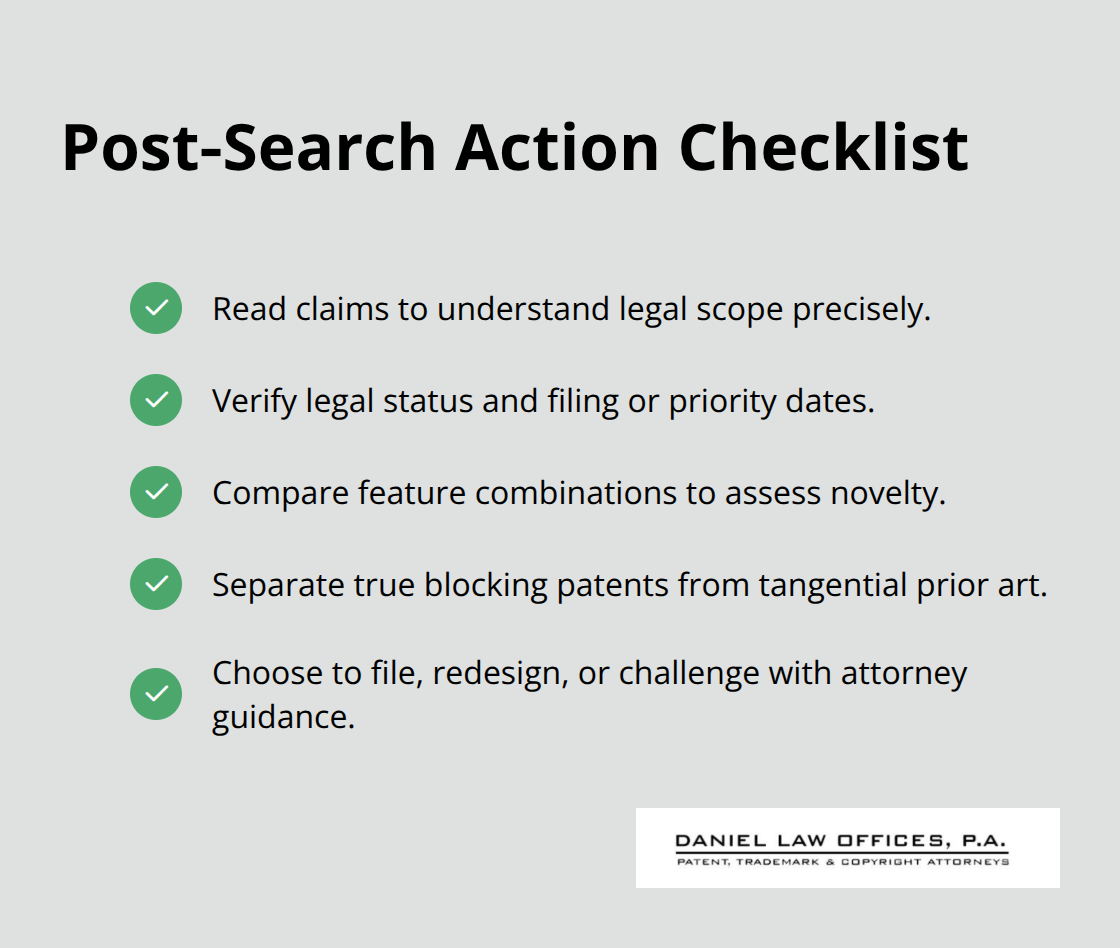
Document which patents pose genuine conflicts versus those that merely address the same general problem using different approaches. This distinction determines whether you can move forward confidently or need to pivot your invention’s design before filing.
Final Thoughts
A thorough patent searching process separates inventors who succeed from those who waste money on applications that never had a chance. You now understand why skipping this step costs thousands, which databases deliver reliable results, and how to interpret what you find. The key takeaway is straightforward: never file without searching first.
After you complete your search, document everything you discovered. List the patents that most closely resemble your invention, note their filing dates and legal status, and identify which claims pose genuine conflicts versus those addressing only tangential aspects of your idea. This documentation becomes invaluable during patent prosecution when the USPTO examiner raises rejections based on prior art.
Your next move depends on what your search revealed. If you found no blocking patents and your invention appears genuinely novel, you’re ready to draft claims and file your application. If you discovered patents with overlapping features, you may need to redesign your invention to work around existing claims or investigate whether those patents are vulnerable to challenge. We at Daniel Law Offices, P.A. review your search results, assess whether genuine conflicts exist, and help you develop a filing strategy tailored to your invention’s strengths and weaknesses-contact us today to discuss your patent protection strategy.