



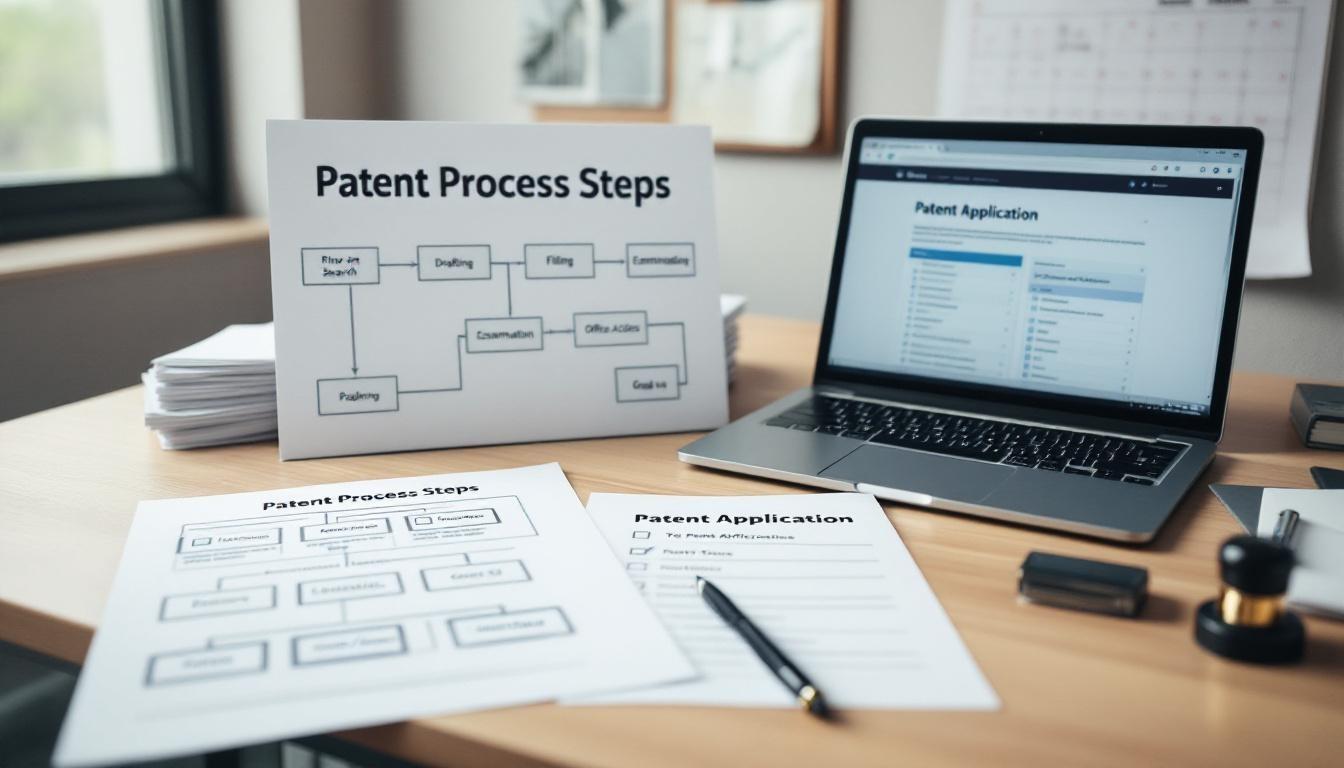
How to Navigate Patent Process Steps Successfully
Getting a patent approved requires understanding multiple stages and avoiding costly mistakes. At Daniel Law Offices, P.A., we guide inventors through each patent process step with clarity and precision.
This guide walks you through application requirements, USPTO filing procedures, and common pitfalls that derail patent protection. You’ll learn exactly what the Patent Office expects and how to respond effectively.
What Makes an Invention Patentable in Orlando, Florida
Determining Your Invention’s Patent Potential
Not every invention qualifies for patent protection, and filing for something that doesn’t meet USPTO standards wastes thousands of dollars. The USPTO applies four strict patentability tests: novelty, non-obviousness, utility, and subject-matter eligibility. Your invention must be new-meaning it cannot exist in prior art filed before your filing date, published materials, or products sold more than one year before you file. About 8% of patent applications face rejection due to lack of novelty alone, according to the USPTO, so understanding this requirement upfront prevents costly rejections. Non-obviousness means your invention cannot be an obvious variation of existing technology to someone skilled in your field. Utility requires that your invention actually works and serves a practical purpose. Subject-matter eligibility means your invention must fall into a patentable category: machines, devices, manufacturing processes, compositions of matter, or software algorithms.
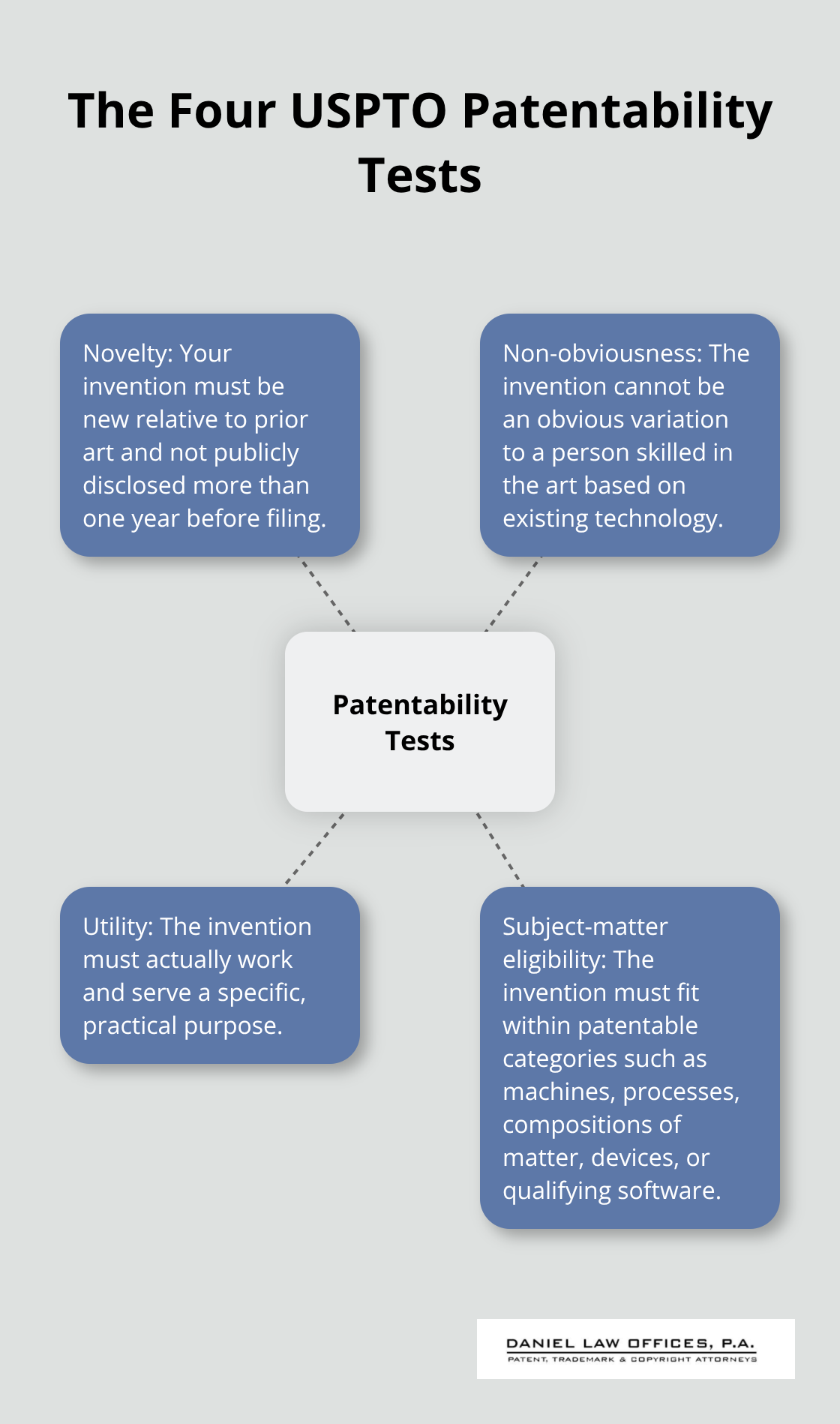
If your invention fails any of these four tests, the Patent Office will reject it, regardless of how well you write the application.
Conducting a Thorough Prior Art Search
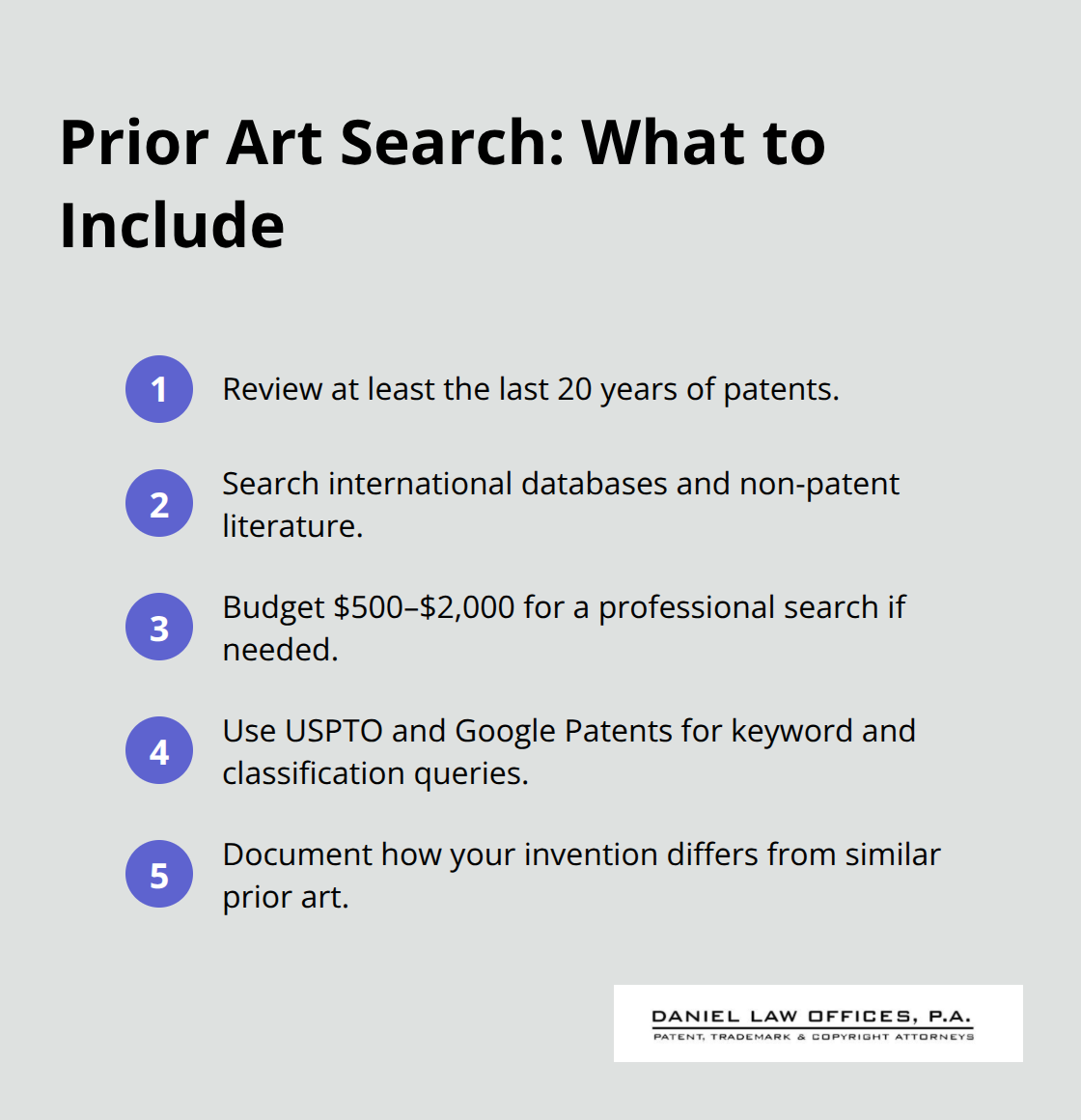
Before spending money on filing, you must search existing patents, published applications, and non-patent literature to understand what already exists in your space. The USPTO data shows that comprehensive prior art searches help determine novelty and can save thousands by refining your idea before filing. A truly comprehensive search should review the last 20 years of patents, international databases, and published materials-not just patents alone. Professional patent searches typically cost $500–$2,000 but reveal hidden prior art that could block your application later. The USPTO patent database and Google Patents provide free search interfaces where you can search by keywords, classifications, or inventor names. If your prior art search reveals similar inventions, you must clearly articulate what makes yours different and non-obvious.
Building Your Technical Foundation
Gathering detailed technical specifications and documentation during this phase helps you explain your invention’s unique features to a patent attorney. Strong documentation now-including drawings, prototypes, lab notes, and technical descriptions-becomes the foundation of your patent application and directly impacts approval rates. These materials demonstrate that your invention actually works and meets the utility requirement. Well-organized technical records also support your claims during patent prosecution when examiners question whether your invention truly functions as described. The more thorough your documentation, the stronger your position when responding to office actions later in the process.
Filing Your Application and Managing USPTO Communication in Orlando, Florida
Submit Your Application Electronically to Avoid Delays
Electronic filing through the USPTO Patent Center eliminates unnecessary delays and fees that paper submissions create. The USPTO reports that electronic filing runs about 15% faster than paper submissions, and paper filings incur a $400 non-electronic filing fee that adds no value. When you file electronically, use DOCX format to avoid surcharges and verify that your application data sheet, fee transmittal form, and inventor oath are complete before submission. Incomplete applications trigger Notices to File Missing Parts, and you have only a limited window to correct them-miss that deadline and your application abandons. The basic USPTO utility patent filing fee ranges from $80 for micro entities to $320 for large entities, but additional fees apply for claims beyond 20 and pages beyond 30.
Understand What the Patent Office Expects in Your First Response
After filing, your first office action typically arrives around 15 months later, though software patents often take longer. The USPTO data shows that about 70% of applications receive at least one rejection before approval, and about 45% face rejection on the first office action-usually due to incomplete disclosures, unclear claims, or formatting errors. When an office action arrives, you have exactly six months to respond or risk abandonment.
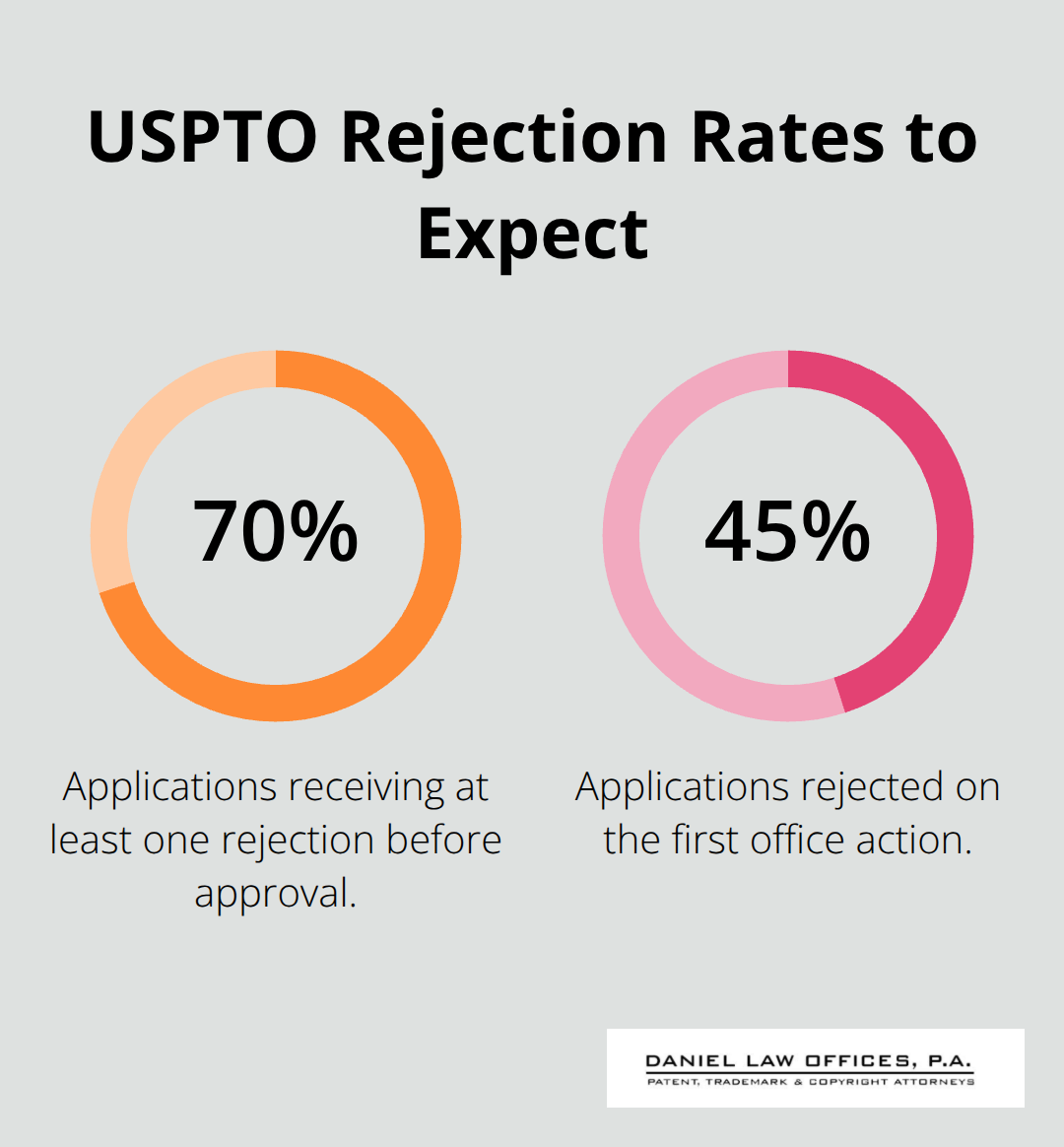
Your response options are straightforward: amend your claims to address examiner concerns, submit arguments explaining why the rejection is incorrect, or do both simultaneously.
Strengthen Your Position Through Strategic Amendments and Arguments
About 60% of applications receive at least one non-final rejection, which means the examiner is giving you a chance to fix problems and resubmit. Applications with well-written specifications have a 30% higher chance of approval without major revisions, and applications with well-drafted claims face about 25% fewer initial rejections, according to USPTO data. Request an examiner interview if the office action is unclear-interviews boost approval rates by about 30% because they let you clarify objections directly rather than guessing at written responses. If a final rejection occurs, you can request continued examination, which restarts review with a new examiner and typically costs around $2,000 in additional fees.
Plan for the Full Patent Prosecution Timeline
The overall patent prosecution timeline from filing to approval generally ranges 2–4 years for utility patents, with total costs including all office action responses and professional fees typically between $8,000 and $15,000 depending on your invention’s complexity. This process is fundamentally a negotiation between you and the examiner, where solid technical arguments and strategic claim amendments yield stronger, more defensible patents. Each response you file shapes the examiner’s perception of your invention and determines whether your patent will ultimately protect your work effectively. The decisions you make during prosecution directly affect the scope and enforceability of your granted patent, making this phase as important as the initial application itself.
What Sinks Patent Applications in Orlando, Florida
Inadequate Technical Disclosure Invalidates Patents
Inadequate technical disclosure ranks as the single most damaging mistake inventors make during patent prosecution. The USPTO reports that about 15% of patent invalidations stem directly from insufficient enablement or failure to disclose the best mode, meaning your written description must be detailed enough that someone skilled in your field could actually build and use your invention without additional experimentation. When examiners receive vague specifications, they reject applications for lack of written description, and you then face the painful choice of narrowing your claims or abandoning protection altogether. Inventors often describe their invention in general terms, assuming the examiner will understand the technical nuances, then face rejections that could have been prevented with concrete details upfront.
Your specification should include specific materials, dimensions, temperatures, pressures, chemical compositions, or software algorithms depending on your invention type. If your invention has multiple embodiments or variations, describe each one explicitly rather than leaving the examiner to infer how your invention works under different conditions. Applications with well-written specifications achieve a 30% higher approval rate without major revisions according to USPTO data, so investing time in thorough technical writing directly increases your odds of success.
Missing Deadlines Causes Automatic Abandonment
The USPTO gives you exactly six months to respond to every office action, and missing that deadline results in automatic abandonment with virtually no recovery option. Set calendar reminders for office action response deadlines at the 4-month mark so you have adequate time to work with a patent attorney rather than scrambling at the last minute. Track every deadline in writing and confirm receipt of office actions immediately upon arrival, as the six-month clock starts ticking from the office action’s issue date, not when you receive it.
Flawed Claim Strategy Restricts Patent Protection
Inventors frequently draft claims that are either so narrow they offer no real protection or so broad they invite rejections for lack of enablement. The USPTO data shows that well-drafted claims face about 25% fewer initial rejections, yet most inventors draft their first claims without understanding how narrow claims sacrifice market coverage while overly broad claims invite novelty and obviousness rejections. Your independent claims should start broad and capture the core innovation, then dependent claims should narrow the scope with specific features. If you include unnecessary limitations in your independent claims, you have voluntarily restricted your patent’s protection before the examiner even reviews it.
Final Thoughts
Successfully navigating patent process steps requires understanding what the Patent Office expects, responding strategically to office actions, and avoiding the mistakes that derail applications. Your technical disclosure must be thorough enough that someone skilled in your field could build your invention without guessing, your claims must balance breadth with enablement, and your deadlines must never slip. Missing any of these elements costs thousands in wasted fees and lost protection.
We at Daniel Law Offices, P.A. help inventors and businesses secure and protect their valuable ideas through comprehensive patent searches, application drafting and filing, and guidance through the entire patent prosecution process. Our registered patent attorney assists you in avoiding the pitfalls that sink applications and positions your patent for approval and enforceability. The decisions you make during patent prosecution directly shape the scope and strength of your granted patent.
Your next step is straightforward: conduct a comprehensive prior art search, gather your technical documentation, and connect with Daniel Law Offices, P.A. to discuss how we can help you protect your innovation. Starting with thorough prior art research, submitting complete technical documentation, and responding strategically to examiner feedback transforms your application from a risky gamble into a defensible asset.