




Global Patent Filing: Strategies for Protecting Innovations Worldwide
Your innovation deserves protection everywhere it operates. Global patent filing is complex, with different rules in each country and tight deadlines that can make or break your protection strategy.
At Daniel Law Offices, P.A., we guide companies through the maze of international patent systems. This guide covers what you need to know to protect your innovations worldwide.
How Patent Protection Actually Works Across Borders
Patents are territorial rights, meaning protection in the United States does not automatically extend to Europe, Asia, or anywhere else. You must file separately in each country or region where you want protection, according to WIPO.
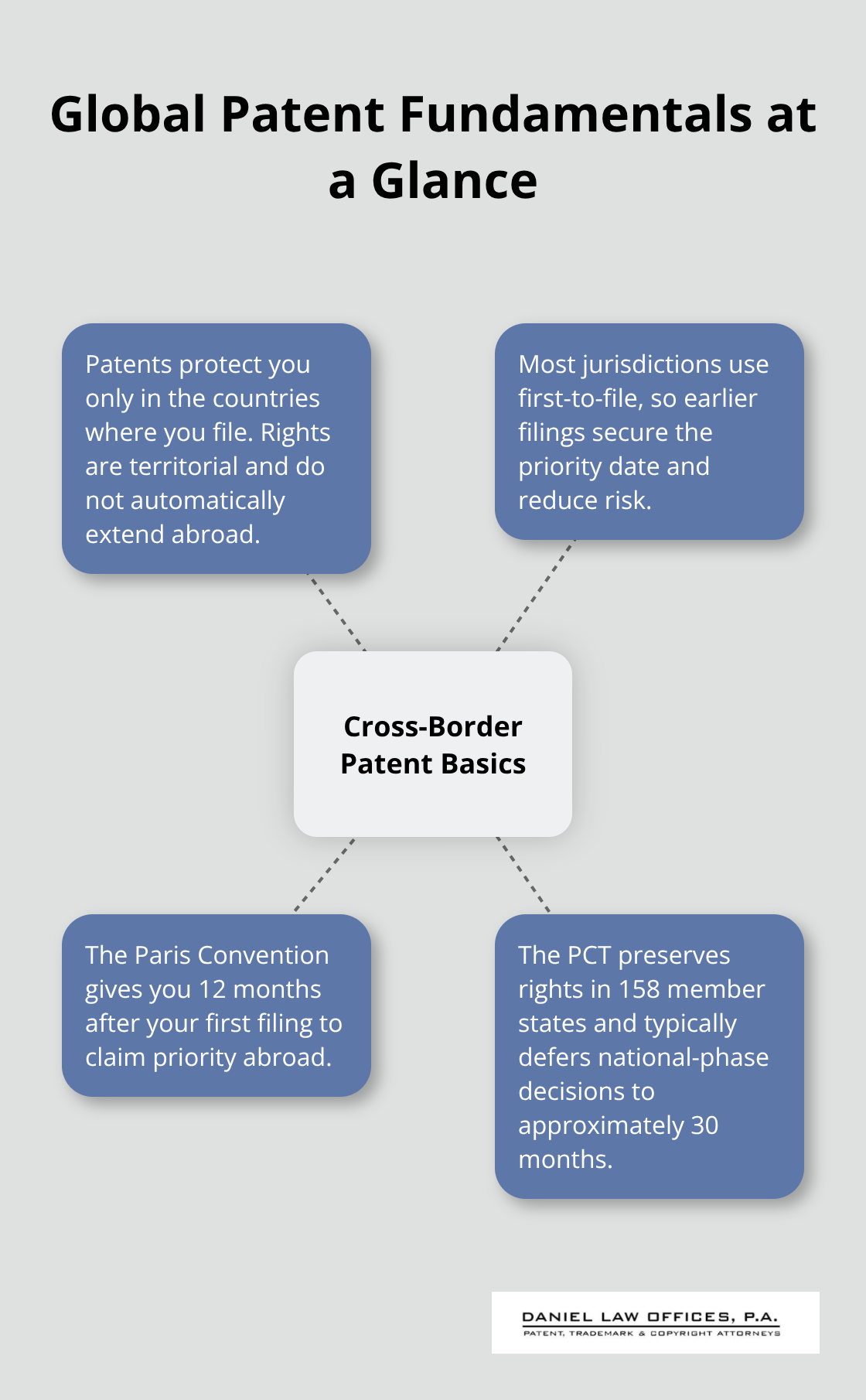
This fundamental reality shapes every global filing decision. The first-to-file system dominates most jurisdictions worldwide, so speed matters enormously. Once you file in your home country, you typically have 12 months to file in other countries while preserving your original filing date as your priority date. Miss that window, and you lose priority protection in those jurisdictions.
The Paris Convention, established in 1883, formalized this 12-month priority right across its member countries, removing the penalty for filing abroad after your initial domestic application. However, waiting the full 12 months often proves counterproductive because you delay gathering market intelligence, assessing competitive threats, and securing funding for expensive national filings. The Patent Cooperation Treaty, adopted in 1970 and now covering 158 contracting states according to WIPO, changed the game fundamentally. It lets you file a single international application that preserves your rights across all member countries simultaneously. Through the PCT, you defer the major costs and strategic decisions, delaying entry into individual national patent offices until approximately 30 months from your priority date. This gives you roughly 18 additional months beyond the Paris Convention deadline to decide where you actually need protection.
Strategic Filing Locations Drive Results
Filing in the United States should be your priority if your business operates there or plans to expand there, because the US offers the strongest patent enforcement environment globally, according to Invention City. Canada, Western Europe, Japan, and South Korea also provide solid enforcement, while China presents enforcement challenges despite rapid improvement. The practical implication is straightforward: file in markets where competitors manufacture and where you plan to sell.
A company called WorkTools spent approximately $100,000 to file three patents across 12 countries, strategically selecting markets based on competitive manufacturing locations rather than attempting worldwide coverage. This demonstrates that targeted filing beats comprehensive but underfunded filings. The approach works because you concentrate resources where they matter most.
Understanding PCT Costs and the 30-Month Advantage
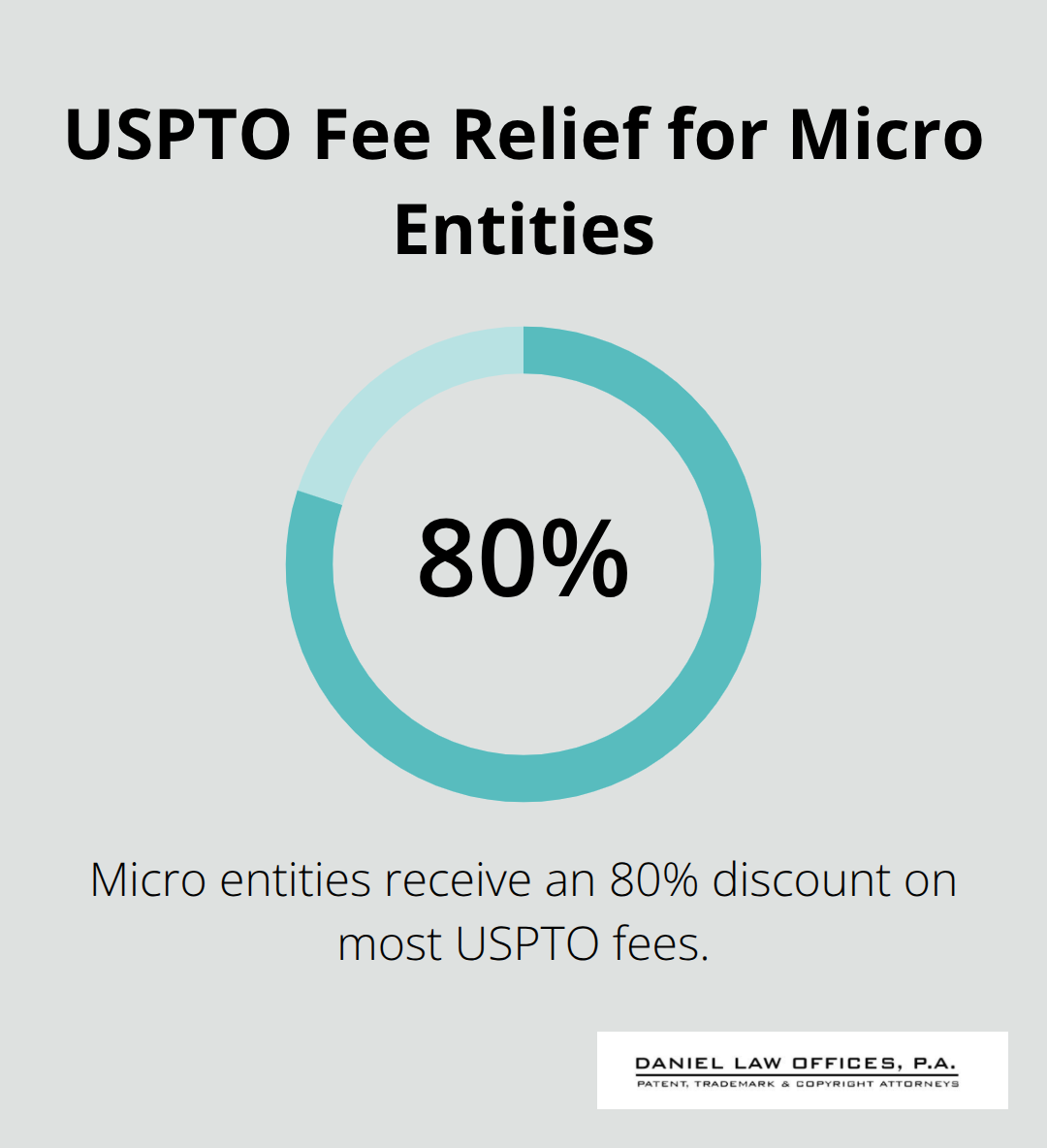
Small entity PCT filing costs roughly $3,700 to $4,500 in combined government fees and attorney fees according to the USPTO, while large entity filings run $7,000 to $11,000 total. Micro entities receive an 80% discount on most USPTO fees, reducing costs to approximately $2,000 to $3,000. Beyond PCT costs, each national phase filing in individual countries typically adds $2,000 to $15,000 per jurisdiction, so your total investment across multiple countries escalates quickly.
The 30-month PCT window proves invaluable because it gives you time to secure funding, identify licensing opportunities, and gather competitive intelligence before committing to expensive national filings in specific jurisdictions. This extended timeline allows you to make informed decisions about where protection actually makes financial sense for your business. With this foundation in place, you can now evaluate which markets align with your business goals and develop a filing strategy that maximizes protection while managing costs effectively.
Building Your Global Filing Strategy
Your market priorities determine where you file, not a desire to protect everywhere. Most companies cannot afford worldwide coverage, so you must choose jurisdictions strategically based on where you generate revenue, manufacture products, or face competitive threats. The United States remains non-negotiable for most inventors because US patent enforcement is significantly stronger than other jurisdictions according to Invention City. However, if your manufacturing happens in China or your largest customer base sits in Japan, those markets demand protection equally.
Map your business footprint first: where do you sell today, where do you plan to expand within five years, and where are your competitors operating. This exercise eliminates guesswork and focuses your budget on markets that actually matter to your bottom line.
The 30-Month Window Creates Strategic Flexibility
The 30-month PCT window gives you breathing room that the Paris Convention alone cannot provide, but only if you use it strategically. After filing your initial PCT application, you have roughly 18 months after the international search to decide which national phases to enter before costs become irreversible. During this window, you should validate market demand, secure funding commitments, and assess whether licensing opportunities exist in specific regions.
If your startup raises Series A funding in month 15, you now know whether investors want you protecting European markets. If a manufacturing partner emerges in South Korea by month 20, you can add that jurisdiction without having made premature commitments. National phase filings cost $2,000 to $15,000 per country according to Invention City, so delaying this decision until you have real market data prevents wasting $50,000 on protection in countries where you never operate. Small entities pay roughly $3,700 to $4,500 for initial PCT filing, making the international route significantly cheaper than filing simultaneously in multiple countries through the Paris Convention route.
Local Patent Attorneys Handle Jurisdiction-Specific Requirements
Hiring a local patent attorney in each major market sounds expensive until you calculate what happens without one. Translation requirements, local filing formalities, and jurisdiction-specific claim interpretation rules vary dramatically across countries. A patent attorney in Germany cannot simply translate your US claims into German and submit them; German patent law requires different claim structures, and the examiner will reject improperly formatted applications outright.
The cost of local counsel typically ranges from $1,000 to $3,000 per jurisdiction for national phase prosecution, but skipping this investment almost guarantees rejections, delays, and ultimately weaker patents. One company spent $8,000 hiring local counsel in Japan and recovered that cost within two years through licensing revenue that stronger Japanese patent protection enabled. This demonstrates that local expertise pays for itself through better patent quality and faster prosecution.
Timing Decisions Protect Your Commercial Interests
Filing too early wastes money on protection before you know whether your invention has commercial viability. Filing too late forfeits priority rights and forces you to compete against prior art that appeared during your delays. The practical window opens when you have a complete patent application with fully supported claims, not when you have a provisional application or rough specifications.
A provisional application preserves your filing date but does not provide actual patent protection, and WIPO notes that relying solely on provisionals for international strategy often backfires because claims remain undeveloped. Converting your provisional to a full non-provisional application within 12 months, then immediately filing a PCT application preserves priority across the 158 PCT member states. This approach costs you roughly $3,700 to $4,500 in PCT fees but buys you 18 additional months to make informed decisions about national phase entries. Waiting longer than 12 months after your initial filing date destroys priority protection in most countries, making early action genuinely non-negotiable.
The decisions you make during the PCT window determine not only where you file but also how strong your patents become in each jurisdiction. Understanding these timing pressures and market realities sets the stage for addressing the mistakes that derail international filing strategies.
Mistakes That Destroy Your International Patent Protection
Missing the 12-Month Priority Deadline Costs Everything
The 12-month priority deadline after your initial filing represents the most expensive mistake you can make, and it happens far more often than expected. Once that deadline passes, you lose priority protection in every country where you haven’t filed, which means any prior art that emerged during your delay can now block your patents in those jurisdictions. A company that files in the US in January but waits 13 months to file in Europe discovers that a competitor’s product launched in month 11 now counts as prior art in European examination. That product destroys the novelty requirement, and your European patent application gets rejected. The cost of missing this deadline isn’t just the rejected application; it’s losing patent protection entirely in that market.
Many companies don’t realize the deadline has passed until an attorney tells them six months too late. WIPO emphasizes that the PCT system solves this problem by allowing a single filing to preserve priority across 158 countries simultaneously, but only if you file your PCT application within 12 months of your initial domestic filing. If you file a domestic application in January and don’t file PCT until March of the following year, you’ve already lost priority in most countries. The solution is mechanical: mark your calendar on day one, set alerts at month 10, and file your PCT application or foreign applications well before month 12. Don’t assume your patent attorney will remind you; confirm the deadline in writing and track it yourself.
Inadequate Prior Art Searches Waste Thousands
Prior art searches before filing separate your strong patents from the ones that examiners will reject during examination. Companies that skip this step or perform inadequate searches waste thousands on applications that examiners will inevitably reject based on prior art references. The difference between a $5,000 search upfront and a $30,000 rejection battle is stark. WIPO’s PATENTSCOPE database lets you search international patent disclosures and identify references that might block your claims before you spend money filing.
Translation errors and missed deadlines compound the damage of inadequate searches because you’ll pay $2,000 to $5,000 to translate applications into German, Japanese, or Chinese only to have examiners reject them based on prior art you should have found beforehand. One startup spent $8,000 translating and filing in three countries, then received rejections in all three based on a single prior patent that a proper search would have revealed for under $1,000. The practical approach requires hiring a professional to conduct a comprehensive prior art search before you file internationally, which costs roughly $800 to $1,500 but prevents far costlier mistakes downstream.
Local Counsel Prevents Translation and Formality Disasters
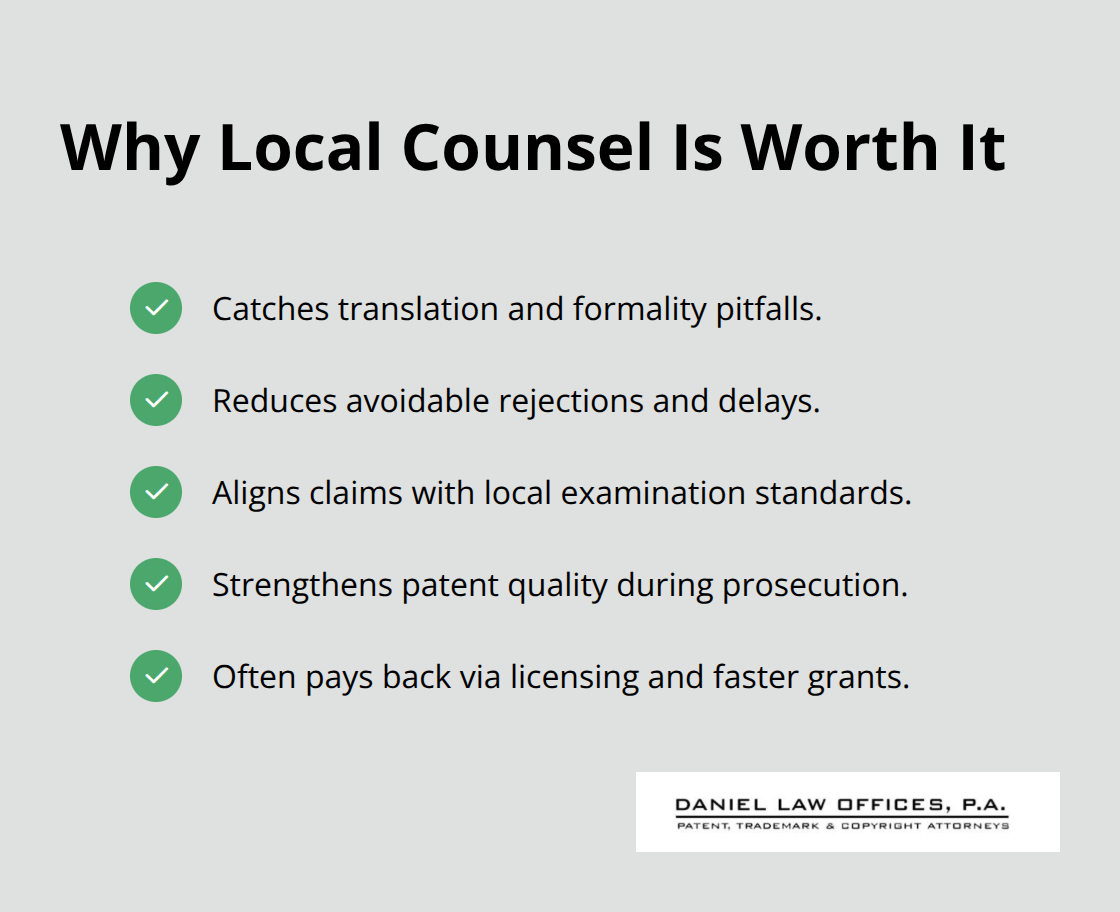
Local patent attorneys in each jurisdiction catch claim interpretation issues that arise from translation and jurisdiction-specific examination standards, which means skipping local counsel to save $1,500 often costs you $20,000 in prosecution delays and weaker patents. The translation and formality requirements vary so dramatically across countries that underestimating them guarantees problems. German examiners reject applications with improper claim formatting, Japanese examiners require specific technical language, and Chinese examiners interpret claims differently than US examiners do.
A US patent drafter might write claims that are perfectly valid in America but structurally unacceptable in Germany. Hiring local counsel costs money upfront ($1,000 to $3,000 per jurisdiction for national phase prosecution), but the cost of reworking rejected applications or accepting weaker patents far exceeds that investment. One company spent $8,000 hiring local counsel in Japan and recovered that cost within two years through licensing revenue that stronger Japanese patent protection enabled. This demonstrates that local expertise pays for itself through better patent quality and faster prosecution.
Final Thoughts
Global patent filing protects your innovations where they matter most, but only when you execute the strategy correctly. File early within your 12-month priority window, conduct thorough prior art searches before spending money on applications, and hire local counsel in each jurisdiction to navigate claim interpretation and formality requirements. The Patent Cooperation Treaty gives you 30 months to make informed decisions about where protection actually makes financial sense, transforming international filing from a rushed gamble into a deliberate business decision.
Small entity PCT filing costs roughly $3,700 to $4,500, then each national phase adds $2,000 to $15,000 per country, so targeting high-value markets based on where you manufacture and sell prevents wasting resources on jurisdictions that don’t matter to your business. We at Daniel Law Offices, P.A. conduct comprehensive patent searches to identify prior art before you file, ensuring your applications avoid rejection based on existing references. We draft and file patent applications with the USPTO and manage prosecution through examination, then coordinate with local counsel in key international markets to handle national phase filings and jurisdiction-specific requirements.
Your next step is scheduling a consultation with Daniel Law Offices, P.A. to map your target markets and develop a filing timeline that aligns with your business goals. We help you understand which jurisdictions deserve protection based on your competitive landscape and revenue projections, then execute the strategy with precision.