



Foreign Patent Filing Tips: Navigating Global Rules
Getting a patent approved in your home country is one thing. Filing internationally is entirely different, with each country playing by its own rules.
At Daniel Law Offices, P.A., we’ve seen countless inventors stumble through foreign patent filing because they didn’t understand the landscape. The mistakes are costly and often irreversible.
This guide walks you through foreign patent filing tips that actually work, from understanding which countries matter to your business to avoiding the deadlines that catch people off guard.
Understanding How Patent Rules Change Across Borders
Patent protection is not universal. A patent granted by the United States Patent and Trademark Office does not automatically protect your invention in Japan, Germany, or any other country. Each nation maintains its own patent system with distinct rules, examination standards, and enforcement mechanisms. The European Patent Office requires a different claim structure than the USPTO, and many countries impose strict requirements on what constitutes patentable subject matter. In China, pharmaceutical patents face significantly different standards than in the United States.
Why Each Country Operates Independently
This fragmentation means that filing internationally demands a completely different strategy than securing domestic protection. The Patent Cooperation Treaty, administered by the World Intellectual Property Organization, streamlines the process by allowing you to file a single international application that can cover up to 195 countries. However, the PCT does not grant a global patent-it simply postpones the decision to file separately in each country and creates a unified priority date. After filing through the PCT, you still must navigate individual country offices, each with their own examination timelines and requirements. Many inventors mistakenly believe a PCT filing means automatic international protection, only to discover years later that they missed critical filing deadlines in key markets.
Examination Timelines Vary Significantly
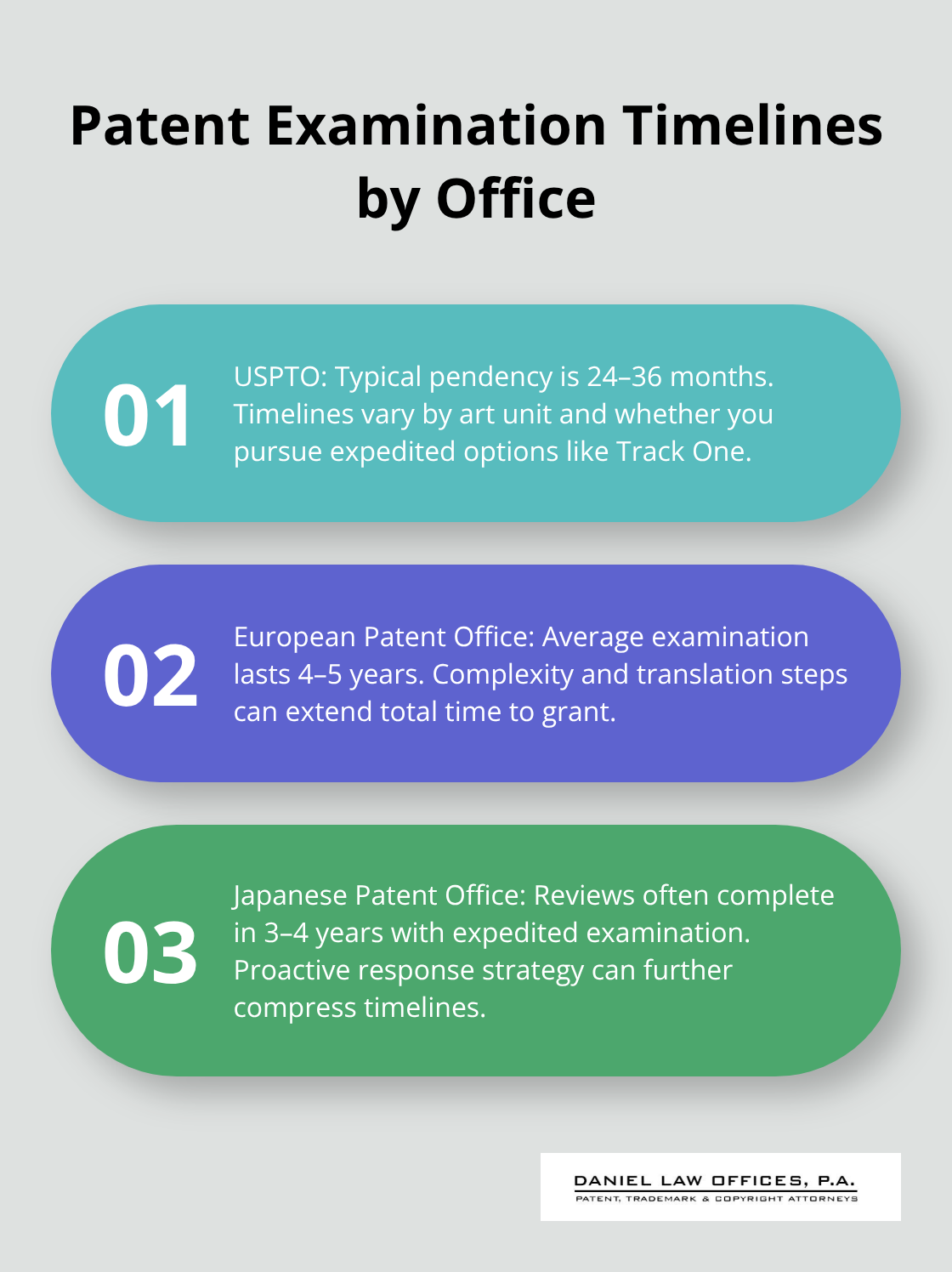
The USPTO typically takes 24 to 36 months to issue a patent, but foreign offices operate on different schedules. The European Patent Office averages 4 to 5 years for examination, while the Japanese Patent Office often completes review within 3 to 4 years if you request expedited examination. These delays matter because your competitors are not waiting-they are filing their own patents and launching products. Some countries, including Australia and Canada, offer accelerated examination programs that reduce timelines to under two years if you meet specific criteria.
Examination Standards Create Real Obstacles
The examination standards themselves vary dramatically. The European Patent Office applies a strict inventive step requirement that differs from the USPTO’s non-obviousness standard, meaning an invention approved in America might face rejection in Europe. Patent protection extends beyond U.S. borders, and international databases contain prior art that affects your application. Understanding these differences before you file prevents wasted resources pursuing patents in jurisdictions where your invention faces insurmountable obstacles or where protection would be ineffective anyway.
Strategic Country Selection Determines Success
Not every country deserves equal filing attention. Filing a patent application costs between $5,000 and $15,000 per country when accounting for translation, local counsel, and government fees. A small manufacturer should not file in 50 countries-that decision wastes capital on markets that will never generate revenue. Instead, focus on countries where your customers actually operate, where manufacturing occurs, or where competitors pose a genuine threat. If your product targets North American markets, the United States, Canada, and Mexico warrant priority. For consumer electronics, Japan and South Korea demand inclusion because those countries drive innovation in that sector. India and Brazil offer growth potential but require careful assessment of enforcement capacity before committing resources. Conducting a realistic market analysis before filing anywhere internationally identifies the three to five countries where your business strategy requires protection. This focused approach sets the foundation for the next critical step: avoiding the mistakes that derail international filings.
Planning Your International Patent Strategy
Identify Your True Markets Before Filing Anywhere
Before filing a single application abroad, you need a realistic assessment of where your innovation matters and what you can afford to spend. The biggest mistake we see is inventors filing in too many countries too quickly, burning through capital on markets that will never generate revenue. Start by identifying your actual customer base and manufacturing locations, not hypothetical markets. If you manufacture in Taiwan, sell to customers in Germany and the UK, and face primary competition from Japanese firms, those three regions should anchor your filing strategy.
Conduct a Competitive Landscape Analysis in Each Target Country
Conducting a competitive landscape analysis means searching existing patents in each target country to understand what competitors already own and what gaps exist in their protection. The European Patent Office database, Japan’s Patent Office search system, and the Chinese patent database WIPO Lens all provide free access to prior art specific to those regions. This research takes time but reveals whether your innovation faces genuine obstacles in each jurisdiction or whether clear pathways exist for protection. A pharmaceutical company filing in Europe encounters significantly different prior art than the same filing in India, where patent standards historically differed. Understanding these competitive realities before committing money prevents expensive surprises during examination.
Calculate Realistic Costs Across Multiple Countries
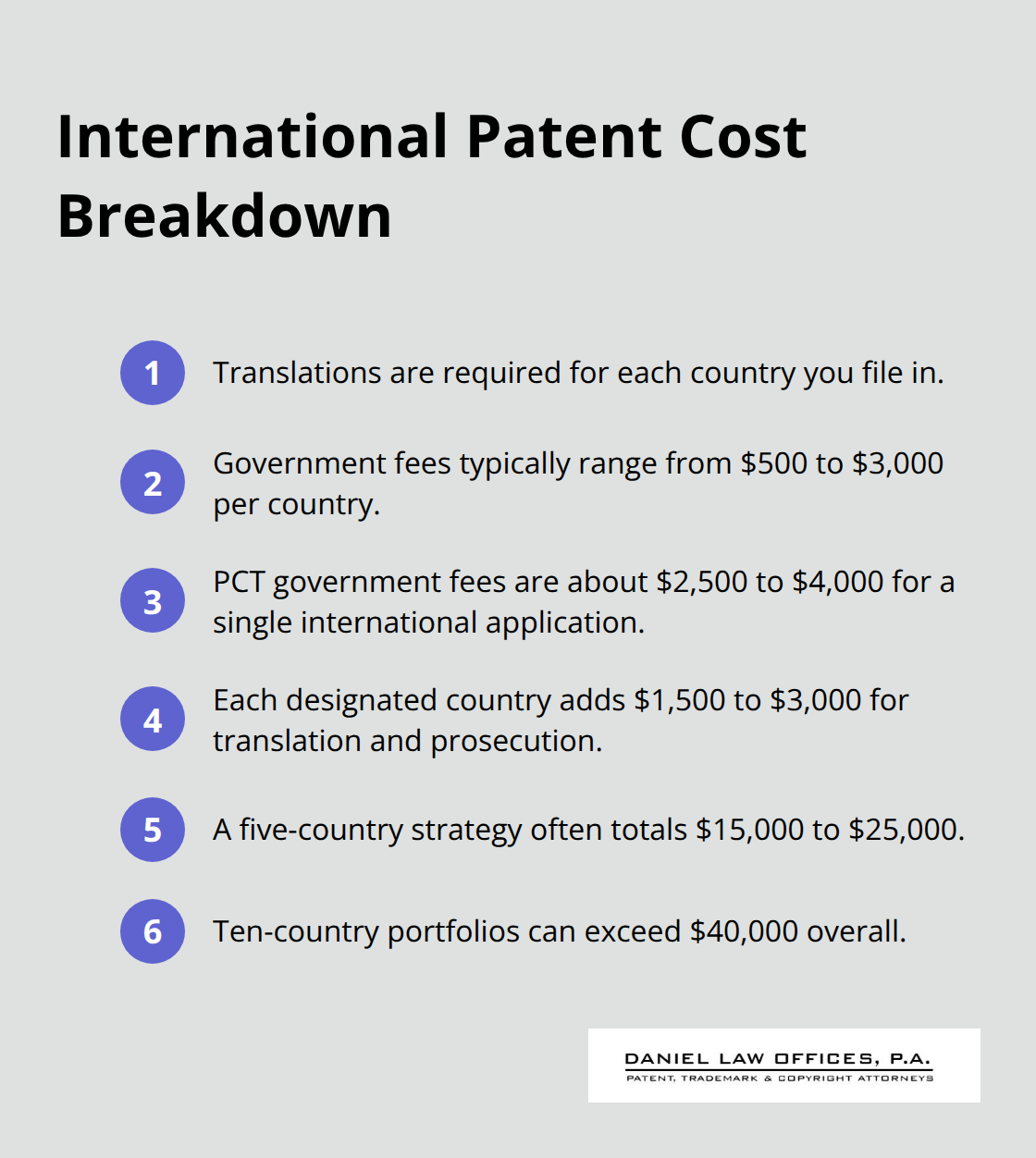
Budget constraints dictate everything in international filing strategy. Filing costs escalate rapidly across multiple countries because each application requires translation into the local language, payment of government fees ranging from $500 to $3,000 per country, and often hiring local patent counsel to navigate unfamiliar procedures. The World Intellectual Property Organization reports that a single international patent application filed through the Patent Cooperation Treaty costs approximately $2,500 to $4,000 in government fees alone, then each country where you designate protection adds $1,500 to $3,000 more for translation and prosecution. A realistic budget for five countries runs $15,000 to $25,000 over the entire prosecution period, while ten countries can exceed $40,000.
Prioritize Countries That Match Your Business Model
Most small manufacturers should prioritize the three to five countries where they generate 80 percent of revenue or face the most significant competitive threats. Filing broadly across 20 or 30 countries makes sense only if your business model supports that investment through genuine international sales. Starting with a focused geographic approach allows you to expand into additional markets only after your core patents issue and you verify market demand justifies the additional expense. This strategic foundation positions you to navigate the specific filing requirements that each country imposes, which brings us to the practical steps that separate successful international filings from costly mistakes.
Common Mistakes in Foreign Patent Filing
Prior Art Searches Must Cover Every Target Country
Skipping a comprehensive prior art search before filing internationally ranks as the single most destructive mistake we observe, yet it happens constantly. Inventors file applications across five countries, spend $20,000 in fees and translation costs, then face rejection during examination when prior art in Japan or Europe invalidates their core claims. A prior art search conducted only in the United States Patent and Trademark Office database misses critical prior patents filed in other countries. The European Patent Office, Japan’s Patent Office, and China’s WIPO Lens database contain millions of patents that never appear in USPTO searches. An invention that passes novelty screening in America might face rejection in Germany because a German company filed similar technology years earlier in their home patent office.
Search each target country’s patent database before filing anywhere internationally, not after. This upfront investment of 10 to 20 hours prevents devastating rejections that waste far more money than the search itself costs. The World Intellectual Property Organization’s database covers over 90 million patent documents across all countries, making comprehensive searching technically possible but requiring systematic approach rather than casual keyword searches.
Language and Documentation Requirements Vary Dramatically
Ignoring language and documentation requirements destroys applications with stunning regularity, and this problem intensifies across countries with non-English speaking patent offices. The European Patent Office accepts applications in English but many national offices in Europe require translations into local languages before examination begins. Japan’s Patent Office historically required Japanese-language specifications, though recent changes allow English filings with Japanese translations submitted later. China’s patent system demands Chinese-language claims and specifications, with poor translations causing claim rejections that prove nearly impossible to fix during prosecution.
Documentation standards vary just as dramatically-some countries require detailed drawings meeting specific formatting standards, while others accept minimal technical drawings. The USPTO tolerates informal drawings during initial filing, but the Korean Intellectual Property Office enforces strict drawing requirements from day one. Missing these requirements means your application sits in administrative limbo while examiners request corrections, consuming months from your filing timeline. Local patent counsel in each target country catches these requirements before filing, preventing costly delays that compress your examination window or trigger missed deadlines. The investment in professional review of language and documentation requirements typically runs $500 to $1,500 per country but prevents rejections that cost multiples of that amount to overcome.
Deadline Tracking Systems Prevent Irreversible Loss
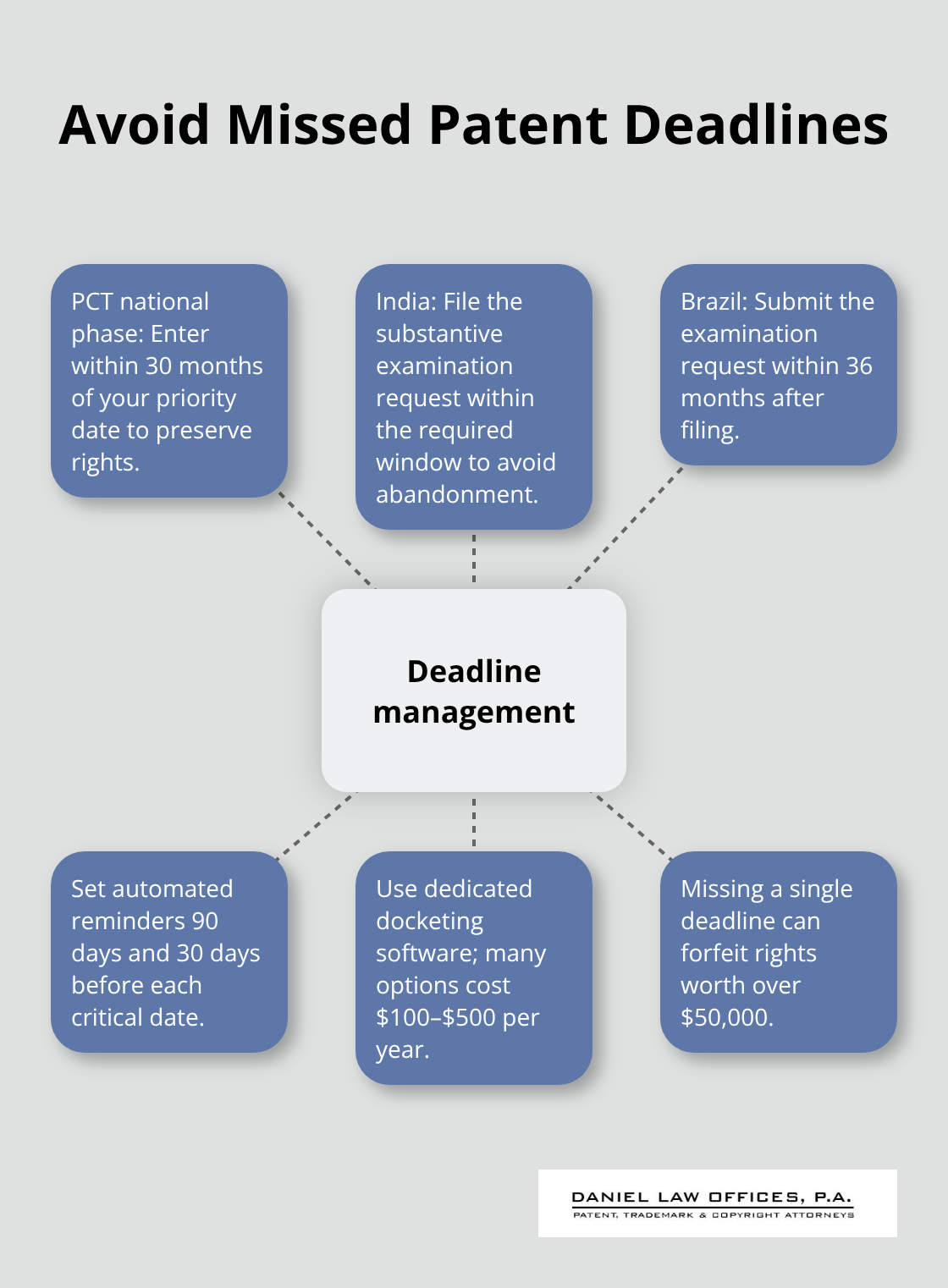
Missing filing deadlines in foreign patent systems permanently destroys your rights in those countries, with no recovery mechanism once the deadline passes. The Patent Cooperation Treaty establishes a 30-month deadline from your priority date to enter national phase prosecution in designated countries, but many inventors lose track of dates across multiple filings. Some countries impose additional requirements-India’s Patent Office requires substantive examination requests within a specific window, missing which results in application abandonment. Brazil’s patent system imposes a 36-month deadline for examination requests after filing.
The USPTO’s timelines differ from these requirements, creating confusion when managing multiple applications simultaneously.
Maintain a deadline tracking system specific to each country and each application to prevent these catastrophic misses. Set calendar reminders 90 days before each critical deadline, then again at 30 days, so missed deadlines cannot claim surprise. Many inventors use spreadsheets that fail when managing 5 to 10 international applications, making dedicated patent management software worth the investment. The cost of missing a single filing deadline-losing all rights in that country-typically exceeds $50,000 in lost protection value, making deadline management systems that cost $100 to $500 annually an absolute bargain.
Final Thoughts
International patent filing demands systematic planning and disciplined execution. The foreign patent filing tips covered throughout this guide-from conducting country-specific prior art searches to tracking deadlines across multiple jurisdictions-form the foundation of successful global protection. Skipping any of these steps creates vulnerabilities that competitors exploit or that examiners expose during prosecution, often at points where corrections become impossible.
Protecting your innovation globally requires understanding that each patent office operates independently with distinct examination standards, language requirements, and procedural timelines. The Patent Cooperation Treaty simplifies initial filing but does not eliminate the need for strategic country selection based on your actual business operations and competitive landscape. Budgeting realistically for translation, local counsel, and government fees prevents the financial strain that forces abandonment of applications in critical markets midway through prosecution.
At Daniel Law Offices, P.A., we guide clients through the complexities of international patent strategy by conducting comprehensive patent searches, drafting applications that meet foreign office requirements, and managing prosecution timelines across multiple jurisdictions. Contact us to develop an international patent strategy tailored to your business model and competitive position.