




Orlando IP Protection Tips for Smart Startups
Your startup’s intellectual property is under constant threat. From competitors copying your innovations to investors walking away because you lack proper protections, the risks are real and expensive.
At Daniel Law Offices, P.A., we’ve seen too many Orlando startups lose valuable assets because they waited too long to act. These Orlando IP protection tips will show you how to build a fortress around your ideas from day one.
Why IP Protection Matters for Startups
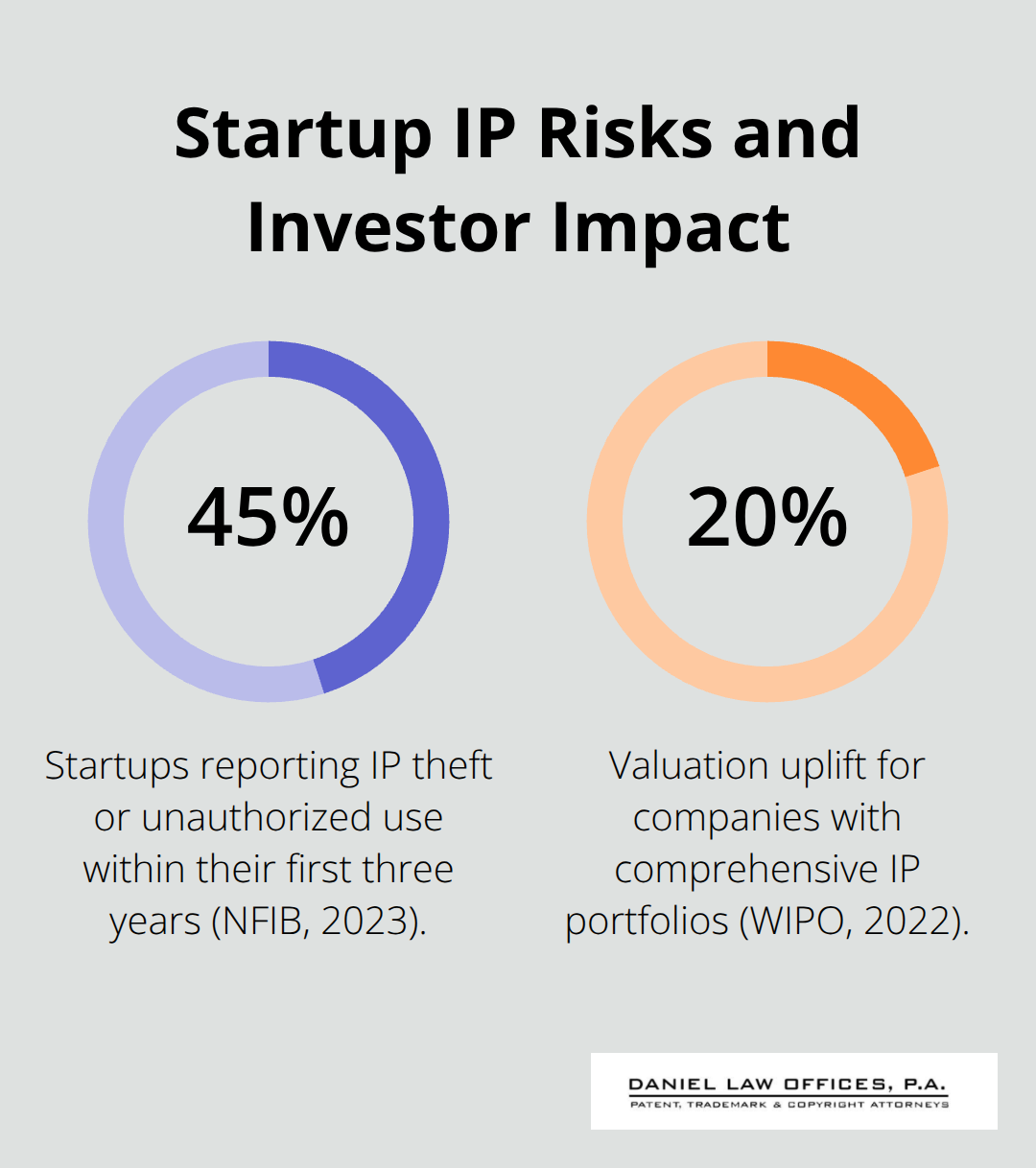
Startups operate in a vulnerable position when it comes to intellectual property. Unlike established companies with legal teams and years of accumulated protections, young businesses often lack formal documentation of their innovations and brand assets. A 2023 survey by the National Federation of Independent Business found that 45% of startups experienced some form of IP theft or unauthorized use within their first three years. The damage extends beyond lost revenue-it creates confusion in the market, delays product launches, and forces startups to spend resources fighting legal battles instead of growing. Competitors can copy your product features, use similar branding, or even file patents on your own inventions if you don’t move first.
Waiting to formalize your IP protections essentially hands your competitive advantage to others.
Early Action Stops Expensive Litigation
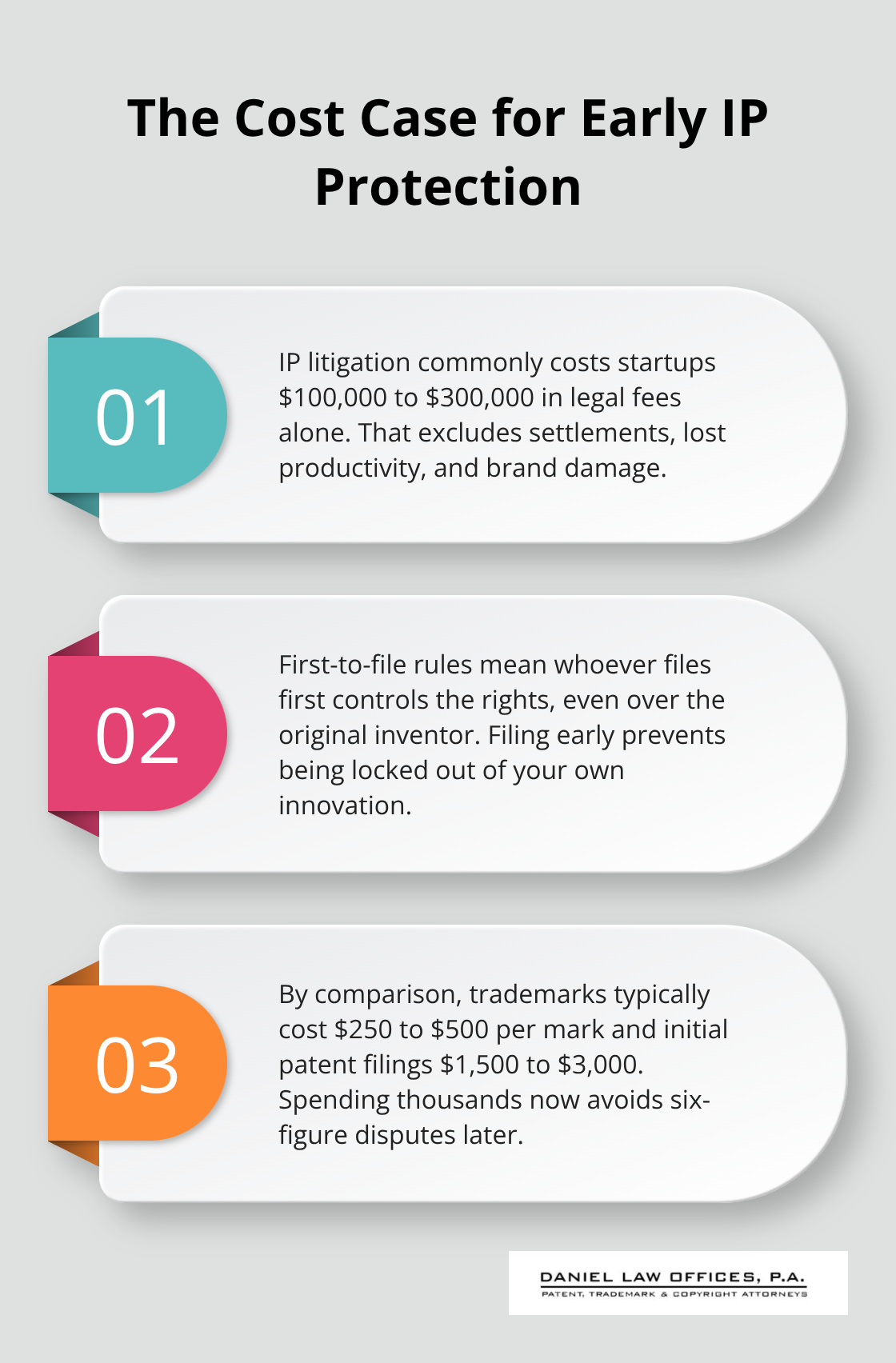
Litigation over intellectual property disputes costs startups an average of $100,000 to $300,000 in legal fees alone, according to data from the American Intellectual Property Law Association. These numbers don’t include settlement payments, lost productivity, or reputational damage. A startup that protects its patents and trademarks from day one avoids most of these conflicts entirely. Patent priority dates matter enormously-whoever files first wins the rights, regardless of who invented it. If a competitor files a patent on technology you developed but didn’t formally protect, you’ll lose the ability to use your own innovation without paying licensing fees. Trademark registration provides similar protection by establishing your exclusive right to use specific brand names and logos. The cost of filing a trademark application typically ranges from $250 to $500 per mark, while a patent application runs $1,500 to $3,000 for the initial filing. Compare that to six-figure litigation costs, and early protection becomes the obvious financial choice.
Investors and Partners Demand IP Proof
Venture capital firms and strategic partners conduct thorough due diligence before committing money or resources to any startup. They want documented evidence that your innovations are legally protected and that you actually own what you claim to own. A startup without filed patents or registered trademarks signals to investors that management doesn’t understand business fundamentals. Strong IP protections increase your company’s valuation. A 2022 analysis by the World Intellectual Property Organization showed that companies with comprehensive IP portfolios commanded valuations 20% higher than similar companies without formal protections. Investors view patents as proof of innovation and competitive differentiation. They view trademarks as protection for brand value. This foundation makes your business attractive to the partners and funding sources you’ll need to scale.
What Comes Next
Now that you understand why IP protection matters, the real work begins. Your startup needs a concrete strategy for patents and trademarks that fits your specific business model and market position.
Building Your Patent and Trademark Protection Strategy
Search for Existing Patents First
Run a comprehensive patent search before filing anything to confirm your innovation is genuinely novel. The United States Patent and Trademark Office maintains a free searchable database of all issued patents and published applications. Many startups skip this step and file patents on ideas that already exist in some form, wasting thousands of dollars on applications the USPTO will reject. A thorough search takes time but reveals existing patents, published applications, and prior art that could block your filing. You’re looking for anything similar to your invention, whether it’s an exact match or a close variation.
If competitors already patented something nearly identical, you need to know this before spending money on applications. The search also informs your patent strategy-if related patents exist, you might need to focus on novel improvements or different applications of your technology. Daniel Law Offices, P.A. conducts these searches as a foundation for any patent strategy because the data you find shapes everything that follows.
File Patents Early to Establish Priority
Filing patent applications early matters more than having a perfect invention. The patent system operates on a first-to-file basis, meaning whoever submits an application first wins priority rights, regardless of who actually invented something first. This creates urgency. The moment you publicly disclose your innovation-at a trade show, in a pitch meeting, or on social media-you typically have only 12 months to file a patent application in the United States before your disclosure bars you from patent protection.
Many countries offer no grace period at all, so international protection requires filing before any public disclosure. The filing fee for a basic patent application costs $1,500 to $3,000 initially. These costs are significantly lower than the legal fees you’ll face if a competitor files first and you’re forced to fight over rights. Startups that file patents within their first 12 months of operation face dramatically fewer disputes than those waiting two years or longer.
Register Trademarks to Protect Your Brand
Trademark registration follows a similar timeline to patent protection. Once you start using a brand name or logo in commerce, file a trademark application within the first few months to establish your priority date and gain nationwide protection. The filing fee for a trademark application runs $250 to $500 per class of goods or services. This investment protects your brand identity and prevents competitors from using confusingly similar marks.
Waiting doesn’t make your applications stronger-it only weakens your position and increases your exposure to competitors. The data is clear: startups that register trademarks early face dramatically fewer brand disputes than those delaying action. Your next step involves understanding the specific mistakes that derail many Orlando startups, so you can avoid these costly pitfalls entirely.
Common IP Mistakes Startups Make in Florida
Failing to Document Invention Development
Most Florida startups lose intellectual property rights not because their innovations lack merit, but because they fail to build a paper trail showing how their inventions developed. Without contemporaneous records showing when you conceived an idea, what problems you solved, and how you tested solutions, you cannot prove you invented something first if a dispute arises. A competitor can claim they developed the same technology independently, and without dated documentation, you have no way to establish priority.
Keep detailed lab notebooks, email chains, design sketches, and prototype photos with timestamps. These records become your evidence if you ever need to prove invention dates in patent office proceedings or litigation. The USPTO requires you to demonstrate that your invention is novel and non-obvious, and solid documentation strengthens both claims significantly. Many startups maintain this information digitally but fail to back it up or organize it properly, making records inaccessible when needed.
One Florida startup discovered their entire development history existed only in an employee’s personal email account that was deleted after she left the company, eliminating proof of their invention timeline. Establish a documentation system from day one-use shared drives, cloud storage, or project management tools that create permanent records with automatic timestamps. This costs almost nothing but protects everything.
Procrastinating on Patent Applications
Startups consistently delay filing patent applications because founders believe their inventions need to be perfect, market-ready, or fully developed before protection matters. This assumption costs millions in lost IP rights annually. The patent system doesn’t require a finished product-it requires demonstrating that your invention solves a technical problem in a non-obvious way.
You can file a provisional patent application for $1,500 to $2,500 that establishes your priority date while you continue development, then convert it to a full application within 12 months. Waiting even six months can mean a competitor files first and locks you out of patent protection entirely. The first-to-file system rewards speed, not perfection.
Neglecting Trade Secrets and Confidential Information
Trade secrets and confidential information require different protection than patents, but startups often treat them casually. Disclose your secret manufacturing process to a manufacturer without a non-disclosure agreement in place, and you’ve lost all legal protection-anyone can now use that information freely. Once information enters the public domain without protection, you cannot reclaim it.
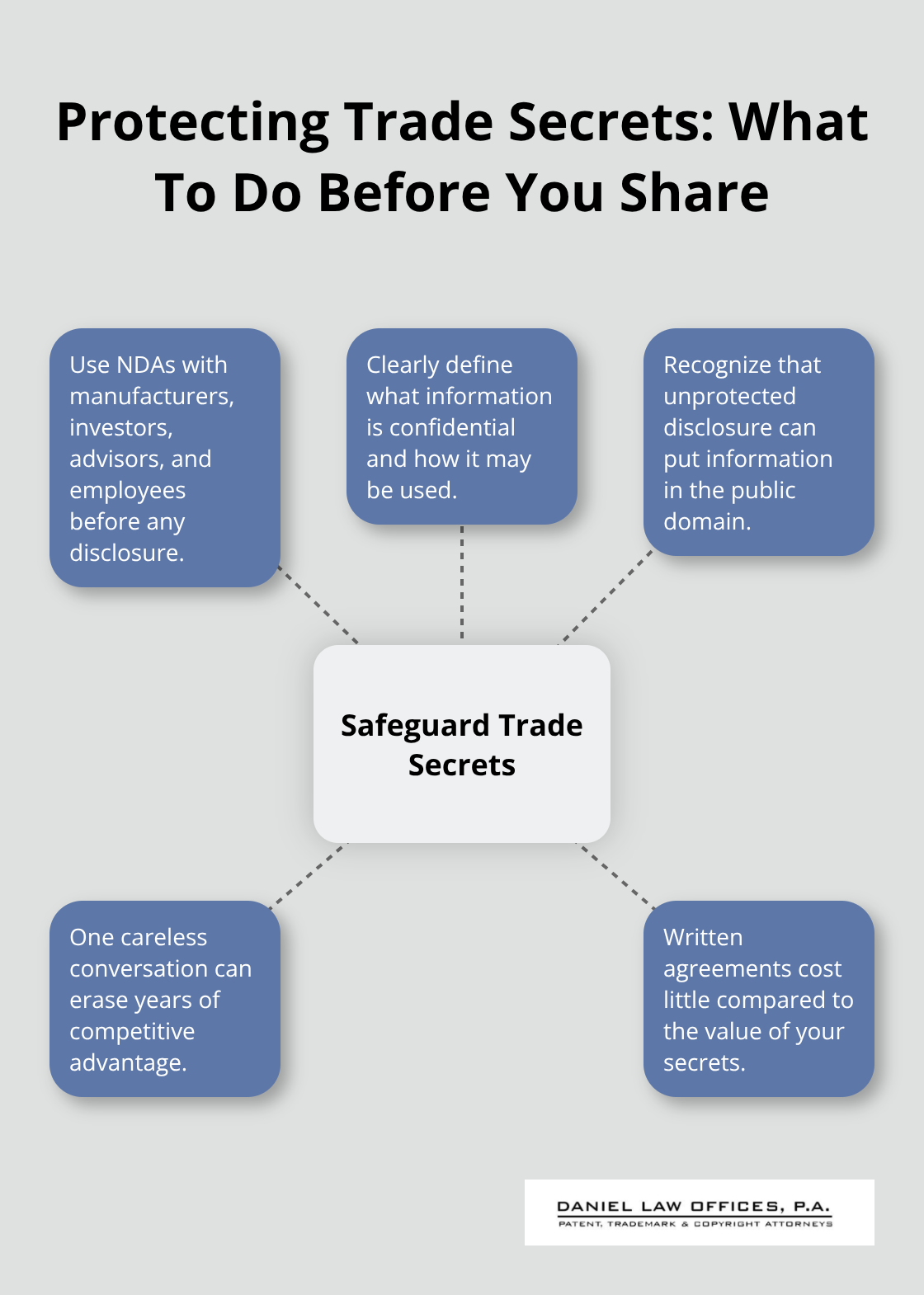
Before sharing sensitive information with manufacturers, investors, advisors, or employees, require written confidentiality agreements that specify what information is protected and how it can be used. These agreements cost far less than the value of the secrets they protect. Startups lose control of core technologies because they share details in casual conversations without documenting that the information was confidential. A single unprotected disclosure can eliminate years of competitive advantage.
Final Thoughts
The path forward is straightforward: protect your intellectual property now, not later. Every day you delay filing patents or registering trademarks increases the risk that a competitor moves first and claims rights to your innovations. The financial case is overwhelming-a $250 to $500 trademark filing or a $1,500 to $3,000 patent application costs a fraction of what you’ll spend defending your IP in court or rebuilding your brand after someone else claims it.
Orlando startups that implement these IP protection tips from day one avoid the costly mistakes that derail so many young companies. You’ve learned why early action matters, how to search for existing patents, when to file applications, and how to document your innovations properly. You understand that trade secrets require confidentiality agreements and that procrastination on patent filings hands your competitive advantage to competitors.
We at Daniel Law Offices, P.A. help individual inventors and businesses secure their valuable ideas through comprehensive patent searches, application drafting, and trademark registration. Contact us today to discuss your specific situation and build a protection strategy that fits your business. The investment you make now in proper IP protection determines whether your innovations remain yours or become available to anyone willing to copy them.