




Patent Application Speed Tips: Accelerate Your Filing Timeline
Patent applications move slowly when you’re unprepared. Most inventors waste months on preventable delays-missing documents, incomplete claims, and slow responses to the USPTO.
We at Daniel Law Offices, P.A. have seen how patent application speed tips make the difference between protection and lost time. This guide shows you exactly how to cut weeks from your filing timeline.
Get Your Documentation Ready Now
Organize Technical Specifications and Drawings
Disorganized documentation kills patent applications. Inventors who arrive at the filing stage without complete technical specifications, drawings, and evidence of conception waste months in back-and-forth exchanges with the USPTO. The patent office rejects incomplete applications outright, forcing you to resubmit and restart the examination clock.
Your technical specifications need to be detailed enough that someone skilled in your field could reproduce your invention without additional guidance. Include dimensions, materials, tolerances, and functional relationships between components. Your drawings should show multiple views: top, side, front, and internal cross-sections if applicable. Label every part with reference numerals and create a detailed legend explaining each element.
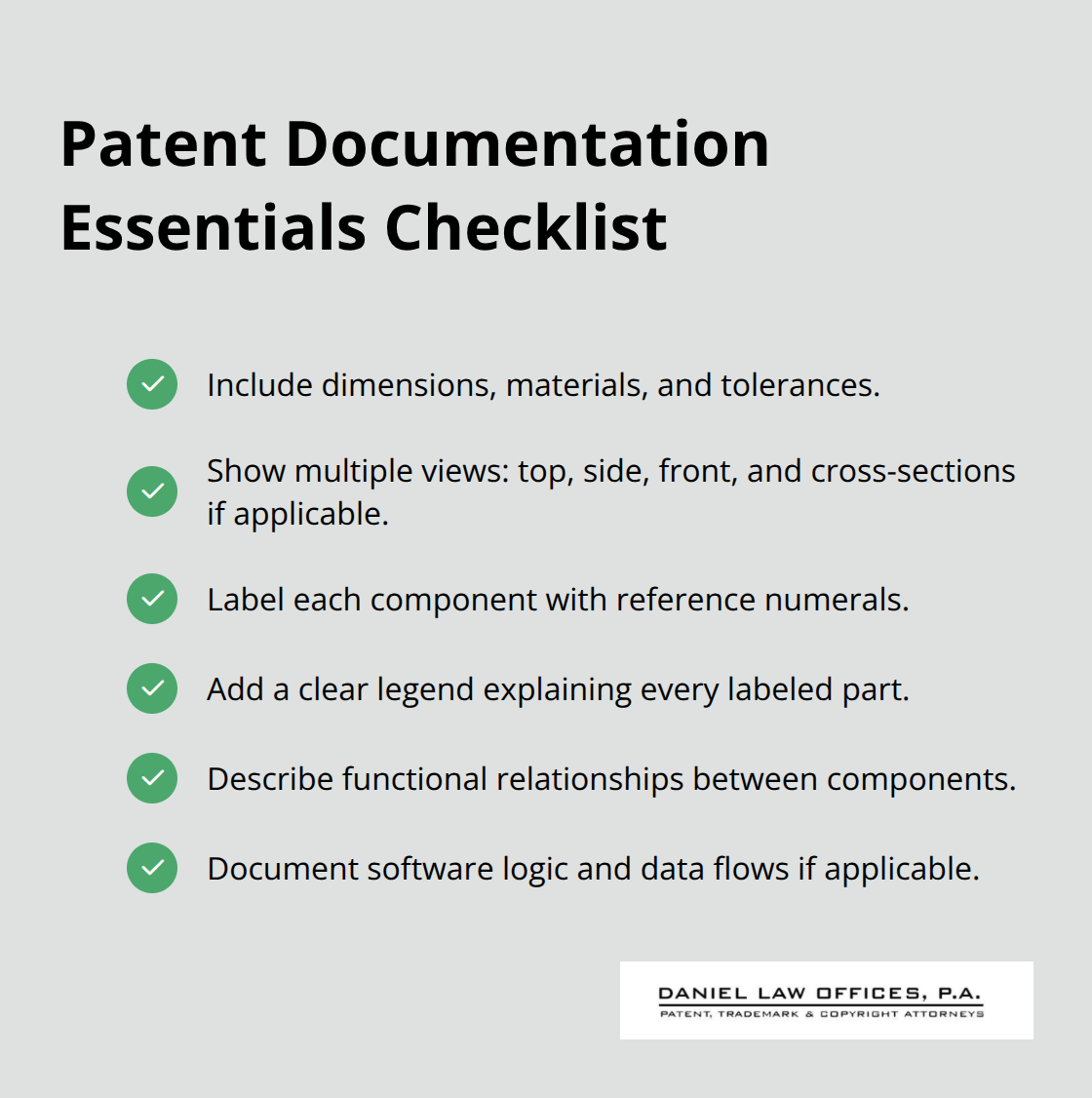
If your invention involves software or algorithms, document the logic flow, code structure, and data processing steps. Start organizing everything before you file a single page-rushing documentation at the last minute introduces errors that derail your entire application.
Search Prior Art Thoroughly
Most inventors stumble at the prior art search stage. Search the USPTO patent database, Google Patents, and relevant scientific literature to identify what already exists in your space. Look for patents filed in the last five years particularly, since examination timelines have compressed significantly.
The USPTO reports that applications with thorough prior art documentation move 30 percent faster through examination because examiners spend less time identifying relevant references themselves. This single step (when completed properly) saves weeks of back-and-forth communication with the patent office.
Document Your Conception and Development Timeline
Write down the dates you first conceived the idea, when you built prototypes, when you tested functionality, and when you achieved your first successful results. Keep lab notebooks, email correspondence, design sketches, and test results. This evidence protects you against disputes over inventorship and demonstrates your commitment to developing the invention.
Gather this material weeks before you plan to file. The documentation you assemble now determines whether your application moves smoothly through examination or gets bogged down in requests for clarification. Once your materials are organized and complete, you’re ready to address the delays that commonly derail applications during the filing process itself.
Common Delays in Patent Applications and How to Avoid Them
Incomplete Information Stops Applications Cold
The USPTO receives over 600,000 patent applications annually, and a significant portion stalls because applicants submit incomplete information or fail to respond to office actions quickly. Missing technical details, vague claim language, and delayed responses to examiner requests are the three biggest culprits holding up applications. When you submit an application missing even one required element-such as a formal declaration, adequate drawings, or a properly structured abstract-the USPTO sends a restriction requirement or office action that resets your examination timeline. You lose weeks waiting for the office action, then additional weeks preparing your response. This cycle repeats for every mistake, turning a six-month examination into an eighteen-month ordeal.
Poorly Drafted Claims Invite Rejections
Claims written without precision invite rejections that could have been avoided entirely. Examiners reject vague or overly broad claims because they fail to clearly distinguish your invention from existing patents. If your claims are poorly drafted, the examiner will issue an office action citing prior art references, and you’ll spend months arguing about what your claims actually cover instead of moving toward approval.
Slow Responses Deprioritize Your File
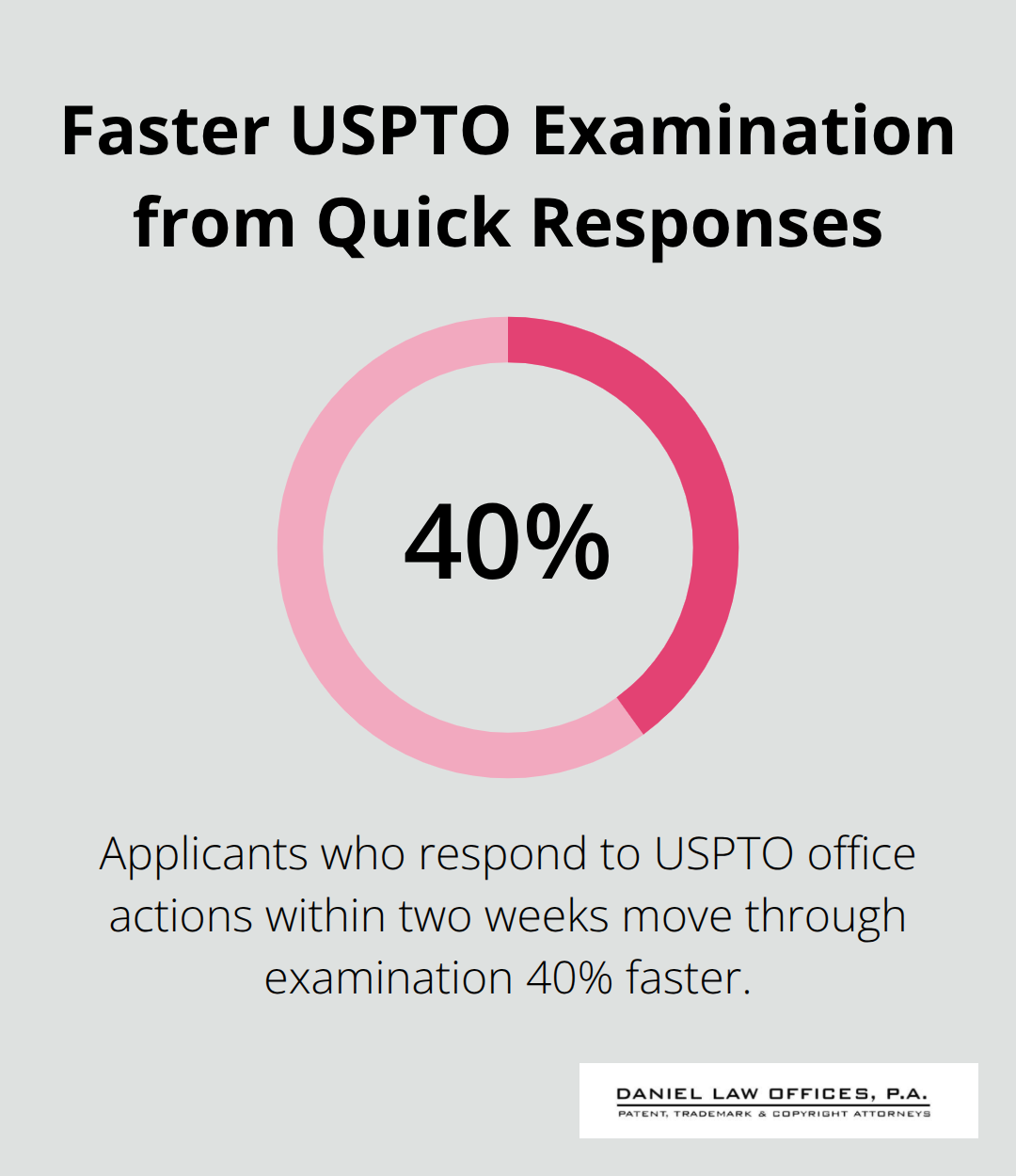
Communication delays compound these problems exponentially. The USPTO data shows that applicants who respond to office actions within two weeks of receiving them move through examination 40 percent faster than those who wait six weeks or longer. Slow responses signal to examiners that your application isn’t a priority, and your file gets deprioritized in their queue.
Act Fast on Every USPTO Communication
Treat every USPTO communication as time-sensitive. Set a calendar reminder the moment an office action arrives, draft your response immediately, and file it back within ten business days (this aggressive timeline keeps your application moving and prevents unnecessary examination delays that add months to your timeline). This approach prevents the examination stalls that plague most inventors. With your documentation organized and these common pitfalls identified, you’re ready to implement strategies that actively accelerate your patent application process.
Strategies to Speed Up Your Patent Application Process
Hire a Patent Attorney During Development, Not After
Waiting for patent approval costs you competitive advantage and market opportunity. The fastest path forward requires three concrete actions that eliminate delays before they start.
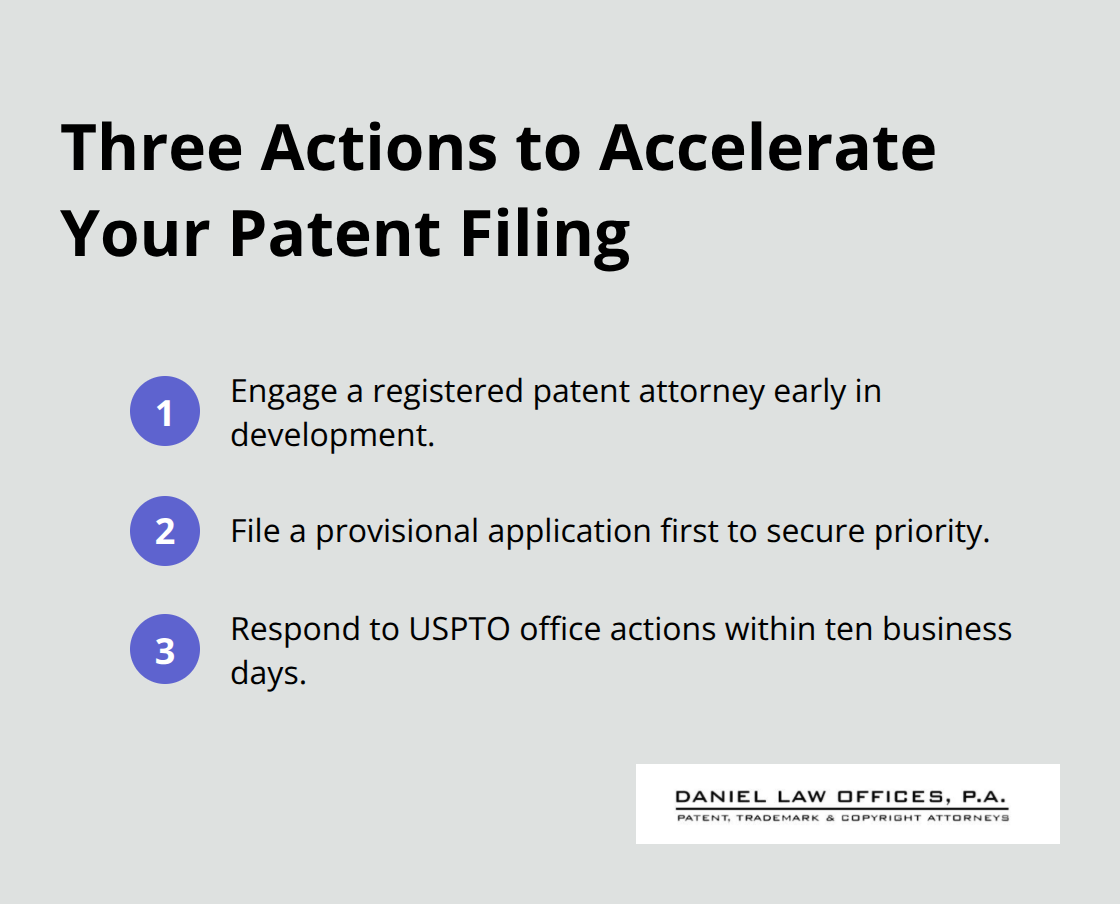
Engage a patent attorney during development, not after you’ve built your prototype. Most inventors wait until they’re ready to file, then scramble to find representation. This backwards approach costs months. When you work with a patent attorney early in development, they shape your documentation strategy from day one, ensure your technical specifications meet USPTO standards, and identify claim strategies before you’ve invested in manufacturing. A registered patent attorney guides you through development phases so your filing packet arrives complete and examination-ready. Early engagement prevents the incomplete application rejections that derail timelines.
File a Provisional Patent Application First
File a provisional patent application first if your invention is still evolving. A provisional application costs significantly less than a full utility patent application and buys you twelve months to refine your design, gather market data, and decide on full patent protection. The USPTO allows you to claim priority back to your provisional filing date when you file the full utility application within that year.
This approach gives you breathing room without sacrificing your filing date. You avoid the pressure of filing a complete utility application before your invention is truly ready, which reduces the likelihood of office actions based on incomplete technical disclosures. Provisional applications move faster through initial processing because they require less formal structure than utility applications.
Respond to Office Actions Within Ten Business Days
Respond to every USPTO office action within ten business days. The data is clear: applicants who respond quickly move through examination significantly faster than those who delay. When you receive an office action, your examiner has already identified issues with your application or found prior art references.
A prompt response keeps your file active and prevents your examiner from moving to other applications. Delays beyond two weeks signal low priority, and your file gets deprioritized in the examination queue. Set up a system that flags USPTO communications immediately and assigns response drafting to someone who understands your technology. Speed here directly translates to months saved in total examination time.
Final Thoughts
Patent application speed tips work because they address the real bottlenecks that slow down inventors. You’ve learned that disorganized documentation, incomplete claims, and slow responses to the USPTO create cascading delays that turn a manageable filing process into a months-long ordeal. The three strategies that matter most are straightforward: organize your materials before filing, work with a patent attorney during development rather than after, and respond to office actions within ten business days.
Acting quickly on patent protection delivers tangible competitive advantages. Every month your application sits in examination is a month competitors gain ground in your market. Filing a provisional application first buys you time to refine your invention while securing your priority date, and responding promptly to USPTO communications keeps your file active and prevents the deprioritization that extends timelines unnecessarily.
The inventors who move fastest treat patent filing as a strategic priority from day one, not an afterthought once manufacturing begins. They gather documentation systematically, conduct thorough prior art searches, and engage professional guidance early. If you’re ready to accelerate your patent filing timeline, contact Daniel Law Offices, P.A. to discuss your invention and get started today.