



Patent Litigation Fundamentals Every Inventor Should Know
You’ve built something valuable with your patent. Now someone else is using it without permission.
At Daniel Law Offices, P.A., we help inventors navigate patent litigation fundamentals when infringement happens. This guide walks you through what infringement looks like, how lawsuits actually work, and what you’ll spend in time and money.
What Counts as Patent Infringement in Orlando, Florida
Patent infringement occurs when someone makes, uses, sells, or offers to sell a patented invention without your permission. The U.S. Patent and Trademark Office defines this as unauthorized activity that violates your exclusive rights granted by the patent. Direct infringement is straightforward-a competitor manufactures your patented product or uses your patented process. Indirect infringement happens when someone actively encourages another party to infringe or knowingly contributes to the infringement. The Federal Circuit Court of Appeals handles most patent infringement cases, and courts have established that infringement can occur even if the infringing product isn’t identical to your patent claims. A product only needs to fall within the scope of your patent claims to constitute infringement.
Recognizing infringement in your industry
Different industries face different infringement patterns. In software and electronics, competitors often implement similar functionality using different code structures. In pharmaceuticals, generic manufacturers sometimes attempt to design around patents through slight formulation modifications. Manufacturing sectors see physical component copying most frequently. Infringement does not require exact copying-it requires meeting all elements of at least one claim in your patent.
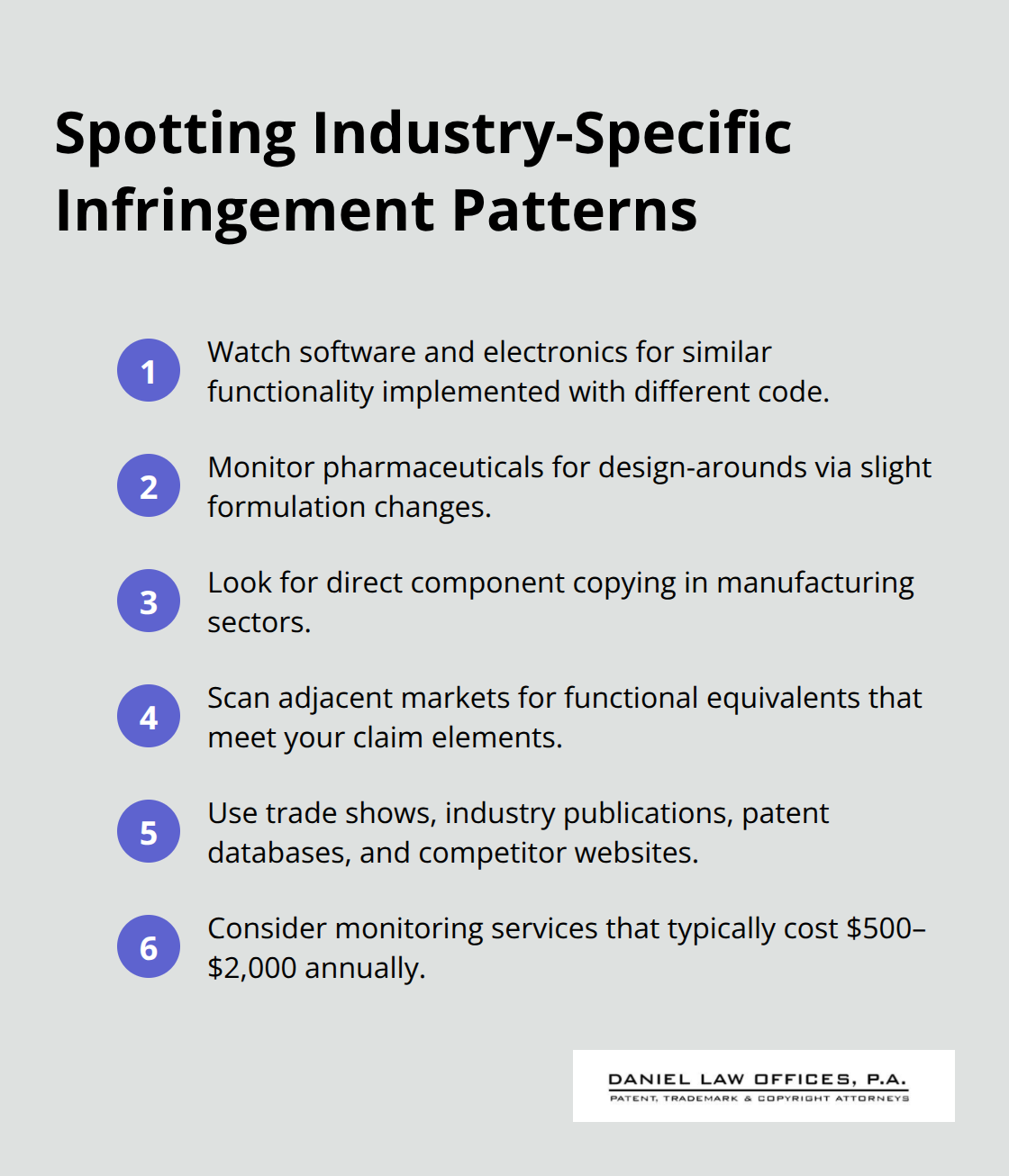
Many inventors miss infringement because they look for carbon copies rather than functional equivalents. You need to monitor not just direct competitors but also adjacent markets where your patented technology might be adapted. Trade shows, industry publications, patent databases, and competitor websites provide practical places to watch for potential violations. Some inventors hire monitoring services, though these typically cost between $500 and $2,000 annually depending on scope.
Building your evidence foundation
When you suspect infringement, documentation becomes your litigation foundation. Collect dated screenshots, product photographs, purchase receipts, and technical specifications showing how the infringing product operates. If you purchase the infringing product, maintain the original packaging and receipt-these establish the timeline and source. Document where you found the product, when you discovered it, and what specific features match your patent claims. Create a side-by-side comparison showing how each element of your patent claim appears in the infringing product. Analysis from a qualified professional typically costs $3,000 to $10,000 to formally document infringement, though initial assessment costs considerably less. Courts require clear evidence linking the infringing product directly to your patent claims, so this documentation phase determines whether litigation makes financial sense before you contact an attorney.
Moving forward with your case
Strong documentation sets the stage for the next phase of your patent protection strategy. The evidence you gather now will inform critical decisions about whether to pursue litigation and how to structure your legal approach. Your documented findings provide the foundation that attorneys at Daniel Law Offices, P.A. use to evaluate your case and recommend the most effective path forward.
How Patent Litigation Actually Moves Through the Courts
Pre-litigation steps that often resolve disputes
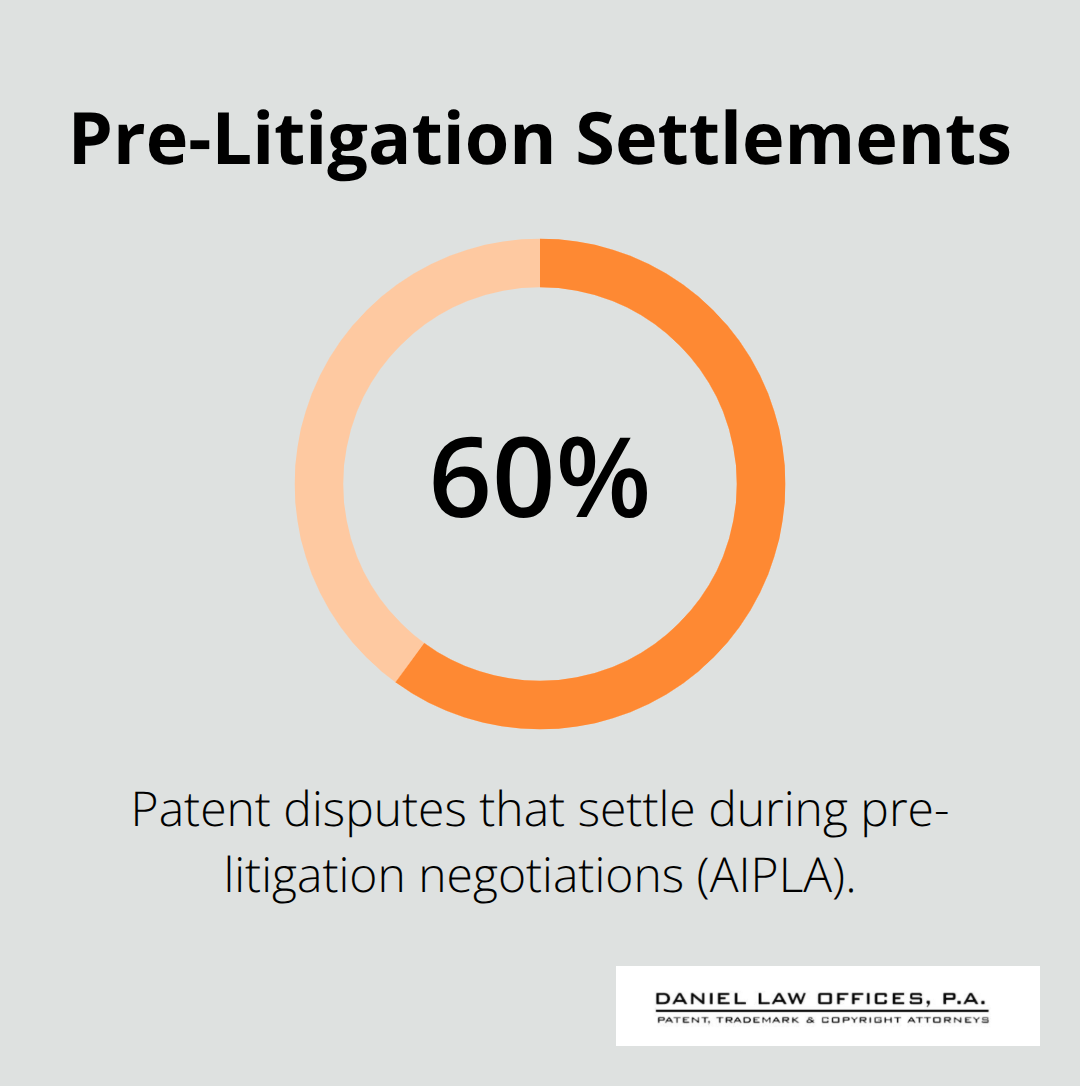
Before you file a lawsuit, most patent cases pass through a critical pre-litigation phase that determines whether litigation makes financial sense. A cease-and-desist letter or formal demand letter to the infringing party works best once your documentation is solid. This letter outlines your patent rights, describes the infringement, and demands they stop the infringing activity within a specified timeframe, typically 30 to 60 days. According to the American Intellectual Property Law Association, roughly 60 percent of patent disputes settle during pre-litigation negotiations, which means a demand letter often produces faster and cheaper resolution than courtroom battles.
The letter should reference your patent number, specific claims being infringed, and concrete examples of how their product violates those claims. Many infringing parties respond seriously to formal demand letters because they trigger notification requirements to their insurance carriers and board members.
Filing your lawsuit and entering discovery
If the infringing party ignores the letter or refuses to negotiate, you move forward with filing a lawsuit in federal court, where patent cases must be filed regardless of the amount in dispute. Once litigation begins, the discovery phase consumes the majority of your time and money. Discovery typically runs 18 to 24 months and involves exchanging documents, depositions, and interrogatories with the opposing party. The American Intellectual Property Law Association reports that average discovery costs in patent cases range from $100,000 to $500,000 depending on case complexity and number of parties involved. During discovery, both sides exchange technical documents, emails, manufacturing records, and sales data to build their arguments.
Expert witnesses and settlement opportunities
Expert witnesses typically cost $300 to $600 per hour and often spend hundreds of hours analyzing technical details. Most cases settle during or after discovery because both sides gain realistic views of case strength and litigation expenses. This settlement window represents your best opportunity to control costs and reach a favorable resolution without proceeding to trial.
Trial, appeals, and damage awards
If your case proceeds to trial, expect the process to last two to five weeks depending on complexity. The Federal Circuit Court of Appeals hears most patent appeals, and appealing a judgment adds another 18 to 36 months and $200,000 to $500,000 in additional costs. Courts can award damages up to three times the actual infringement amount in willful infringement cases, but they rarely award attorney fees unless the losing party acted unreasonably or in bad faith. Understanding these potential outcomes helps you evaluate whether continuing litigation aligns with your financial and business goals.
What Patent Litigation Actually Costs
Patent litigation in Orlando, Florida drains resources faster than most inventors anticipate. The American Intellectual Property Law Association reports that median litigation costs through trial reach $2.97 million for cases involving more than $25 million at stake, while smaller disputes involving under $1 million in damages still average $659,000 through trial. Discovery alone consumes 60 to 70 percent of total litigation expenses, which explains why cases settling before trial cost substantially less. If your case involves software or biotech patents, expect costs to climb higher because these fields require more technical expert analysis.
Breaking down your litigation budget
A realistic budget breakdown shows attorney fees running $200 to $400 per hour for most patent work, expert witnesses costing $300 to $600 hourly, and court filing fees adding another $500 to $2,000. The timeline compounds these expenses significantly. From filing to trial verdict typically spans three to five years, meaning you pay legal bills continuously during that entire window. If the case proceeds to appeal through the Federal Circuit Court of Appeals, add another 18 to 36 months and $200,000 to $500,000 in additional costs.
Settlement saves money faster than trials
Settlement during the discovery phase cuts total spending roughly in half compared to proceeding through trial, which is why most patent disputes resolve before reaching a courtroom. This financial reality shapes how both parties approach negotiations once they understand their true exposure.
Controlling costs before litigation starts
The most effective cost reduction happens before you file any lawsuit. Strong documentation and a well-crafted demand letter can resolve disputes for under $5,000 in attorney fees, compared to hundreds of thousands once litigation begins. A patent attorney can evaluate your case before you pursue litigation and prevent wasting money on unwinnable disputes. Some inventors delay sending demand letters hoping the problem resolves itself, but this hesitation only strengthens the infringing party’s position and increases litigation complexity.
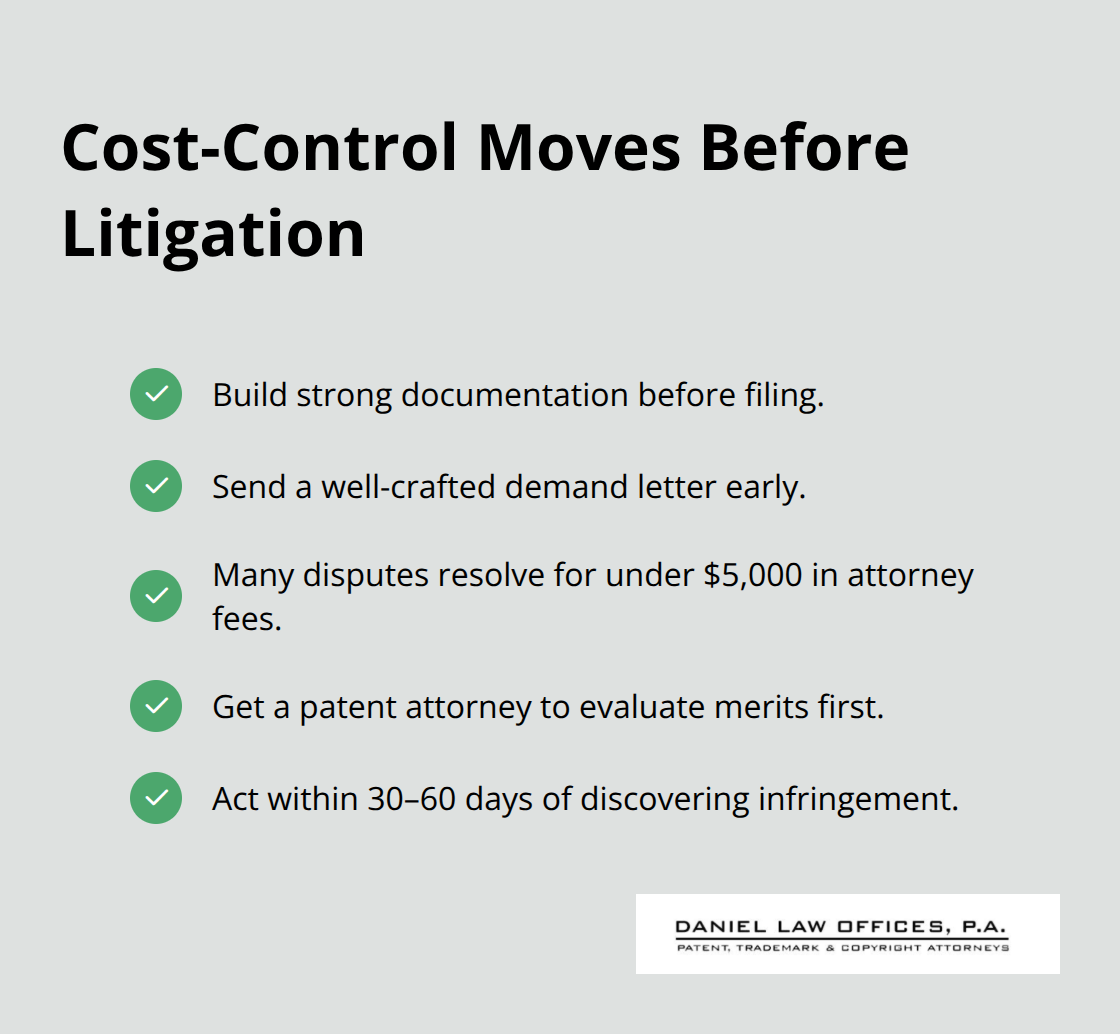
Act within 30 to 60 days of discovering infringement to maximize your settlement leverage.
Reducing expenses during active litigation
During litigation itself, you can negotiate a structured discovery process with opposing counsel to reduce expert witness hours and document review expenses. Focus discovery on the most critical technical elements rather than broad information requests to prevent unnecessary billing. Settlement discussions should start immediately after both parties complete initial discovery, before expensive expert reports and depositions consume additional funds.
Final Thoughts
Patent infringement threatens the value of your innovation, but understanding patent litigation fundamentals gives you control over how you respond. The path forward depends on acting quickly once you detect infringement-within 30 to 60 days of discovery, send a formal demand letter to establish your seriousness and trigger settlement discussions before litigation costs spiral. Most disputes resolve during pre-litigation negotiations or early discovery phases, which means your documentation and initial legal strategy determine whether you spend thousands or hundreds of thousands of dollars.
The financial reality is stark: litigation through trial averages $659,000 for smaller cases and climbs to $2.97 million for larger disputes, while settlement during discovery cuts these costs roughly in half. This cost structure makes early intervention your most powerful tool. A patent attorney can evaluate your case before you commit to litigation and identify whether your infringement claim has genuine merit or whether pursuing it will drain resources without return.
Contact Daniel Law Offices, P.A. in Orlando, Florida when you discover infringement or need guidance protecting your patent rights. The sooner you act, the more leverage you maintain in negotiations and the more money you save in legal expenses. Your next step is scheduling a consultation to discuss your specific situation and determine the most effective path forward for your invention.