



Litigation strategies for patents: A Practical Guide for Innovators
Patent infringement can cost your business millions in damages and lost market share. At Daniel Law Offices, P.A., we’ve seen innovators caught off guard because they lacked solid litigation strategies for patents.
This guide walks you through the practical steps to protect your innovations-from the initial filing stage through courtroom defense. You’ll learn how to build a strategy that actually works.
What Counts as Patent Infringement in Orlando, Florida
Patent infringement occurs when someone makes, uses, sells, or imports a patented invention without permission from the patent holder. The U.S. Patent and Trademark Office does not police infringement-that burden falls on you. Direct infringement is straightforward: another company produces a product that includes every element of your patent claims. Indirect infringement is trickier and often gets overlooked by innovators. If you knowingly help someone else infringe your patent or sell components specifically designed for infringement, you’ve crossed into liability territory. Willful infringement carries treble damages, meaning courts can award up to three times the actual damages, according to Federal Circuit precedent. This distinction between accidental and deliberate copying creates financially devastating consequences.
How to Identify Infringement Early
The moment you notice a competitor’s product that resembles your patented technology, document everything. Take screenshots, purchase samples, record dates and sources. Many innovators wait too long before acting, which weakens their legal position and allows competitors to capture market share. The USPTO reported that patent litigation cases filed in 2023 numbered over 2,400, with average litigation costs reaching $2 million to $5 million depending on complexity. Early detection gives you negotiation leverage. Send a cease-and-desist letter before filing suit-this often resolves disputes without courtroom expenses. Conduct quarterly market monitoring if your innovation operates in competitive sectors. Check competitor websites, patent databases, product announcements, and trade shows regularly. Infringement does not require identical products; substantially similar functionality that performs substantially the same function in substantially the same way violates your patent.
Settlement Versus Litigation Reality
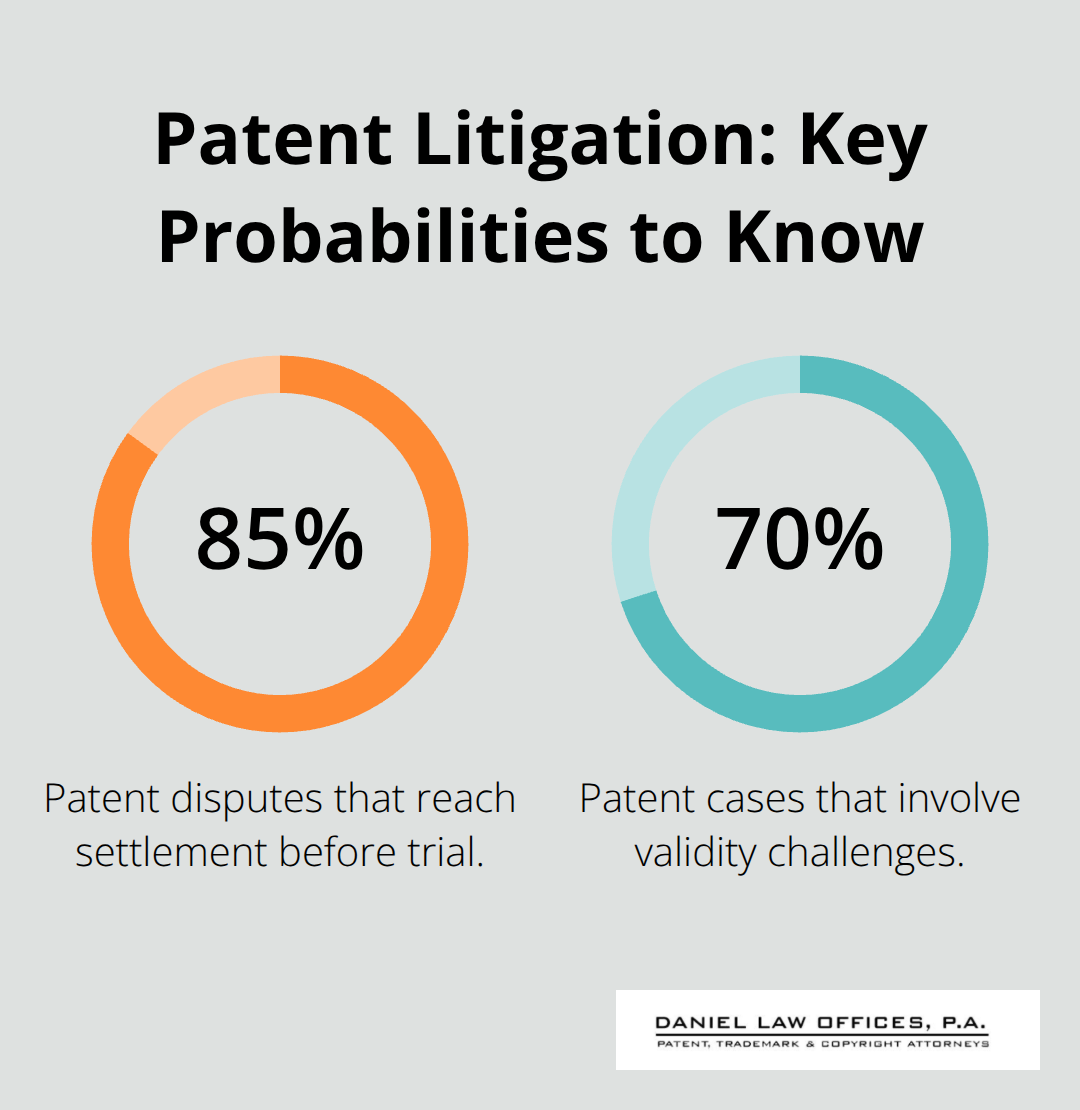
Most patent cases settle before trial. About 85% of patent disputes reach settlement according to American Intellectual Property Law Association data. Settlement talks typically occur after discovery but before trial begins.
Your litigation strategy should assume settlement is likely, which means gathering strong evidence early matters more than perfect legal arguments. Damages in settled cases average between $500,000 and $2 million for small to mid-sized companies. Litigation timelines stretch from three to five years for district court cases, with appeals potentially adding years. This extended timeline forces many businesses to settle simply to move forward. The Federal Circuit Court handles appeals, and their decisions shape patent law nationwide. Understanding these realities shapes whether litigation makes business sense for your company. With infringement identified and settlement dynamics understood, the next step involves building a litigation strategy that protects your position from the moment you detect a violation.
Building Your Patent Litigation Strategy in Orlando, Florida
Assess Your Patent’s Validity First
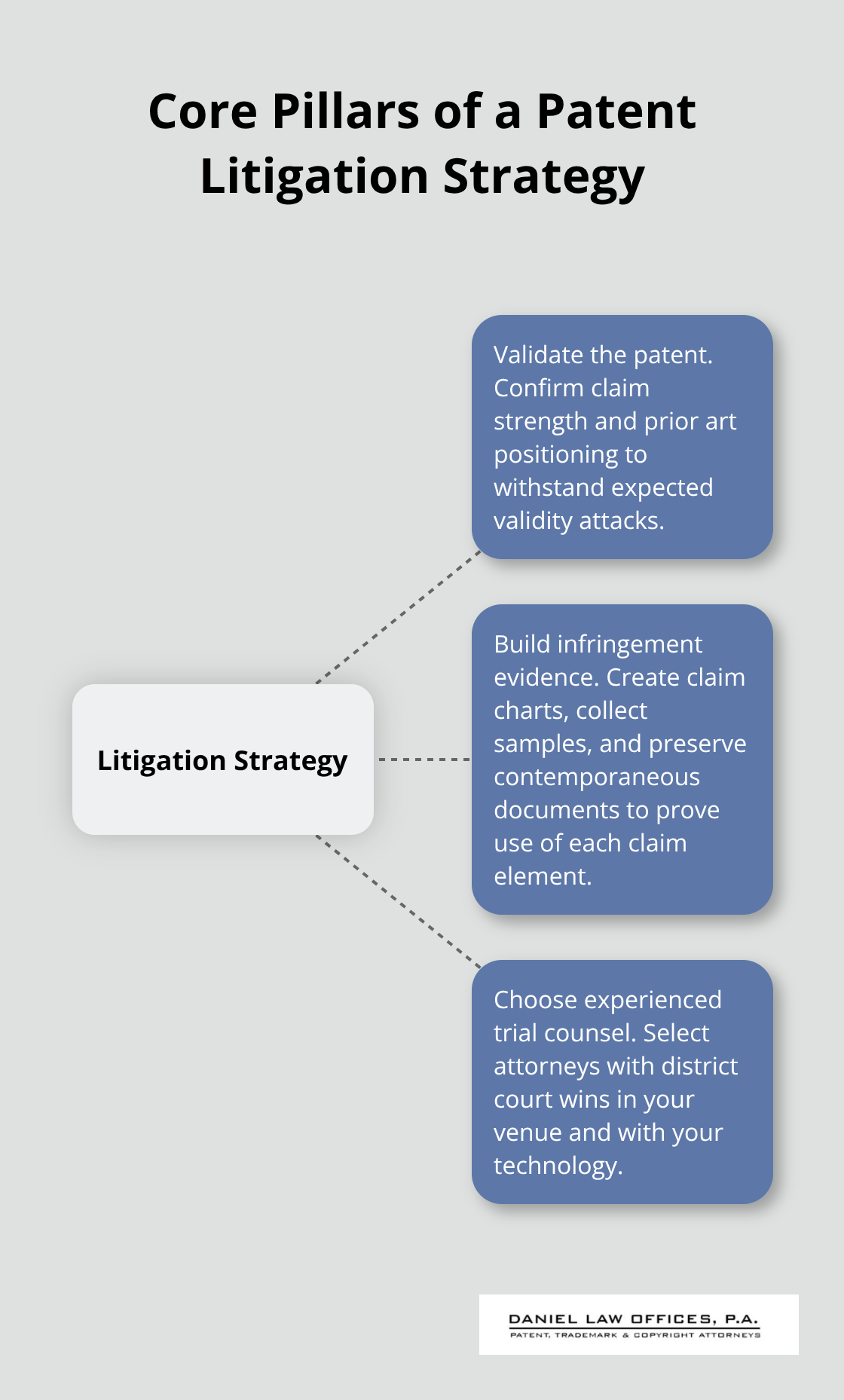
Your patent validity assessment determines whether litigation makes financial sense before you spend a dime on court costs. We recommend conducting an independent examination of your patent claims against prior art before engaging in litigation. Hire a patent attorney to analyze whether your patent withstands validity challenges, since defendants almost always attack patent validity as their primary defense. According to the American Intellectual Property Law Association, approximately 70% of patent cases involve validity challenges. If your patent has weak claims or overlaps significantly with existing patents, settlement becomes your only rational option. Request a detailed patentability opinion that identifies specific vulnerabilities in your claims.
This assessment costs between $2,000 and $5,000 but prevents you from pursuing a case you cannot win. Document the results thoroughly because this analysis informs your litigation budget and settlement parameters. Strong validity assessments position you for favorable settlements since defendants recognize their defense risks.
Gather Evidence That Proves Infringement
Evidence separates winners from losers in patent litigation. Collect technical documentation showing your development timeline, design iterations, and the specific date you conceived your invention. Obtain sales records, marketing materials, and customer communications that demonstrate your patent’s commercial value. Preserve emails, meeting notes, and development logs that establish your innovation process before the infringement began. The Federal Circuit Court emphasizes contemporaneous documentation in damages calculations, and courts have awarded higher damages when evidence shows deliberate copying. Photograph the infringing product, purchase samples directly from the competitor, and document where and when you obtained them. Create detailed technical comparisons showing how each claim element appears in the infringing product. Retain a technical consultant early to prepare a claim chart mapping your patent language to the competitor’s product specifications.
Select Attorneys With District Court Experience
Selecting your legal team matters more than most innovators realize because patent litigation requires attorneys with district court trial experience, not just patent prosecution background. Choose attorneys who have successfully litigated cases in the specific district where you plan to file, since judges and local patent bar practices vary significantly across districts. The Eastern District of Texas historically awards higher damages than other districts, but cases there face longer dockets. The Northern District of California moves faster but applies stricter claim construction standards. Interview potential attorneys about their win rates, settlement amounts achieved, and specific experience with your technology type. Avoid attorneys who suggest litigation as a primary business strategy rather than a calculated response to documented infringement. The right legal team understands your technology deeply and knows how to position your evidence for maximum impact during settlement negotiations or trial.
Securing Your Patent Before Competitors Strike in Orlando, Florida
Most innovators skip the groundwork that prevents litigation entirely. Too many businesses file weak patents, miss prior art, and then face validity challenges in court that could have been prevented with proper upfront work. The solution is straightforward: conduct a comprehensive patent search before filing, file a strong application with clear claim language, and monitor your market continuously.
Conduct a Thorough Prior Art Search
The USPTO receives over 600,000 patent applications annually, and examiners spend an average of 18 hours reviewing each application. This limited time means your application must be exceptionally well-drafted to withstand scrutiny. A thorough prior art search identifies existing patents and publications that could affect your patent’s scope and validity.
Search the USPTO database, scientific journals, product catalogs, and international patent databases like Google Patents and WIPO. Many innovators discover during litigation that their patent overlaps substantially with prior art, which destroys their case before trial begins. The cost of a comprehensive search ranges from $500 to $2,000 depending on your technology’s complexity, but this investment prevents spending hundreds of thousands on litigation you cannot win.
File Strong Patent Applications With the USPTO
When you file with the USPTO, provide detailed drawings, comprehensive specifications, and claim language that is both broad enough to protect variations of your innovation and narrow enough to withstand validity challenges. Weak claim language becomes the defendant’s primary attack vector in litigation. Work with a registered patent attorney to ensure your application includes dependent claims of varying scope, which gives you multiple fallback positions if courts narrow your broadest claims.
The USPTO’s average examination takes 2-3 years, and applicants who respond promptly to office actions and incorporate feedback strategically receive stronger patents. Daniel Law Offices, P.A. assists individual inventors and businesses in drafting and filing patent applications with the USPTO, guiding clients through the entire patent prosecution process to strengthen their protection.
Monitor Your Market Continuously
Market monitoring begins the moment your patent issues and continues indefinitely. Set up Google Alerts for competitor product launches, trademark filings, and technology announcements in your sector. Subscribe to industry trade publications and attend relevant conferences where competitors showcase new products.
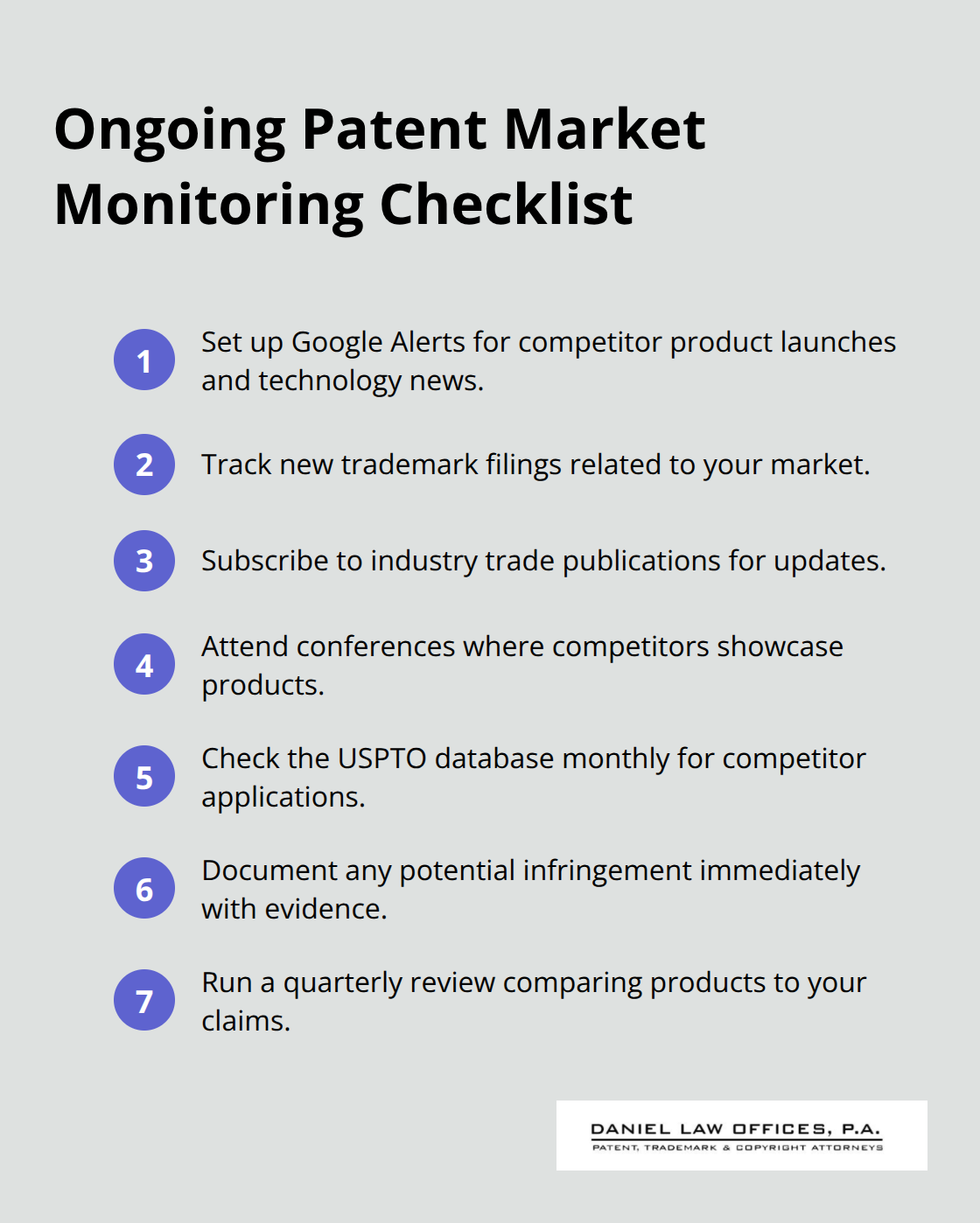
Check the USPTO’s patent database monthly for applications filed by your competitors, since published applications appear 18 months after filing regardless of approval status. Document any potential infringement immediately with screenshots, purchase dates, and product specifications. The Federal Trade Commission reports that companies detecting infringement within the first year of market entry recover significantly higher damages than those waiting 2-3 years.
Establish a quarterly review process where you analyze competitive products against your patent claims systematically. This structured approach prevents infringement from escalating unchecked while competitors build market share. Many successful patent holders treat market monitoring as an operational expense similar to quality control, not as an afterthought. The difference between catching infringement early and discovering it years later often determines whether litigation makes financial sense for your business.
Final Thoughts
Patent protection requires action at every stage, from filing through market monitoring and beyond. Strong patents begin with thorough prior art searches and well-drafted applications that withstand validity challenges. Market monitoring catches infringement early, when settlement leverage favors patent holders and litigation costs remain manageable.
Litigation makes financial sense only when your patent is solid, infringement is clear, and potential damages justify the three to five year timeline and $2 million to $5 million in costs. Most cases settle before trial, which means your litigation strategies for patents should prioritize gathering compelling evidence and selecting attorneys with district court experience. Weak patents, delayed detection, and poor legal representation destroy even legitimate infringement claims.
We at Daniel Law Offices, P.A. help innovators build protection from the beginning through comprehensive patent searches, application drafting, and USPTO guidance that prevents costly litigation mistakes. Contact Daniel Law Offices, P.A. to strengthen your patent strategy before competitors threaten your market position.