




Trademark Registration Process Steps: From Application to Brand Protection
Your trademark is one of your most valuable business assets. We at Daniel Law Offices, P.A. understand that protecting it requires knowing the trademark registration process steps from start to finish.
This guide walks you through each stage, from conducting your initial search to enforcing your rights after registration. You’ll learn what the USPTO actually reviews, how to respond to rejections, and what timeline to expect.
Search Your Trademark Before Filing
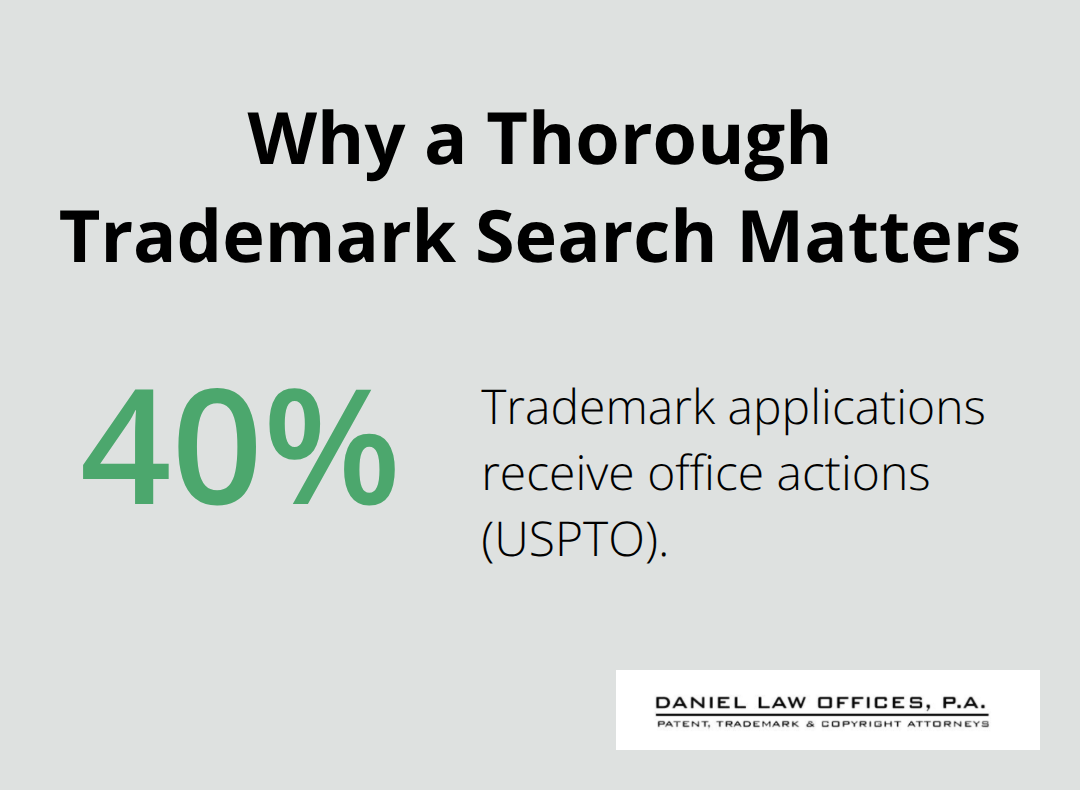
Skipping a trademark search is one of the costliest mistakes business owners make. You can spend $250 to $350 filing your application, wait months for examination, and then face rejection because someone else already registered a similar mark. The USPTO reported that approximately 40% of trademark applications receive office actions, and many of those rejections stem from conflicts that a proper search would have caught beforehand.
A preliminary search isn’t optional-it’s the foundation of a successful registration. The search reveals whether your mark conflicts with existing registrations or common law rights, which determines whether you’ll face rejection during examination or infringement liability after registration.
Three-Layer Search Strategy
Start with the USPTO Trademark Electronic Search System, which is free but limited. Most business owners struggle to search beyond exact matches, missing confusingly similar marks that the USPTO considers problematic. A professional search typically costs $300 to $500 and covers federal registrations, state registrations, common law usage, and domain name availability across all 50 states. This three-layer approach catches conflicts you’d miss alone.
The central test the USPTO applies is likelihood of confusion, not whether names are identical. A mark similar enough to divert customers or dilute brand value will be rejected, even if it’s not an exact duplicate. Geographic descriptive marks face additional hurdles and may require secondary meaning to register on the principal register.
Interpreting Search Results
Once your search is complete and reveals no significant conflicts, you have clearance to file. This clearance gives you confidence that your application won’t face rejection due to conflicting marks already in the system. If your search uncovers a similar mark, you can modify your mark, narrow your goods and services, or abandon the application before spending more money.
The investment in a thorough search now prevents costly rejections, refiling fees, and delays later in the process. With clearance in hand, you’re ready to prepare your application materials and select the filing basis that matches your business situation.
File Your Trademark Application with the Right Information
Gather the Details the USPTO Requires
Once your search confirms no conflicting marks, you need to collect the specific details the USPTO requires before filing. The application demands more than just your mark and business name. You’ll need the exact goods or services you offer, stated in language the USPTO accepts. Vague descriptions like “business services” face immediate rejection. Instead, use the USPTO’s approved classification system with specific terms. For example, if you sell software, specify “software for project management” rather than generic language. The USPTO uses 45 International Classes, and placing your mark in the correct class determines the scope of your protection. Misclassification means your registration won’t protect you in other categories, creating gaps in your brand protection.
Prepare Your Specimen and Filing Basis
You also need a clear image of your mark as you use it, called a specimen. If you’ve already used your mark in commerce, submit a specimen showing the mark on your product, packaging, website, or advertising materials. This specimen proves actual use and strengthens your application. The USPTO accepts photographs, screenshots, labels, and product images as specimens. If you haven’t launched yet, you can file on an Intent-to-Use basis, which reserves your filing date without requiring a specimen immediately. This option costs more but protects your priority date while you develop your product.
Submit Through TEAS and Choose Your Fee Level
The actual filing happens through the USPTO’s TEAS system, where you choose between TEAS Plus at $250 per class or TEAS Standard at $350 per class. TEAS Plus requires you to use approved identification language and correct classification, but the lower fee makes it the better choice if you prepare carefully. TEAS Standard costs more but allows broader descriptions. Neither option is refundable if the USPTO rejects your application. Prepare your application details thoroughly before filing because the examination process takes roughly 10 months for the first office action, and mistakes add months to your timeline. Have your goods and services description finalized, your specimen ready, and your International Class confirmed before submitting.
What Happens After You File
Once submitted, you receive a filing receipt with your application number, and the clock starts on the examination period. The USPTO examiner reviews your mark for descriptiveness, likelihood of confusion with existing marks, and compliance with all requirements. Geographic descriptive marks face particular scrutiny and may require proof of secondary meaning to register on the principal register. Understanding these requirements upfront prevents costly delays and refiling expenses. With your application submitted, the examination phase begins-and that’s where the USPTO may request clarification or raise objections that require your response.
Navigating the Examination and Registration Process in Orlando, Florida
What the USPTO Examiner Reviews
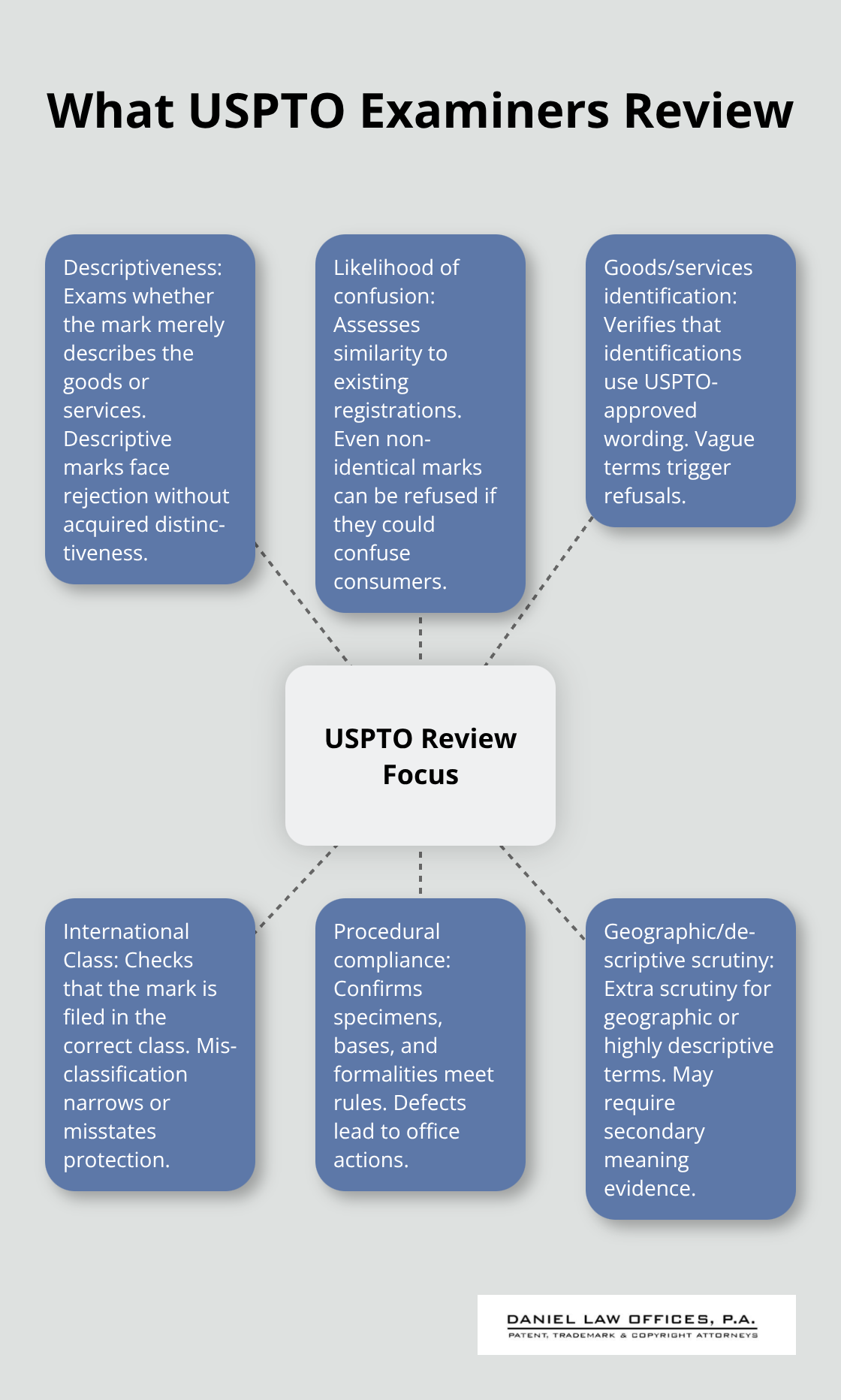
The USPTO examiner assigned to your application conducts a thorough review over roughly ten months before issuing a first office action. During this examination period, the examiner checks whether your mark is descriptive, whether it conflicts with existing registrations, and whether your application meets all procedural requirements. The examiner does not simply search for identical marks-they apply the likelihood of confusion test, which means a mark similar enough to divert customers or dilute your brand value will be rejected even if it is not an exact duplicate.
This is why your preliminary search matters so much.
The examiner also verifies that your goods and services descriptions match USPTO-approved language and that you have placed your mark in the correct International Class. If your mark is geographic or descriptive (such as a place name or a term that describes your product), the examiner will likely reject it unless you can prove secondary meaning, which requires showing that consumers associate your mark exclusively with your brand through years of use and advertising.
How Office Actions Work and What They Mean
When an office action arrives, you typically have three months to respond with legal arguments, amended descriptions, or evidence of use. This is not the time to panic or ignore the rejection. Treat each office action as a solvable problem rather than a final decision. Common rejections include descriptiveness refusals, which you can sometimes overcome by narrowing your goods descriptions or providing secondary meaning evidence; likelihood of confusion rejections, which may require you to modify your mark or clarify how your goods differ from the cited conflicting mark; and procedural issues like incorrect classification or vague identification language, which are straightforward to fix.
Timeline from Filing to Registration
The entire process from filing to final registration typically takes twelve to fourteen months for straightforward applications, though complex cases involving office actions or appeals can stretch to eighteen months or longer. If you receive an office action and feel uncertain about responding, the cost of professional guidance now is far lower than the cost of an improper response that leads to abandonment or costly refiling.
Maintaining Your Registration After Approval
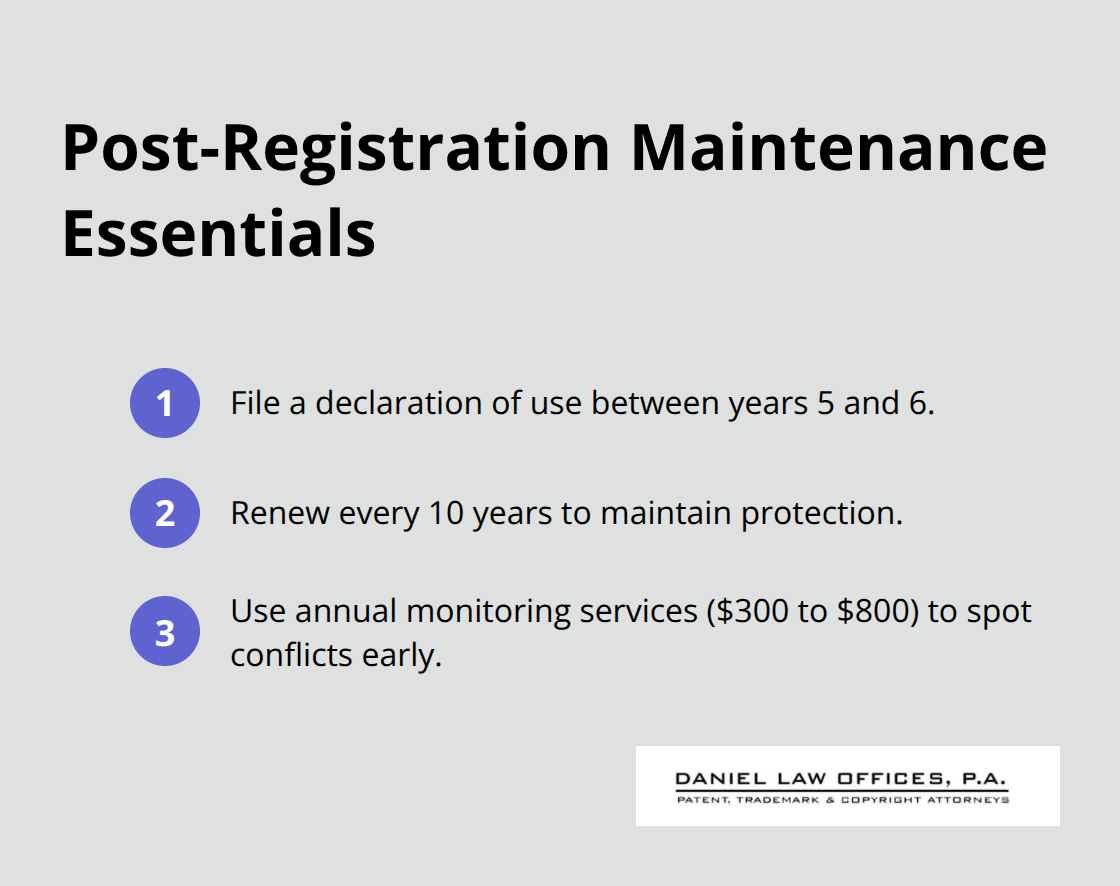
Once your registration issues, it remains valid for ten years, and you can renew it indefinitely by filing a declaration of use between years five and six after registration. This maintenance step is essential-failure to file the declaration can result in cancellation of your trademark protection.
Final Thoughts
Your trademark registration creates a federal asset that demands ongoing attention to retain its value. File your declaration of use between years five and six after registration to prevent cancellation, then renew every ten years to maintain protection indefinitely. Annual monitoring services ($300 to $800) alert you to conflicting marks before they register, allowing you to oppose infringing applications at a fraction of the cost of post-registration enforcement.
When you discover unauthorized use of your mark, your federal registration shifts the burden to the infringer to prove non-infringement in court. You can send cease-and-desist letters, file opposition or cancellation proceedings with the USPTO, or pursue infringement litigation for damages. The trademark registration process steps you followed from application through examination have equipped you with powerful legal tools that protect your brand’s value and prevent revenue loss from customer confusion or brand dilution.
We at Daniel Law Offices, P.A. help businesses navigate post-registration obligations and enforce trademark rights when infringement occurs. Contact us to discuss your brand protection strategy.