




Patent Search Cost Savings: Cut Your Search Expenses Strategically
Patent searches protect your intellectual property, but the costs can spiral quickly without a clear strategy. At Daniel Law Offices, P.A., we’ve seen Orlando inventors waste thousands on unnecessary searches or pay premium rates because they didn’t plan ahead.
The good news: patent search cost savings are within reach when you understand what drives expenses and take the right approach from the start.
What Drives Patent Search Costs
Search Scope Sets Your Budget
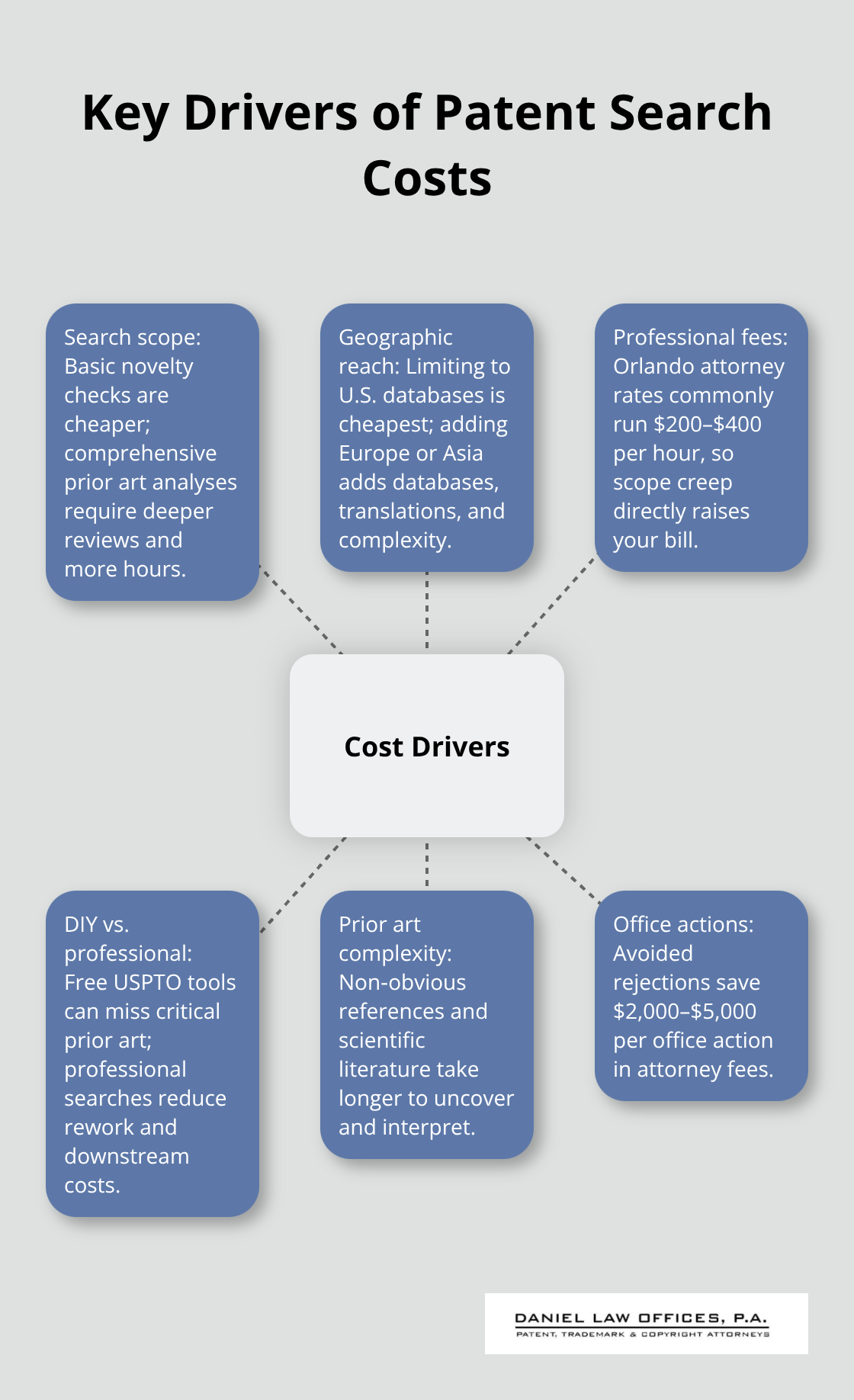
Search scope determines your bill more than anything else. A basic novelty check through USPTO databases costs far less than a comprehensive prior art analysis that examines competing patents, scientific literature, and international filings. The Orange County Library System assisted over 500 local inventors in 2022 and offers free access to USPTO databases, allowing you to conduct preliminary searches without attorney fees. However, professional searches run $1,000–$3,000 because they require 10–15 hours of attorney time and deeper investigation into non-obvious prior art.
Geographic Reach Multiplies Expenses
Geographic reach multiplies expenses significantly. Searching only U.S. patents through the USPTO represents the cheapest route. Adding European, Asian, or other international patent offices escalates costs dramatically because each jurisdiction maintains separate databases and may require translation services.
Orlando inventors planning to commercialize products internationally often discover too late that competitors already hold patents in key markets, forcing them to abandon plans or redesign entirely.
Professional Fees vs. DIY Tools
Professional services charge more in Orlando than cost-efficient providers in other regions, with local attorneys typically billing $200–$400 per hour according to industry standards. The choice between DIY tools and professional help creates the starkest cost difference. Free USPTO resources let you search independently, but this approach fails 60% of the time according to USPTO data showing that 60% of applications receive at least one rejection. Hiring a professional search service increases approval odds by roughly 20% compared to filings without such searches.
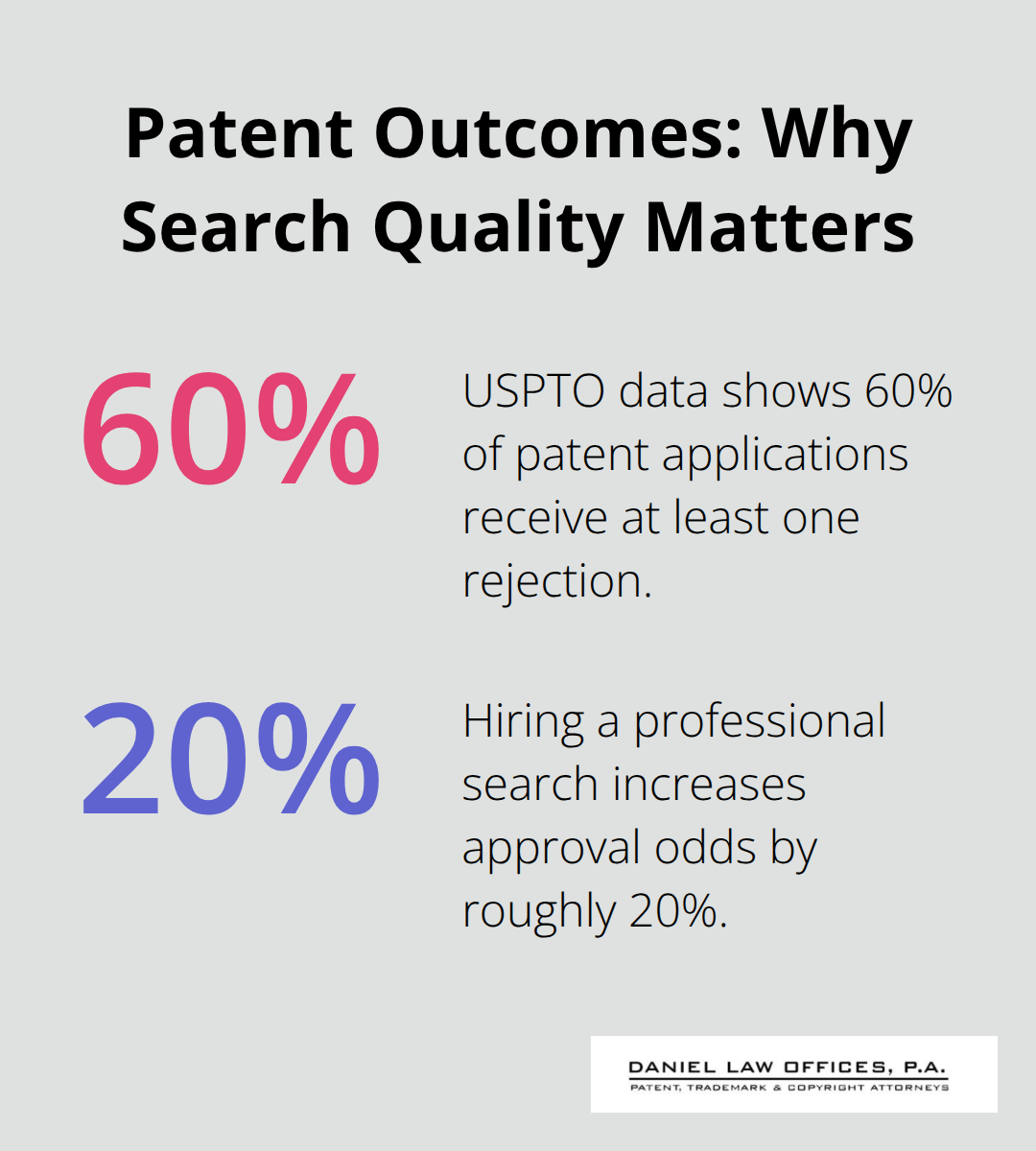
That 20% improvement translates directly into fewer office actions, lower revision costs, and faster prosecution timelines. A single office action costs $2,000–$5,000 in attorney fees, so one avoided rejection pays for a comprehensive professional search many times over. The decision isn’t whether you can afford professional help-it’s whether you can afford to skip it. Understanding these cost drivers positions you to make smarter choices about where to invest your search budget and where strategic planning actually saves money.
How to Start Searching Without Breaking Your Budget
Start with free resources before spending money on professional searches. The USPTO Patent Full-Text and Image Database lets you conduct preliminary novelty checks at no cost, and the Orange County Library System provides free access to USPTO databases with staff assistance available to local inventors. Spend 5–10 hours searching independently first to understand what already exists in your field. This preliminary work accomplishes two things: it identifies obvious prior art that would sink your patent application, and it narrows your search parameters before you hire an attorney. Orlando inventors who skip this step often pay professionals to search obvious territory that a few hours of independent research would have eliminated. The goal isn’t to conduct a thorough prior art analysis yourself-that requires legal training-but to eliminate wasted time and money on searches that would reveal nothing useful anyway.
Tighten Your Search Focus Before Professional Work Begins
Define exactly what makes your invention different from existing products and which specific technical features matter most for protection before contacting a patent attorney. Instead of asking an attorney to search everything remotely related to your invention, provide them with a focused list of core technical elements and the specific markets you plan to enter. Professional searches cost $1,000–$3,000 for 10–15 hours of work, and vague instructions waste those hours on tangential research. If you’re developing a medical device, specify the exact mechanism of action, the patient population, and competing devices you’ve identified. If you’re creating software, identify the programming language, the specific problem it solves, and existing solutions you’ve researched. This precision cuts search time by 30–40% because attorneys spend less time clarifying scope and more time investigating genuine competitive threats. Narrow geographic focus also reduces costs dramatically-if you only plan to sell in the United States, searching only U.S. patents costs significantly less than international searches that may never generate value.
Consolidate Multiple Searches Under One Engagement
Bundle patent searches, trademark searches, and related IP work with a single provider rather than splitting work across multiple attorneys or firms. Each time you engage a new provider, you pay for a new intake meeting, explanation of your invention, and research setup. When one firm handles multiple IP projects for a single client, that firm leverages the same foundational research across different protection strategies, eliminating redundant work and reducing overall hours billed. If you need both a patent search and a trademark availability search, handle them together. If you’re filing multiple patents across related inventions, batch the searches so one attorney can understand your technology landscape and apply that knowledge efficiently. This approach typically reduces total search costs by 15–25% compared to handling searches separately over time.
The next phase of your patent protection strategy involves understanding how to respond when your search uncovers competitive patents and how to position your claims to navigate around existing intellectual property.
Mistakes That Turn Patent Searches Into Money Pits
Skipping Professional Searches Costs Far More Later
Orlando inventors frequently make the first critical error: skipping professional searches entirely to save money upfront. They assume that DIY research through free USPTO databases will suffice. This gamble fails consistently. According to the USPTO, 60% of patent applications receive at least one rejection, and many of those rejections stem from prior art that inventors missed during independent searches. A single office action costs $2,000–$5,000 in attorney fees to address, meaning one avoidable rejection wipes out the savings from skipping a $1,000–$3,000 professional search. Worse, rejected applications often require substantial claim amendments or specification rewrites that compound costs further.
Orlando inventors who skip professional searches discover this too late, after spending money on application filing fees and attorney time for drafting work that becomes partially worthless. Professional searches improve approval odds by roughly 20% compared to filings without such searches, according to industry data. That 20% difference translates into avoided office actions, faster prosecution timelines, and significantly lower total costs over the patent’s lifecycle. The false economy of skipping a search upfront creates a debt you pay later with interest.
Vague Search Requests Waste Time and Money
The second mistake involves conducting searches without defining clear objectives beforehand. Vague search requests waste attorney time and money because professionals spend hours researching tangential territory instead of focusing on genuine competitive threats. If you tell an attorney to search everything related to your invention without specifying which technical features matter most or which geographic markets you plan to enter, that attorney bills 10–15 hours covering ground that doesn’t inform your actual protection strategy.
Define your core technical elements, identify the specific problem your invention solves, and specify your target markets before engaging a professional searcher. This precision cuts search time by 30–40% and ensures every hour billed investigates threats that actually matter. Vague instructions force attorneys to clarify scope repeatedly, eating into billable hours that should focus on substantive research instead.
International Neglect Creates Expensive Surprises
The third mistake involves ignoring international patent landscapes when your commercialization plans cross borders. Many Orlando inventors focus exclusively on U.S. patents, only to discover years later that competitors hold patents in Europe, Asia, or other key markets. Adding international searches after the fact costs significantly more because you cannot retroactively claim an earlier filing date in those jurisdictions.
If you plan any international sales, conduct international searches upfront as part of your initial patent strategy. This adds cost to your search budget, but it prevents the far more expensive scenario of developing and marketing a product only to face infringement claims or forced redesigns in major markets. Early international awareness protects your investment and prevents costly market exits.
The Common Thread Across All Three Mistakes
These three mistakes share a common thread: they appear to save money initially but generate much larger expenses downstream through rejected applications, wasted search time, and missed competitive threats. Each mistake trades short-term savings for long-term costs that multiply exponentially. The inventors who avoid these errors invest strategically upfront and protect themselves from far greater financial damage later.
Final Thoughts
Strategic planning transforms patent search cost savings from a theoretical concept into measurable financial protection. When you invest time upfront defining your search scope, narrowing your geographic focus, and clarifying your technical objectives, you eliminate wasted hours and redirect your budget toward research that actually informs your protection strategy. Orlando inventors who plan ahead spend less overall because they avoid the compounding costs of rejected applications, unnecessary office actions, and missed competitive threats that derail unplanned searches.
Professional guidance matters most when you apply it strategically rather than reactively. A registered patent attorney helps you understand which searches generate genuine value for your specific invention and which searches represent unnecessary expense.
We at Daniel Law Offices, P.A. guide clients through the entire patent prosecution process by conducting comprehensive patent searches that verify novelty before you commit significant resources to drafting and filing.
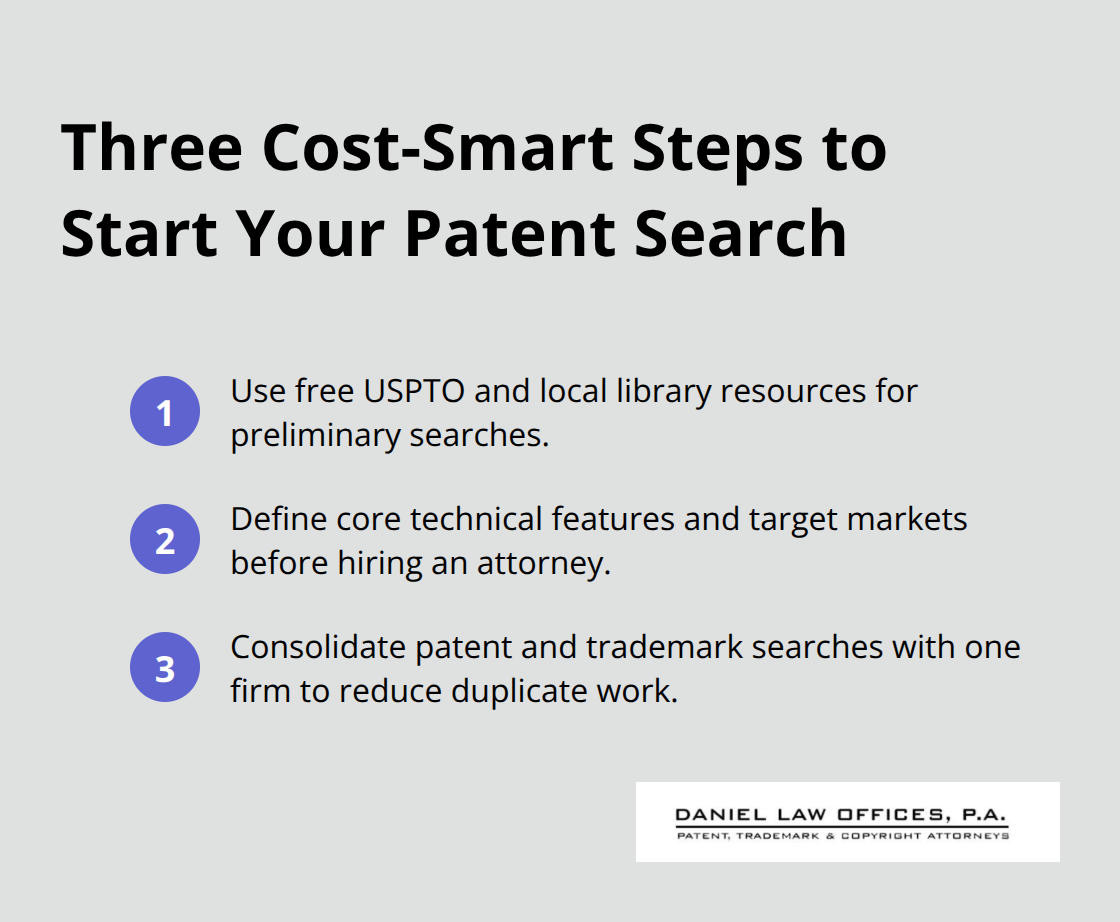
The path forward requires three concrete steps: conduct preliminary searches independently using free USPTO resources to eliminate obvious prior art, define your search parameters precisely before engaging professional help by specifying your core technical features and target markets, and consolidate your patent and trademark searches with a single firm to leverage foundational research across multiple protection strategies. Contact Daniel Law Offices, P.A. to discuss how a focused search strategy protects your innovation while keeping your costs predictable and manageable.