




Florida Trademark Registration Tips: Local Insights for Startups
Your startup’s brand is one of your most valuable assets, and protecting it legally should be a priority from day one. Florida trademark registration tips help you secure exclusive rights to your brand name and logo before competitors can claim them.
At Daniel Law Offices, P.A., we’ve guided countless Florida startups through the registration process and helped them avoid costly mistakes. This guide walks you through what you need to know to protect your brand effectively.
Why Trademark Registration Matters for Your Florida Startup
Federal Registration Protects Your Brand Nationwide
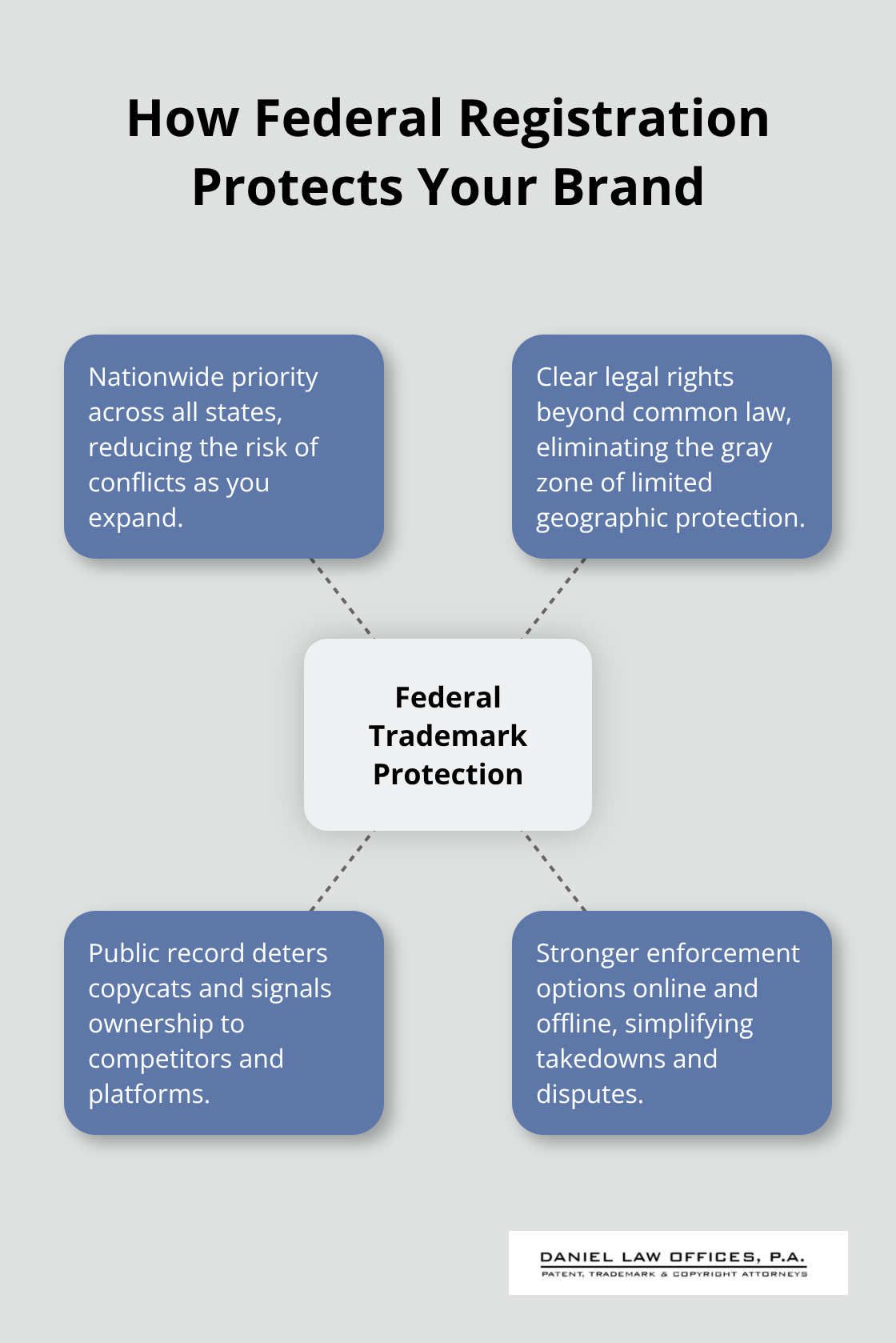
Florida’s economy ranks 15th globally, and the state attracts over 143 million visitors annually, creating a massive marketplace where brand identity can make or break a startup. Without federal trademark registration, your brand exists in a legal gray zone. Common law rights-protection based solely on use-only cover the geographic areas where you actively operate, leaving your brand vulnerable in every other state and online. A competitor in another state can legally use a confusingly similar name, and you’ll have limited recourse. Federal registration through the USPTO eliminates this risk entirely. It establishes nationwide priority and creates a public record that deters competitors from copying your brand.
The Financial Case for Registration
The registration fee of $250 to $350 per class is minimal compared to the cost of rebranding or defending your mark in court later. Statutory damages for willful infringement can reach $150,000 per violation under the Lanham Act, but only if you hold a federal registration. Without it, you’re limited to proving actual damages, which is far harder and yields smaller recoveries. Florida startups that plan any interstate or online expansion should file federally from the outset, not wait until a competitor forces the issue.
Building Business Value Through Registration
A registered trademark significantly increases your business’s tangible value. Investors and potential buyers perform trademark searches during due diligence, and a clean federal registration signals a professionally managed brand. Forbes data shows that strong trademarks can account for over 20 percent of a company’s market value, and companies like Nestlé operate thousands of registered brands that generate licensing revenue streams. A federal registration also unlocks access to brand protection tools on major platforms like Amazon Brand Registry, which provides automated monitoring and enforcement against counterfeiters. You gain the right to use the ® symbol, which increases perceived credibility with customers and partners. The registration lasts 10 years and can be renewed indefinitely, creating a permanent asset that protects your investment in building brand recognition.
The Cost of Waiting
Startups that delay registration often discover too late that a similar mark has been filed or that a competitor has gained traction with a confusingly similar name. The smarter move is to secure federal protection now, when filing costs are lowest and your brand identity remains yours to control. Understanding what mistakes to avoid during the registration process will help you move forward with confidence.
How to Navigate the Trademark Registration Process in Orlando, Florida
Start With a Thorough Trademark Search
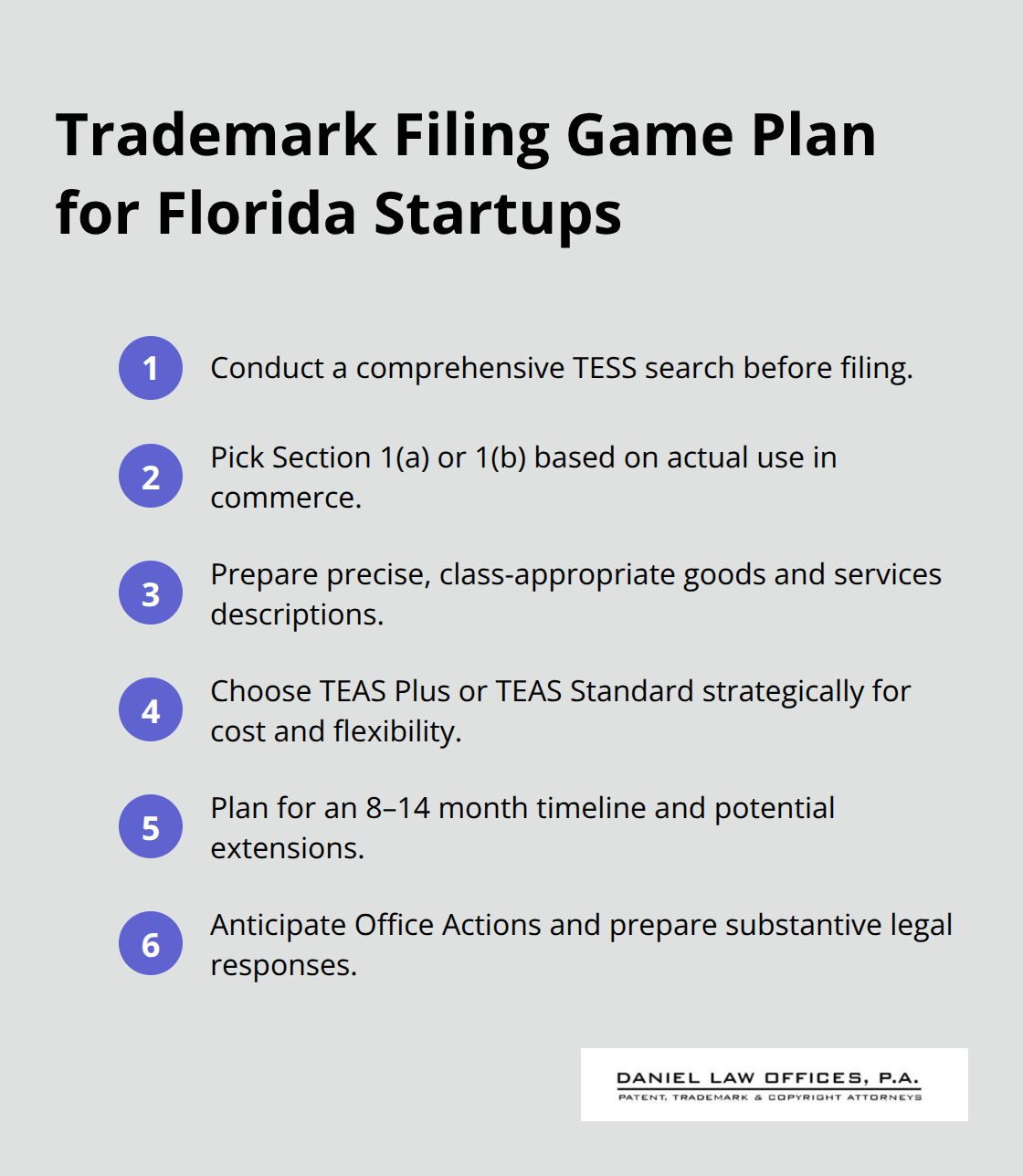
Starting your trademark search matters far more than most Florida startups realize. The USPTO database contains over 2.3 million active registrations, and a thorough search prevents you from filing an application that will face rejection for likelihood of confusion. You should search the Trademark Electronic Search System (TESS) across all relevant classes and look for phonetically and visually similar marks, not just exact matches. A proper search typically takes 2–3 hours and costs about $200–$500 if you outsource it, which is a small price compared to filing fees and attorney time wasted on a doomed application. Many startups skip this step or use automated services, which is a critical mistake-those services cannot assess likelihood of confusion or provide legal opinions on your mark’s strength. Before you file, also check available domain names and verify that your exact brand name is available for Amazon Brand Registry, because these platforms matter for modern brand protection.
Choose Your Filing Basis and Prepare Precise Descriptions
When you’re ready to file, you must choose your filing basis carefully. If you’ve already used your mark in commerce, file under Section 1a and include a specimen showing actual use. If you haven’t launched yet, file under Section 1b intent-to-use, which secures your filing date before any sale but requires you to prove use within six months of approval. The filing fee is $250 per class with TEAS Plus (which requires pre-approved descriptions) or $350 per class with TEAS Standard (which allows custom descriptions). Vague descriptions like general services create gaps and rejections-instead, use precise terms like legal services in Class 36 for a law firm. The timeline from filing to registration typically runs 8–14 months, though complex cases with Office Actions extend to 24 months.
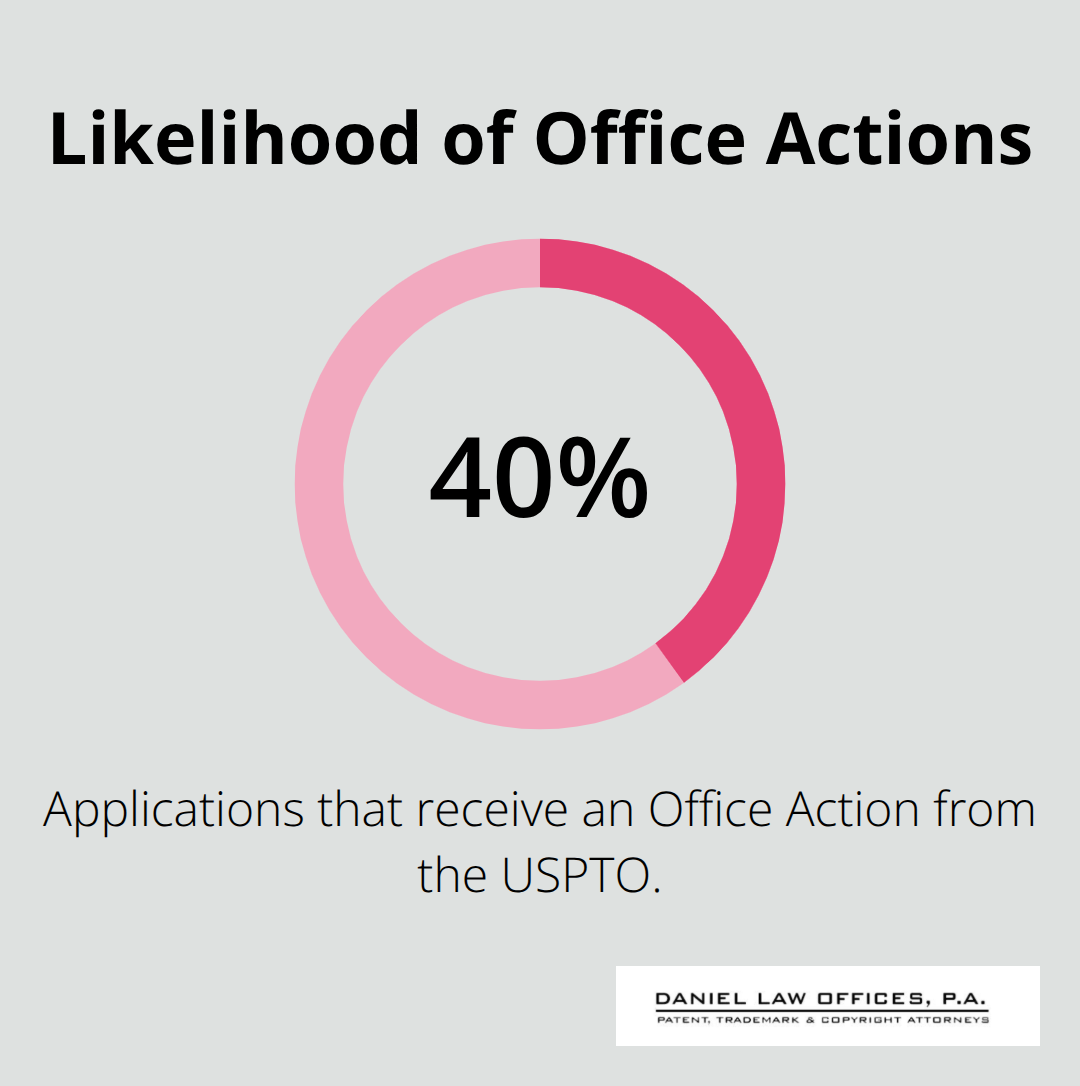
About 40 percent of applications receive an Office Action, most commonly for likelihood of confusion or descriptiveness.
Respond to Office Actions With Legal Arguments
When an Office Action arrives, you have three months to respond, and this is where many startups fail because the response requires legal arguments backed by case law and statutes that non-attorneys struggle to craft effectively. A trademark attorney can help you navigate these technical requirements and avoid abandonment traps.
Manage Publication, Opposition, and Post-Registration Deadlines
Once the USPTO approves your application, it publishes in the Official Gazette for a 30-day opposition window where others can challenge registration. If no one opposes, registration typically occurs within 2–3 weeks. After registration, you must file a Statement of Use within six months to prove actual use in commerce, or you lose your registration. The registration lasts 10 years and can be renewed indefinitely, but you must file maintenance documents between years 5 and 6 to keep protection active, and renewal opens in year 9. Missing these deadlines by even one day results in cancellation, so set calendar reminders now. Federal registration also allows you to record your mark with U.S. Customs and Border Protection to block counterfeit goods at the border, a powerful tool many startups overlook. After five years of continuous use with proper maintenance, your mark becomes incontestable, making it harder for competitors to challenge. These technical requirements and renewal deadlines present real risks that lead many Florida startups to make costly mistakes in the months following approval-mistakes that the next section addresses directly.
Common Trademark Mistakes Florida Startups Make
Filing for Marks That Resemble Existing Brands
The most expensive mistake Florida startups make is filing for a trademark that resembles an existing brand, then watching the USPTO reject the application months later. The USPTO applies a confusingly similar standard that extends far beyond exact matches. The agency examines phonetic similarity, visual similarity, and conceptual overlap between your mark and existing registrations across all 45 classes relevant to your goods or services. About 40 percent of applications receive an Office Action, and likelihood of confusion represents the most common rejection reason. A startup that files for Miami Tech Solutions after Miami Software Solutions already holds a federal registration will face rejection, even though the marks aren’t identical. The USPTO doesn’t care that you added one word; it cares whether customers might confuse the two brands.
The timeline damage proves real: you lose 4–6 months waiting for the Office Action, then another 3–6 months crafting a response that almost certainly fails. The filing fee of $250–$350 per class vanishes, and you’ve wasted attorney time on a doomed application. Honest assessment during your initial search prevents this outcome. Use the Trademark Electronic Search System across all relevant classes, look for phonetically and visually similar marks, and don’t assume your mark is safe just because it’s not an exact match. If you’re uncertain whether your mark faces a confusingly similar problem, consult an attorney before filing rather than discovering the issue after rejection.
Missing Post-Registration Maintenance Deadlines
Florida startups that secure federal registration often assume the hard work ends, then they miss critical deadlines that cost them their entire registration. Federal trademark registration lasts 10 years and can be renewed indefinitely, but the maintenance requirements are unforgiving. Between years 5 and 6, you must file a Statement of Use to prove continuous use in commerce, or your registration cancels. In year 9, you must file a renewal application, and missing the deadline by even one day results in cancellation. Many startups lose their registrations because they didn’t set calendar reminders or didn’t understand that these filings are mandatory, not optional. The practical fix is straightforward: set automated reminders for maintenance filings, document actual use in commerce through invoices and marketing materials, and conduct quarterly searches of the USPTO database and online marketplaces to detect potential infringement early.
Failing to Monitor Your Registered Mark
Startups that secure federal registration often fail to monitor whether competitors infringe on their registered mark. The USPTO database is public, and competitors regularly search for marks similar to their own to find gaps or opportunities. If you don’t actively monitor your registration and the marketplace, you won’t know if someone is using a confusingly similar mark until they’ve already built market presence and customer loyalty. Federal registration gives you the legal right to pursue infringement cases in federal court and claim damages up to $150,000 per willful violation under the Lanham Act, but only if you catch and document the infringement. You can also record your mark with U.S. Customs and Border Protection to intercept counterfeit goods at the border (a powerful tool many startups overlook), but this tool only works if you maintain your registration and monitor inbound shipments. Treat your trademark like any other business asset: set automated reminders for maintenance filings, document actual use in commerce, and conduct quarterly searches to detect potential infringement early.
Final Thoughts
Protecting your Florida startup’s brand requires action on two fronts: securing federal trademark registration and maintaining that protection long after approval. The registration process itself takes 8–14 months and costs $250–$350 per class, a modest investment compared to the $150,000 in statutory damages available under the Lanham Act if someone infringes your registered mark. More importantly, federal registration creates a nationwide legal presumption of ownership that common law rights simply cannot match.
The practical steps are straightforward: conduct a thorough search of the USPTO database before filing, choose your filing basis carefully based on whether you’ve already used your mark in commerce, and prepare precise descriptions of your goods or services. When an Office Action arrives-and about 40 percent of applications receive one-respond with legal arguments rather than hoping the rejection disappears. After registration, set calendar reminders for maintenance filings between years 5 and 6, renewal in year 9, and quarterly monitoring of the marketplace to catch infringement early.
The mistakes covered in this guide are preventable, and most Florida startups fail because they skip the initial search, file vague descriptions, or neglect post-registration maintenance. If you’re ready to move forward with federal trademark registration or need help navigating an Office Action, contact us to discuss your brand protection strategy.