



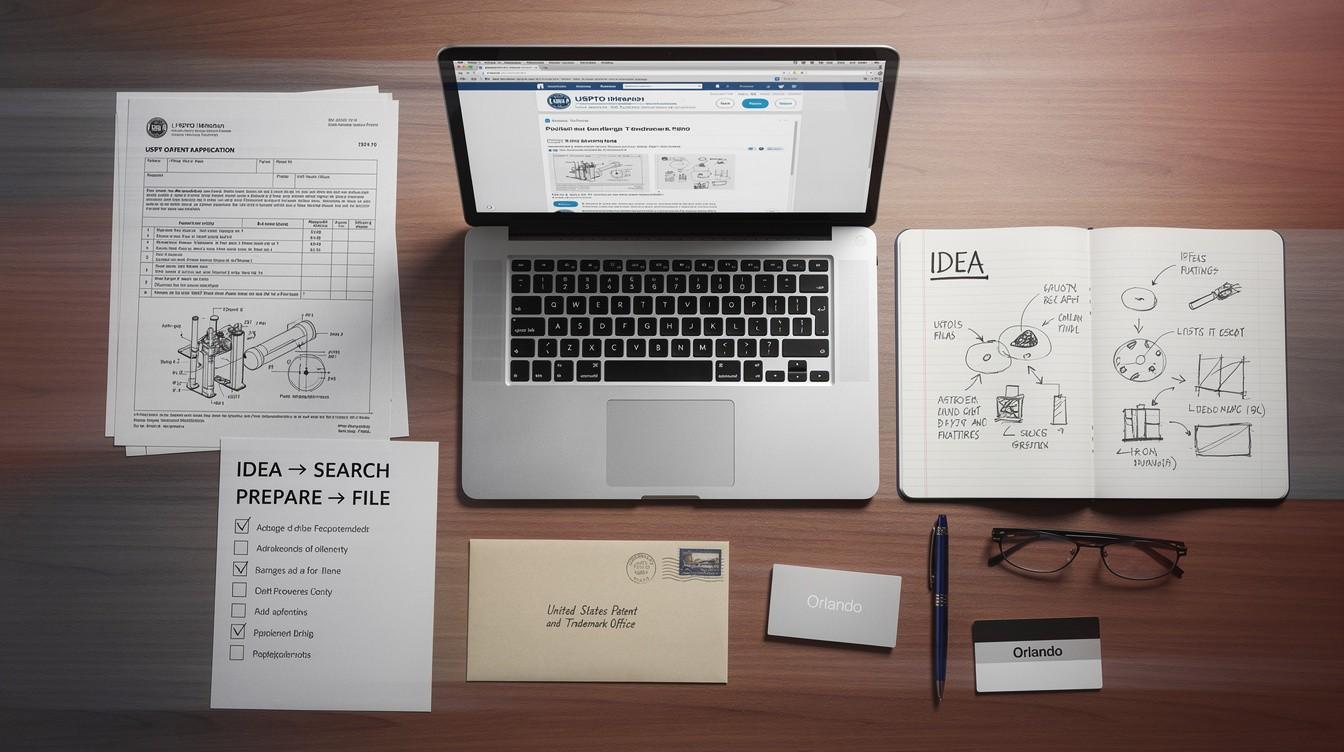
Orlando Patent Filing Advice: From Idea to USPTO Submission
Turning your invention into a protected asset requires more than just a good idea. The path from concept to USPTO submission involves specific steps, common pitfalls, and strict deadlines that catch many inventors off guard.
We at Daniel Law Offices, P.A. have guided countless innovators through Orlando patent filing advice and the application process. This guide walks you through each stage so you can file with confidence.
Preparing Your Idea for Patent Protection
Starting your patent journey means looking backward before you move forward. A comprehensive prior art search isn’t optional-it’s the foundation that determines whether your invention stands a real chance of approval. The European Patent Office reports that roughly 60% of patent rejections stem from prior art issues, which tells you exactly how critical this step is.
Conducting a Comprehensive Patent Search
Professional patent searches covering 15 to 20 databases, including European and Japanese records, reduce rejections by approximately 25% compared to surface-level searches. This isn’t theoretical: the Orange County Library System’s Patent and Trademark Resource Center assisted over 500 local inventors in 2022, many of whom discovered existing patents only after starting their applications. You can start free using USPTO Patent Public Search and Google Patents, but these tools scratch the surface.
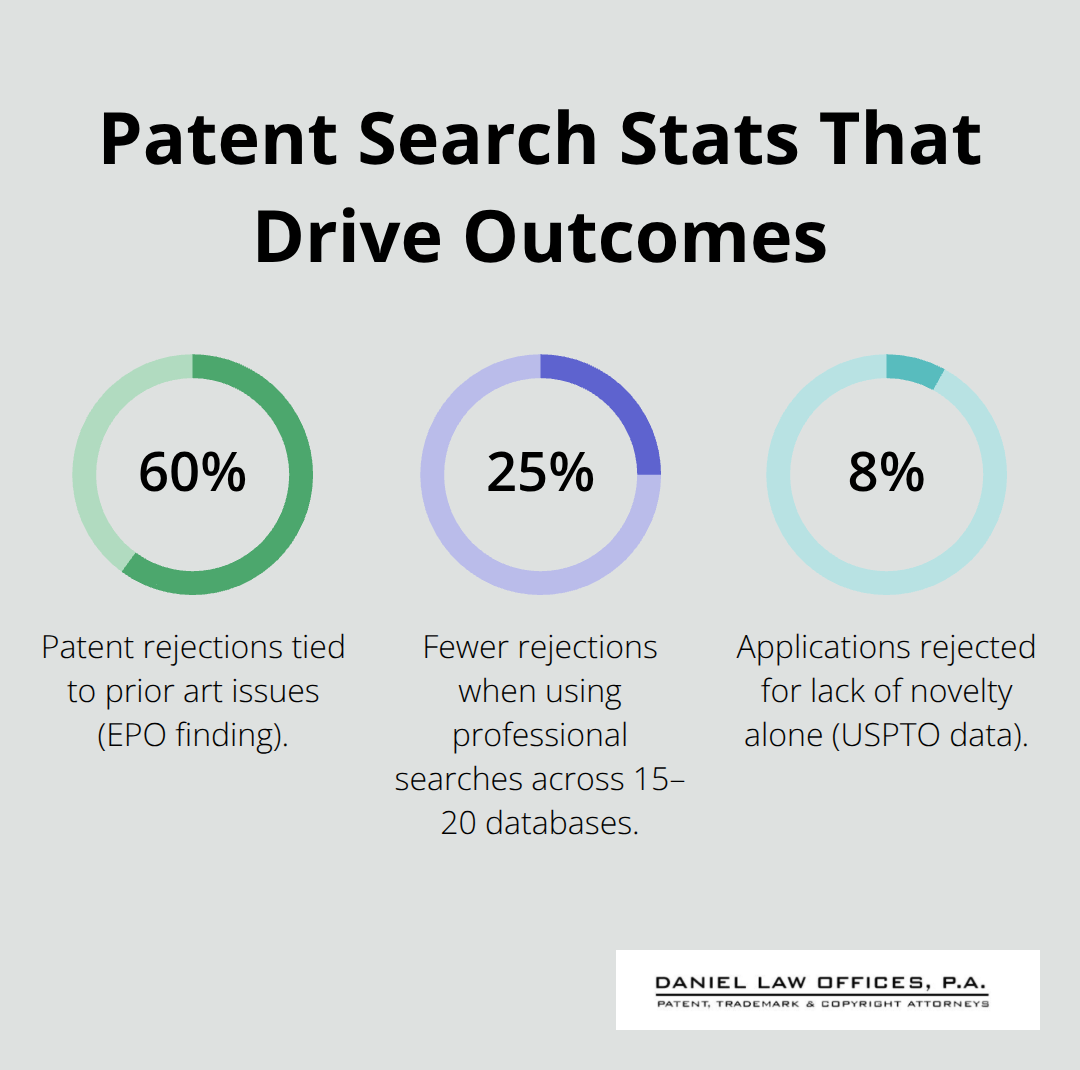
A thorough search must extend to international records because competitors in Japan or Europe may have filed patents that bar your U.S. application even if you’ve never heard of them. About 8% of patent applications face rejection due to lack of novelty alone, according to USPTO data. The cost of a comprehensive search typically runs $1,000 to $3,000, but this investment prevents the far costlier scenario of filing a full application only to receive a rejection based on prior art the examiner uncovers.
Documenting Your Innovation Thoroughly
Documentation transforms your invention from a vague concept into something the USPTO can actually examine. The specification-your written description of the invention-must be detailed enough that someone skilled in your field could make and use your invention without undue experimentation. This is called enablement, and it’s non-negotiable. Include sketches, notes, prototypes, and dates alongside your formal technical documentation; these records establish your conception date and protect you if questions arise later. High-quality patent drawings matter enormously: applications with professional drawings are associated with approximately 20% higher approval rates without major revisions. Expect to pay $75 to $150 per drawing sheet, but this expense directly improves your odds. Your specification should describe the invention’s purpose, structure, and function, then present alternative embodiments to broaden your protection scope. Well-written specifications increase approval odds without major revisions by roughly 30%. About 60% of applications receive at least one non-final rejection, often due to incomplete disclosures or unclear claims-problems that proper documentation prevents.
Assessing the Patentability of Your Invention
Not every invention deserves patent protection, and filing for something unpatentable wastes money and time. You must assess whether your invention is novel (new), non-obvious (not an easy variation of existing technology), and useful. A utility patent covers how something works or what it does and provides up to 20 years of protection; a design patent protects the ornamental appearance and lasts up to 15 years. Orlando’s patent landscape shows rapid growth in aerospace, drone technology, and entertainment/VR sectors, reflecting local opportunities in specific technical fields. If your invention falls outside these areas, the competitive landscape may differ, so understand your specific market. Provisional patents establish an initial filing date for $75 to $320 depending on your entity size, and they last 12 months-giving you time to refine the invention before committing to a full non-provisional application. In 2022, roughly 189,338 provisional applications were filed, with approximately 50% converting to non-provisional within the year. This two-stage approach lets you test market viability and gather feedback before investing in the full filing process. A registered patent attorney can evaluate whether your invention meets patentability standards; this consultation prevents you from pursuing protection for something that won’t survive examination and positions you to move forward with confidence into the application process itself.
Choosing Your Patent Type and Meeting USPTO Requirements
Once you’ve confirmed your invention is patentable, you face a critical decision about which patent type aligns with your protection goals and timeline. Utility patents cover how an invention functions or what it accomplishes, offering up to 20 years of protection and representing roughly 90% of all USPTO filings. Design patents protect the ornamental appearance of a product and last up to 15 years without requiring maintenance fees after grant, making them cost-efficient for protecting visual features like furniture shapes or consumer electronics styling.
Selecting the Right Patent Type for Your Invention
The choice hinges on what you’re actually trying to protect: if competitors can copy your invention’s function, a utility patent is non-negotiable; if they can only steal your design through visual imitation, a design patent may suffice. Orlando’s aerospace and entertainment sectors lean heavily toward utility patents due to functional innovation, while design patents gain traction in furniture and consumer electronics where ornamental features drive market differentiation. Your market and competitive landscape determine which path makes financial sense.
Understanding Provisional and Non-Provisional Filing Costs
A provisional application ($75 for micro-entities, $150 for small entities, $300 for large entities according to 2023 USPTO structure) establishes your priority date immediately and buys 12 months to complete development before filing a non-provisional application. Non-provisional filings cost $320 for large entities, $160 for small entities, and $80 for micro-entities at the basic filing fee, plus additional charges for claims beyond 20 and pages exceeding 100. Electronic filing through USPTO Patent Center runs approximately 15% faster than paper submissions and eliminates the $400 non-electronic penalty, so filing online is strongly advisable.
Preparing Required Application Materials
Your application requires an Application Data Sheet, a detailed specification with enablement and best mode disclosure, formal patent claims (independent claims first, then dependent claims that narrow scope), and technical drawings tied to each claim element. High-quality drawings matter enormously: professionally prepared drawings appear in roughly 90% of strong filings and boost approval odds by about 20%.
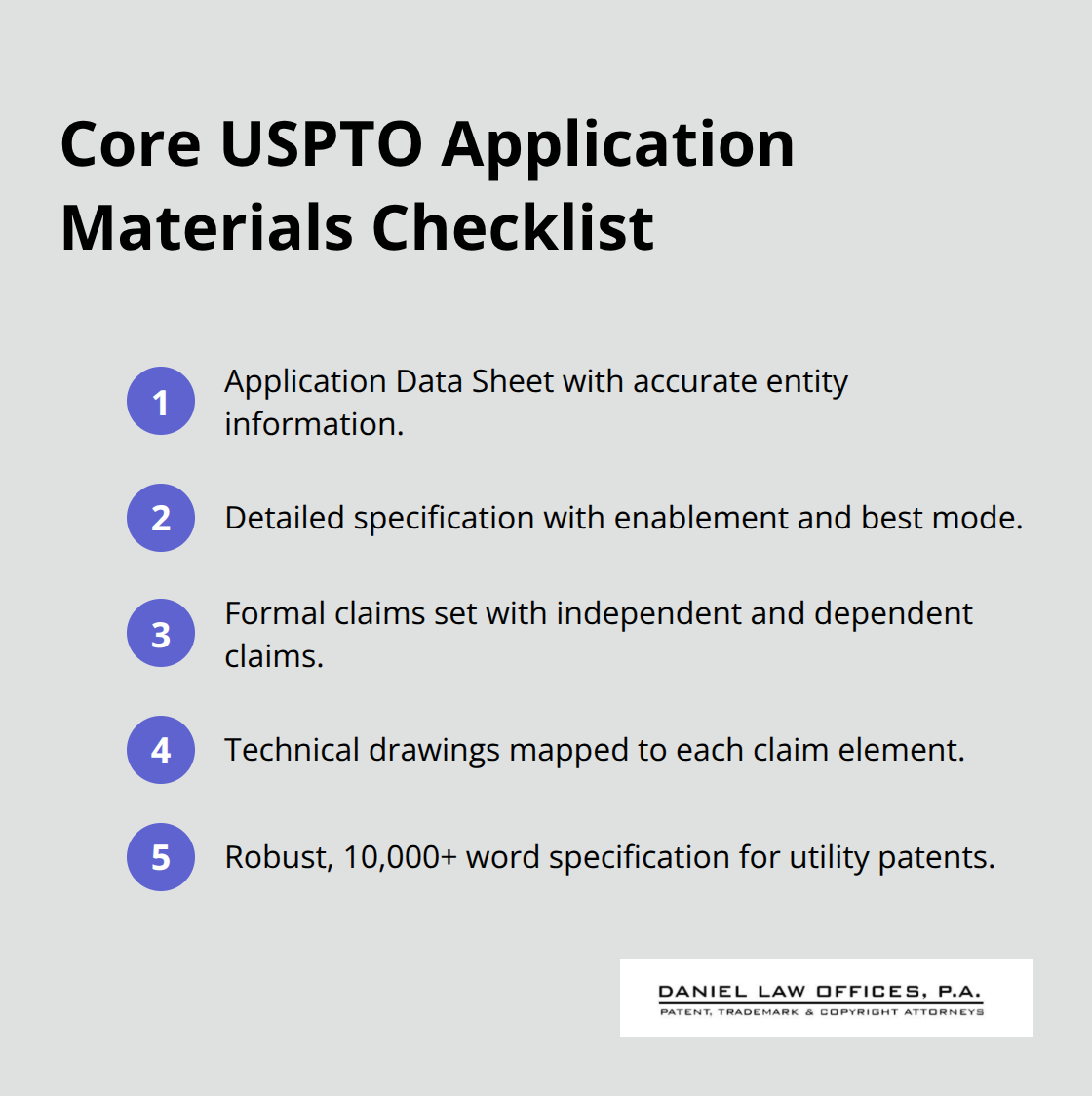
The specification itself should run 10,000 words or more for utility patents to satisfy enablement requirements and prevent invalidation during litigation.
Managing the Examination Process and Deadlines
After submission, the USPTO typically issues office actions within 6 to 18 months; you must respond within three months to maintain your application, though extensions are available at additional cost. About 60% of applications receive at least one non-final rejection, but this doesn’t signal failure-it’s the standard examination process. Applicants with well-drafted claims experience roughly 25% fewer initial rejections, so claim quality directly impacts prosecution speed and cost. Identity verification through USPTO Patent Center became mandatory as of September 11, 2025, so set up your account and verify credentials before filing. Track your application status continuously in Patent Center and respond to every office action promptly; missing deadlines abandons your application and forfeits your filing fee and priority date.
The technical and procedural demands of patent prosecution require careful attention to detail and strategic claim construction. Understanding these requirements positions you to navigate the examination process effectively, but many inventors benefit from professional guidance to anticipate examiner concerns and structure applications that move toward approval efficiently.
What Derails Most Patent Applications in Orlando, Florida
Skipping Comprehensive Prior Art Searches
Inventors often sabotage their own filings by treating prior art searches as an afterthought or relying solely on free tools. About 30% of patent applications face rejections due to prior art issues, according to the World Intellectual Property Organization, yet many Orlando inventors skip comprehensive searches to save a few hundred dollars upfront. Professional searches covering 15 to 20 databases reduce rejections by roughly 25% compared to surface-level approaches, and this difference translates directly to faster prosecution and lower total legal costs. The USPTO rejects approximately 8% of applications due to lack of novelty alone, meaning your invention may already exist in a Japanese database or European filing you’ve never encountered. A $1,000 to $3,000 search investment prevents the costly scenario where you file a full application, receive an office action citing prior art, and must abandon or substantially revise your claims-losing months and thousands in attorney fees.
Submitting Incomplete or Poorly Written Technical Descriptions
The second critical mistake involves submitting incomplete or poorly written technical descriptions that fail enablement requirements. About 60% of applications receive at least one non-final rejection, and incomplete disclosures drive a significant portion of these rejections. Your specification must contain enough detail that someone skilled in your technical field could manufacture and use your invention without undue experimentation; vague language about how your invention works invites rejections and prolonged prosecution. High-quality patent drawings tied explicitly to each claim element are non-negotiable-applications with professional drawings see roughly 20% higher approval rates without major revisions. Well-written specifications increase approval odds without major revisions by approximately 30%, yet many inventors rush this section to cut costs. The specification itself should run 10,000 words or more for utility patents to satisfy enablement requirements and prevent invalidation during litigation.
Missing Critical Deadlines and Office Action Responses
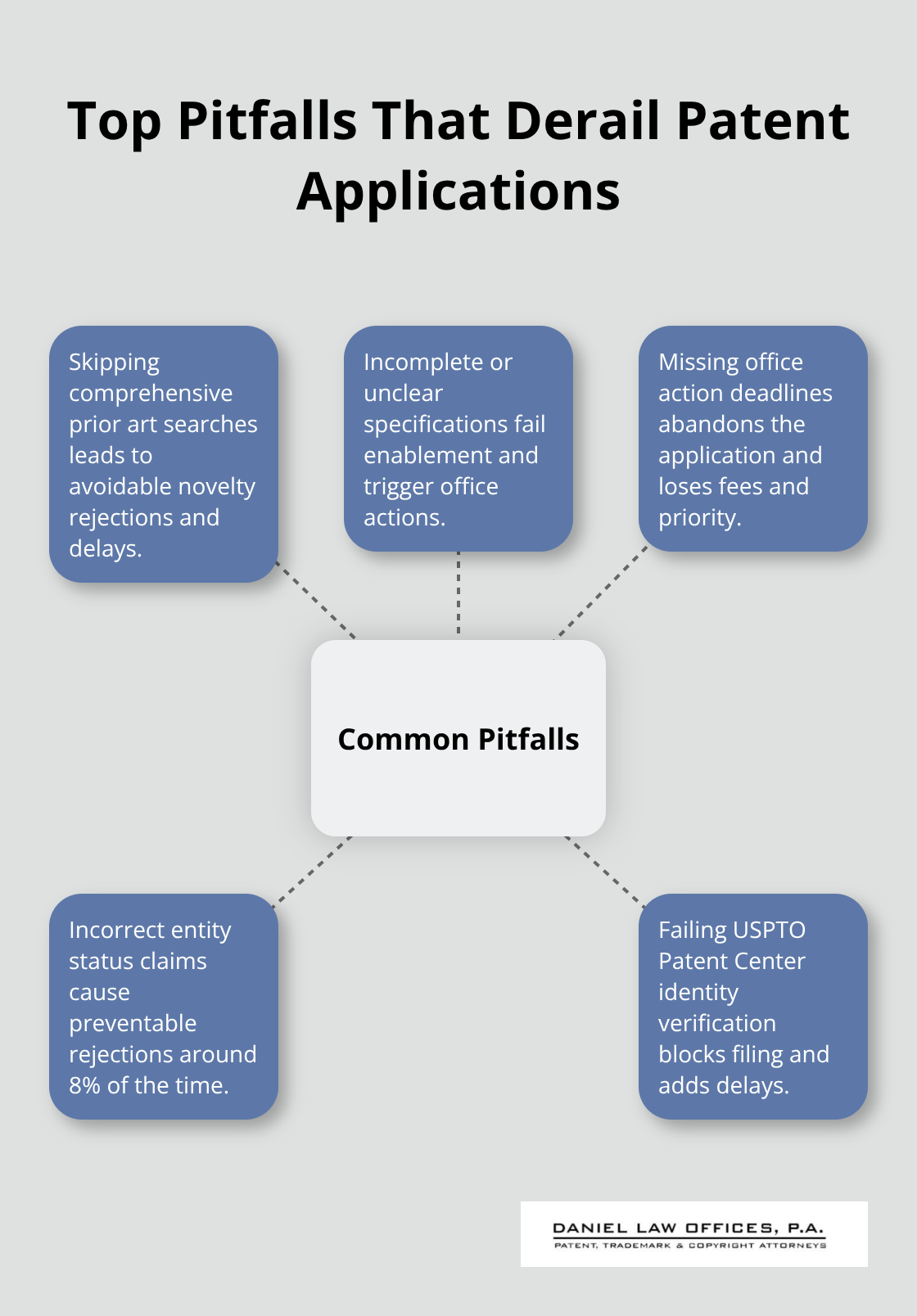
The third fatal mistake involves missing critical deadlines and failing to respond promptly to office actions. The USPTO allows three months to respond to office actions, but this deadline is absolute-missing it abandons your application and forfeits your entire filing fee and priority date. About 8% of filings face rejection due to incorrect entity status claims, a mistake that could have been caught and corrected with proper tracking and response protocols. Identity verification through USPTO Patent Center became mandatory as of September 11, 2025, adding another procedural requirement that must be completed before filing. Systematic tracking of all USPTO communications and response deadlines eliminates this category of loss entirely. The cost of professional guidance pales against the cost of losing your priority date or receiving rejections that could have been anticipated through better preparation.
Final Thoughts
Filing a patent successfully requires three non-negotiable practices: thorough prior art searches before you draft your application, precise documentation with professional-quality drawings, and strict adherence to every USPTO deadline. The data proves this approach works-comprehensive searches reduce rejections by 25%, well-written specifications boost approval odds by 30%, and professional drawings improve outcomes by 20%. Skipping any of these steps costs far more in revisions, abandoned applications, and lost priority dates than investing in them upfront.
The first-to-file system means delays hand control to competitors, so Orlando patent filing advice always emphasizes speed. Provisional applications establish your priority date immediately for $75 to $320, buying 12 months to refine your invention before committing to a full non-provisional filing. This two-stage approach lets you test market viability while protecting your conception date, and systematic tracking of office actions and response deadlines becomes your responsibility after submission.
We at Daniel Law Offices, P.A. assist individual inventors and businesses in securing their valuable ideas through comprehensive patent searches, strategic application drafting, and guidance through patent prosecution. Our registered patent attorney helps you anticipate examiner concerns, structure applications that move toward approval efficiently, and navigate the complexities of intellectual property law. Contact us to discuss your filing strategy and establish your priority date today.