



Florida Trademark Registration: A Local Guide for Businesses
Your brand is your business’s most valuable asset in Florida’s competitive market. Without proper Florida trademark registration, you risk losing control of what makes your company recognizable and valuable.
At Daniel Law Offices, P.A., we’ve seen too many Florida businesses skip trademark protection only to face costly disputes later. This guide walks you through registration, common pitfalls, and how to build lasting brand protection.
Why Your Brand Needs Legal Protection in Florida
Trademark registration isn’t optional for Florida businesses that want to grow. Without it, competitors can legally use names, logos, or slogans similar to yours, confusing customers and stealing your market share. The U.S. Patent and Trademark Office receives over 700,000 trademark applications annually, and Florida accounts for a significant portion of this activity due to the state’s robust business environment. When you register your trademark federally, you gain exclusive rights across all 50 states, not just Florida. This matters because a customer in Georgia or California could otherwise use your brand name without consequence. The moment you use a mark in commerce, you own some common law rights, but those rights are limited to the geographic area where you actually do business. Federal registration changes everything.
The Real Cost of Skipping Registration
Unregistered trademarks leave you vulnerable to expensive legal battles you cannot win easily. If someone infringes on your mark and you haven’t registered it federally, you face limits to state-level claims and cannot recover attorney fees or statutory damages in federal court. Statutory damages can reach $150,000 per willful infringement according to the Lanham Act, but you only access this if you registered first. Competitors know this, which is why they sometimes copy marks from unregistered businesses. A registered trademark also makes your brand more valuable if you ever sell your business or license your name to partners. Investors and acquirers conduct trademark searches as part of due diligence, and they want to see federal registration on file. The USPTO filing fee is $250 to $350 per class-a small investment compared to defending your brand later or losing customers to confusion.
Building Defensible Brand Rights From Day One
Registration creates a legal record that your brand belongs to you, with a specific filing date that proves priority. This matters in Florida’s competitive markets where multiple businesses operate in similar industries. When you file with the USPTO, you establish a public record that deters others from adopting confusingly similar marks. The registration also gives you grounds to file cease-and-desist letters with real legal weight behind them. Most infringers stop immediately when they receive formal notice, avoiding costly litigation. If they don’t stop, a registered trademark gives you the standing to sue in federal court and recover actual damages plus profits from their unauthorized use. The registration lasts 10 years and is renewable indefinitely, meaning your protection compounds over time.
What Happens Next in the Registration Process
Once you understand why protection matters, the actual registration process becomes your next priority. The path from application to approval involves several steps that many Florida business owners mishandle without proper guidance. Understanding these steps helps you avoid delays and rejections that cost time and money.
Getting Your Trademark Through the USPTO
Search Your Mark Before Filing
The search phase separates serious Florida business owners from those who waste money on applications that will be rejected. Most business owners skip this step or conduct a surface-level Google search, which misses the actual problem: the USPTO database contains millions of registered and pending marks that could conflict with yours. The Trademark Electronic Search System at the USPTO is free and searchable, but it requires understanding how the system classifies goods and services.
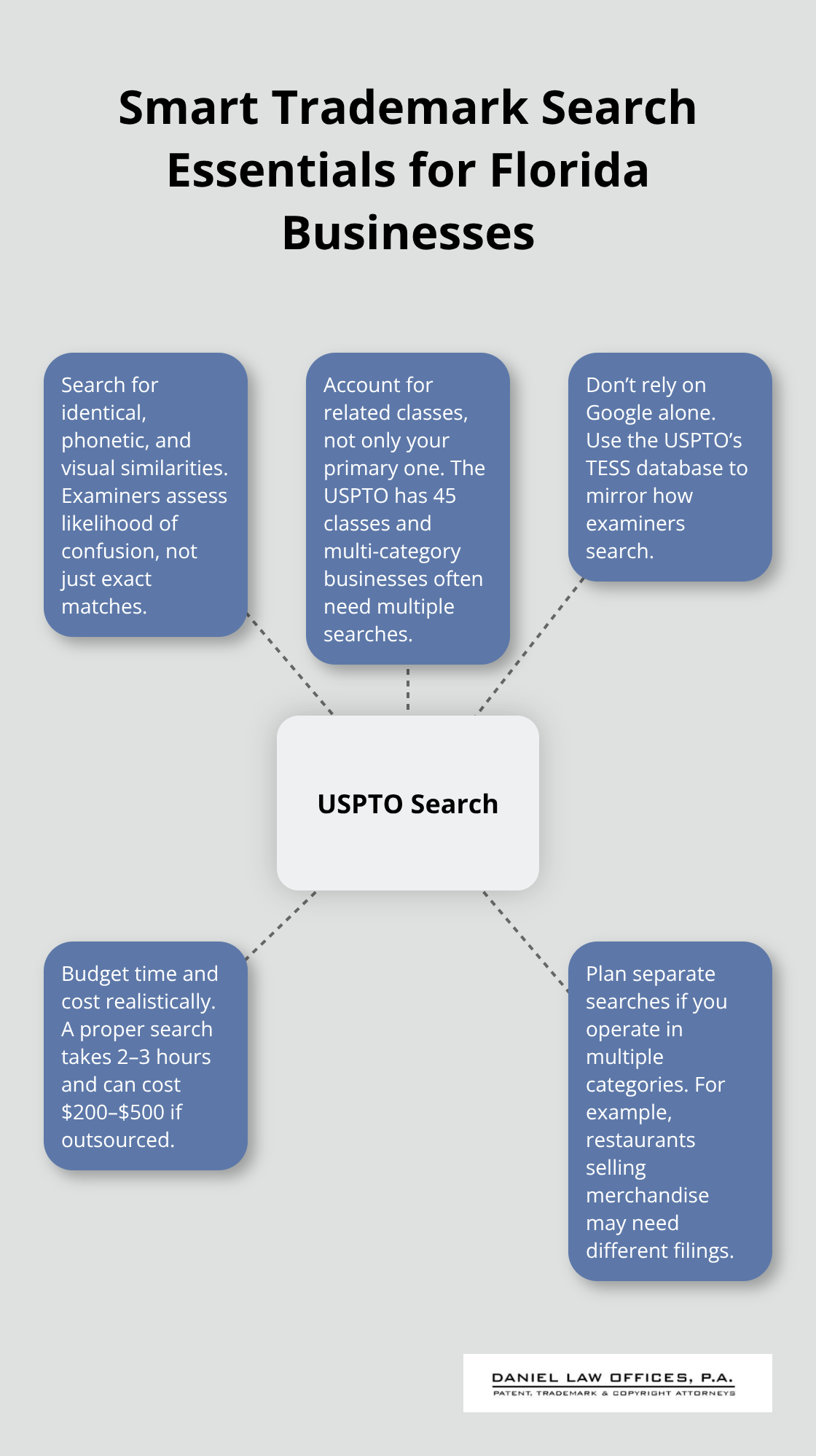
Florida businesses operating in multiple categories need separate searches for each class-a restaurant with merchandise requires different filings than one selling only food. The USPTO has 45 different classes, and choosing the wrong one means your registration won’t protect your actual business. Search not just identical marks but phonetically similar ones and visually similar ones, since the USPTO rejects applications based on likelihood of confusion, not exact matches. This is where most applications fail-applicants find no exact match and assume they’re clear, then receive an office action months later rejecting the application because a similar mark already exists. A proper search takes 2-3 hours and costs $200-$500 if you hire someone, but it prevents the heartbreak of a rejected application after paying filing fees.
Prepare Your Application With Precision
Filing your application requires accuracy in how you describe your goods and services. The description you submit becomes the official scope of your protection, so vague language like “services” or “retail products” will either be rejected or leave gaps in your coverage. Florida businesses in hospitality, retail, and professional services need precise descriptions-for example, a law firm needs “legal services” in Class 36, not just “business services.”
The application itself takes 30-60 minutes if your search is complete, and you’ll need your business address, a clear image of your mark if it’s a logo, and a list of goods or services in the exact format the USPTO requires. Accuracy at this stage prevents rejections later and ensures your protection covers what you actually sell.
Respond to Office Actions on Time
After filing, expect an office action within 3-6 months if issues exist. The most common rejection is likelihood of confusion with an existing mark, which means you’ll need to argue why your mark is different or modify your application to cover different goods. Responding to an office action requires meeting strict deadlines-you have six months to respond, and missing that deadline abandons your application entirely.
Many Florida business owners lose their applications at this stage because they don’t understand the legal arguments required in the response letter or they procrastinate on deadlines. If the examiner rejects your mark a second time, you have limited options: amend your application further, appeal to the Trademark Trial and Appeal Board, or abandon it and start over. The stakes at this point make professional guidance valuable, since a poorly written response often leads to final rejection.
Understand What Comes After Approval
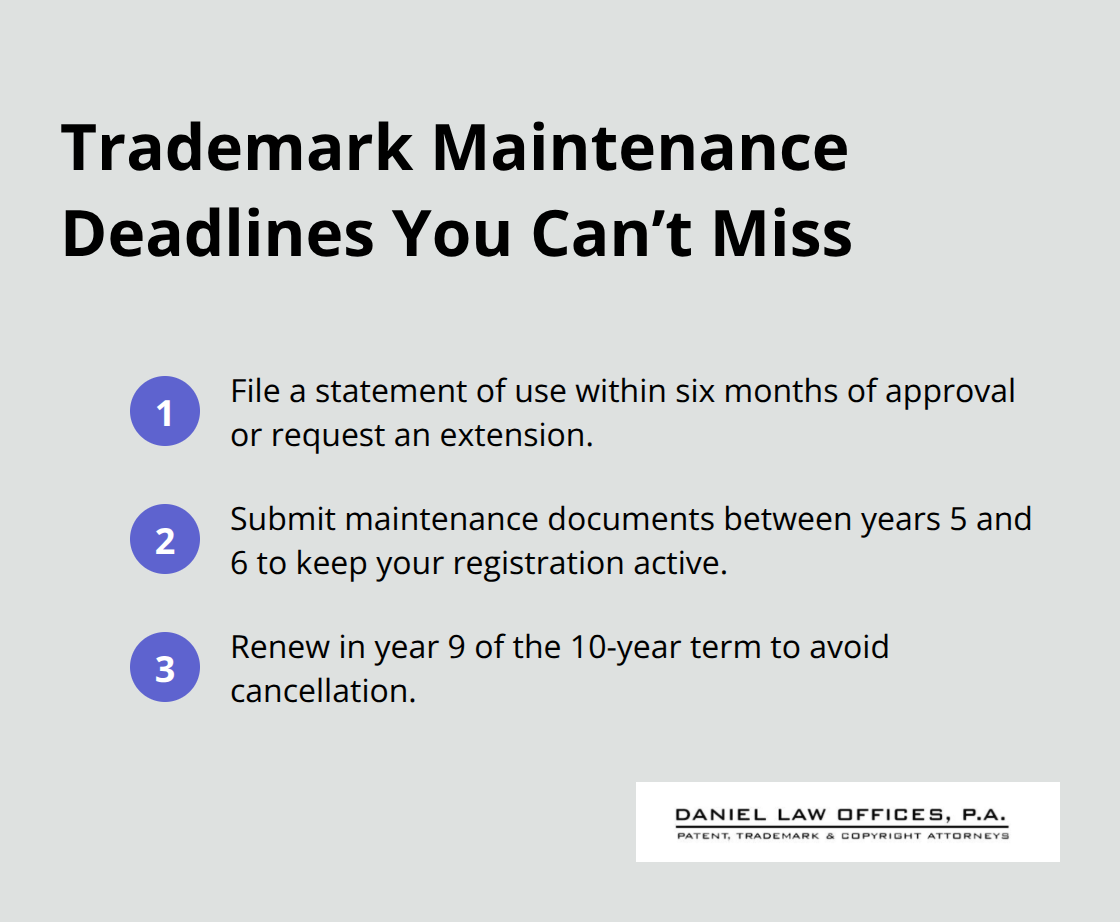
Once the USPTO approves your application, your work isn’t finished. You must file a statement of use within six months of approval (or request an extension), proving you actually use the mark in commerce. This requirement trips up many applicants who file speculatively for marks they haven’t launched yet. The registration lasts 10 years and is renewable indefinitely, but you must file maintenance documents between years 5 and 6 to keep it active. Missing these deadlines costs you the registration entirely, leaving your brand unprotected after investing in the application process.
Mistakes That Cost Florida Businesses Their Trademark Protection
Skipping the Trademark Search Wastes Time and Money
The trademark search before filing represents the single biggest mistake Florida businesses make, and it costs thousands of dollars annually in wasted applications. A business owner files an application, pays the $250 to $350 filing fee, waits months for examination, then receives a rejection letter citing a similar mark already registered. At that point, the money is gone and the timeline resets. The Trademark Electronic Search System at the USPTO contains over 2.3 million active registrations, and a proper search must account for phonetic similarities, visual similarities, and marks in related classes.
Most Florida business owners conduct a quick Google search, find nothing, and assume they’re clear to file. This approach fails because Google doesn’t search the USPTO database the way the trademark examiner does. A business selling craft coffee under the name Brew Haven might miss a registration for Brew Sanctuary in the same coffee class, even though the examiner would reject the application based on likelihood of confusion. The search takes 2 to 3 hours and costs $200 to $500 if outsourced, but skipping it leads to rejected applications and wasted filing fees.
Weak or Generic Marks Face Rejection and Enforcement Problems
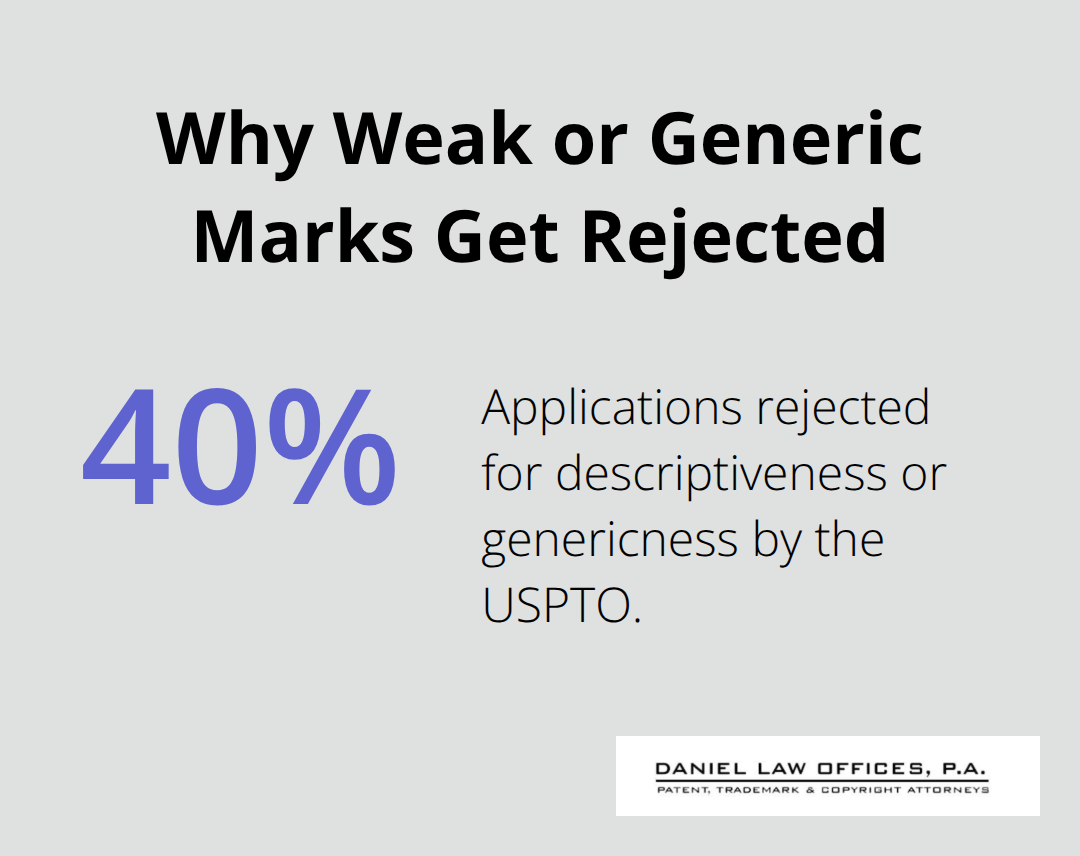
Choosing weak or generic marks creates a different problem that appears later in the registration process or during enforcement. A Florida retail business filing a trademark for the word Furniture in the furniture class faces immediate rejection because the mark is descriptive and lacks distinctiveness. The USPTO rejects approximately 40 percent of trademark applications on the grounds of descriptiveness or genericness.
Owners of weak marks also struggle to enforce their rights even if registration succeeds, because competitors can argue the mark is too generic to warrant protection. A business filing for Quality Services or Best Products faces the same barrier. The strongest marks are arbitrary or fanciful words that have no connection to the goods or services, like Apple for computers or Kodak for photography. Florida businesses should invest time in developing mark names that stand out and don’t describe what the business does.
Missing Renewal and Maintenance Deadlines Forfeits Your Registration
Neglecting renewal and maintenance deadlines costs registrations unnecessarily after years of building brand value. The renewal window opens in year 9 of the 10 year registration period, and missing this window by even one day results in cancellation. Florida business owners who file applications often mark the filing date in their calendar but forget about the renewal requirement until years pass.
The registration also requires a statement of use filed between years 5 and 6 to maintain active status. Missing either deadline forfeits the entire registration and requires starting the process over, losing all priority benefits and the established registration date. These maintenance requirements demand attention years after the initial filing, which many business owners overlook once their mark receives approval.
Final Thoughts
Florida trademark registration protects what matters most to your business, but only if you act strategically and maintain your rights over time. The process demands attention at three critical moments: before filing through a thorough search, during examination by responding promptly to office actions, and after approval by meeting renewal deadlines. Skipping any of these steps costs you protection and wastes the investment you’ve already made in building your brand.
The businesses that succeed with trademark protection treat it as an ongoing responsibility, not a one-time task. Your registration lasts 10 years and renews indefinitely, but only if you file maintenance documents on schedule and prove continued use of your mark. Setting calendar reminders for year 5 and year 9 prevents the costly mistake of losing registration through missed deadlines.
We at Daniel Law Offices, P.A. guide Florida businesses through every stage of trademark protection, from conducting comprehensive searches that prevent rejected applications to responding to office actions and managing renewal requirements. Your next step is straightforward: conduct a trademark search for your mark in the USPTO database or contact us to do it for you. Visit Daniel Law Offices, P.A. to discuss your trademark needs and protect your brand before competitors do.