



US Patent Landscape 2026: What It Means for Your Patent Strategy
The US patent landscape 2026 is shifting faster than most innovators realize. Patent applications in AI, software, and green technology are surging, while the USPTO has introduced new examination guidelines and fee structures that directly affect your filing strategy.
At Daniel Law Offices, P.A., we’ve seen firsthand how these changes catch businesses off guard. This guide walks you through the trends reshaping patent protection and shows you how to adapt your approach now.
Where Patent Applications Are Heading in 2026
Computer Technology Dominates the Filing Pipeline
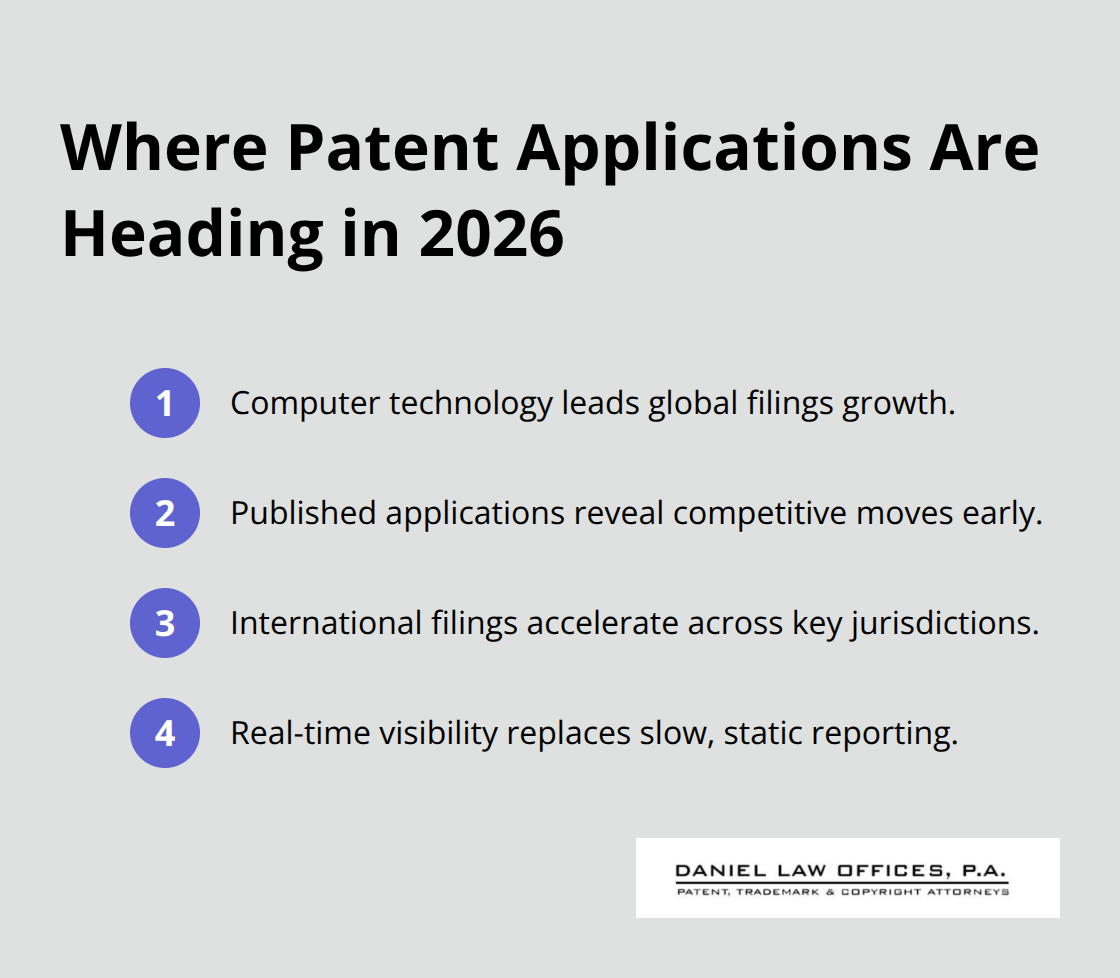
Computer technology now accounts for 13.2% of global patent filings according to WIPO data, and that share continues climbing as AI and software inventions flood the application pipeline. The sheer volume signals where competition is intensifying and where your patent strategy risks becoming obsolete if you don’t monitor the landscape actively. Global patent applications reached record levels in 2024, with the European Patent Office reporting near-historic highs in EU filings.
This crowded landscape means the real challenge in 2026 isn’t whether to file patents-it’s tracking what competitors and adjacent industries have already filed before your rights are granted.
Published Applications Reveal Competitive Threats Early
Published patent applications give you the earliest signals of technology trends because offices publish applications before patents are granted, sometimes years before enforcement becomes relevant. WIPO and the European Patent Office actively analyze emerging technologies using published patent data to identify where innovation is heading, and you should monitor these publications too. Traditional annual IP reviews move too slowly to keep pace; continuous monitoring of new publications prevents you from missing competitor activity that could reshape your market position. The biggest risk isn’t failing to protect your own ideas-it’s missing what others are doing in your technical field.
International Filings Accelerate Across Jurisdictions
International filings through the Patent Cooperation Treaty are accelerating, with China projected to remain the largest user, followed by the US and Japan. This means your competitors file globally faster than ever, and design-arounds or conflicting claims in foreign jurisdictions can undermine your enforcement leverage before you realize it exists. Europe is deepening PCT adoption, while India shows massive growth in patent filings, indicating where innovation clusters are forming. A proactive strategy requires monitoring published applications continuously across jurisdictions rather than waiting for granted patents or litigation to force your hand.
Real-Time Visibility Replaces Static Reporting
The volume and velocity of filings means you need real-time visibility into your technical space rather than static reports that age quickly. Implement continuous landscape analysis so you can spot emerging competitors, understand potential overlaps with your claims, and adjust your prosecution strategy before examination concludes. This shift from reactive to proactive monitoring positions you to make informed decisions about where to file next and which claims warrant reinforcement through continuation applications or additional filings.
How USPTO Changes Reshape Your Filing Timeline and Costs in 2026
AI Patent Guidance Clarifies Examination Standards
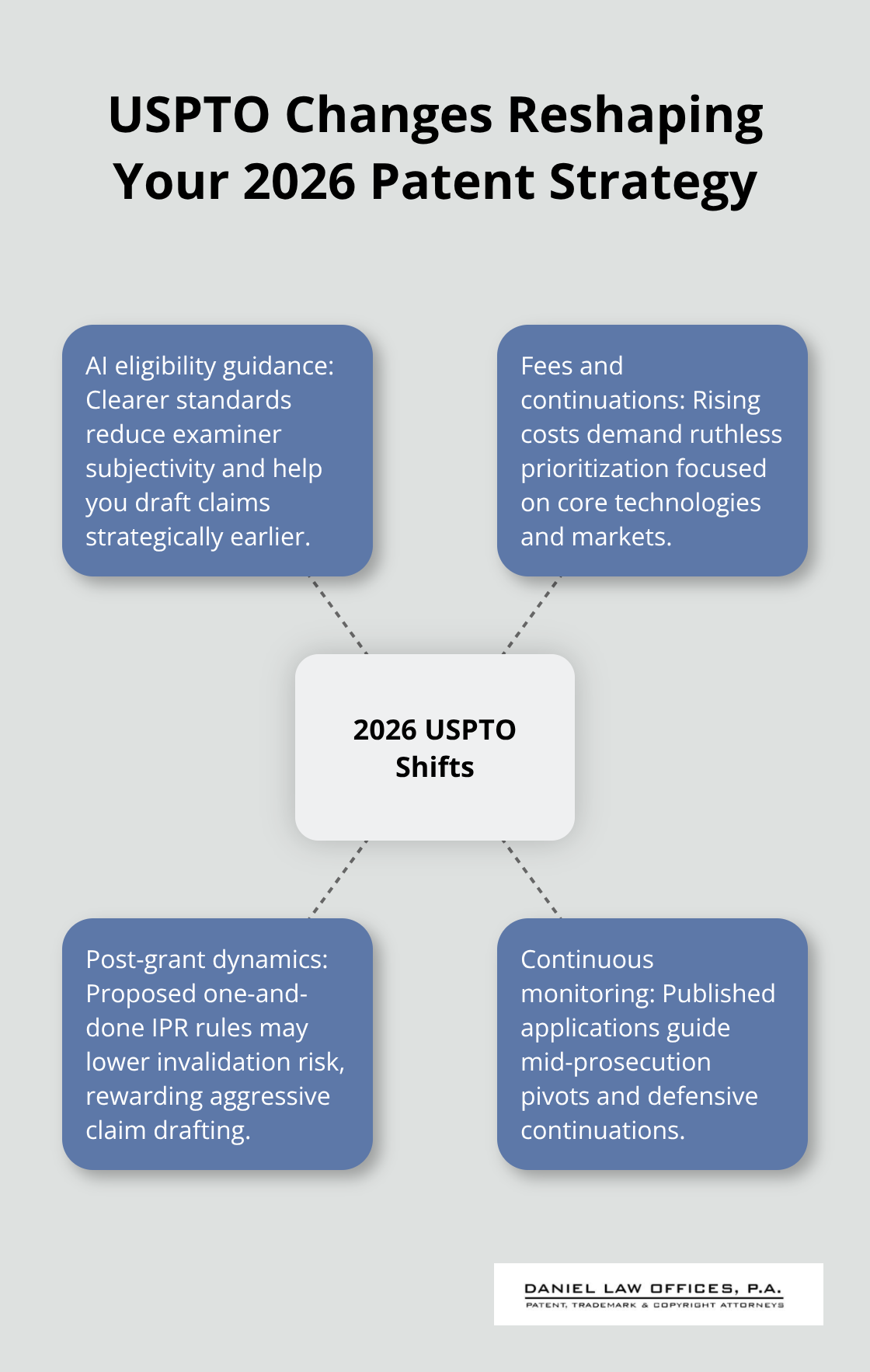
The USPTO will issue more focused guidance on subject matter eligibility for AI-related inventions in 2026, with clearer standards around burden and use of declarations to reduce examiner subjectivity. Examiners previously applied inconsistent standards to AI patents, causing unpredictable rejections and extended prosecution timelines. With updated guidance in place, you can draft claims more strategically upfront and anticipate examiner positions earlier, potentially shortening your path to allowance. Your responses become more predictable when grounded in the updated standards, and your amendments carry more weight as examiners apply consistent benchmarks across applications.
Filing Fees and Continuation Strategy Demand Ruthless Prioritization
Filing fees and continuation strategy timing have become critical levers in 2026 patent strategy. The cost of filing and maintaining patents continues climbing, making it essential to evaluate which claims warrant protection and which technical areas justify continuation applications versus standalone filings. The Patent Cooperation Treaty remains a cost-effective gateway to international protection, but filing costs and maintenance fees across multiple jurisdictions demand ruthless prioritization of your core technology and markets. Map your filing timeline against your product launch schedule and competitive threats; if a competitor’s published application signals a design-around risk, filing a targeted continuation or divisional application months earlier than planned secures broader claim coverage before the competitor’s patent grants.
Post-Grant Proceedings Favor Aggressive Claim Drafting
The proposed USPTO one-and-done IPR rules could reduce the number of instituted inter partes reviews, which means patents that survive initial examination face lower invalidation risk post-grant. This shift rewards aggressive claim drafting during prosecution rather than defensive narrowing, because broader claims are harder to challenge through post-grant proceedings. Invest time in prosecution now to build claims that survive PTAB scrutiny later, rather than filing narrow claims and hoping to avoid litigation. The strategic implication is clear: your prosecution decisions today determine your enforcement leverage tomorrow, and the tightening PTAB standards make that leverage increasingly valuable.
Continuous Monitoring Prevents Costly Prosecution Missteps
Published applications from competitors and adjacent industries reveal prosecution risks before your own application reaches final rejection or allowance. Continuous monitoring of new publications in your technical space prevents you from filing claims that overlap with granted patents or published applications that will mature into blocking patents. This real-time visibility allows you to adjust your claim strategy mid-prosecution, file defensive continuations, or pivot your technical approach before examination concludes. The firms and inventors who adapt their prosecution strategy based on published competitor activity gain months of advantage over those who wait for examination office actions to reveal conflicts.
How to Adapt Your Patent Strategy in 2026
Search for Prior Art Continuously, Not Once
Prior art searches have fundamentally changed in 2026, and conducting them the old way will cost you months and thousands of dollars in wasted prosecution. The volume of published applications means your search must now include continuous monitoring rather than a one-time check before filing. Search for patents and published applications across the USPTO, European Patent Office, and WIPO databases using your core technical terms, and then set up alerts for new publications in those same spaces. When you find overlapping claims or competitor filings that signal design-around risks, adjust your claim strategy immediately rather than waiting for an office action to force your hand.
Many applicants discover blocking patents only after their own application reaches final rejection, at which point continuation strategies cost significantly more and take longer to resolve. Start with a comprehensive prior art search before filing, then implement quarterly monitoring of new publications in your technical field for at least three years post-filing. This approach catches prosecution risks early and prevents costly amendments or abandonment decisions later.
Prioritize Your Portfolio Based on Market Threats
Building your patent portfolio now means filing strategically across multiple jurisdictions while prioritizing claims that reflect current market threats rather than theoretical future risks. The Patent Cooperation Treaty allows you to file a single international application that opens pathways to protection in multiple countries, but you must decide within twelve months whether to pursue protection in specific jurisdictions based on real competitive data. Continuation applications and divisional filings cost money, so ruthlessly prioritize which technical areas and claim scopes justify additional filings.
If a competitor’s published application reveals a design-around path, file a continuation application months earlier than planned to protect broader claim coverage before their patent grants. This timing advantage (measured in months, not years) can mean the difference between enforceable claims and claims that competitors have already designed around in the marketplace.
Work with Patent Professionals Who Understand Your Business
Your patent attorney should understand your product roadmap and competitive landscape, not just patent law. They should help you time filings against product launches, anticipate competitor moves based on published applications, and draft claims aggressively enough to survive post-grant challenges while remaining specific enough to avoid examiner rejections on enablement grounds. At Daniel Law Offices, P.A., we guide clients through the entire patent prosecution process, helping them navigate the complexities of intellectual property law and ensuring their innovations receive legally sound protection.
The firms winning in 2026 treat their patent portfolio as a dynamic asset requiring continuous adjustment, not a static collection of applications filed years ago. Your strategy must adapt as competitors publish new applications, as your product roadmap shifts, and as USPTO guidance evolves.
Final Thoughts
The US patent landscape 2026 demands action now, not later. The volume of filings in AI, software, and green technology accelerates continuously, while USPTO guidance and post-grant procedures shift in ways that reward aggressive prosecution and continuous monitoring. Missing the competitive signals hidden in published applications from your rivals costs you months of enforcement leverage.
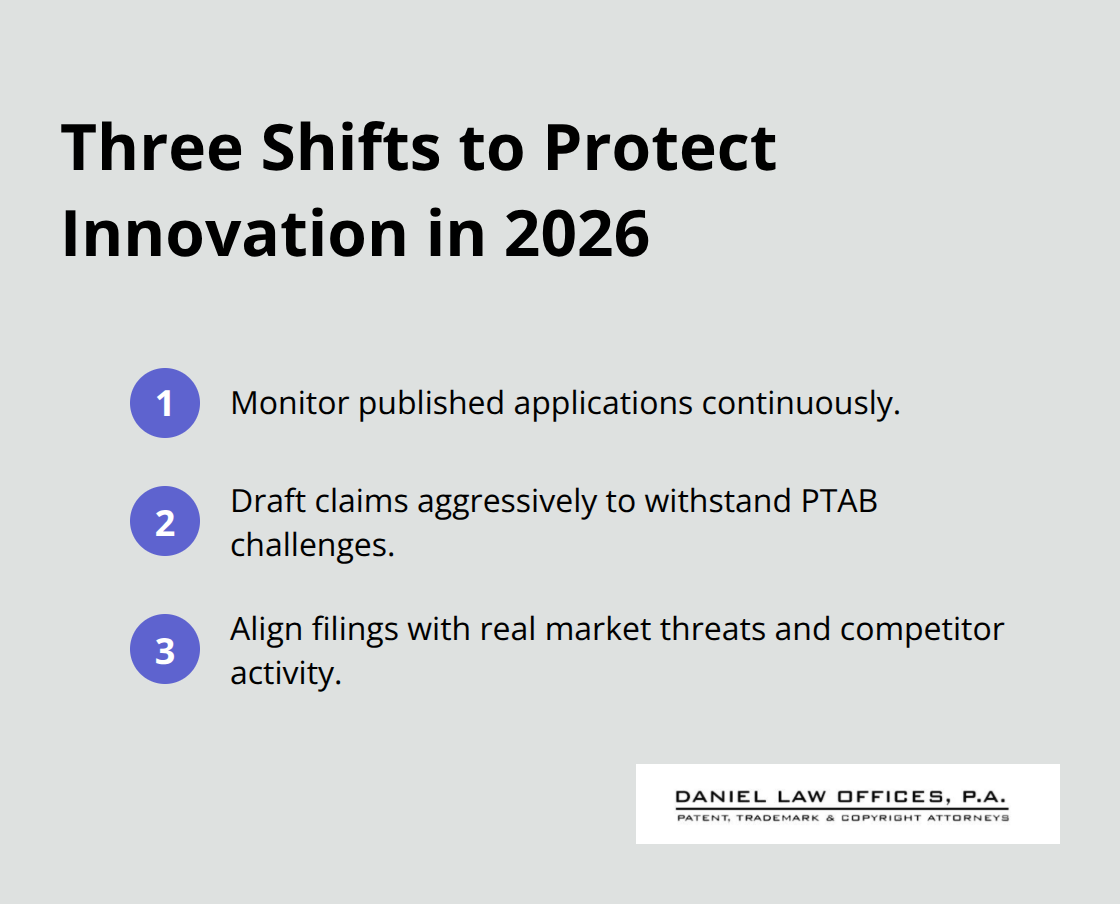
Your innovation protection requires three simultaneous shifts. You must monitor published applications continuously rather than conducting a single prior art search before filing and then ignoring the landscape for years. You need to draft claims aggressively during prosecution because tightening PTAB standards mean broader claims face lower invalidation risk post-grant. Your filing strategy must align with real market threats and competitor activity, not theoretical risks or generic technology trends.
We at Daniel Law Offices, P.A. help clients navigate these complexities by guiding them through comprehensive patent searches, drafting claims that survive post-grant scrutiny, and timing filings strategically against competitive threats. Our registered patent attorney works with you to understand your product roadmap and competitive landscape, ensuring your patent portfolio reflects real business priorities rather than generic protection. Contact Daniel Law Offices, P.A. to discuss how your patent strategy should adapt to the current landscape.