



Filing A Patent Application: A Step-By-Step Guide
Filing a patent application is one of the most important steps in protecting your invention. The process involves multiple stages, from conducting thorough searches to submitting detailed documentation to the USPTO.
At Daniel Law Offices, P.A., we guide inventors through each phase of this journey. This guide breaks down the filing process into manageable steps so you understand what comes next.
Conducting a Comprehensive Patent Search
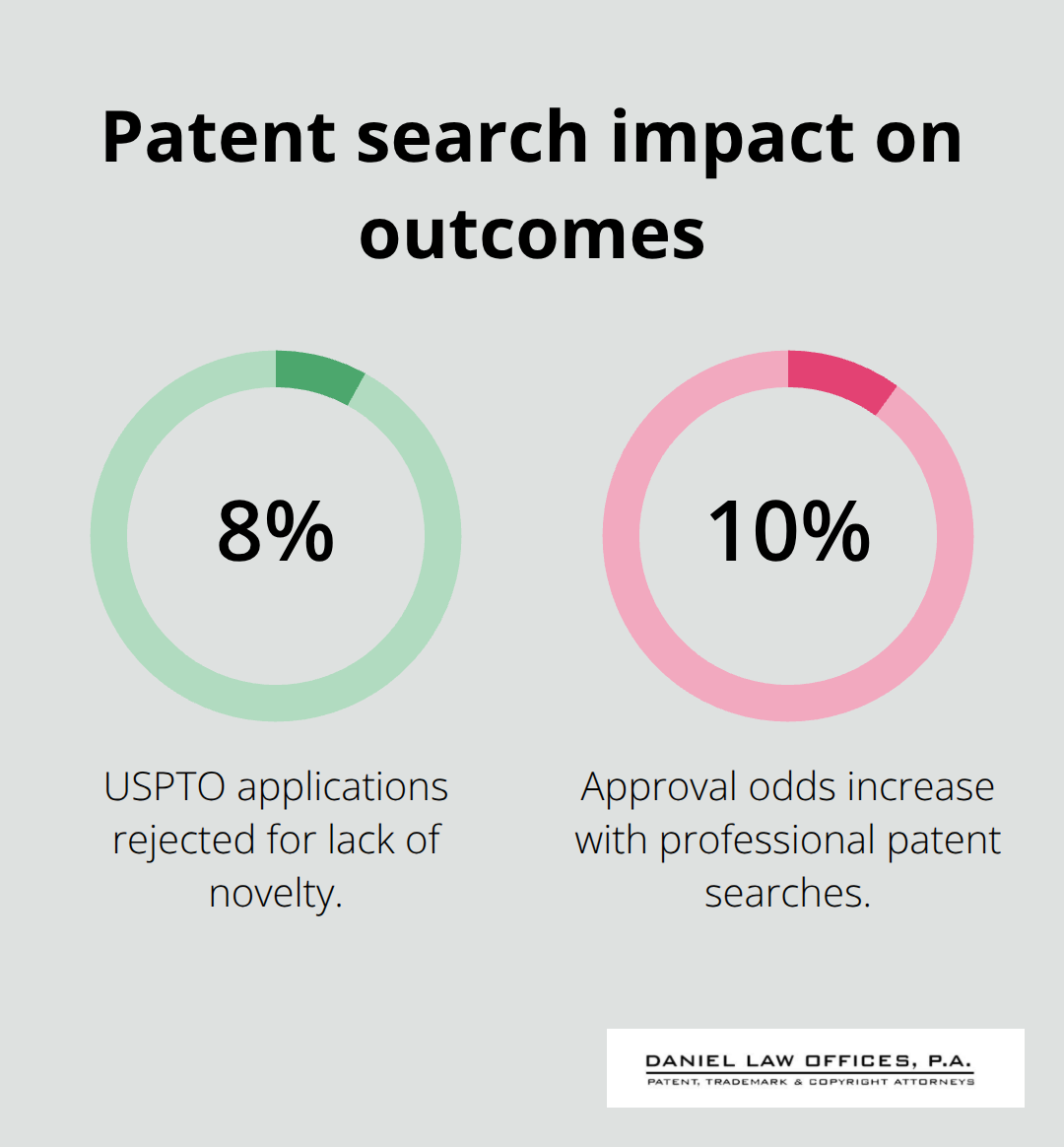
A patent search isn’t optional-it’s the foundation of a successful filing. The USPTO rejects roughly 8% of applications for lack of novelty, and that statistic reflects applications from inventors who skipped thorough searching or didn’t search correctly. When you search properly, you identify existing patents and publications that resemble your invention, which lets you understand the competitive landscape and craft stronger claims.
Without this step, you risk investing time and money into an application the USPTO will reject.
Why You Must Search Before Filing
Skipping a patent search creates real financial risk. You spend hundreds or thousands of dollars preparing and filing an application, only to receive a rejection based on prior art the examiner finds. A thorough search upfront prevents this waste. The search also reveals how competitors have protected similar inventions, showing you which claim strategies work and which ones fail. This intelligence shapes your own claims and strengthens your application significantly. Professional patent searches increase approval odds by roughly 10% compared to informal searches, making the investment worthwhile for most inventors.
Finding Prior Art in the USPTO Database
Start with the official USPTO patent database. The search interface allows you to query by keyword, inventor name, patent number, or classification code. Most inventors begin with keyword searches, but this approach often misses relevant patents because terminology varies across industries. Instead, search by classification code-the USPTO organizes patents into thousands of specific technology categories. Identify your invention’s primary classification, then browse related codes to uncover patents you might miss with keywords alone. Electronic searching is free and immediate, so spend time exploring multiple angles rather than relying on a single search method.
Interpreting Patent Claims and Documentation
When you locate potentially relevant patents, read the claims carefully-claims define what the patent actually protects, not the title or abstract. A patent titled something similar to your invention might have claims so narrow it doesn’t conflict with your design. Conversely, a patent with a different title might have broad claims that cover your concept. Document everything you find: patent numbers, filing dates, key claims, and how each differs from your invention. This documentation becomes invaluable when you draft your own application and explain why your invention is novel.
Getting Professional Help with Your Search
If you have budget constraints, consider at least consulting with an attorney about search strategy before conducting searches yourself. A comprehensive prior art search helps you establish novelty and understand the competitive landscape before filing. A registered patent attorney can guide you toward the most effective search methods for your technology area, saving you time and improving your results. With your search complete and documented, you move forward to the next critical phase: gathering and organizing all the materials your application requires.
Preparing Your Patent Application
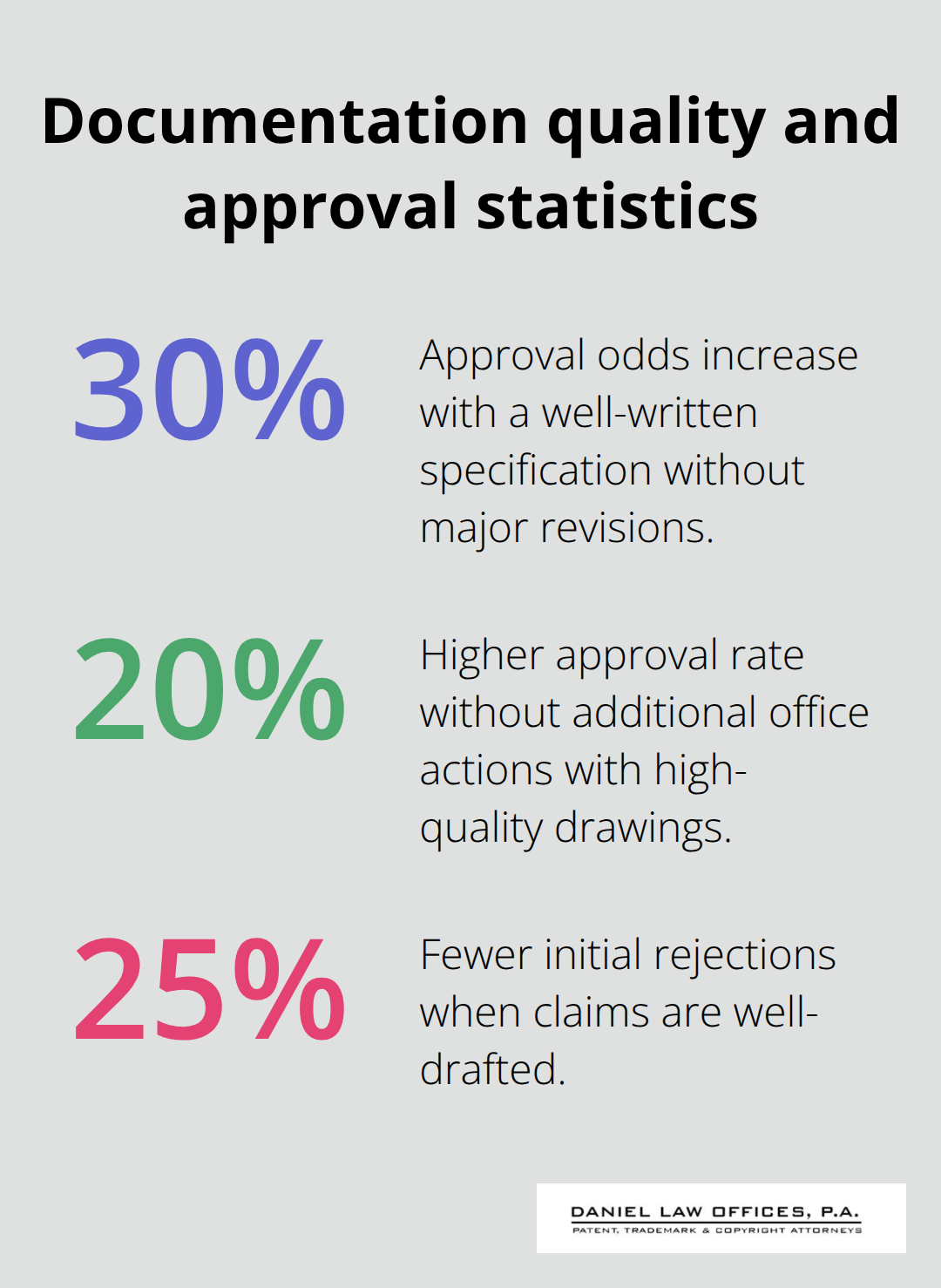
Once your search is complete, you need to gather and organize every piece of information the USPTO requires. This stage separates inventors who receive approval from those who face rejections and delays. The USPTO publishes specific formatting requirements, and applications that follow these standards move through examination faster. A well-written specification increases approval odds by roughly 30% without major revisions, according to USPTO data. This means the time you invest now in proper documentation directly impacts your success rate.
Write a Detailed Specification
Start by writing a detailed description of your invention. This specification must enable someone skilled in your technology area to build and use your invention based solely on your written explanation. Include the background of the problem your invention solves, a summary of how your invention works, and a detailed description of every component and how they interact. The specification also requires you to disclose the best mode you know for making and using the invention-this isn’t optional, and omitting it creates a vulnerability during examination. Organize this document chronologically and logically, walking through each element systematically.
Create Technical Drawings That Meet USPTO Standards
Next, create technical drawings that show every feature mentioned in your claims. High-quality drawings correlate with roughly a 20% higher approval rate without additional office actions, per USPTO statistics. Your drawings must clearly depict all claimed features and remain consistent with your written specification. Use multiple views-front, side, cross-section, and detail views-to show exactly how your invention functions. The USPTO specifies exact requirements for line weight, margins, and figure numbering; non-compliance can delay your application. If your drawings are complex, consider hiring a professional illustrator who understands USPTO standards rather than attempting rough sketches yourself.
Draft Precise Claims and Your Abstract
Finally, draft your claims with precision. Claims define the legal scope of your patent protection, and poorly drafted claims are a leading cause of rejection. Start with one broad independent claim that captures the core of your invention, then add dependent claims that narrow the scope to specific variations. Applications with well-drafted claims face about 25% fewer initial rejections. Each claim must reference your specification and drawings, using consistent terminology throughout. Write your abstract in one paragraph-typically 150 words or fewer-summarizing the invention’s purpose and technical approach. The abstract appears in patent databases, so make it clear and searchable.
Compile Required Forms and Verify Inventor Information
Gather all required forms, including the Application Data Sheet that provides bibliographic information about you, your invention, and any co-inventors. Verify that every inventor who contributed to the invention is listed; omitting an actual inventor can invalidate your patent later. Compile everything into a single, organized package before filing. A careful review at this stage prevents costly rejections and accelerates approval. With your materials organized and verified, you’re ready to move forward with the actual submission process-choosing the right patent type and filing method to protect your invention.
Submitting Your Patent Application to the USPTO
Choosing Between Provisional and Nonprovisional Filings
You face a critical decision before submission: provisional or nonprovisional filing. This choice affects your timeline, costs, and protection strategy. A provisional application costs far less upfront and gives you a 12-month window to file a nonprovisional application while claiming an earlier filing date. In 2022, inventors filed 189,338 provisional applications with the USPTO, showing this path’s popularity. However, a provisional application is never examined and automatically abandons after 12 months unless you convert it to a nonprovisional filing. If you need patent protection quickly and plan to refine your invention before formal examination, provisional filing makes sense. If you want examination to start immediately and are prepared with a complete specification, go directly to nonprovisional. Roughly 50% of provisional applications convert to nonprovisional within the 12-month window, suggesting many inventors use provisional filings as a strategic stepping stone rather than a final protection method.
Filing Electronically Through Patent Center
Electronic filing through Patent Center is not optional-it is the only practical path forward. The USPTO charges a $400 non-electronic filing fee for regular nonprovisional utility filings submitted by mail, making online submission significantly cheaper. Electronic filings also process about 15% faster than paper submissions, accelerating your examination timeline. You must create a USPTO.gov account and complete identity verification before you can proceed. Prepare your specification, claims, drawings, Application Data Sheet, and signed oath or declaration in the required formats. Convert all documents to DOCX format to avoid additional surcharges, use the USPTO’s provided templates, and place your independent claims on a separate sheet. File through Patent Center with correct fees based on your entity status: as of 2023, basic filing fees are $320 for large entities, $160 for small entities, and $80 for micro entities. Small-entity and micro-entity discounts are substantial-apply if you qualify. Check the current USPTO fee schedule for excess claims or page fees that may apply to your specific application.
Understanding Filing Fees and Entity Status Discounts
Your entity status determines your filing costs. Large entities pay the full fee schedule, while small entities receive roughly 50% discounts, and micro entities obtain approximately 80% discounts. These discounts apply to filing, search, examination, and issue fees, making them worth pursuing if you qualify.
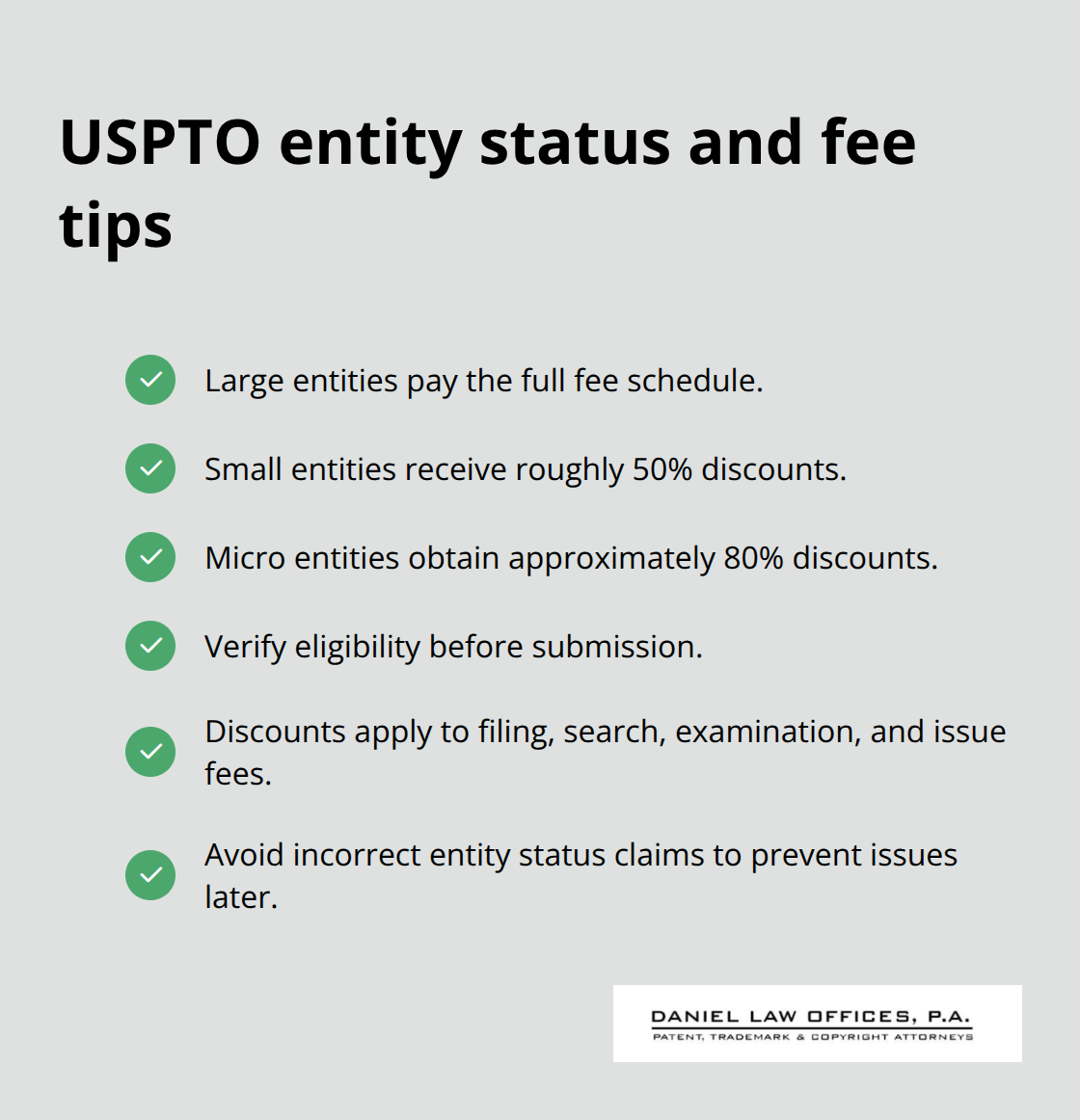
Verify your eligibility before submission-the USPTO defines small entities as businesses with fewer than 500 employees and micro entities as individuals or small businesses meeting specific income thresholds. Incorrect entity status claims can result in fee adjustments or application issues later. Calculate your total costs upfront, including excess claims fees if your application exceeds the standard claim count, and budget accordingly.
Responding to Pre-Prosecution Formalities and Office Actions
After submission, the USPTO will issue pre-prosecution formality notices if essential parts are missing; you must respond within the stated deadline or your application will be abandoned. Expect your examination to start roughly 18 months after filing, though the complete process from filing to final decision often extends to 24 months or longer depending on complexity. During examination, you will receive Office Actions outlining objections or rejections; respond within three to six months with amendments or arguments addressing every issue. If prosecution becomes difficult, you can file a continuation application to pursue related subject matter while maintaining copendency with your original filing. Each response you submit must address every objection raised by the examiner and present clear arguments for why your invention meets all legal requirements.
Managing Your Application Timeline and Next Steps
Track your application status and pendency using Patent Center, which provides real-time updates on your filing’s progress. The USPTO offers expedited examination options if timely protection is critical, including Track One prioritized examination and Accelerated Examination programs. These programs compress your timeline significantly but involve additional fees and stricter response requirements. Plan your strategy based on your business needs-if speed matters more than cost, expedited options may justify the investment. If you need guidance navigating filing decisions and submission requirements, a registered patent attorney can help you choose the right patent type and understand the technical standards that determine approval odds.
Final Thoughts
Filing a patent application demands attention to detail at every stage, from your initial search through final submission and beyond. The process requires you to document your invention thoroughly, create drawings that meet strict standards, and draft claims with precision. A well-written specification increases success by roughly 30%, while quality drawings correlate with 20% higher approval rates without additional office actions.
Once you file, the examination process unfolds over 18 to 24 months or longer, depending on your invention’s complexity. The USPTO will issue Office Actions outlining objections or rejections, and you must respond within three to six months with amendments or arguments addressing every concern. This back-and-forth continues until the examiner either allows your application or issues a final rejection, so understanding this timeline helps you plan your business strategy and budget accordingly.
The complexity of filing a patent application makes professional guidance invaluable. At Daniel Law Offices, P.A., we assist individual inventors and businesses in securing and protecting their valuable ideas through comprehensive patent searches, application drafting, and guidance throughout the entire patent prosecution process. A registered patent attorney helps you navigate USPTO requirements, interpret Office Actions correctly, and develop prosecution strategies tailored to your invention and business goals-whether you are filing your first application or managing multiple filings, working with a patent attorney in Orlando, Florida ensures you avoid costly mistakes and maximize your protection. Contact Daniel Law Offices, P.A. to discuss your invention and learn how we can guide you through the patent filing process.