




How Long Does the Patent Process Take?
Getting a patent approved takes time, and most applicants underestimate how long the patent process timeline actually is. The path from filing to approval typically spans several years, with multiple stages of review and communication with the USPTO.
At Daniel Law Offices, P.A., we help clients navigate this timeline so they understand what to expect. This guide breaks down each phase and shows you what factors speed up or slow down your application.
Patent Application Filing and Initial Review
Getting Your Application to the USPTO
Filing a patent application requires precision from day one. Most applicants rush through this stage, then spend months correcting incomplete submissions. The USPTO requires specific documentation: a detailed specification describing your invention, claims that define what you’re protecting, drawings or diagrams, and a signed oath or declaration from the inventor. Filing in DOCX format through Patent Center speeds processing significantly, while non-DOCX filings trigger a surcharge and slower handling. Submit a complete application the first time rather than filing hastily and fixing errors later. A thorough patent search before filing takes one to two weeks but prevents you from pursuing protection for something already patented or obvious. This upfront work saves months of wasted prosecution.
What Happens After You File
Once the USPTO receives your application, it enters an examination queue based on the technology field. The average time from filing to your first Office Action is approximately 22 months, according to the USPTO Patent Dashboard updated March 12, 2026. However, this varies dramatically by field. Software and business method patents often exceed 24 months before examination begins, while mechanical inventions may see action within 18 months.
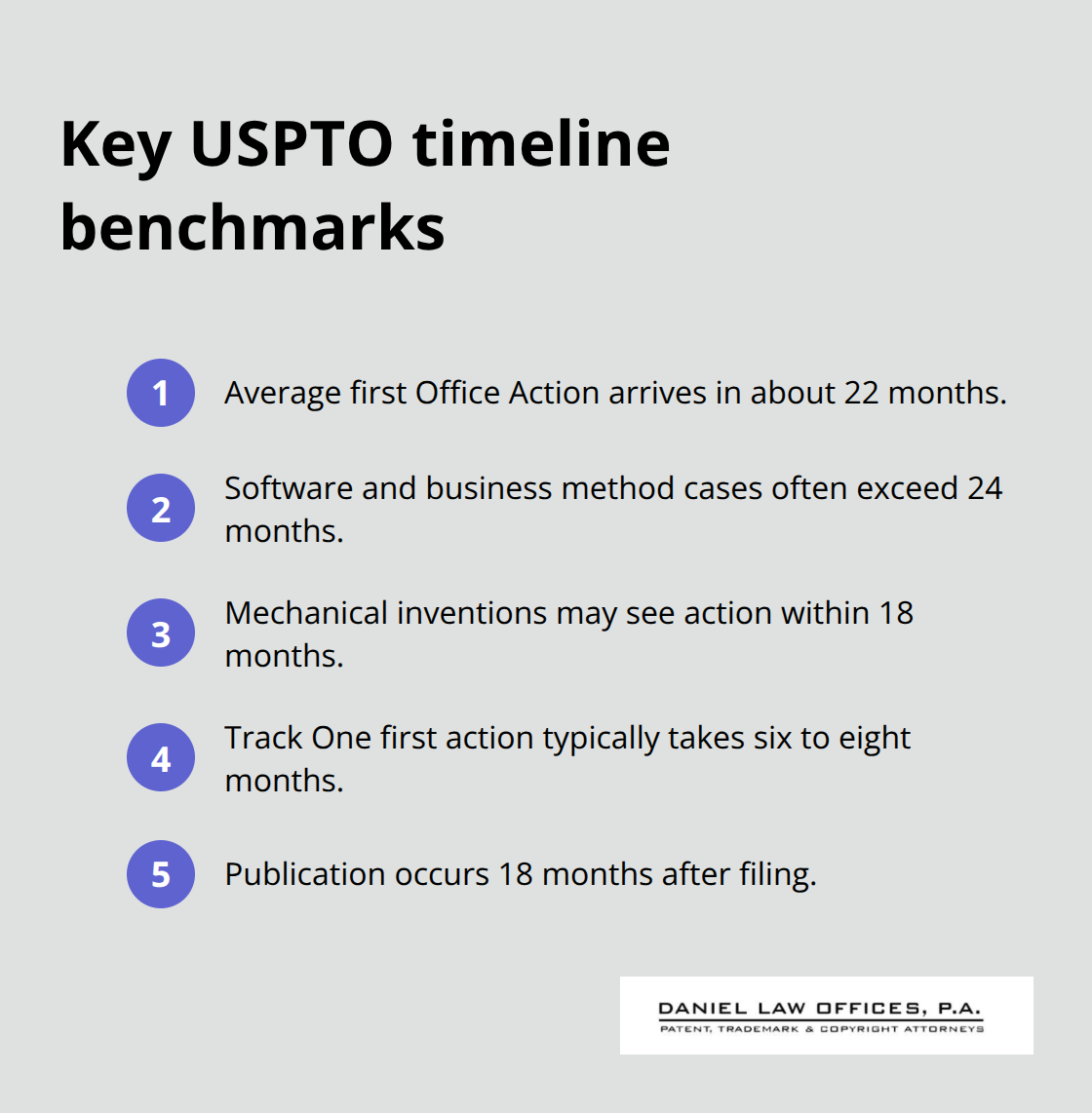
Track One Prioritized Examination compresses this to roughly six to eight months for the first action, though it requires additional fees around $4,200 for large entities and strict claim limits (four independent claims and 30 total claims maximum). The Publication Patent Initiative makes your application public 18 months after filing, which establishes it as prior art against competitors but also signals your filing to the market.
Responding to Your First Rejection
Expect rejection. The USPTO reports that 80 to 90 percent of initial patent applications face rejection on the first Office Action. This is normal and not a death sentence. You typically have three to six months to respond, though responding within one month accelerates the overall timeline. Your response can include arguments explaining why the examiner’s objections are flawed, amendments narrowing your claims to overcome prior art, or new evidence supporting patentability. Dragging out responses extends total prosecution time significantly. Treat the first Office Action as a negotiation opening, not a final verdict. Most applicants who respond strategically and promptly move toward allowance rather than abandonment. The decisions you make at this stage determine whether your patent prosecution continues smoothly or encounters additional complications down the road.
How Long Does Patent Prosecution Actually Take in Orlando, Florida?
The Real Timeline Behind Patent Examination
After your first Office Action arrives, most applicants face a grueling back-and-forth cycle with the USPTO that stretches the timeline far beyond initial expectations. The average time from filing to final disposal of a patent application, according to the USPTO Patent Dashboard updated March 12, 2026, is approximately 22 to 32 months for nonprovisional applications. However, this number masks the reality of prosecution: if you file an RCE (Request for Continued Examination) after a final rejection, you add another 6 to 12 months to the clock. The pendency from RCE filing to the next Office Action averages around 4 to 6 months, meaning applicants who struggle with rejections can easily stretch their timeline to three or four years.
Speed depends entirely on how you respond to each Office Action. Responding within one month accelerates the process noticeably compared to waiting the full three to six months allowed. The examiner treats prompt, focused responses as a signal that you’re serious about prosecution, and examiners often move faster through cases where applicants demonstrate engagement. Conversely, applicants who delay responses, submit weak arguments, or require multiple clarifications from the examiner create bottlenecks that compound delays throughout the entire prosecution cycle.
How Examiners Move Your Application Forward
The examination process unfolds in predictable stages if you understand what examiners actually need. After your first Office Action rejection, your response must address each rejection point individually with either claim amendments, arguments, or new evidence. A second Office Action frequently arrives four to eight weeks after you submit your response, depending on examiner workload and the complexity of your invention.
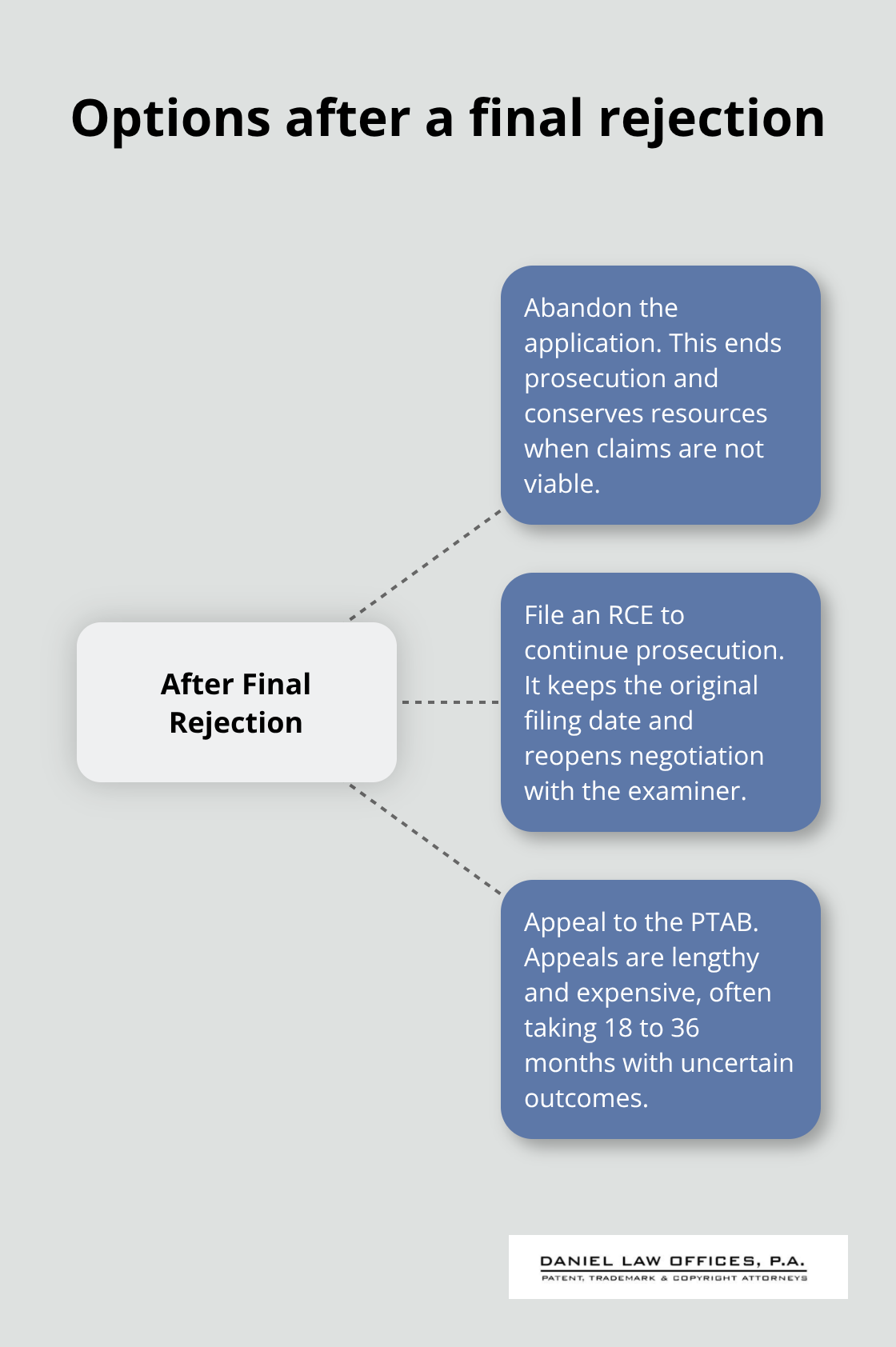
If the examiner issues a final rejection at this stage, you face three choices: accept the rejection and abandon the application, file an RCE to continue prosecution, or appeal to the Patent Trial and Appeal Board. Most applicants choose the RCE path because appeals are lengthy and expensive, typically consuming 18 to 36 months with no guarantee of success. The RCE restarts prosecution with your original filing date intact, allowing continued negotiation with the examiner.
Making the RCE Decision
The RCE decision should depend on whether the examiner’s objections stem from legitimate prior art or from unclear claim drafting on your end. If your claims are poorly written, an RCE often wastes money because the examiner will reject them again on similar grounds. If the examiner misunderstood your invention, an RCE with better explanations and narrower claims frequently leads to allowance within 6 to 12 months.
Track One’s Compressed Timeline
Track One applicants face a compressed timeline because response periods cannot be extended and examiners must issue two examining actions within 12 months. This acceleration works only if your claims are tight and defensible from the start; overly broad claims still get rejected repeatedly under Track One, negating any speed advantage.
The critical insight is that prosecution timelines are not fixed-they depend almost entirely on the quality of your initial application, the clarity of your responses, and your willingness to narrow claims strategically rather than fight for maximum scope. These decisions made during prosecution directly influence whether your patent reaches allowance quickly or encounters extended delays that consume years and resources. The next section examines the specific factors that determine whether your application moves through the system rapidly or encounters extended delays.
What Slows Down Your Patent Application
Claim Drafting Mistakes That Extend Timelines
Broad claims destroy timelines faster than anything else. When you file claims that attempt to protect every possible variation of your invention, examiners reject them immediately as overly broad or lacking adequate written support. The USPTO Patent Dashboard data from March 12, 2026 shows that applications with tightly drafted claims receive first Office Actions roughly four to six months faster than those with sweeping claim language. Applicants who insist on maximum claim scope during prosecution guarantee multiple rejection cycles because examiners will force narrowing anyway-you simply waste time and money fighting the inevitable.
The practical move is accepting narrower claims from the start that actually survive examination rather than gambling on broad claims that trigger endless back-and-forth. Claim complexity matters too. If your invention involves multiple dependent claims or intricate technical terminology, examiners spend longer understanding what you’re actually protecting, which delays their initial action. Software and business method patents suffer most from this problem because their abstract nature makes claim clarity extraordinarily difficult.
How Examiner Workload Affects Your Timeline
Patent Office workload directly impacts when examiners reach your application, though most applicants ignore this factor entirely. The USPTO examiner queue varies dramatically by technology art unit. Mechanical patents might face 18-month waits for first examination while computer software applications wait 24 to 28 months according to current USPTO data. Your application sits in that queue regardless of how perfect your filing is-there’s no way around it except Track One.
The quality of your initial application determines how quickly examiners move through your case once they finally reach it. Incomplete specifications, poorly drawn diagrams, or vague descriptions force examiners to issue Notices to File Missing Parts, which adds another 30 to 60 days of delay before examination even begins. Filing on your own or using general legal services can result in errors that slow down or even derail your application. Applicants lose months at this stage when they submit drawings without proper labels or specifications that don’t clearly explain how their invention functions.
Documentation Quality That Prevents Delays
Including every required element prevents examiners from requesting clarifications that extend your timeline. Detailed drawings with numbered components, comprehensive written descriptions covering multiple embodiments, and clear claim language mean examiners can evaluate patentability immediately rather than requesting additional information. This single factor separates applicants who reach allowance in 24 months from those taking 36 months or longer.
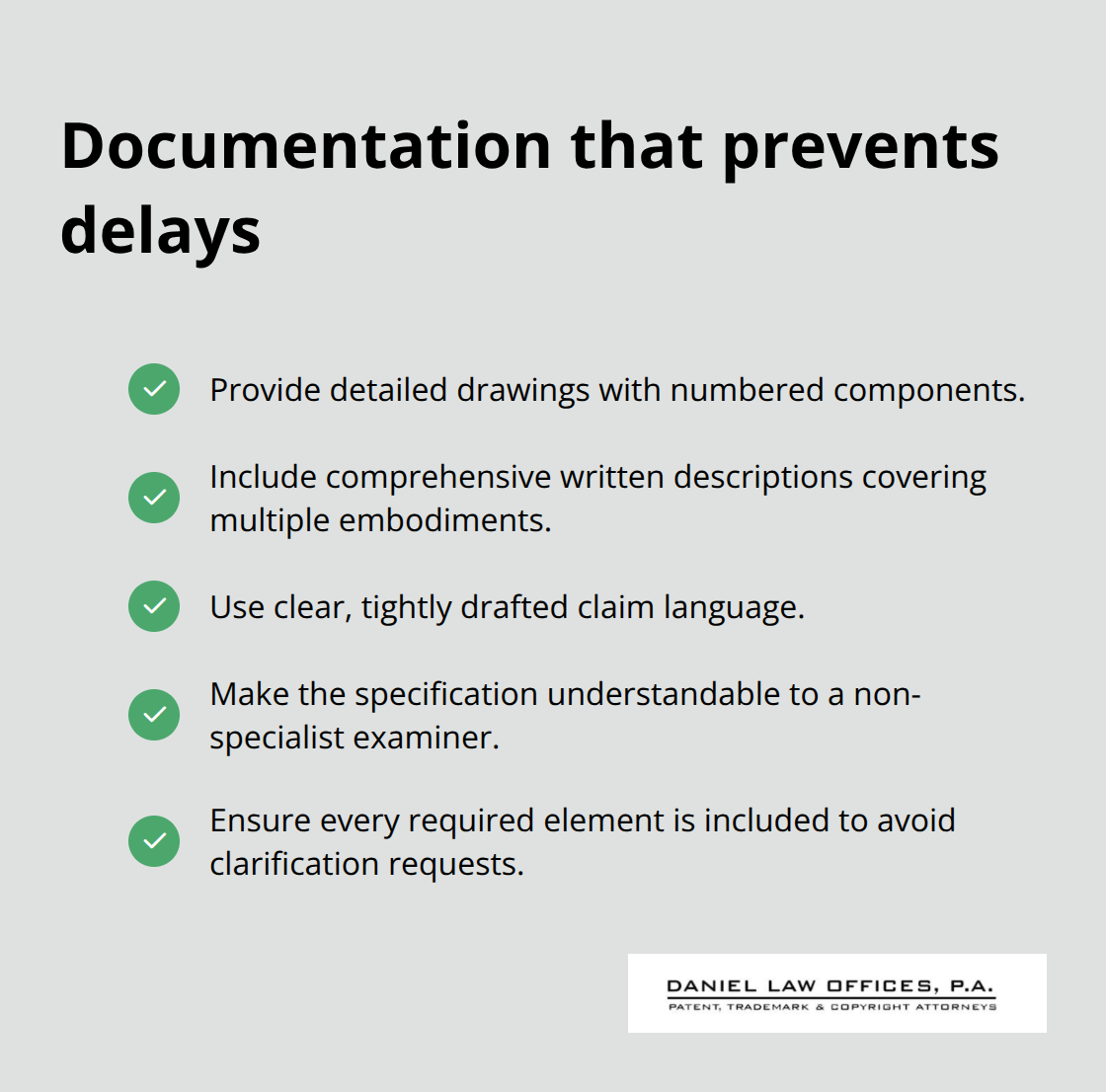
Filing clean, straightforward claims that a non-specialist examiner can grasp immediately accelerates your entire prosecution timeline by months.
Final Thoughts
The patent process timeline stretches far longer than most inventors anticipate, but understanding each stage removes the uncertainty. Submit a complete, well-documented application with clear drawings, comprehensive specifications, and tightly drafted claims, since incomplete filings trigger delays before examination even begins. Respond to Office Actions within one month rather than waiting the full three to six months allowed, because examiners move faster through cases where applicants demonstrate engagement and provide focused arguments.
Accept narrower claims strategically instead of fighting for maximum scope, as broad claims guarantee multiple rejection cycles that extend your timeline by months or years. The real variable in your patent process timeline is not the USPTO’s processing speed but your decisions during prosecution and the quality of your initial application. These three actions-submitting complete documentation, responding promptly, and narrowing claims strategically-separate applicants who reach allowance in 22 to 32 months from those taking three or four years.
At Daniel Law Offices, P.A., we guide clients through each decision point to keep their applications moving forward efficiently. Our team handles comprehensive patent searches before filing, drafts applications that survive initial examination, and manages the back-and-forth with the USPTO to reach allowance faster. Contact Daniel Law Offices, P.A. to discuss your patent strategy and get a realistic timeline for your specific invention.