




How to Conduct a Patent Search
Filing a patent application without first searching existing patents is like walking into a minefield blindfolded. Most inventors skip this step and face rejection letters months later, wasting thousands in application fees.
At Daniel Law Offices, P.A., we’ve seen how a thorough patent search saves time and money upfront. This guide walks you through the process so you understand what’s already out there before you invest in protection.
Why Patent Searches Matter Before Filing
The Cost of Skipping This Step
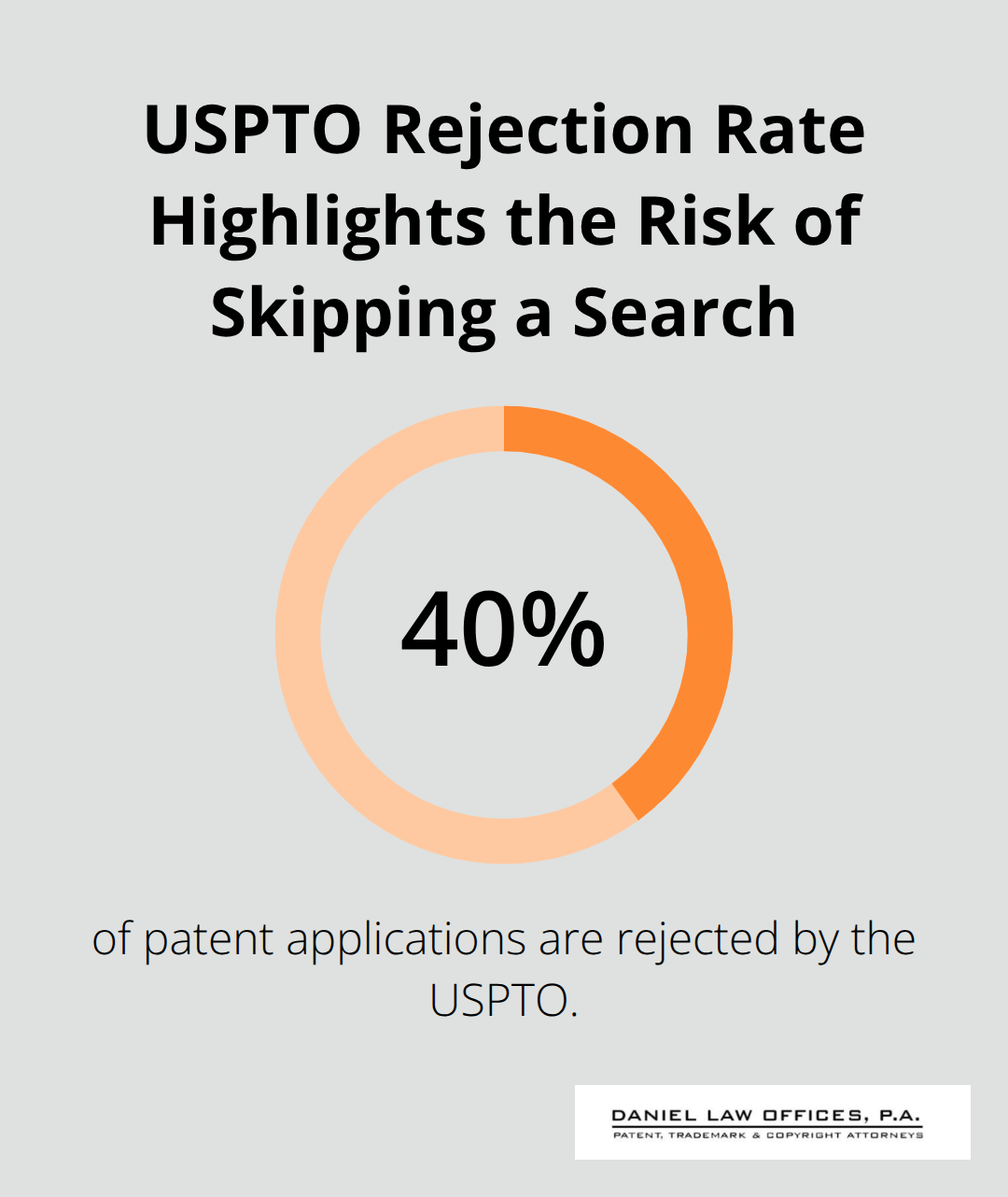
Skipping a patent search before filing costs you money and time. The USPTO rejects approximately 40% of patent applications, and many rejections stem from prior art that a simple search would have revealed. When an examiner finds existing patents that cover your invention, you face two options: narrow your claims so drastically that protection becomes worthless, or abandon the application and lose your filing fees. Neither outcome is acceptable.
What a Thorough Search Reveals
A thorough search accomplishes three concrete goals. First, it reveals whether your invention already exists in the patent system, saving you thousands in application and attorney fees before you commit further. Second, it identifies the actual landscape of similar patents so you understand what competitors already control and what gaps remain for protection. Third, it gives you defensible ground to stand on when your patent examiner reviews your application, because you can cite the search and show why your invention differs from what came before.
Building Credibility with Patent Examiners
The USPTO expects applicants to disclose prior art they find, and doing so builds credibility with examiners rather than weakening your case. Patents issued through this transparent process hold up better in court if someone challenges them later. A documented search demonstrates that you conducted due diligence before filing, which strengthens your position throughout the examination process.
Moving Forward with Confidence
Now that you understand why a patent search matters, the next step involves learning how to search the USPTO database effectively. The tools and techniques available to you make this process straightforward, and mastering them puts you in control of your patent strategy from day one.
How to Search the USPTO Database Effectively
Start with Patent Public Search
Patent Public Search serves as the USPTO’s modern web-based tool that replaced older systems like PatFT and AppFT. This platform offers two interfaces: Basic search for straightforward keyword queries and Advanced search for refined filtering and document organization. Most inventors should begin with Basic search, entering terms that describe your invention’s core function or components. If you’re patenting a new type of fastener, search terms like fastener, clip, and latch will pull relevant results. The system automatically flags overly complex queries and suggests improvements, which saves time compared to struggling with outdated search syntax.
Screen Results and Narrow Your Focus
Once you have initial results, screen the front pages of patents to quickly eliminate irrelevant documents. This step typically cuts your review workload in half because most results will clearly miss your invention’s specific features or application. Narrow your results using Boolean operators and patent classifications to target only the closest prior art. The Advanced search interface lets you combine keywords with AND, OR, and NOT operators to build precise queries. Searching for fastener AND automotive AND magnetic will eliminate results about general fasteners or non-automotive applications.
Use Patent Classifications to Pinpoint Technology Areas
After refining keywords, examine the Cooperative Patent Classification system to find patents in your exact technology area. The USPTO’s CPC Classification Resources page helps you identify relevant codes before searching. This classification approach reveals patents that keyword searches might miss, giving you a more complete picture of what already exists in your field. Patent examiners use these same classifications, so understanding them puts you ahead in the examination process.
Map Citations to Understand the Patent Landscape
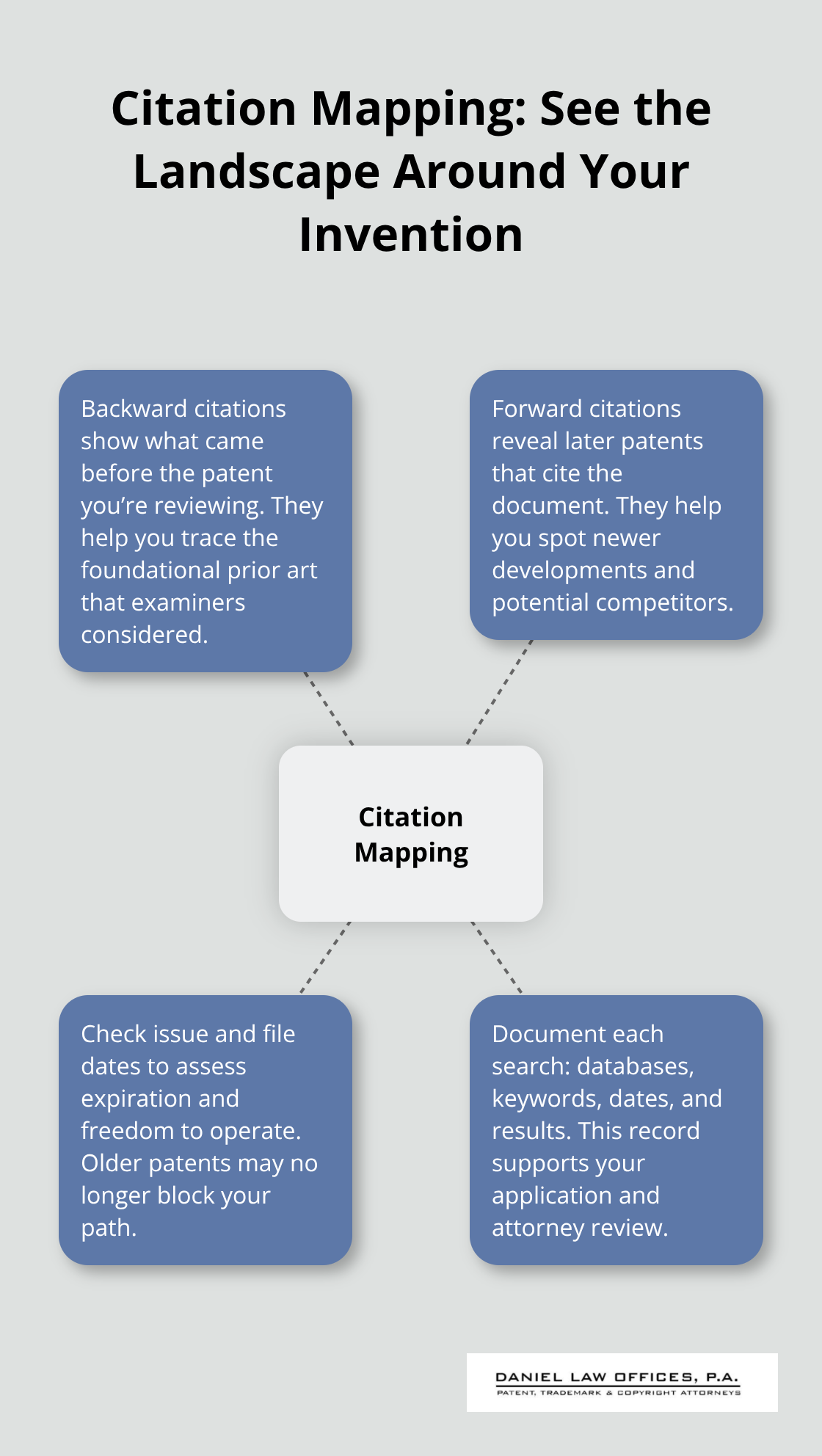
Once you’ve located the most relevant patents, examine their backward citations-the references listed on the front page that show what came before-and forward citations, which reveal patents that cite the document you’re reviewing. This citation mapping reveals the actual landscape around your invention far better than keyword searching alone. Pay close attention to issue dates and file dates because older patents may have expired or be close to expiration, which affects your freedom to operate. Document every search you conduct, including databases used, keywords tried, dates, and results, because you’ll need this record if you file an application or consult with a patent attorney to review your findings and strategy.
Understanding your search results is the next critical step. The patents you’ve identified now require careful analysis to determine which ones truly threaten your invention and which ones actually support your patentability case.
Understanding Patent Search Results in Orlando, Florida
Read the Claims, Not Just the Abstract
The patents you’ve identified through your search now demand careful analysis, and most inventors make critical mistakes at this stage by either overestimating or underestimating what they’ve found. Screening the front page of a patent takes seconds, but analyzing whether it truly blocks your invention requires examining the specific claims the patent actually protects. Patent claims define the legal boundaries of what the inventor controls, and a patent with broad language in the abstract might have narrow claims that don’t cover your invention at all.
Open each relevant patent and read the numbered claims at the end of the document, not just the summary. Claims often contain specific limitations like materials, dimensions, or process steps that your invention might avoid entirely. If your search revealed a patent for a magnetic fastener but your invention uses a polymer-based system instead, that prior art patent may not pose a real threat despite surface-level similarities. Document exactly which claims concern you and why, because this specificity matters if you later discuss your findings with a patent attorney or file your own application.
Map Your Invention Against Prior Art
The strength of your patent position depends on how much daylight exists between your invention and the closest prior art you’ve found. If multiple patents cover different aspects of your invention, your freedom to operate shrinks dramatically, and combining those patents together might block your ability to commercialize. Conversely, if the closest prior art is an expired patent or one filed in a narrow field you’re not entering, your position strengthens considerably.
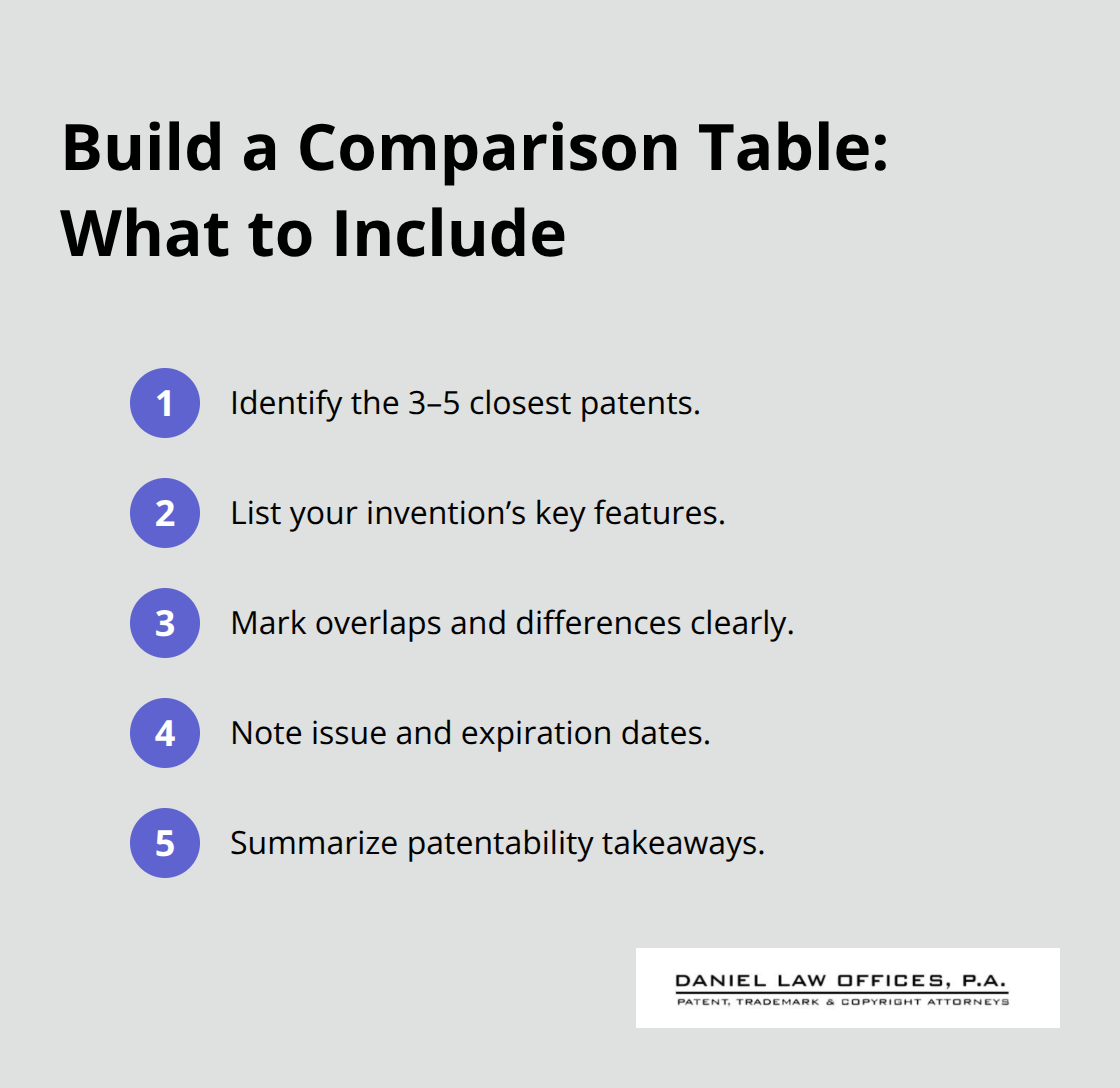
Examine the issue dates and expiration timelines for the most relevant patents because patents issued before 1996 may have already expired, removing them as obstacles. Create a simple comparison table listing the top three to five closest patents alongside your invention’s key features, marking where they overlap and where your invention differs. This tangible document serves two purposes: it clarifies your own thinking about patentability, and it provides evidence of your diligence if you later file an application.
Build Credibility Through Documented Analysis
The USPTO expects applicants to conduct thorough searches and disclose relevant prior art they find, so your documented analysis strengthens your credibility throughout the examination process rather than weakening it. Patent attorneys review these documented searches to advise clients on patentability and strategy. Your comparison table and claim-by-claim analysis demonstrate that you conducted due diligence before filing, which positions you favorably when examiners review your application.
Final Thoughts
A thorough patent search reveals the actual landscape of existing patents before you invest thousands in filing. The process you’ve learned-from Patent Public Search through citation mapping to detailed claims analysis-gives you the information needed to make sound decisions about your invention’s future. Most inventors who skip this step face rejection letters and wasted fees, while those who conduct a proper search move forward with confidence.
After you complete your search, document everything you’ve found. Your comparison table, claim-by-claim analysis, and search methodology become invaluable if you decide to file an application or need to explain your patentability position to investors or business partners (the USPTO values applicants who disclose the prior art they’ve discovered, so your documented search strengthens your credibility throughout the examination process). The decision to file a patent application should rest on solid ground, not hope.
At Daniel Law Offices, P.A., we help inventors and businesses secure protection for their valuable ideas through comprehensive patent searches and strategic filing. Whether you want to review your search findings with a registered patent attorney or need guidance on how to conduct a patent search tailored to your invention, contact us to discuss your patent strategy.