



How to Patent an Invention: Essential Steps to Follow
Getting a patent protects your invention from being copied or sold by competitors. The steps to patent an invention involve several stages, from checking if your idea qualifies to filing with the USPTO.
At Daniel Law Offices, P.A., we guide inventors through this process so you understand what happens at each phase. This guide walks you through the requirements, searches, and paperwork needed to secure your intellectual property rights.
How to Patent an Invention in Orlando, Florida: Is Your Invention Actually Patentable?
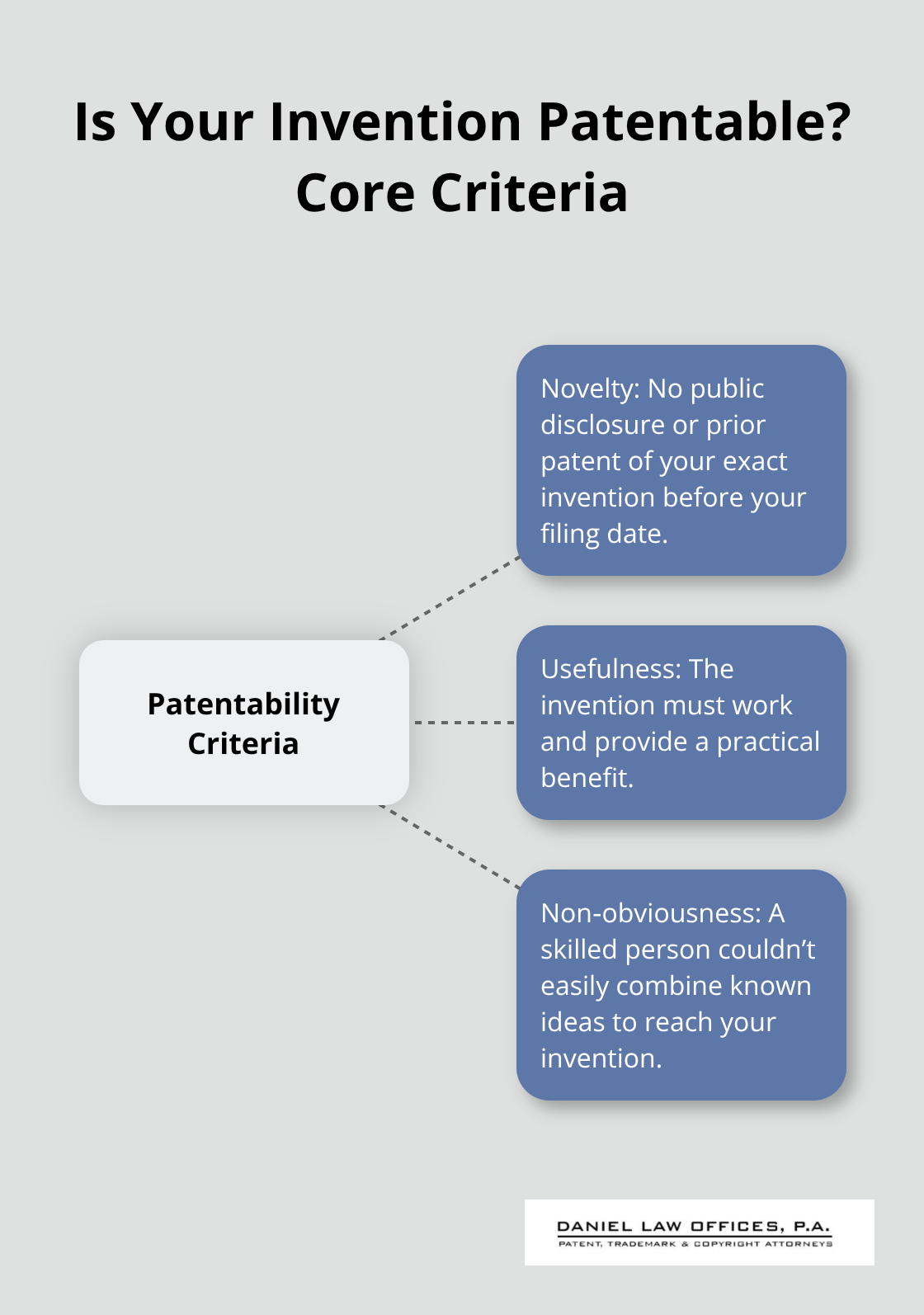
Not every invention qualifies for patent protection, and filing for something that doesn’t meet USPTO requirements wastes time and money. To patent an invention, it must be novel, useful, and non-obvious. Novelty means no one has publicly disclosed or patented your exact invention before your filing date. Usefulness requires that your invention actually works and provides a practical benefit. Non-obviousness is the toughest standard to meet-it means someone skilled in your field couldn’t easily combine existing knowledge to arrive at your invention. The USPTO data shows about 8% of patent applications are rejected for lack of novelty alone, so understanding these requirements upfront saves resources.
Know Which Patent Type Fits Your Innovation
You need to identify which patent type fits your innovation. Utility patents protect how something works or what it does and last roughly 20 years from your filing date. Design patents protect the ornamental appearance of an object and last about 15 years from grant date. Plant patents, which are rare, protect new plant varieties. Most inventors pursue utility patents because they offer the broadest protection for functional innovations.
Conduct a Thorough Prior Art Search
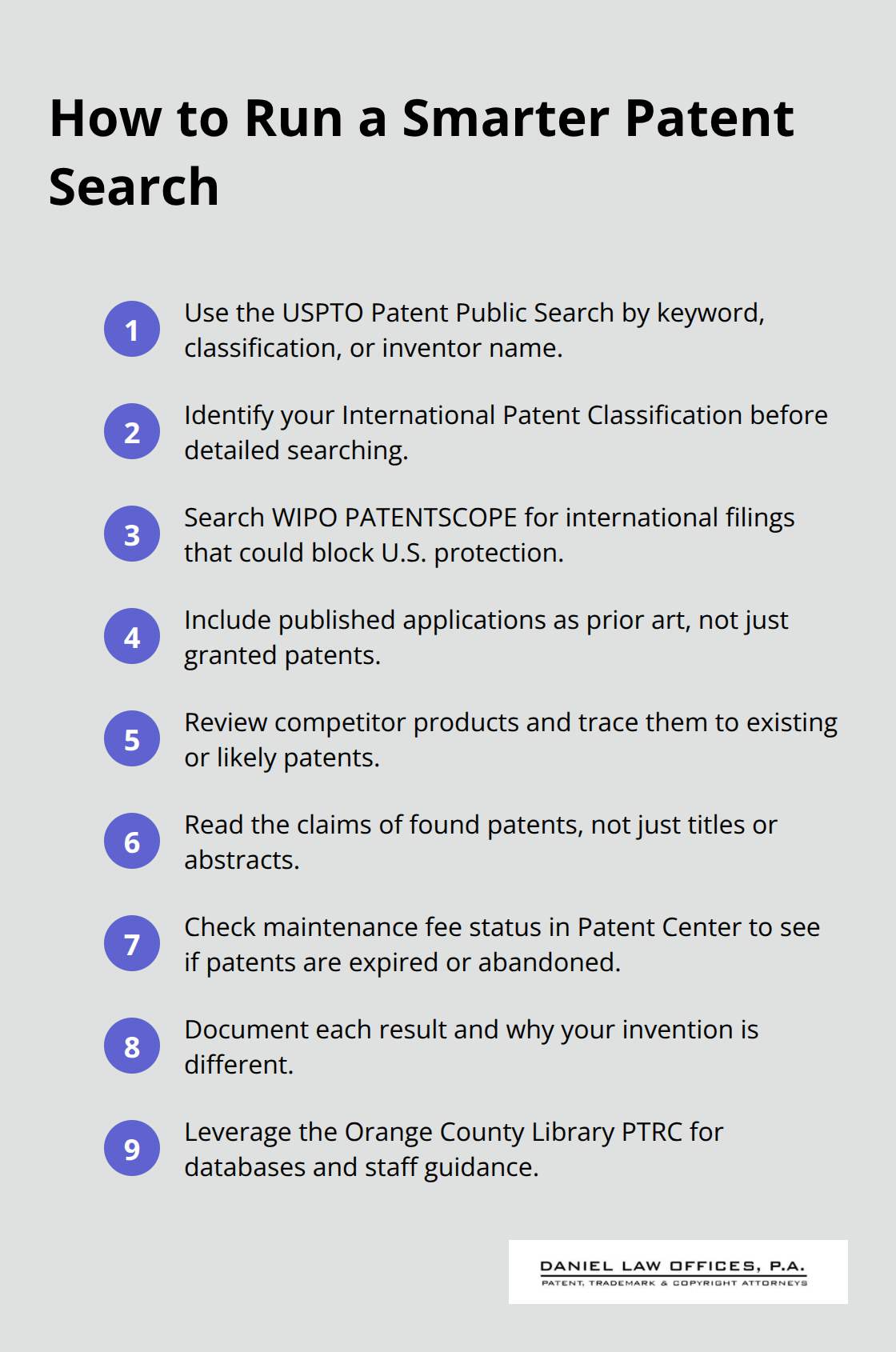
Before you file anything, conduct a thorough prior art search using the USPTO Patent Public Search or WIPO PATENTSCOPE to check whether similar inventions already exist. This search is non-negotiable-roughly 60% of applications receive at least one rejection, and many stem from inadequate upfront searches that miss existing patents. Look beyond just patents; check published applications, competitor products, and academic literature because public disclosures can destroy patentability in many jurisdictions.
Understand Disclosure Rules and Grace Periods
The US offers a one-year grace period for your own disclosures, but most countries require absolute novelty, so any public discussion of your invention before filing can bar protection internationally. Software and business method inventions face additional eligibility challenges under current USPTO guidelines, so if your invention falls into these categories, structure your claims around hardware implementations to strengthen patentability.
Get Professional Help Before Moving Forward
Conducting a prior art search before investing heavily in development or marketing clarifies whether protection is realistic and helps you identify features that differentiate your invention from existing solutions. Patent law attorneys in Orlando, Florida can assist individual inventors in conducting comprehensive patent searches to ensure novelty and can guide you through evaluating your invention’s patentability. Once you confirm your invention meets patentability standards, the next step involves preparing detailed documentation and drawings that will form the foundation of your patent application.
Conduct a Comprehensive Patent Search in Orlando, Florida
A patent search is not optional-it forms the foundation of a smart filing strategy. Too many inventors skip this step and later find that their invention already exists in some form, wasting thousands on application fees and prosecution costs. The USPTO Patent Public Search tool is free and searchable by keyword, classification, or inventor name, making it the logical starting point for any inventor.
Start with the Right Search Tools
You should search not just for exact matches but for patents that solve similar problems using comparable methods, because the examiner will find these during prosecution whether you do or not. According to USPTO data, about 8% of rejections stem from lack of novelty, but that number climbs when applicants haven’t conducted thorough upfront searches. Start with broad searches using your invention’s core function, then narrow down by industry classification. The International Patent Classification system organizes patents into specific technology areas, so identifying your invention’s classification before searching saves hours. WIPO PATENTSCOPE complements USPTO searches by covering international filings, which matters because a patent granted in Germany or Japan can still block your US application if it predates your filing.
Understand What Counts as Prior Art
Published applications matter as much as granted patents because they become prior art the moment they publish, typically 18 months after filing. Competitor products deserve scrutiny too-if a competitor is selling something similar, trace it back to its patent or search for the patent they might hold. This detective work reveals not just whether your invention is novel but also which features competitors have already claimed, helping you identify white space where your claims can be stronger.
Go Beyond Surface-Level Searching
Most inventors underestimate how thorough a search needs to be, treating it as a checkbox rather than a strategic investigation. You must review the patents you find, not just scan titles. Read the claims section because that’s what legally matters-the claims define what the patent actually protects, and you need to understand how your invention differs from what’s already claimed. If you find a patent that looks problematic, check its maintenance fee status through Patent Center; if fees weren’t paid, that patent may be expired or abandoned, reducing the threat to your application.
Take notes on every search result and create a simple document showing what you found and why your invention is different. This document becomes invaluable during prosecution if an examiner cites prior art against you-you’ll already have analyzed it and prepared arguments. The Orange County Library System serves as a designated Patent and Trademark Resource Center and assisted over 500 inventors in 2022, offering free access to professional search databases and staff guidance if you’re in the area.
Interpret Your Search Results Strategically
If your search reveals nothing similar, document that finding carefully because it strengthens your novelty argument. If you find related patents, don’t panic-most inventions build on existing ideas; what matters is whether your specific combination or improvement is non-obvious. This is where many inventors benefit from professional guidance; a thorough prior art analysis by someone trained in patent law prevents costly missteps later in the process. Once you’ve completed your search and confirmed your invention stands apart from existing solutions, you’re ready to move into the documentation phase-preparing the detailed drawings and descriptions that will form the backbone of your patent application.
Building Your Patent Application in Orlando, Florida
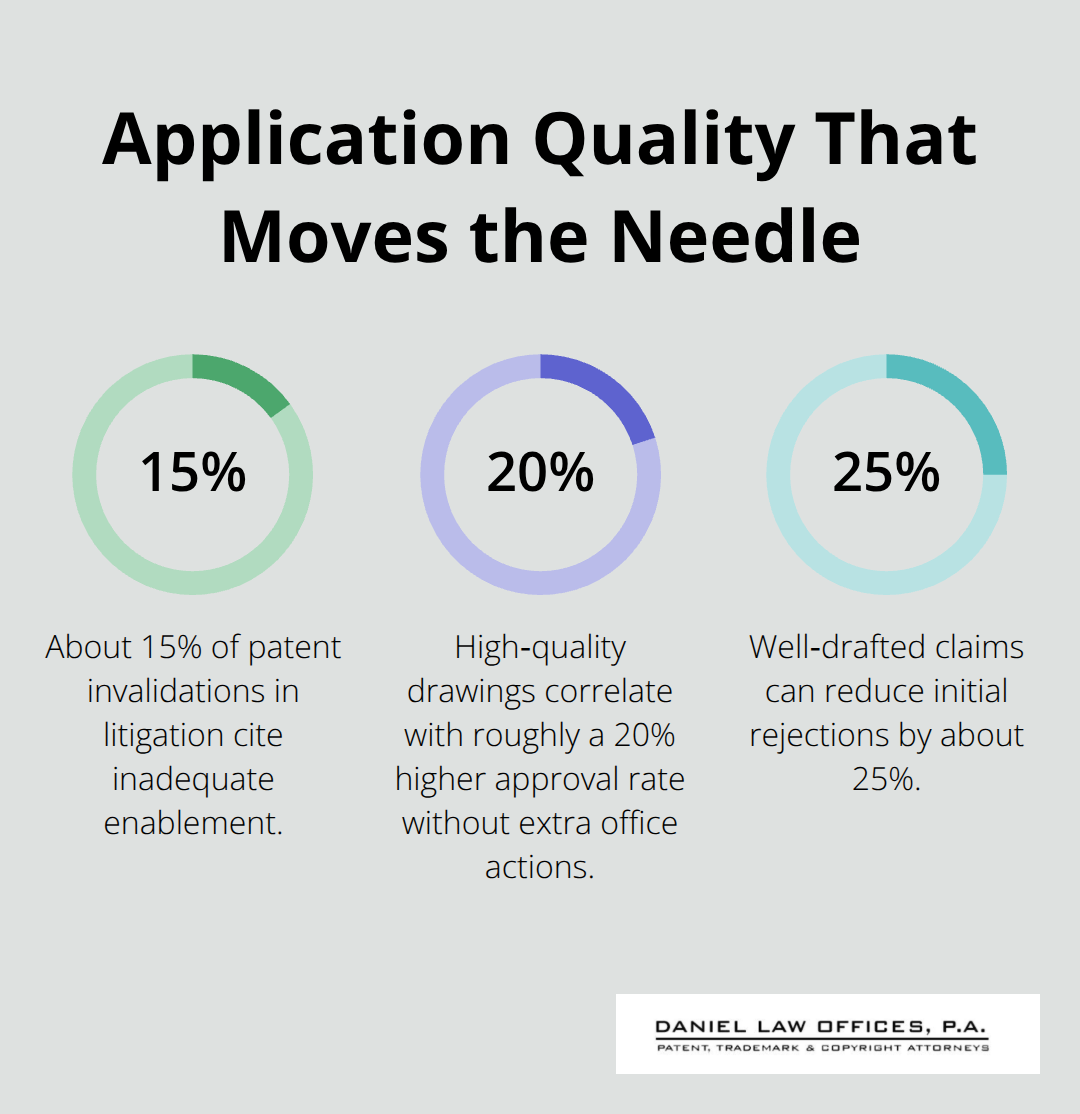
Your patent specification is the legal foundation of everything that follows, and it cannot be weak. The USPTO requires a complete specification that allows someone skilled in your field to understand and replicate your invention without undue experimentation. This means your written description must cover the background of your invention, the field it operates in, a summary of what makes it different, and a detailed explanation of how it works. Vague or incomplete specifications face rejection regularly, and inadequate enablement contributes to about 15% of patent invalidations in litigation according to USPTO data.
Write a Complete and Clear Specification
Start by documenting every aspect of your invention in plain language before you draft the formal specification. Include how it functions, what problems it solves, and what makes your approach better than existing solutions. Your drawings matter enormously here-high-quality drawings correlate with roughly a 20% higher approval rate without additional office actions. Do not submit rough sketches; invest in professional drawings that clearly show each component, how parts connect, and the relationships between elements. The drawings must match your written description exactly; discrepancies between text and drawings create examination problems that cost time and money to resolve.
Draft Claims That Protect Your Innovation
Your claims define what the patent actually protects, and weak claims mean weak protection. Draft independent claims broadly to capture your core innovation, then add dependent claims that narrow the scope to specific implementations or improvements. Well-drafted claims can reduce initial rejections by about 25% compared to poorly constructed ones. Start your independent claims with the broadest version of your invention that you can support with your specification, then progressively narrow it.
Each dependent claim should reference an earlier claim and add one or more limitations. The language must be precise-ambiguous terms lead to rejections and future enforcement problems.
File Your Application Electronically
File your application through the USPTO Patent Center rather than by mail; electronic filings process roughly 15% faster than paper submissions, and paper filings incur a non-electronic filing fee of 400 dollars. When you file, you will need an Application Data Sheet, your specification, claims, abstract, drawings, and an inventor oath or declaration. For non-provisional filings, basic filing fees start at 80 dollars for micro entities, 160 dollars for small entities, and 320 dollars for large entities as of 2023, though additional fees apply for extra claims beyond 20 and extra pages beyond 100.
Respond Promptly to USPTO Communications
Expect a formalities review after filing where the USPTO checks whether your application is complete; if documents are missing or incomplete, you will receive a notice with a deadline to correct the problem. Missing these deadlines results in abandonment, so respond promptly to any USPTO communications. A skilled patent law attorney can guide you through this filing process to avoid common pitfalls that lead to rejections or abandoned applications.
Final Thoughts
After you file your application, the USPTO will conduct a formalities review to verify completeness, and within months a patent examiner will assess your invention against existing patents and prior art. Roughly 60% of applications receive initial rejections, but most inventors overcome them through proper responses and claim adjustments. The examination process typically takes 18 to 36 months, though this varies by technology area and application complexity.
Once your application receives approval, you will pay the Notice of Allowance fee, and your patent will issue with a term of approximately 20 years from your earliest filing date. After grant, you must pay maintenance fees at 3.5, 7.5, and 11.5 years to keep your patent enforceable. These steps to patent an invention involve technical requirements, strategic decisions, and strict deadlines that are easy to mishandle without proper support.
Professional guidance makes a measurable difference-hiring a registered patent attorney increases approval odds without major revisions by roughly 10%, and well-written specifications raise approval chances by about 30%. We at Daniel Law Offices, P.A. guide inventors through patent searches, application drafting, and the entire prosecution process to protect your innovations. Contact us today to discuss your invention and learn how we can help you secure the patent protection your work deserves.