



How to Apply for a Patent: Essential Steps
Getting a patent approved requires following specific steps to apply for a patent correctly. Many inventors skip critical phases or miss filing deadlines, which costs them protection and money.
At Daniel Law Offices, P.A., we guide clients through each stage of the patent application process. This guide breaks down what you need to do from your initial search through final approval.
Search Strategy Before You File
Why Your Initial Search Matters
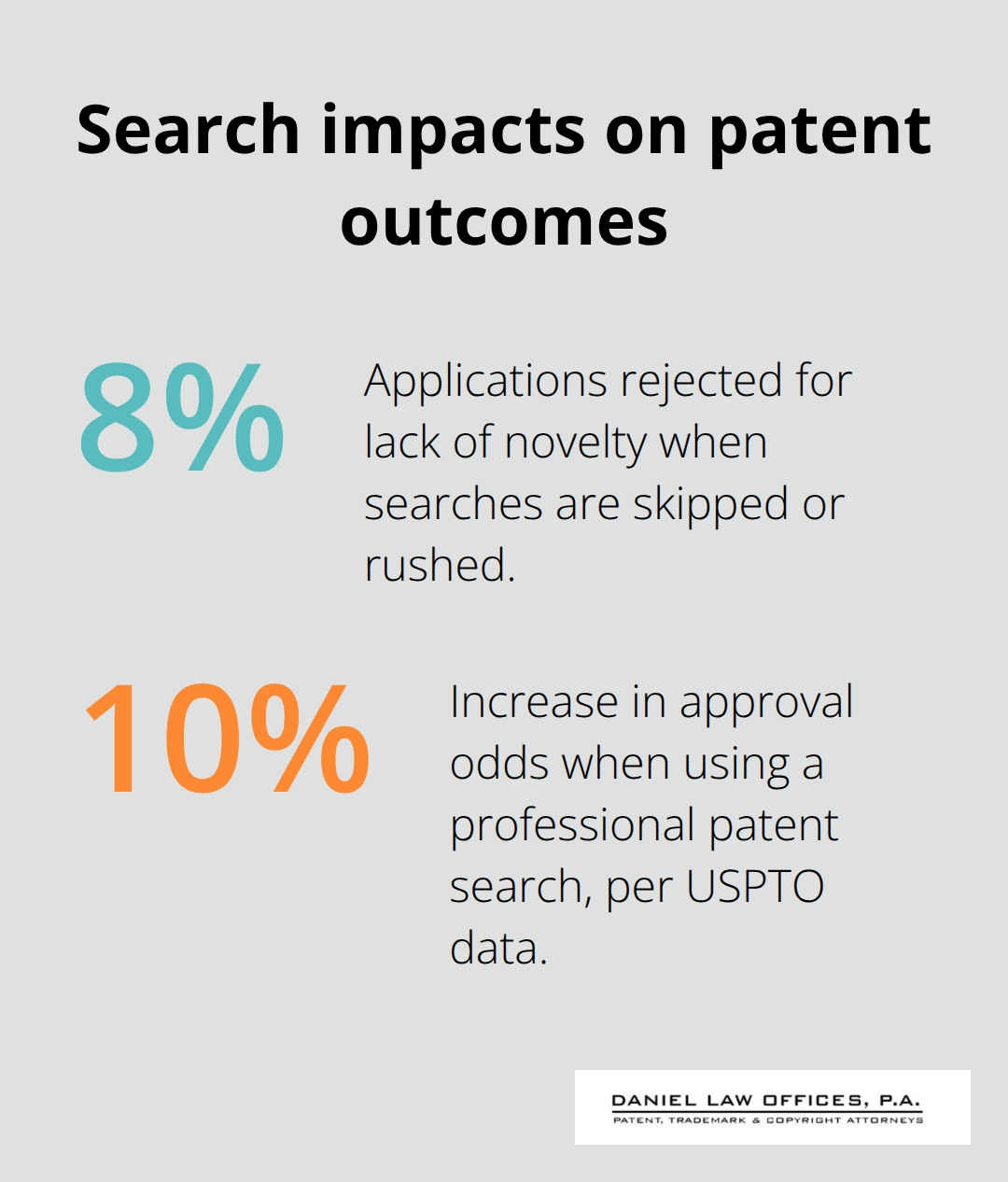
Starting your patent search the right way saves thousands in wasted filing fees and prevents you from pursuing protection for something that already exists. About 8% of patent applications face rejection due to lack of novelty according to the USPTO, and most of those rejections stem from inventors who skipped or rushed their search. The USPTO Patent Public Search tool is free and should be your first stop, but treating it as your only search is a mistake. You need to search multiple databases, review what competitors are doing, and honestly assess whether your invention truly stands apart. A thorough search takes time, but the alternative is filing an application for an invention that someone else already patented, which wastes your money and protects nothing.
Searching Multiple Patent Databases
Start with the USPTO Patent Public Search, where you can filter by classification codes related to your invention. Spend time learning the classification system because examiners will use these same codes to find prior art against your application. After the USPTO database, search the scientific and technical literature in your field because published research often describes innovations before patents are filed. Google Patents and the WIPO PatentScope database give you access to international filings, which matters because someone may have patented your idea in another country. If your invention touches on chemistry, biology, or medical devices, search PubMed and scientific journals where researchers publish findings years before any patent application. Industry publications and trade magazines also reveal what companies are developing.
When to Hire a Professional Search
This multi-source approach takes longer than a quick USPTO search, but the Orange County Library System Patent and Trademark Resource Center reported assisting over 500 inventors in 2022, and the most successful ones conducted searches across multiple sources before filing. Hiring a patent search professional increases your approval odds by around 10% according to USPTO data because professionals know where to look and how to interpret what they find. We at Daniel Law Offices, P.A. recommend conducting your own initial search to understand the landscape, then having a professional conduct a comprehensive search before you commit to filing fees. Once you complete your search and confirm your invention’s novelty, you move forward to preparing the actual application materials that the USPTO requires.
What to Include When You File Your Patent Application
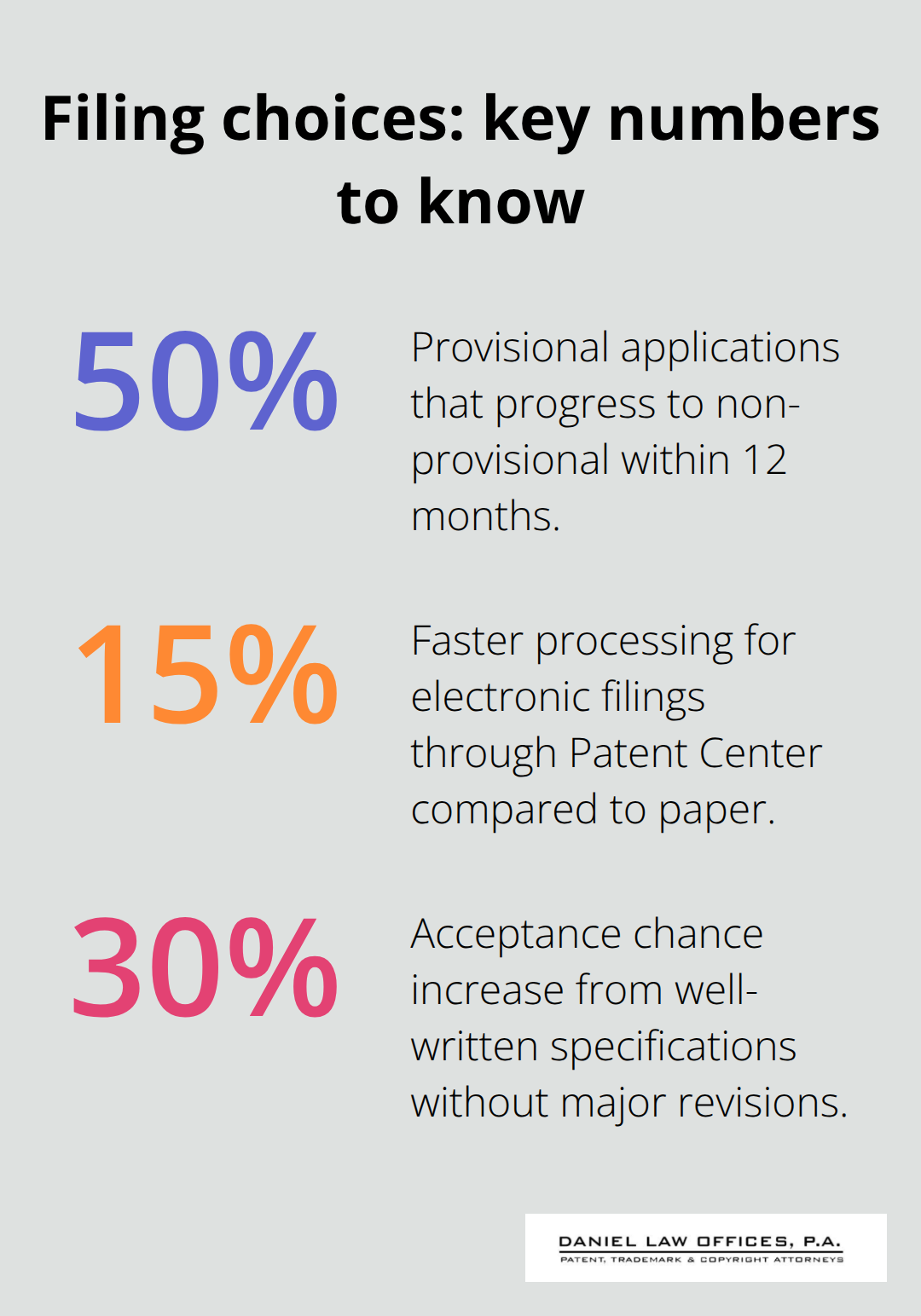
Your invention documentation determines whether examiners can understand what you created and why it matters. Write a detailed specification that explains your invention’s purpose, how it works, what problems it solves, and how someone skilled in your field could build it from your description. The USPTO requires this level of detail because vague descriptions lead to rejections or, worse, a patent that’s too narrow to protect your actual invention. Include alternative versions of your invention in the specification because this breadth protects you against competitors who make minor modifications to work around your patent. According to USPTO data, well-written specifications increase acceptance chances by approximately 30% without requiring major revisions, so the time spent documenting thoroughly pays off directly in approval odds.
Choosing Your Filing Path
Provisional applications establish a filing date and let you use Patent Pending status for 12 months while you refine your invention, but they automatically abandon if you don’t file a non-provisional utility application within that window. In 2022, inventors filed 189,338 provisional applications, yet only about 50% progressed to non-provisional filings within 12 months, showing that many inventors miss this deadline and lose their early filing date. File provisionally only if you genuinely need 12 months to prepare your complete application; otherwise, filing non-provisional directly saves money and eliminates abandonment risk. Non-provisional applications require a complete specification, detailed drawings, claims that define your protection boundaries, an abstract, an Application Data Sheet with your inventor information, and the proper fees. As of 2023, non-provisional utility patent filing fees are $320 for large entities, $160 for small entities, and $80 for micro entities, with additional charges for claims exceeding 20 total or more than 3 independent claims. File electronically through Patent Center because the USPTO processes electronic filings roughly 15% faster than paper submissions, and filing by mail adds a $400 non-electronic fee that makes no sense to pay.
Technical Drawings That Actually Work
Your drawings must show every feature mentioned in your claims, use black-and-white format unless color is essential to understanding the invention, and follow precise margin and labeling standards that the USPTO enforces strictly. Poor-quality drawings trigger rejections because examiners cannot visualize your invention properly, wasting months in back-and-forth corrections. High-quality drawings that clearly illustrate every claimed feature improve approval rates by approximately 20% according to USPTO evidence, making this one of the highest-impact improvements you can make. Include multiple views, cross-sections, and detail views that show how components fit together and operate. Number every part in your drawings and reference those numbers consistently in your written specification so examiners see the connection immediately. Upload all drawings as PDF files through Patent Center with proper formatting to avoid processing delays that force resubmission.
Preparing Claims That Define Your Protection
Claims form the legal boundaries of your patent and determine what competitors cannot copy without infringing your rights. Start with broad independent claims that capture the core of your invention, then add dependent claims that cover specific variations and commercially important features. Strong claims reduce initial rejections by about 25% according to USPTO data, so invest time in precise language that avoids unnecessary restrictions while maintaining novelty and non-obviousness. Examiners will scrutinize your claims against prior art, so make each word count and eliminate vague terms that create ambiguity. The specification must support every claim element, meaning if you claim a feature, your written description must explain how it works and why it matters.
Moving Forward to Examination
Once you submit your complete application with specification, drawings, claims, abstract, and Application Data Sheet through Patent Center, the USPTO begins its review process. Your application enters examination roughly 18 months after filing, and examiners will assess whether your invention meets patentability standards. Understanding what happens next in the examination phase helps you prepare for the feedback and responses that follow.
What Happens After You Submit Your Patent Application in Orlando, Florida
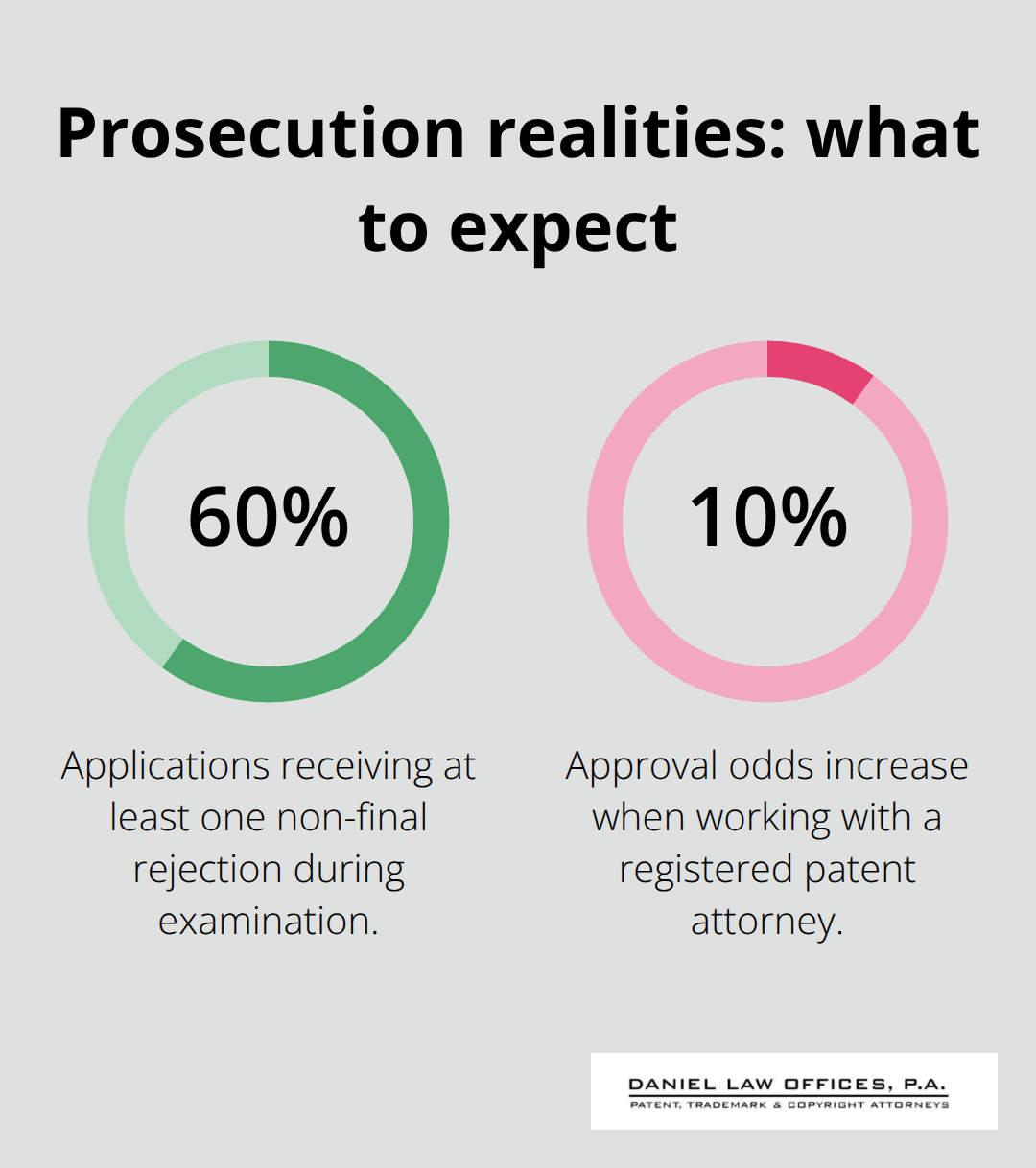
After the USPTO receives your application, the examination process unfolds over months or years, and how you respond to examiner feedback directly determines whether you receive a patent or face rejection. Your application enters examination roughly 18 months after filing, at which point an assigned examiner reviews your specification, drawings, and claims against prior art to assess patentability. Roughly 60% of applications receive at least one non-final rejection according to USPTO data, meaning most inventors must respond to examiner concerns before approval. The first communication you receive is typically a First Action on the Merits, which outlines any rejections or objections the examiner found. Read this office action carefully because it tells you exactly what the examiner believes is problematic with your claims or specification.
Understanding Common Rejection Reasons
Common rejection reasons include lack of novelty when the examiner finds prior art that covers your invention, lack of non-obviousness when the combination of existing patents would make your invention obvious to someone skilled in your field, and insufficient enablement when your specification does not adequately explain how to make or use the invention. The examiner will cite specific references, so obtain those patents or publications and understand precisely how the examiner believes they relate to your claims. This understanding shapes your entire response strategy and determines which amendments or arguments will succeed.
Meeting Deadlines to Prevent Abandonment
You typically have six months to respond to an office action, but waiting until month five creates unnecessary risk because any delay in submitting your response can result in abandonment if the deadline passes. Try responding within three months whenever possible because this keeps momentum in your favor and shows the examiner you take the process seriously. Your response options include amending your claims to narrow them and distinguish your invention from prior art, canceling claims the examiner rejected while keeping others intact, or submitting arguments that explain why the examiner’s rejection is incorrect.
Amending claims is the most common approach because you can often overcome rejections by adding specific limitations that distinguish your invention from what already exists. However, your amendments must remain supported by your original specification-you cannot add new matter that was not disclosed in your initial filing, or the examiner will reject your amendment as introducing new subject matter. If you need more time, request an extension before your deadline expires, though extensions incur additional fees of approximately $2,000 or more depending on entity size.
Leveraging Examiner Interviews
Interviews with your examiner can prove valuable because a direct conversation often clarifies misunderstandings faster than written exchanges. Schedule an interview if your rejection involves claim interpretation issues or if the examiner seems to have misunderstood your invention’s purpose or operation. These conversations frequently reveal what specific amendments or arguments will satisfy the examiner’s concerns.
Working With Patent Counsel Through Prosecution
Patent prosecution requires interpreting complex office actions, drafting precise claim amendments, and developing arguments grounded in patent law-tasks where a patent attorney makes a measurable difference. Working with a registered patent attorney increases approval odds by roughly 10% according to USPTO data because attorneys understand examiner tendencies, know which arguments succeed in your specific patent classification, and can restructure claims strategically rather than merely narrowing them reactively.
If the examiner continues rejecting your claims after your first response, you can file a Request for Continued Examination to restart prosecution, though this extends your timeline and incurs additional fees. Alternatively, you can appeal to the Patent Trial and Appeal Board if you believe the examiner’s rejection is legally incorrect, but appeals are expensive and time-consuming, typically costing between $5,000 and $15,000 in attorney fees. Most inventors find amending claims and resubmitting a more practical path forward. Once the examiner allows your claims, you receive a Notice of Allowance and must pay the issue fee within three months to receive your granted patent. Failing to pay this fee results in abandonment, so track this deadline carefully in your calendar.
Final Thoughts
Following the steps to apply for a patent in Orlando, Florida demands attention at every stage, from your initial search through final approval. The process typically spans 24 months or longer depending on examiner workload and application complexity, though electronic filing through Patent Center accelerates timelines by roughly 15% compared to paper submissions. Most applications encounter at least one office action requiring amendments or arguments, so you should budget time and resources for prosecution rather than expecting immediate approval.
Your specification quality, claim precision, and drawing clarity each independently boost approval odds by 20% to 30%, meaning investment in these foundational elements pays measurable returns. After the USPTO grants your patent, you must pay maintenance fees at 3.5, 7.5, and 11.5 years after grant to keep your patent active, with each payment due within a six-month grace period. Your granted patent provides exclusive rights to produce, use, and sell your invention for up to 20 years from your original filing date, creating licensing and commercialization opportunities that protect your competitive advantage.
We at Daniel Law Offices, P.A. guide inventors through each phase of this process, from conducting comprehensive patent searches to navigating prosecution and securing your granted patent. Our registered patent attorney helps you avoid common pitfalls that derail applications and strengthens your claims strategically rather than reactively. Contact us to discuss how we can help protect your invention.