



How to Navigate Patent Steps Successfully
Getting a patent approved involves multiple stages, each with specific requirements and deadlines. The patent steps can feel overwhelming without proper guidance, but understanding the process makes it manageable.
At Daniel Law Offices, P.A., we help inventors and business owners move through patent protection with clarity. This guide breaks down what you need to know at each stage.
What Makes Your Invention Patentable
Not every invention qualifies for patent protection, and understanding what the United States Patent and Trademark Office considers patentable saves you time and money before you invest in an application. The USPTO grants patents for inventions that are new, non-obvious, and useful.
Meeting the Core Requirements
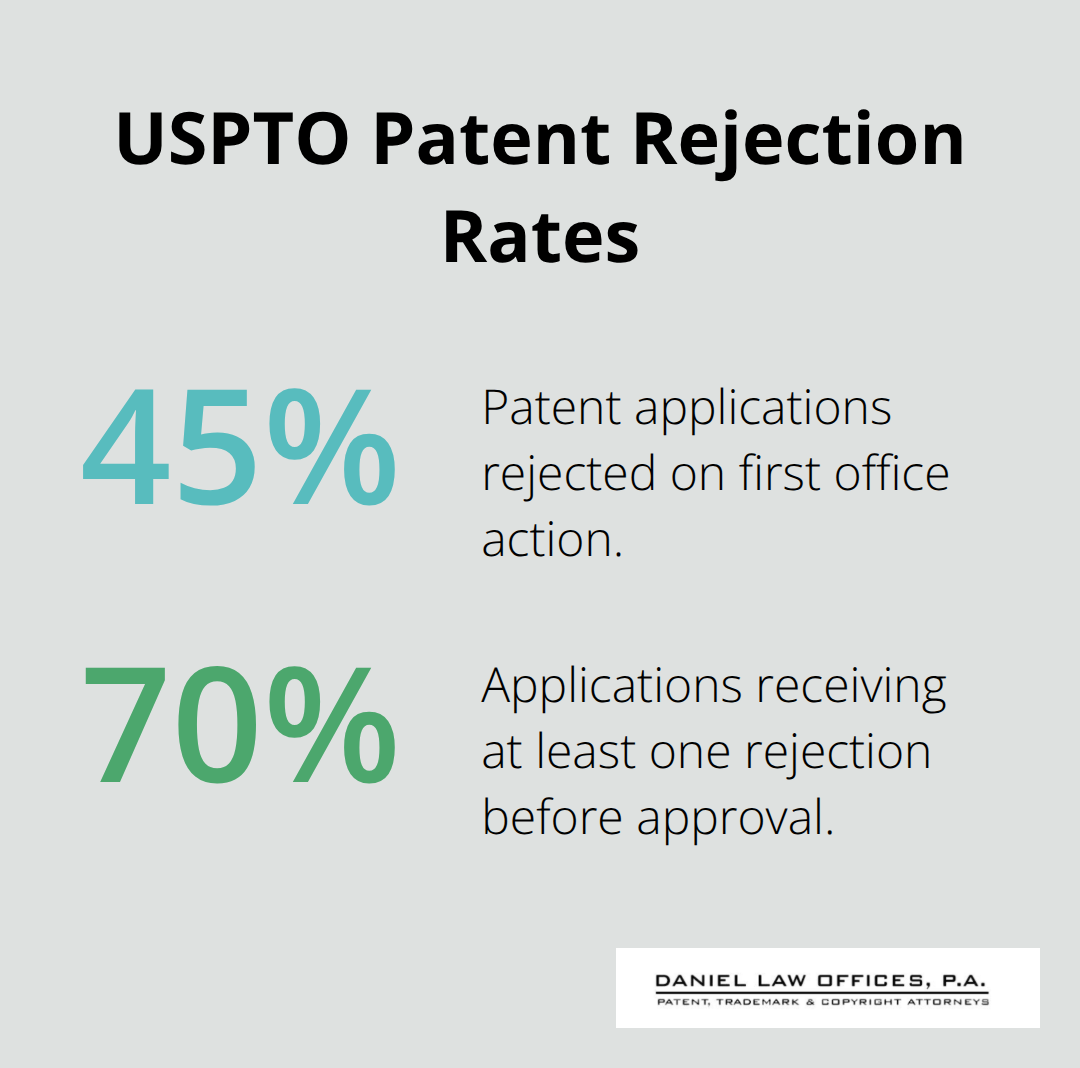
An invention must differ meaningfully from everything already patented or publicly known. If your invention exists in prior art (which includes patents filed before your application date, published materials, or products sold more than one year before filing), the USPTO will reject your application. Approximately 45% of patent applications face rejection on first office action according to USPTO data, often because applicants file without understanding these basic requirements.
Your invention also needs to show a non-obvious improvement over existing technology. The courts define non-obvious as something that wouldn’t occur to someone with ordinary knowledge in your field. Additionally, your invention must have practical utility, meaning it performs a real function and isn’t merely ornamental or theoretical.
Understanding Patent Types
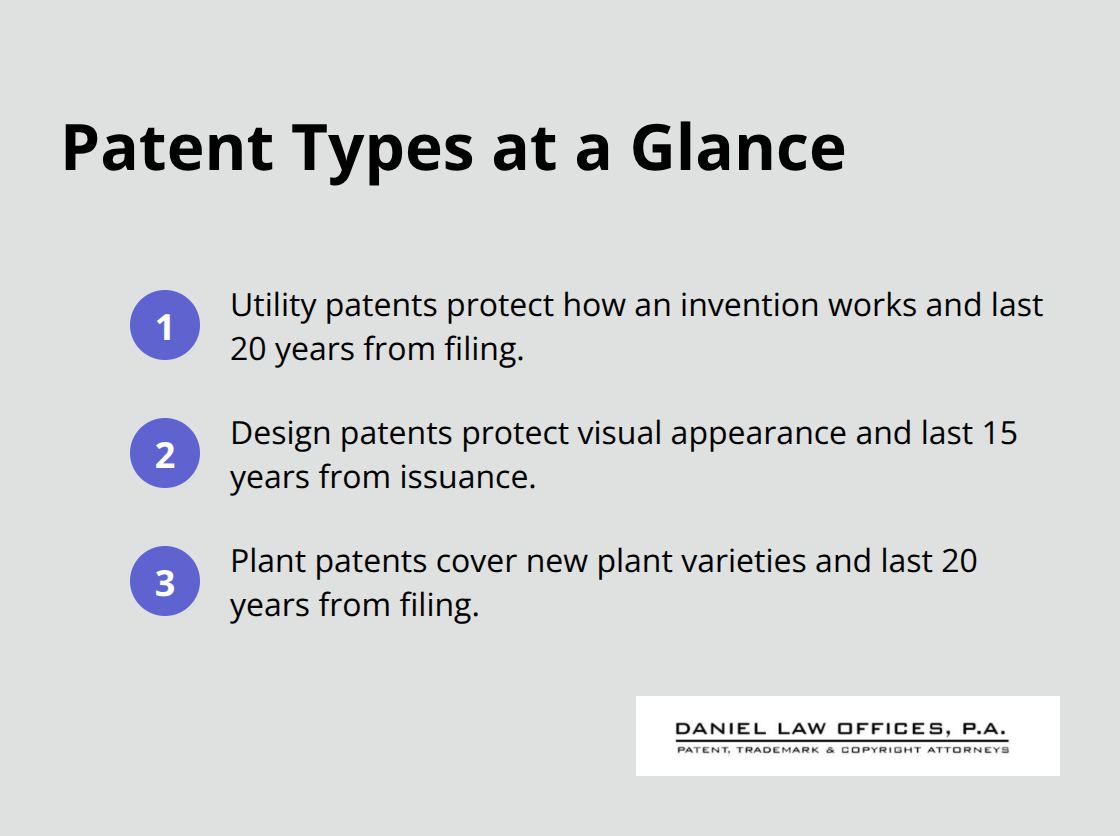
Utility patents protect how inventions function and represent the most common type, lasting 20 years from your filing date. Design patents protect the unique visual appearance of manufactured items and last 15 years from issuance. Plant patents cover new plant varieties and last 20 years from filing.
Most businesses pursue utility patents because they cover the broadest range of innovations, from software algorithms to mechanical devices to manufacturing processes. Understanding which type fits your innovation prevents costly mistakes during prosecution. For instance, if you’ve created a new smartphone interface, a utility patent protects the functional aspects while a design patent could protect its distinctive visual design.
Taking the Next Step Forward
Identifying which patent type aligns with your innovation requires a thorough examination of what you’ve actually created. A comprehensive patent search reveals not only whether your invention qualifies for protection but also which patent category best serves your business goals. This foundation determines how effectively your application addresses the right protection category from the start, setting you up for success as you move into the application process.
Conducting a Patent Search and Filing Your Application
Search Before You File
Starting your patent search before filing saves thousands of dollars and prevents wasted effort on inventions that already exist. The USPTO reports that 45% of applications face rejection on first office action, and many of these rejections stem from inadequate prior art searches. You need to examine patent databases, scientific literature, and commercial products to understand what’s already protected.
The free USPTO patent search database lets you search by keyword, classification, or inventor name. Google Patents also provides a free alternative interface for the same database, which many inventors find more intuitive for initial searches. However, a truly comprehensive search goes beyond patents-you must investigate published articles in your industry, existing products on the market, and even unpublished disclosures made more than one year before your intended filing date.
Many inventors make the mistake of searching only patents when prior public use or sale of your invention (even by someone else) destroys patentability. If you find your core concept already exists in a patent filed before your application date, you face an uphill battle. The non-obviousness requirement becomes nearly impossible to overcome if someone already patented something substantially similar.
Preparing Your Application Materials
Once your search confirms patentability, preparing your application materials demands precision and specificity. Your patent application requires a detailed written description of your invention, drawings or diagrams that show how it works, and specific claims that define exactly what you’re protecting. The specification section needs enough technical detail that someone knowledgeable in your field could build or use your invention based solely on your written description-vague descriptions lead to rejections and weaker patent protection.
Your drawings must clearly illustrate every element mentioned in your specification, with consistent numbering throughout. Claims are the legal boundaries of your patent, and they’re where most prosecution battles occur. Broader claims cover more variations but face higher rejection risk, while narrow claims get approved easier but protect less.
Understanding Costs and Timeline
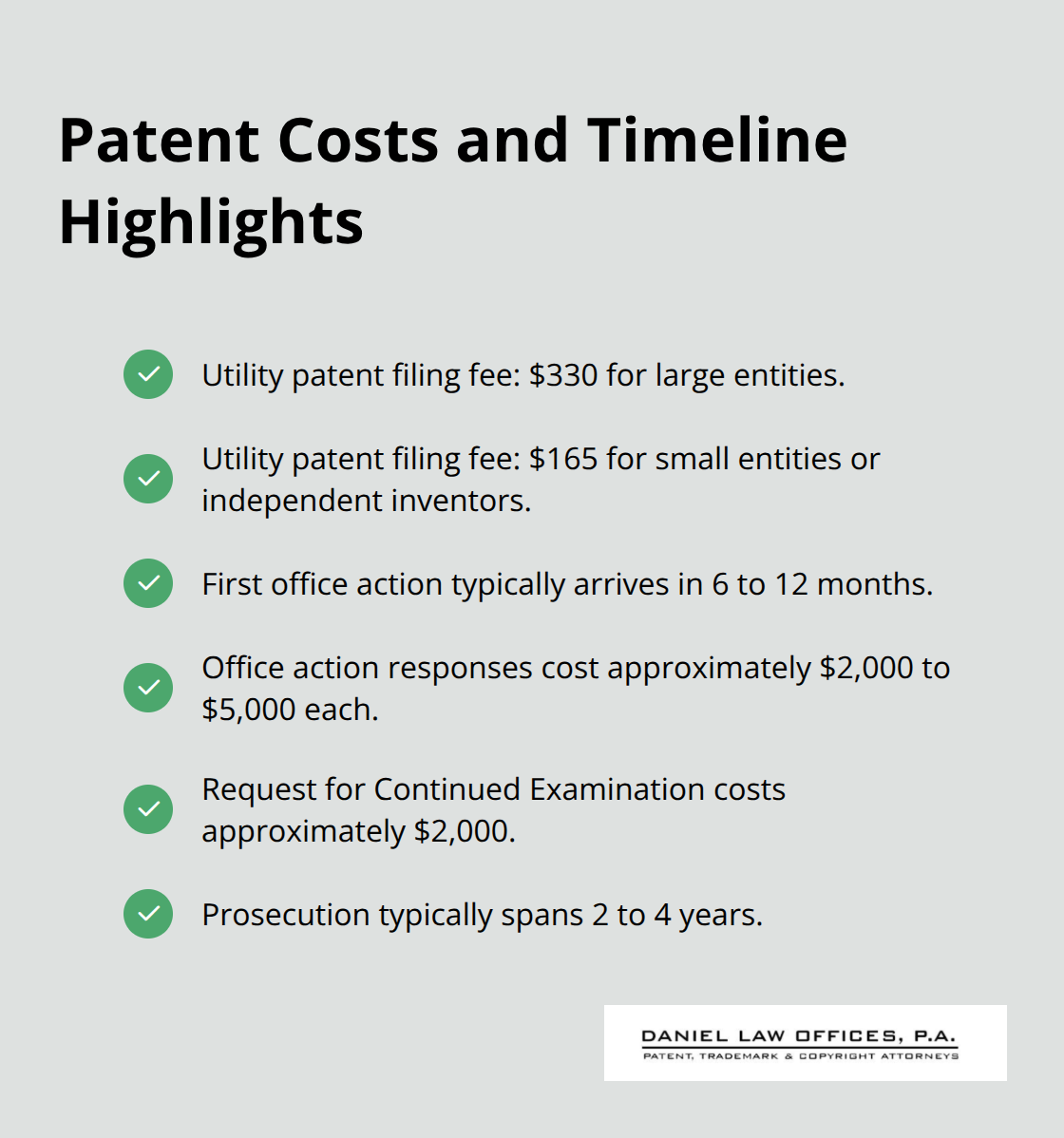
The USPTO filing fee for a utility patent is currently 330 dollars for large entities and 165 dollars for small entities or independent inventors, though this covers only the basic filing. You should prepare a detailed summary of your invention’s background, what problems it solves, and how it differs from existing solutions-this background information strengthens your application by establishing why your invention matters and why it’s non-obvious.
Filing happens through the USPTO’s electronic filing system, and most inventors receive their first office action within 6 to 12 months, though this timeline varies significantly based on technology area and USPTO workload. During this waiting period, your application is pending, which means you cannot legally claim patent protection yet, but you can mark your product as patent-pending to discourage competitors from copying your work.
Moving Into Prosecution
After you file your application, the USPTO examines your claims against prior art and existing patents. This examination phase determines whether your invention meets patentability standards and whether your claims adequately protect your innovation. Understanding what happens next in the prosecution process helps you prepare for the responses and amendments you’ll likely need to make.
Managing the Patent Prosecution Process
Understanding Your First Office Action
The USPTO examination process begins weeks after you submit your application, and your first office action typically arrives within 6 to 12 months depending on your technology classification. This office action is where the real work starts, and most inventors are unprepared for what they receive. The examiner will either approve your claims, reject them based on prior art, or issue rejections combined with requests for clarification. According to USPTO data, roughly 70% of applications receive at least one rejection before approval, so receiving an office action rejection is standard, not a failure.
When the examiner rejects your claims, they cite specific prior art references-existing patents, published materials, or known products-that they believe make your invention obvious or not novel. Your response strategy matters enormously here. You have three main options: amend your claims to narrow them and avoid the cited prior art, argue why the examiner’s rejection is incorrect based on the technical evidence, or combine both approaches.
Responding to Rejections Strategically
Many inventors amend their claims too aggressively on the first response, creating unnecessarily narrow protection that covers only minor variations of their invention. Instead, your first amendment should address the examiner’s specific concerns while maintaining the broadest reasonable scope. The USPTO allows you to file multiple responses to office actions, though each response costs additional fees and extends your timeline.
After your response, the examiner either approves your application, issues another office action, or declares the case final. A final office action doesn’t mean rejection is permanent-you can request continued examination, which restarts the process with a new examiner review and costs approximately $2,000 in additional fees. The language and technical arguments you present directly determine whether the USPTO grants your patent or rejects your innovation.
Timeline and Cost Expectations
The entire prosecution process from initial filing to approval typically takes 2 to 4 years for utility patents, though some cases extend much longer depending on complexity and office action responses. Your total costs beyond the initial filing fee include office action response fees of approximately $2,000 to $5,000 per response, continuation application fees if you pursue broader claims, and professional fees if you work with a patent attorney.
Many inventors underestimate these costs and assume they can handle office actions independently, then discover too late that their informal responses lack the technical precision and legal strategy needed to overcome rejections. The examination timeline isn’t fixed-you control some aspects by choosing when to respond to office actions, typically within 3 to 6 months of receiving them.
Navigating the Prosecution Negotiation
During the entire prosecution period, your patent remains pending, which means you cannot enforce it against competitors, but you can mark products as patent-pending and potentially recover damages if you eventually receive approval and the other party had notice of your patent. Prosecution is a negotiation between you and the examiner, not a pass-fail test. The examiner wants to understand why your invention truly differs from prior art, and your job is to provide the technical and legal evidence that proves it.
This back-and-forth process, while expensive and time-consuming, ultimately produces stronger patents because approved claims have survived rigorous examination and are far more defensible if you ever need to enforce them against infringers. Daniel Law Offices, P.A. guides clients through these patent prosecution responses, helping them navigate the technical arguments and strategic amendments that determine approval outcomes.
Final Thoughts
Successfully navigating patent steps requires understanding each stage from determining patentability through prosecution. The path involves conducting thorough prior art searches, preparing precise application materials, and responding strategically to office actions. Most applications face rejection initially, but this standard part of examination allows you to refine your claims and provide technical evidence supporting your innovation.
The costs and timeline vary significantly based on your invention’s complexity and the examiner’s initial assessment. You should budget between $5,000 and $15,000 for the complete process, with prosecution typically spanning 2 to 4 years. Your responses to office actions determine whether you receive approval or face continued examination, making strategic amendments and clear technical arguments essential throughout.
We at Daniel Law Offices, P.A. guide clients through every patent step with precision and experience. Our registered patent attorney handles comprehensive patent searches to confirm novelty, drafts applications that withstand examination, and manages the entire prosecution process on your behalf. Contact Daniel Law Offices, P.A. to discuss your patent protection strategy and learn how we help inventors and businesses secure their valuable ideas through the USPTO process.